
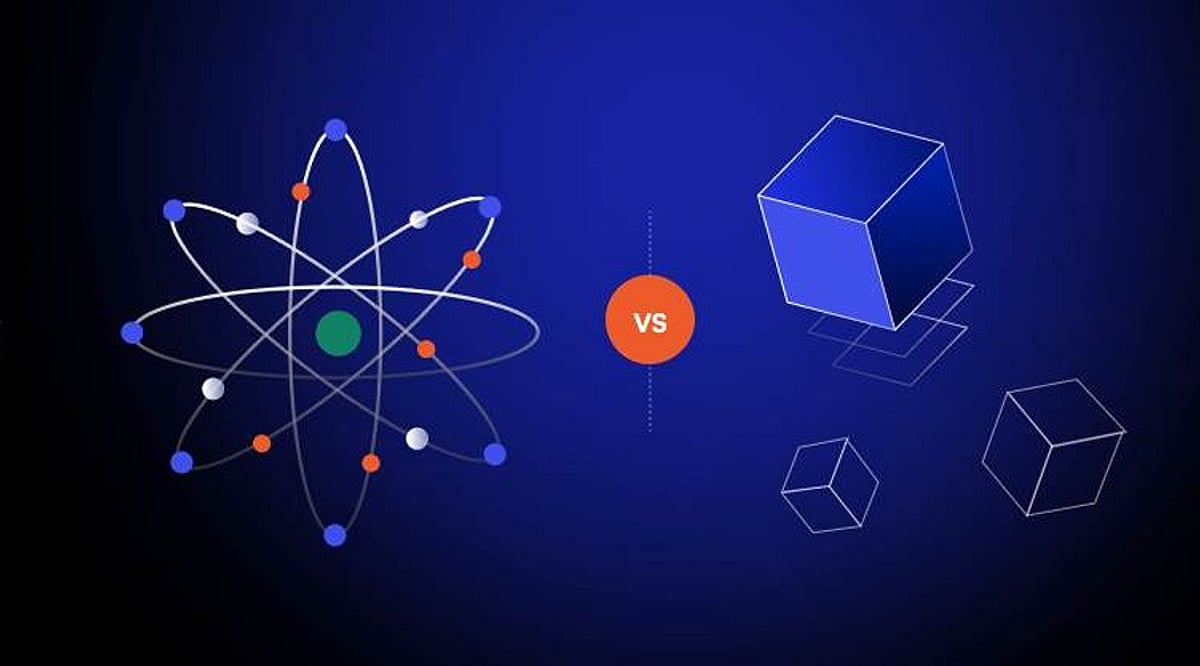
Quantum computing does not pose an immediate threat to blockchain, but it does challenge the cryptography behind digital signatures and wallets. The industry is already preparing with post-quantum cryptography and migration strategies. Understanding the real risks helps separate technical reality from common misconceptions.
How Blockchain Security Works
Blockchain security relies on cryptographic algorithms, consensus rules, a distributed network, and incentive structures. Quantum computing only affects cryptography, not consensus or network integrity. The real quantum risk is concentrated in the cryptographic layer that secures digital signatures and wallet control.
Shor’s vs. Grover’s Algorithm
Two quantum algorithms drive this conversation, but they are not equally significant. Shor’s algorithm can theoretically break elliptic curve cryptography, allowing attackers to derive private keys from exposed public keys. This would enable forged signatures and fraudulent transactions. In many networks, public keys remain hidden until a transaction is signed, limiting exposure for unused addresses. Grover’s algorithm accelerates brute-force searches against hash functions, but its impact is modest and can be offset by longer hash outputs. Treating these two threats as identical is a common mistake.
Is Blockchain at Risk Today?
No existing quantum computer is capable of running Shor’s algorithm at the scale needed to threaten current signatures. Researchers refer to a “cryptographically relevant quantum computer” (CRQC) as the threshold, and current hardware remains far short due to error rates and qubit instability. The migration conversation is urgent because building and testing replacement cryptography takes years. Waiting for a CRQC to appear would leave networks exposed during the transition.
Where Quantum Risk Exists
Quantum risk is not evenly distributed across a blockchain network. It is concentrated in identity and authorization—specifically the cryptographic algorithms used for digital signatures and wallet security. Consensus mechanisms and ledger validation remain unaffected.
Post-Quantum Blockchain Upgrades
The response is already underway. NIST finalized its first set of post-quantum cryptography (PQC) standards in 2024, giving developers real building blocks. Blockchain researchers are testing quantum-resistant signature schemes, and some projects have begun hybrid migrations that layer new cryptography alongside existing systems. This phased approach enables upgrades without breaking compatibility. Enterprise blockchain applications—such as supply chain tracking and identity systems—face the same cryptographic exposure as cryptocurrency wallets.
What This Means for Users
Investors should evaluate a project’s readiness for post-quantum migration alongside traditional metrics. Projects actively testing quantum-resistant signatures signal stronger planning. Builders should monitor signature scheme upgrades and wallet compatibility. Crypto asset holders do not need to act today; the transition will likely happen gradually through wallet updates. Exchanges and custodians will probably lead the shift, rolling out new signature standards before individual users notice changes.
Final Thoughts
The quantum threat to blockchain is real, specific, and manageable. It sits almost entirely in the cryptographic layer, driven by Shor’s algorithm. The industry has years of runway before a CRQC becomes a practical concern. Post-quantum cryptography is not a hypothetical defense—it is standardized, tested, and already being integrated into next-generation blockchain infrastructure.
Frequently Asked Questions
1. Will quantum computing break blockchain?
Not immediately. It threatens certain cryptographic algorithms used for digital signatures. Most experts expect networks to transition to PQC before CRQCs become widely available.
2. What is the biggest quantum threat to blockchain?
The greatest risk is to public-key cryptography, especially elliptic curve cryptography (ECC), which secures wallets and verifies transactions. Consensus mechanisms are not directly broken.
3. What is post-quantum cryptography?
PQC refers to algorithms designed to resist attacks from both classical and quantum computers. It is the leading strategy for protecting blockchain and other digital systems against future quantum threats.
4. Are today’s blockchains already preparing?
Yes. Many projects, researchers, and standards organizations are exploring quantum-resistant signature schemes, hybrid approaches, and migration strategies.
5. Should investors and developers worry now?
No immediate panic is needed, but preparation is important. Investors should follow projects with clear upgrade plans; developers should design adaptable systems and monitor PQC advances.