Tag: digital twins

  • Smart Manufacturing Drives Transformation in Aerospace and Defense

    Smart Manufacturing Drives Transformation in Aerospace and Defense

    Introduction

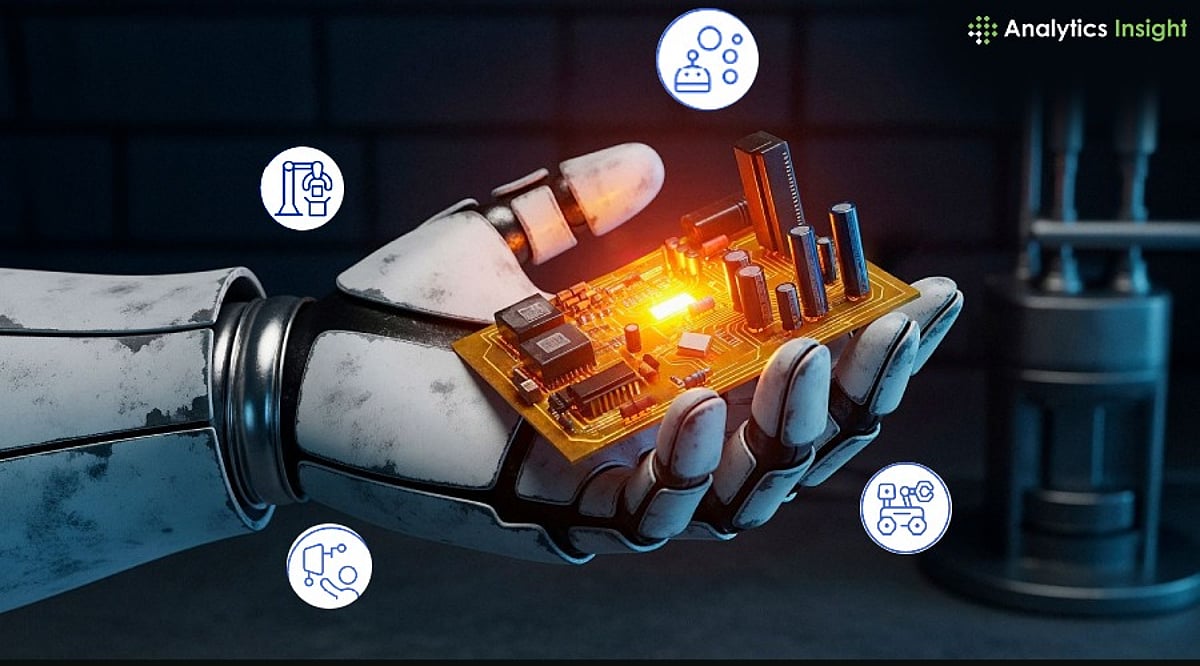
    Smart manufacturing is revolutionizing the aerospace and defense sectors by integrating advanced technologies such as artificial intelligence (AI), the Internet of Things (IoT), robotics, and digital twins. These innovations are creating a unified digital ecosystem that connects design teams, factories, suppliers, and maintenance systems, leading to unprecedented levels of efficiency and innovation.

    Digital Twins: Virtual Testing for Real-World Performance

    Digital twins allow engineers to simulate and test aircraft, engines, and components in a virtual environment. This capability helps identify design flaws and optimize performance before physical production begins, saving time and resources.

    IoT and AI: Predictive Maintenance and Quality Control

    Industrial IoT sensors monitor temperature, vibration, and machine performance in real time. AI algorithms analyze this data to detect potential equipment failures early, enabling predictive maintenance. AI-powered quality control systems inspect aircraft parts, welds, coatings, and composite surfaces to identify defects, reducing rework and improving safety.

    Robotics and Automation

    Robots and collaborative machines handle tasks such as drilling, fastening, welding, painting, and material handling. These systems enhance precision and support human workers in complex operations, boosting productivity and consistency.

    3D Printing for Lightweight Components

    Additive manufacturing (3D printing) enables rapid prototyping and production of lightweight parts, tooling, and complex low-volume components. This reduces material waste and simplifies assembly processes, contributing to more sustainable manufacturing.

    Augmented and Virtual Reality

    AR and VR technologies provide digital work instructions for technicians, support maintenance training, aid factory planning, facilitate design reviews, and enable remote assistance, improving accuracy and reducing errors.

    Strengthening Supply Chains

    Smart manufacturing enhances defense supply chains by improving parts visibility, predicting shortages, and enabling faster production adjustments in response to changing demand. This resilience is critical for national security.

    Challenges and Future Outlook

    The transition to smart manufacturing also brings challenges, including cybersecurity risks, certification hurdles, integration with legacy systems, and workforce upskilling. According to TCS, around 40% of aerospace manufacturing operations are expected to require minimal human intervention within five to seven years, though human oversight will remain essential.

    Conclusion

    Smart manufacturing is not just a technological upgrade but a fundamental shift in how aerospace and defense products are designed, produced, and maintained. By embracing these innovations, the industry can achieve higher efficiency, quality, and adaptability in an increasingly complex global environment.

  • 2027 Manufacturing Logistics Trends: AI, Automation, and Smart Warehouses Reshaping Supply Chains

    2027 Manufacturing Logistics Trends: AI, Automation, and Smart Warehouses Reshaping Supply Chains

    Manufacturing and logistics are moving toward a more connected, automated, and data-driven model as companies look for ways to improve efficiency, manage supply-chain disruptions, and respond faster to changing demand. Artificial intelligence, robotics, smart warehouses, digital twins, and multimodal transportation are emerging as important areas of investment. In India, growing manufacturing activity is also driving demand for modern industrial and logistics infrastructure. Industry forecasts suggest these trends could become more visible through 2027 and beyond.

    AI Moves from Experiment to Operations

    Artificial intelligence is expected to play a larger role in manufacturing logistics, particularly in planning, procurement, inventory management, and disruption management. The National Institute of Standards and Technology’s 2026 roadmap identifies industrial data analytics, autonomous systems, digital twins, robotics, supply-chain optimization, and sustainable manufacturing as areas where AI and machine learning are enabling advances. AI-powered systems can analyze large volumes of supply-chain information and help companies identify potential disruptions earlier. Emerging agentic AI systems could also support tasks such as finding alternative suppliers and improving production planning.

    Smart Warehouses Gain Ground

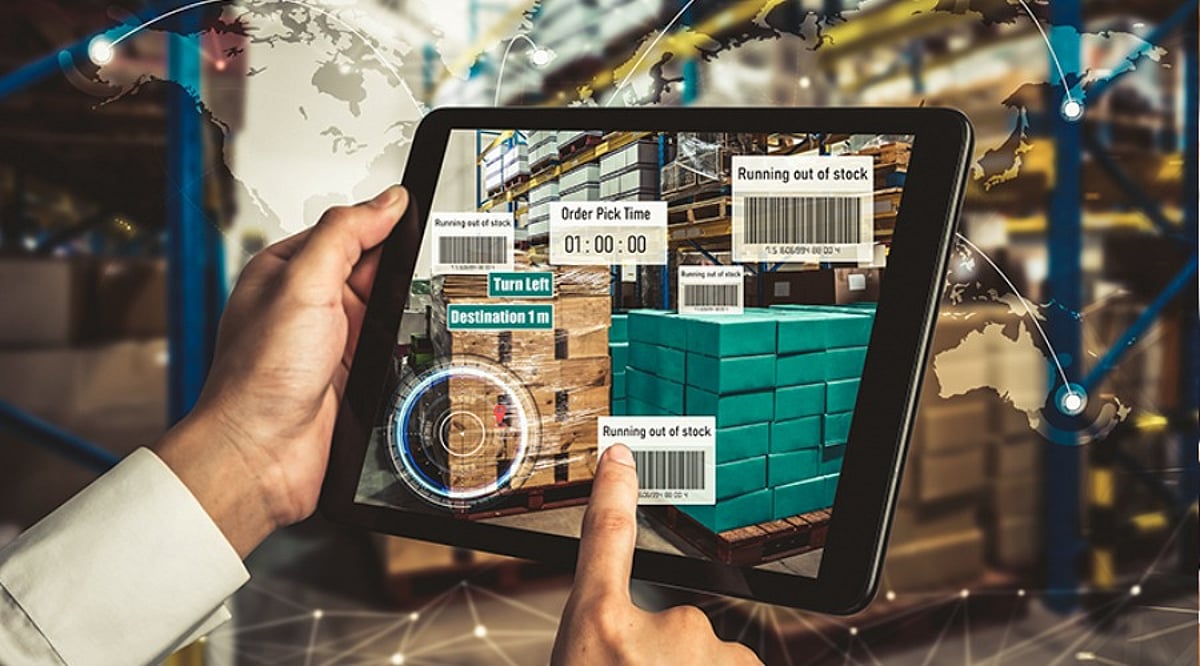
    Warehouses are increasingly becoming technology-enabled logistics hubs rather than simple storage facilities. In India, technologies such as Warehouse Management Systems, automated storage and retrieval systems, robotics, RFID, IoT sensors, artificial intelligence, and digital twins are being used to improve inventory accuracy, operational efficiency, and supply-chain visibility. The expansion is also visible in market numbers: ICRA expects warehousing supply across eight primary Indian markets to grow 12–14% year-on-year to 550–570 million square feet in FY2027. Manufacturing and third-party logistics are expected to remain key demand drivers.

    Robotics and Automation Expand

    Automation is expected to move beyond repetitive production tasks and deeper into material movement, sorting, storage, and distribution. Physical AI is another trend manufacturers are developing, including more autonomous robots that can work in unstructured environments. Deloitte’s survey showed that 22% of manufacturers planned to use physical AI in the next two years, up from 9% at the time of the survey. In warehouses, autonomous mobile robots and automated distribution systems may become an integral part of the workforce, helping manufacturers handle increased volumes and improve operational consistency.

    Digital Twins for Real-Time Decision Making

    Digital twins are becoming another key aspect of connected manufacturing. They build virtual replicas of physical devices, processes, or facilities and use real-time data for monitoring, simulation, and decision-making. Industrial digital twins are an important technology in intelligent manufacturing, with multiple applications in predictive analysis and efficient resource management. For logistics functions, digital replicas may help model different scenarios before implementing changes in production, warehousing, or the supply chain network.

    Multimodal Logistics Gets More Attention

    Supply chains are also expected to rely more heavily on combinations of road, rail, air, and sea transportation. India’s National Logistics Policy, PM GatiShakti, and multimodal logistics parks aim to improve connectivity between production centers, warehouses, and consumption markets. The Unified Logistics Interface Platform is also designed to improve visibility across the logistics chain. The shift could become increasingly important as manufacturers seek greater flexibility and resilience amid geopolitical and transportation disruptions.

    Grade A and Automation-Ready Infrastructure

    Modern facilities that can accommodate automation and comply with compliance standards have become highly sought after by manufacturers. Light manufacturing leases in India’s eight biggest cities grew from 3.2 million sq. ft. in 2020 to 22.1 million sq. ft. in 2024, according to JLL data cited by The Economic Times. Leasing activity is estimated to rise to almost 34 million sq. ft. by 2027. JLL estimates India’s total warehouse needs to be about 1.2 billion sq. ft. by 2027, while Grade A warehouse inventory might be close to 400 million sq. ft.

    Sustainability Becomes Logistics Priority

    Companies are increasingly considering sustainability by weighing the environmental impact of manufacturing and delivery. Green logistics initiatives include renewable energy, energy-efficient warehouses, route optimization, and other ways to make transportation more environmentally friendly. India’s logistics and warehousing industry has also become more concerned with sustainability, alongside automation and digitization.

    What 2027 Could Look Like

    The logistics sector for manufacturing will most likely be defined by a combination of artificial intelligence, automation, smart warehousing, digital twins, and multimodal networks. The industry is moving away from adopting technologies separately toward integrating technologies that connect production, inventory, transportation, and supply chain decision-making. The difficulty for manufacturers will be scaling up and managing all of these aspects together.

  • AI as the Default Operating Layer: Pinnacle’s Bimal Patwari on the Future of AEC

    AI as the Default Operating Layer: Pinnacle’s Bimal Patwari on the Future of AEC

    Artificial intelligence is steadily reshaping the Architecture, Engineering, and Construction (AEC) industry, driving automation across design, engineering, documentation, quality control, and project management. While AI adoption on construction sites remains relatively slow, organizations are increasingly integrating intelligent technologies into design workflows, compliance, digital twins, and engineering processes to improve productivity, accuracy, and collaboration.

    As the industry moves beyond experimentation, AI is expected to connect the entire project lifecycle—from design and engineering to construction execution and facility management—creating a unified digital thread powered by predictive intelligence and automation. The convergence of AI, Digital Twins, and cloud-based collaboration is set to redefine how infrastructure projects are planned, delivered, and managed.

    Bimal Patwari, Founder and CEO of Pinnacle, believes AI should augment engineering expertise rather than replace it. He says successful AI adoption depends as much on organizational culture, digital maturity, and workforce readiness as it does on technology. According to him, companies that invest in structured digital foundations and continuous upskilling today will lead the next generation of AI-driven construction.

    In an exclusive interview with Analytics Insight, Patwari discusses AI adoption in the AEC industry, Digital Twins, generative AI, workforce transformation, enterprise-wide AI implementation, and how Pinnacle is building intelligent engineering and construction workflows. Here are the excerpts from the interview:

    How is AI Adoption Transforming the AEC Industry and What’s Driving its Rapid Growth?

    Overall, automation and AI adoption within the AEC industry remains relatively slow, but the picture varies sharply across the project lifecycle. On the design and engineering side, the pace has somewhat accelerated: major design software providers are now building native AI compatibility into their platforms, particularly through MCP connectors, and leading design and engineering firms are embedding automation and AI into design, modeling, coordination, and documentation workflows as a matter of course. Construction execution, however, tells a very different story: adoption remains markedly slower, with much of the industry still reliant on conventional, manual site processes. This is where the sector’s real digital transformation gap lies.

    At Pinnacle Future Build, closing this gap is a deliberate priority; we see it as the next frontier for AI-driven impact in AEC, not a peripheral concern.

    The AEC Sector has Traditionally Relied on Manual Processes and Legacy Systems. What are the Biggest Barriers Organizations Still Face in Adopting AI at Scale, and How Can They Overcome Them?

    The biggest barriers are rarely technological; they are structural: legacy data trapped in siloed formats, inconsistent standards across teams, and a workforce accustomed to manual sequencing.

    Organizations can overcome this by treating AI adoption as a change-management program, not an IT rollout, pairing every tool deployment with training, clear governance, and visible leadership sponsorship. We addressed this at PFB through a phased, center-by-center rollout with dedicated trial teams, rather than a single enterprise-wide switch.

    At Pinnacle Future Build, our focus on AI implementation extends well beyond BIM modeling alone into the automation of design workflows, AI-led QC verification processes, AI-led design documentation, code compliance reviews, automated engineering design calculations, and AI-led project management practices. Closing the design-to-construction adoption gap is a deliberate priority for us; we see it as the next frontier for AI-driven impact in AEC, not a peripheral concern.

    How will Generative AI Reshape Engineering, Design, and Project Execution Over the Next Five Years?

    Generative AI will dramatically compress the ideation-to-documentation cycle. What once took design teams weeks of iteration will increasingly happen in days, with AI generating first-pass options that engineers refine rather than originate from scratch. This does not diminish the engineer’s role; it elevates it, shifting professionals from repetitive drafting toward judgment, validation, and design intent.

    AI will help expedite repetitive, high-volume work across the design cycle, generating models, supporting clash resolution, performing quality control and code compliance verification, conducting constructability and maintainability reviews, and producing documentation faster, with greater accuracy and consistency.

    On the construction side, AI-assisted Scan-to-BIM can substantially transform site processes, enabling paperless construction, continuous quality control, more accurate schedule management, materials management, and stronger risk analysis across broader project management practices.

    Over the next few years, expect GenAI to act as a genuine co-engineer across architectural, structural, and MEP disciplines.

    How Can Organizations Scale Generative AI from Pilot Projects to Enterprise-Wide Adoption?

    The most effective strategy is sequencing before scaling, proving value on a contained, measurable use case before expanding horizontally.

    We structured our own program as a multi-deliverable pilot, deliberately experimenting with and evaluating solutions from multiple technology providers, combined with 35 years of Pinnacle’s own domain expertise and a skilled internal team, to identify the best available option for each component of the workflow, rather than settling for a single one-size-fits-all platform.

    We deployed a dedicated R&D team to conduct comparative studies across market-available tools and engineer the most efficient combination of solutions for our environment.

    The finalized solution was then handed to a pilot team for real-world trial, surfacing genuine challenges and learnings before we proceeded to an organization-wide rollout. Critically, the entire initiative was led from the top by the organization’s senior-most leadership, ensuring it was treated as a strategic priority rather than a departmental experiment.

    How Can Organizations Balance AI Automation and Human Expertise in Construction and Engineering?

    The right balance is augmentation, not substitution. In knowledge-intensive industries like ours, AI is exceptional at pattern recognition, reading and analyzing documents, and repetitive computation. Still, engineering judgment, constructability and maintainability, accountability for safety, code compliance, and site realities must remain firmly human.

    We anchor this by design: every AI-generated output at PFB passes through a multi-layered quality control process before it becomes a deliverable. That discipline is what allows automation to scale without compromising trust.

    What Role do Data Quality, Digital Infrastructure, and Culture Play in Successful AI Adoption?

    All three are prerequisites, not enablers. Data quality determines whether AI outputs are usable; digital infrastructure determines whether those outputs move seamlessly across project stages; and culture determines whether teams actually adopt what is built for them.

    Most organizations fall short on the third; they invest heavily in tools and platforms but underinvest in the change-readiness of their people, which is ultimately why adoption stalls.

    The Demand for AI-Ready Talent Continues to Grow. How Should Organizations Rethink Workforce Development and Upskilling to Prepare Employees for an AI-Enabled Future?

    Workforce development must shift from one-time training to continuous skill enhancement. We have institutionalized this through a structured training program supported by market experts and a certification sponsorship scheme covering globally recognized credentials, so upskilling becomes a career pathway rather than a compliance exercise.

    Equally important is exposing talent early to AI-augmented workflows during onboarding, so proficiency becomes the norm rather than the exception. The AEC professional of the future will be judged as much on their fluency with AI tools as on technical depth.

    Can AI Adoption Succeed without Strong Digital Foundations and a Broader Transformation Strategy?

    AI adoption cannot outrun digital maturity. Organizations need a coherent digital foundation of structured data, integrated systems, and defined workflows before AI can deliver reliable value; attempting AI without this foundation produces fragmented, unrepeatable results.

    We approached this sequentially: standardized workflows first, multi-layered QA/QC processes, and then layering automation and AI on top of a foundation built to scale.

    How will AI-Powered Digital Twins Transform Infrastructure Planning, Execution, and Lifecycle Management?

    Traditional Digital Twins have been largely descriptive, telling you what exists. AI-enabled twins are becoming predictive and prescriptive, telling you what is likely to happen and what to do about it.

    AI changes that fundamentally: the twin becomes a living, continuously learning asset, ingesting sensor data, performance feedback, and operational history to predict maintenance needs, optimize energy performance, and flag risk before it materializes. For infrastructure projects where assets operate for decades after handover, this shift from a point-in-time model to a self-updating intelligence layer is transformative for long-term lifecycle value.

    Historically, planning, execution, and operations have functioned as three disconnected phases, each with its own tools, teams, and data value generated in design is routinely lost by the time an asset reaches operations. AI-driven Digital Twins finally break this silo, carrying design intent and construction reality forward into a single operational model that facility teams can act on immediately at handover. For infrastructure where operational costs vastly exceed construction costs over an asset’s life, this continuity is where the real financial and safety value of the convergence lies.

    How will AI shape the Future of AEC, and Pinnacle Infotech’s Digital Transformation Role?

    Over the next five years, AI will move from a productivity lever to the default operating layer of AEC delivery, embedded in every discipline, every project stage, and every decision point. Companies like Pinnacle Future Build will contribute by proving that this transformation is achievable at scale, not just in isolated centers of excellence. We operate across four production centers and 14 countries, which gives us a unique vantage point to standardize AI-driven delivery across geographies and disciplines.

    What Automation Initiatives has Pinnacle Future Build Delivered, and What Results have They Achieved?

    Rather than speak in the abstract, we have deployed automation and AI directly into production, including AI-assisted designs, Revit-native MCP / AI-compatible tooling for model generation and coordination, QA/QC, and AI-assisted workflows integrated into our documentation pipeline.

    Early results have shown measurable reductions in turnaround time for routine modeling and coordination tasks, alongside improved consistency in deliverable quality. We track adoption centrally, which lets us quantify impact rather than rely on anecdotes, a discipline I would encourage every AEC leader to adopt.

    How Can AI Connect Design, Engineering, Construction, and Operations into One Digital Thread?

    Too many organizations still treat digital design, digital construction, and digital operations as separate initiatives with separate tools and separate data. The real opportunity is a digital thread, a single, traceable flow of data that begins at design intent and carries forward, unbroken, through engineering, construction sequencing, and into operational asset management via Digital Twins. AI is the connective mechanism that makes this thread possible, continuously translating data from one lifecycle stage into intelligence usable in the next.

    What Advice Would You Give AEC Leaders Who Are Hesitant to Begin Their AI Journey?

    The greatest risk today isn’t adopting AI too early; it’s standing still while competitors compound their learning curve. Leaders who hesitate are often waiting for certainty that will never arrive; AI, like any transformation, is refined through practice, not planning. My advice is to treat the first initiative as a learning investment, not a finished solution; measure it honestly, adjust quickly, and let each cycle build organizational confidence for the next.

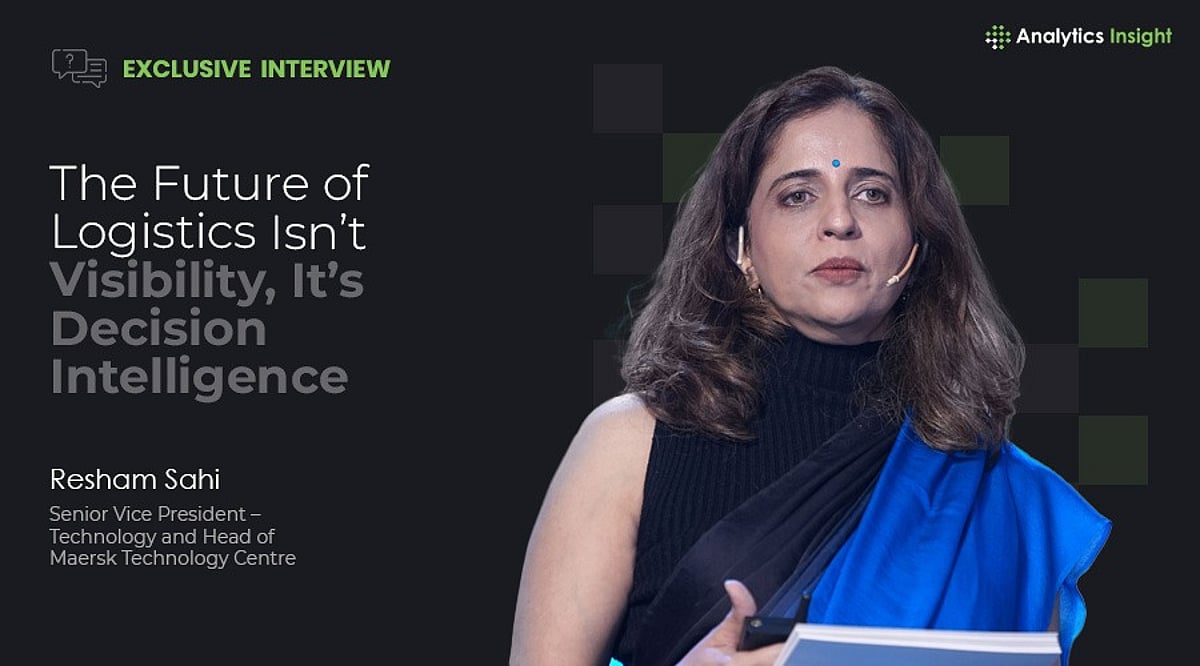
  • AI in Logistics: Maersk’s Resham Sahi on Moving from Visibility to Decision Intelligence

    AI in Logistics: Maersk’s Resham Sahi on Moving from Visibility to Decision Intelligence

    Artificial intelligence is reshaping the logistics industry, helping organizations move beyond reactive supply chain management toward intelligent, connected, and data-driven operations. As global trade becomes increasingly complex amid geopolitical uncertainty, demand volatility, and evolving customer expectations, AI is enabling businesses to make faster, more informed decisions that improve resilience, efficiency, and operational agility.

    The convergence of AI with Digital Twins, predictive analytics, cloud computing, Internet of Things (IoT), and intelligent Control Towers is creating a new generation of supply chains capable of anticipating disruptions before they occur. From demand forecasting and inventory optimization to real-time shipment visibility, network simulation, and proactive risk management, these technologies are helping organizations optimize every stage of planning, execution, and fulfillment while reducing operational costs and improving customer outcomes.

    Industry leaders believe the future of logistics lies in connected intelligence, where data flows seamlessly across transportation, warehousing, customs, and fulfillment. By integrating AI-powered insights with digital infrastructure, businesses can move beyond monitoring operations to predicting challenges, automating decisions, and building supply chains that are both resilient and future-ready.

    In an exclusive interview with Analytics Insight, Resham Sahi, Senior Vice President – Technology and Head of Maersk Technology Centre, Bangalore, discusses how AI, Digital Twins, predictive analytics, cloud technologies, and intelligent logistics solutions are transforming global supply chains, strengthening operational resilience, and helping Indian businesses build smarter, more connected logistics ecosystems.

    From Visibility to Decision Intelligence

    According to Sahi, the notable trend is that companies are moving from visibility to decision intelligence. “In today’s environment of demand volatility, geopolitical uncertainty, and evolving trade patterns, resilience increasingly determines how quickly organizations can turn operational data into informed decisions. Companies can generate significant volumes of operational data through their supply chains; however, real value lies in translating data into actionable insights that enable improved planning and execution.”

    Through AI, companies are becoming better at forecasting demand, optimizing inventory, improving ETA, and managing exceptions. For example, Digital Twins allow companies to test different scenarios and assess how operational decisions may affect transportation, warehousing, and inventory positioning before changes are implemented in the physical supply chain. Using AI, Digital Twins can predict certain disruptions before they occur, helping make more informed decisions while reducing operational risk.

    “The true value comes through integration,” Sahi emphasized. “According to our recent Trade Momentum APAC research, although 74% of companies have operationalized their AI capabilities, only 47% have integrated it with their trade compliance and customs platforms, suggesting that many companies still keep their digital initiatives separate.”

    Maersk believes in the connected intelligence future, where decision intelligence will be built across the entire process of planning, execution, and fulfillment.

    AI-Powered Control Towers

    The function of Control Towers is moving from providing visibility to enabling intelligence, helping organizations move from simply monitoring supply chains to making better decisions. “In today’s environment, it is not enough to know the location of a shipment; it is more valuable to be aware of possible risks and implications and to be able to make a decision based on that information,” Sahi said.

    AI-powered Control Towers deliver this by connecting data from all sources—transportation, warehousing, customs, IoT assets, and enterprise systems—into a single view. This information is constantly analyzed through AI, identifying exceptions, forecasting delays, and proposing the optimal next step for operations, such as changing the route, reallocating inventory, or adjusting warehouse capacity.

    “The real value of a Control Tower lies not in aggregating more data, but in enabling faster, more confident decisions across the supply chain,” Sahi noted. By bringing together operational insights in real time, organizations can respond proactively to disruptions instead of reacting after they occur.

    Digital Twins for Smarter Network Optimization

    One of the most significant advantages of Digital Twins is that they can help make better decisions before any changes to the physical logistics network. This is even more important when reacting to disruptions yet to be encountered. For example, using weather data, Digital Twins can identify several vessel berthing options at ports and recommend the best scenarios for maximizing operational efficiency.

    “With increasing interconnectivity within our logistics network, we require more confidence in our decisions when it comes to logistics such as inventory positioning, transportation flows and warehouse capacity, and Digital Twins allow us to do scenario planning in a virtual environment,” Sahi explained.

    Digital Twins can be transformed from being merely simulation tools into intelligent decision support systems once integrated with AI and operational data. Organizations will be able to run different scenarios of the network, optimize asset use, and spot potential bottlenecks before they affect operations. In line with this, Gartner predicts that by 2027, more than 40% of large enterprises will combine simulation, Digital Twins, and AI to optimize operational processes.

    Building Future-Ready Supply Chains in India

    The rising importance of India in international manufacturing is contributing to the increasing requirement for intelligent and interconnected supply chains. As per the Economic Survey 2025-26, Manufacturing GVA increased by 7.72% in Q1 and 9.13% in Q2 of FY26, highlighting the country’s industrial strength. As businesses diversify supply chains and expand their participation in global value chains, logistics is becoming a strategic enabler of growth rather than simply a support function.

    At Maersk, the company is helping customers connect transportation, warehousing, customs, and fulfillment through integrated digital solutions. AI, cloud, and IoT strengthen that connected ecosystem by improving visibility, planning, and execution across the logistics journey. Cloud-based platforms enable customers to unify transportation, warehousing, customs, and fulfillment into one cohesive digital platform, making faster, better decisions possible.

    “AI represents a once-in-an-era shift that can tackle complex problems, provide faster insights, enable proactive, data-driven decisions, and drive effective execution,” Sahi said. “We are putting AI to use by streamlining how frontline teams serve customers by reducing complexity, redesigning workflows, and improving customer access to insights.”

    At the end of the day, Maersk’s focus is on helping customers build connected and resilient supply chains by integrating data across every stage of the logistics journey, rather than optimizing individual functions in isolation. This will help both Maersk and its customers improve cost efficiency, reliability, and outcomes.

  • 6G by 2035: 10 Transformative Predictions for the Next-Generation Network

    6G by 2035: 10 Transformative Predictions for the Next-Generation Network

    As the world continues to rely on faster and more intelligent connectivity, researchers and industry leaders are already envisioning the capabilities of 6G networks. Expected to arrive around 2035, 6G promises to revolutionize communication, computing, and daily life. Here are ten bold predictions for what 6G will deliver.

    AI-Native Networks

    Artificial intelligence will be embedded directly into network infrastructure, enabling real-time traffic management, performance optimization, predictive failure detection, and energy efficiency—all without constant human oversight.

    Terabit Speeds

    6G could achieve data rates of up to one terabit per second, making downloads nearly instantaneous and supporting seamless, high-bandwidth digital experiences like 8K streaming and massive data transfers.

    Holographic Communication

    Real-time holographic calls may become practical, allowing lifelike remote meetings, immersive education, and interactive entertainment across global networks, shrinking distances like never before.

    Integrated Sensing

    Networks will not only transmit data but also sense their environment—detecting movement, temperature, and objects—enabling smarter cities, autonomous systems, and industrial automation.

    Space-Air-Ground Connectivity

    A seamless mesh of satellites, drones, and terrestrial towers will provide uninterrupted internet coverage even in the most remote corners of the planet, bridging the digital divide.

    Digital Twins

    Real-time digital replicas of cities, factories, and infrastructure will become commonplace, powered by 6G’s low latency and high bandwidth, enabling better planning, monitoring, and predictive maintenance.

    Extended Reality

    Augmented and virtual reality experiences will become mainstream, with ultra-low latency and massive capacity making immersive environments feel truly natural and responsive.

    Autonomous Transportation

    Self-driving cars, delivery drones, and logistics systems will rely on 6G for split-second communication, ensuring safer and more efficient real-time decision-making on the move.

    Sustainable Networks

    Future 6G infrastructure will prioritize energy efficiency through intelligent resource allocation, renewable energy integration, and environmentally friendly operations, reducing the carbon footprint of connectivity.

    Medical Innovation

    Ultra-fast, reliable 6G connections will enable advanced remote surgeries, continuous patient monitoring, and AI-assisted diagnostics, making healthcare more accessible and effective worldwide.

    These predictions paint a picture of a hyper-connected, intelligent future where 6G serves as the backbone for innovation across industries. While challenges remain, the trajectory toward 2035 is clear—a network that is faster, smarter, and more integrated than anything before.

  • Nvidia Partners with Japanese Robotics Firms to Accelerate AI-Powered Automation

    Nvidia Partners with Japanese Robotics Firms to Accelerate AI-Powered Automation

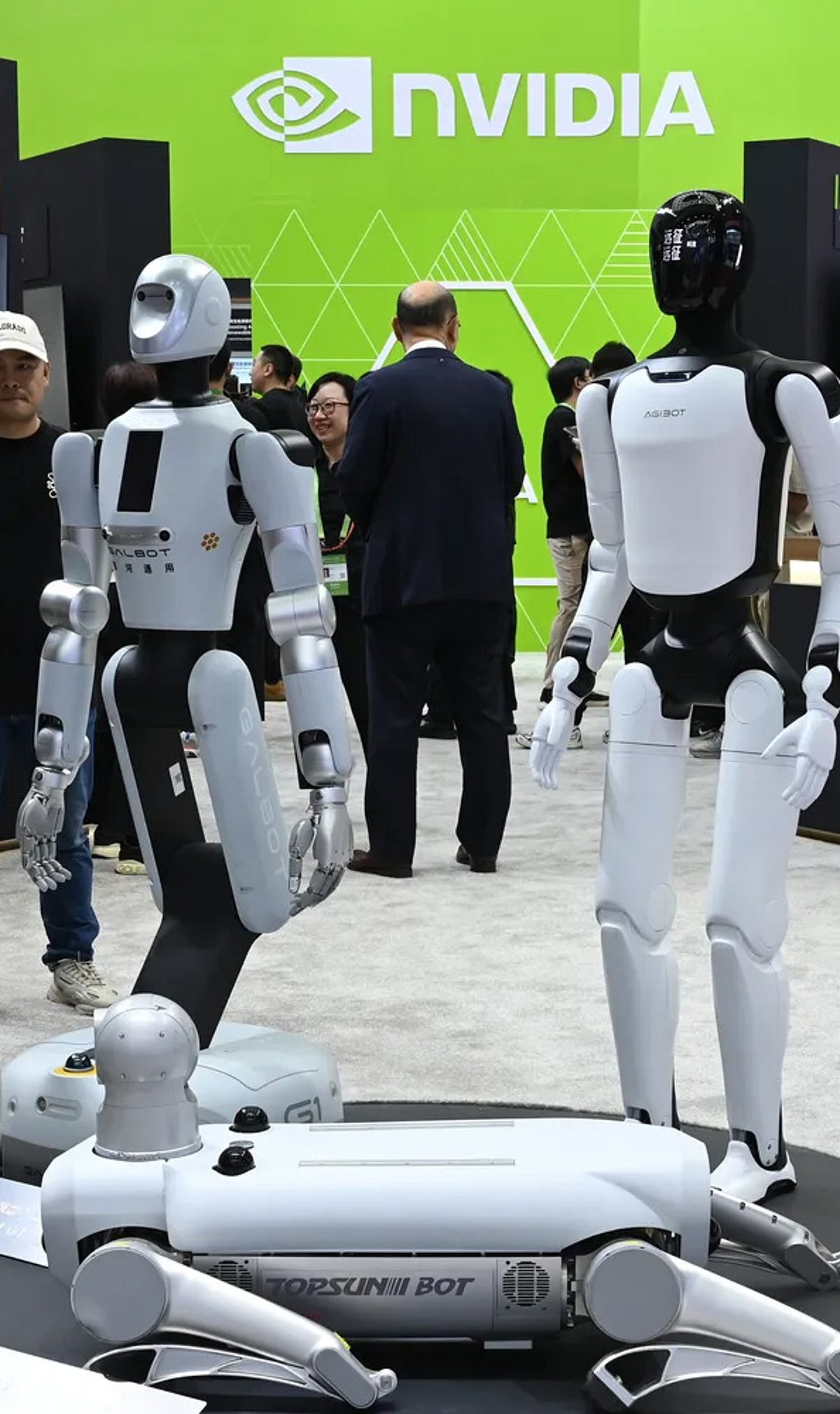
    Nvidia is deepening its commitment to robotics by partnering with leading Japanese companies to develop advanced AI-powered machines. This collaboration targets the creation of next-generation factory robots, AI-powered humanoids, and digital twin simulations that streamline development and testing.

    Japan’s longstanding leadership in robotics, combined with Nvidia’s powerful GPU computing platforms, positions the partnership to drive a new wave of industrial automation. The goal is to improve productivity and efficiency in manufacturing through smarter, AI-driven systems.

    Beyond factories, the technology could extend to healthcare, logistics, and service robots, enabling more intelligent and autonomous operations. The move reflects the global race to invest in intelligent automation, with Nvidia providing the computational backbone for training and deploying robotics AI models.

    This strategic partnership underscores how Japan is strengthening its role in global AI development, leveraging digital twins and advanced simulations to accelerate innovation. The collaboration is expected to have a significant impact on the future of robotics and AI across multiple industries.

  • PowerPlay CEO Iesh Dixit on How AI and Digital Platforms Are Building Smarter Infrastructure in India

    PowerPlay CEO Iesh Dixit on How AI and Digital Platforms Are Building Smarter Infrastructure in India

    India’s construction sector is embracing digital transformation as builders turn to software, artificial intelligence, and data-driven tools to enhance project management. Traditionally reliant on manual processes, the industry is now leveraging smartphones and cloud-based platforms to streamline operations, track progress, and minimize delays.

    In a recent episode of the Analytics Insight Podcast, Iesh Dixit, Co-founder and CEO of PowerPlay, discussed how his company is digitizing construction sites across India. He shared his entrepreneurial journey, the role of AI and predictive analytics, the future of digital twins and IoT, and how technology can help achieve India’s ambitious infrastructure goals.

    From Construction Sites to Startup Founder

    Dixit explained that his childhood was spent on construction sites, where he worked as a site supervisor. After graduation, he was determined to start a company. By 2020, he focused on building something for the construction industry, recognizing a gap in digitization and data centralization. PowerPlay began as bulky software for contractors’ back offices, but the team soon realized they needed to solve problems for on-site users. Today, PowerPlay has over a million users across platforms, all from construction sites.

    Practical Impact of AI in Indian Construction

    According to Dixit, the widespread adoption of smartphones has been a game-changer. He emphasized that construction site workers are not primarily focused on digitization—it’s only 10–20% of their job. Therefore, any digital tool must not interfere with their core tasks. PowerPlay focuses on making adoption seamless so that site teams can continue their main work while benefiting from digital insights.

    Predictive Analytics for Cost and Delay Reduction

    Dixit noted that digitization has broken down silos in construction. Previously, even large companies had projects that rarely communicated with finance except at milestones. Now, predictive analytics can link baseline plans, progress data, material usage, labor, and assets together. This integration helps forecast delays, optimize resource allocation, and improve operational efficiency.

    Digital Twins and IoT

    IoT is essential for collecting accurate data points, while digital twins allow stakeholders to compare planned progress with actual site conditions without visiting the site. Dixit shared that he previously built an AR/VR company and understands the potential, but technology maturity is still a barrier for widespread adoption, particularly among smaller players. Larger firms can afford digital twin implementations now, and they offer significant benefits.

    AI as a Core Enabler for India’s Infrastructure

    PowerPlay’s mission is to support the infrastructure India needs over the next decade, including roughly 90 million homes. Dixit believes AI will help bring new talent into the industry and drive innovation. He called for more entrepreneurs to build solutions that address construction’s unique challenges.

    For the full conversation, listeners can tune into the Analytics Insight Podcast.

  • How Digital Twins Are Transforming Manufacturing Operations

    How Digital Twins Are Transforming Manufacturing Operations

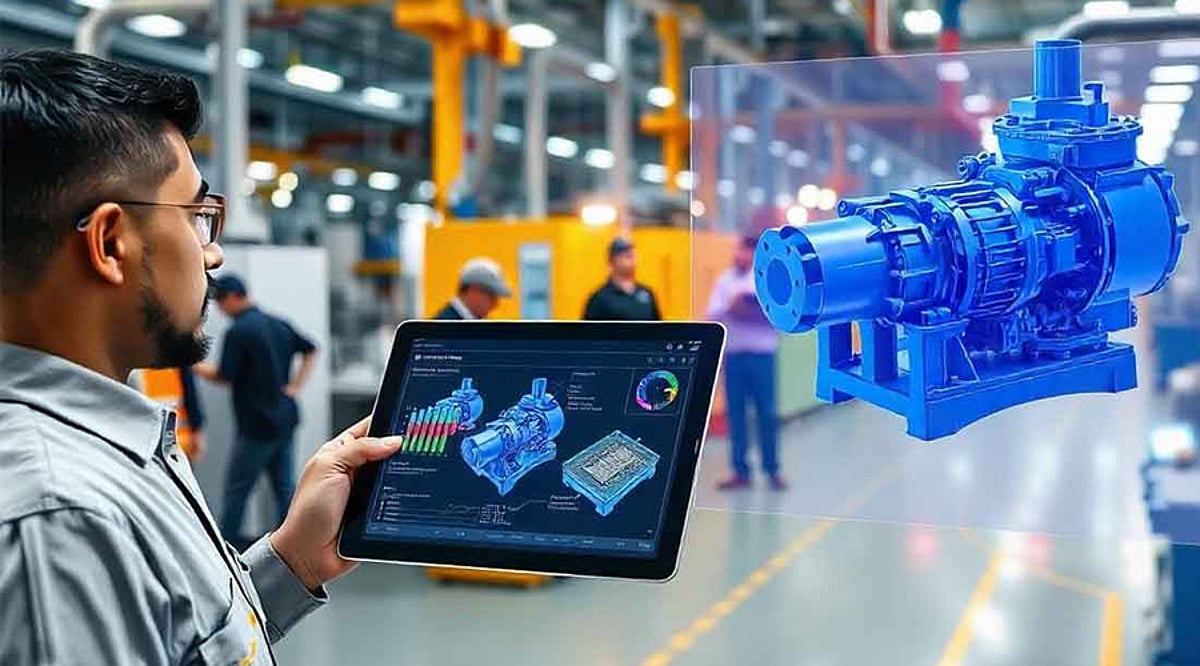
    Digital twins are revolutionizing the manufacturing industry by creating virtual replicas of physical assets, systems, and processes. These dynamic digital models use real-time sensor data to mirror the behavior of machines, production lines, and entire factories, enabling manufacturers to gain unprecedented visibility and control over their operations.

    Real-Time Production Monitoring

    Digital twins create virtual replicas of machines, production lines, and factories using live sensor data. Manufacturers can monitor equipment performance, identify bottlenecks, and track production in real time. This visibility helps managers make informed decisions, improve operational efficiency, reduce downtime, and maintain consistent production quality across manufacturing facilities.

    Predictive Maintenance

    By continuously analyzing equipment data, digital twins detect early signs of wear and potential failures before breakdowns occur. Manufacturers can schedule maintenance only when required instead of following fixed intervals. This approach minimizes unexpected downtime, extends machine lifespan, reduces maintenance costs, and ensures uninterrupted production with improved asset reliability.

    Faster Product Development

    Engineers use digital twins to simulate product designs and manufacturing processes before physical production begins. They can test different materials, identify design flaws, and optimize production methods virtually. This reduces prototype costs, shortens development cycles, accelerates innovation, and enables manufacturers to launch higher-quality products more quickly.

    Improved Quality Control

    Digital twins continuously compare real-time production data with expected performance standards. Any deviation is identified instantly, allowing manufacturers to correct defects before products reach customers. This proactive quality management reduces waste, improves product consistency, enhances customer satisfaction, and lowers the cost of rework and product recalls.

    Smarter Supply Chain Management

    Manufacturers use digital twins to model supply chains and simulate disruptions such as material shortages or transportation delays. These simulations help optimize inventory, improve logistics planning, and identify alternative sourcing strategies. Better visibility across the supply chain strengthens resilience, reduces costs, and ensures smoother production schedules.

    Energy Efficiency and Sustainability

    Digital twins monitor energy consumption across manufacturing operations and identify areas where electricity, water, or raw materials are being wasted. Manufacturers can test energy-saving strategies virtually before implementation. This leads to lower operating costs, reduced carbon emissions, improved resource utilization, and stronger progress toward sustainability goals.

    Better Workforce Safety and Training

    Digital twins simulate factory environments, allowing workers to practice operating equipment and responding to emergencies without real-world risks. Manufacturers can evaluate workplace safety, identify hazardous conditions, and improve training programs. These virtual environments reduce accidents, enhance employee confidence, strengthen compliance, and promote a safer manufacturing culture.

  • 2030 Robotics Forecast: Top Trends Driving the Industry’s Next Decade

    2030 Robotics Forecast: Top Trends Driving the Industry’s Next Decade

    The robotics industry is undergoing a profound transformation. No longer confined to rigid, pre-programmed tasks, modern machines are learning, adapting, and collaborating with humans at an unprecedented pace. Driven by advances in artificial intelligence, sensor technology, and declining hardware costs, the sector is poised for explosive growth. By 2030, experts predict the global robotics market will surpass $110 billion, with some estimates reaching beyond $200 billion. Here are the top ten predictions shaping the future of robotics.

    1. Humanoid Robots Become Mainstream

    Humanoid robots, designed to navigate environments built for people, are moving from research labs into commercial settings. By 2030, these machines will be common in factories, warehouses, hotels, and healthcare facilities. Industry forecasts suggest that at least one million humanoid robots could be deployed between 2026 and 2030, though specialized robots will still outperform them in many specific tasks.

    2. AI Becomes the Brain of Every Robot

    Artificial intelligence is transforming robots from simple tools into intelligent agents. Future robots will understand voice commands, recognize objects, and make real-time decisions. The intelligent robotics market is projected to grow from $13.99 billion in 2025 to $50.33 billion by 2030, a compound annual growth rate (CAGR) of 29.2 percent.

    3. Collaborative Robots Work Alongside Humans

    Collaborative robots, or cobots, are designed to operate safely with people without extensive safety barriers. Their ease of use and lower cost make them accessible to small and mid-sized businesses. With the global stock of industrial robots reaching 4.664 million units in 2024—a 9 percent increase from the prior year—automation continues to drive productivity and address labor shortages.

    4. Smart Factories Achieve Greater Autonomy

    Factories are integrating robots, sensors, cameras, and software into unified systems that can adapt to changing demand, equipment issues, or supply chain disruptions. Digital twins and machine vision enhance quality control. Asia leads this trend, accounting for 66.6 percent of the global industrial robotics market in 2024, fueled by strong manufacturing growth and automation investments.

    5. Healthcare Robots Expand Their Role

    Robots are increasingly assisting in surgery, transporting supplies, disinfecting rooms, and supporting rehabilitation. An aging population and healthcare worker shortages are driving demand. The service robotics market is expected to grow from $26.35 billion in 2025 to $131.9 billion by 2034, at a CAGR of 19.8 percent.

    6. Warehouse Automation Accelerates

    E-commerce growth is pushing warehouses to process orders faster. Autonomous mobile robots, robotic picking systems, and smart inventory tools are becoming essential. The warehouse robotics market is forecast to rise from $6.51 billion in 2025 to $25.41 billion by 2034, a CAGR of 16.8 percent.

    7. Robot Teams Tackle Complex Tasks

    Future workspaces will rely on teams of robots that share information and coordinate tasks. This approach improves resilience—if one robot fails, others can step in. Annual industrial robot installations now exceed 500,000 units, roughly double the rate from a decade ago.

    8. Edge AI Boosts Robot Performance

    Edge AI enables robots to process data locally, reducing latency and enhancing privacy. This is critical for applications in factories, hospitals, and remote locations. The industrial robotics market could reach $60.6 billion by 2030, with edge computing and AI as key drivers.

    9. Digital Twins Speed Up Development

    Digital twin technology creates virtual replicas of machines and production lines, allowing engineers to test and refine robotic systems before deployment. This reduces costs and risks. As AI advances, digital testing will become a standard part of robot development.

    10. Robotics Becomes a Massive Global Industry

    The convergence of smarter AI, cheaper hardware, and labor shortages is fueling demand across manufacturing, healthcare, logistics, agriculture, retail, and construction. The global robotics market is expected to exceed $110 billion by 2030, and with software and service robots included, could top $200 billion. Robotics is set to become one of the most lucrative and influential technology sectors of the decade.

  • Quest Global Named Leader in All Digital Engineering Categories in ISG Provider Lens 2026 Study for US Market

    Quest Global Named Leader in All Digital Engineering Categories in ISG Provider Lens 2026 Study for US Market

    Quest Global, the largest independent pure-play engineering services company, has been recognized as a Leader in every category of the ISG Provider Lens® Digital Engineering Services Midsize Providers 2026 Study for the U.S. market. The categories include Augmented Design and R&D Services, Intelligent Operations and Connected Experiences, and Integrated Platform and Application Services. This acknowledgment underscores the company’s ability to help enterprises accelerate innovation and tackle increasingly complex technology and business challenges.

    The ISG Provider Lens® research series is one of the most widely referenced analyst assessments used by enterprises to evaluate technology and engineering service providers. Companies named as Leaders are recognized for their comprehensive capabilities, strong market presence, competitive positioning, and ability to guide customers through evolving business and technology requirements.

    Shirish Kulkarni, Senior Lead Analyst at ISG, commented on Quest Global’s positioning: “Quest Global is leveraging its core strength in deep ER&D and systems engineering capabilities, which continue to resonate with global OEMs seeking outcome-led innovation. By sharpening its digital software and managed services capabilities around this engineering foundation, Quest Global is well positioned to support customers as they navigate increasingly complex transformation journeys.”

    The company’s leadership positions reflect its ability to help organizations bridge the growing convergence of engineering, software, data, and artificial intelligence. The assessment highlights strengths in engineering-led innovation, supported by expertise in AI-driven engineering, Model-Based Systems Engineering (MBSE), digital twins, and virtual validation frameworks. With capabilities spanning silicon-to-system engineering and high-fidelity virtual prototyping, Quest Global helps customers shorten development cycles, improve operational performance, and build scalable digital ecosystems.

    Rob Vatter, Executive President of Quest Global, said: “Engineering is no longer just a function of execution; it is increasingly the force that shapes innovation, resilience, and competitive advantage across industries. We believe this recognition reflects Quest Global’s ability to help customers navigate complex engineering challenges while advancing digital adoption, intelligent operations, and the development of next-generation products. As companies invest more deeply in AI, connectivity, and platform-led transformation, the real differentiator will be how effectively these technologies are engineered into scalable, meaningful business outcomes. That remains our focus.”

    According to the study, Quest Global’s differentiated position is driven by its deep engineering heritage, domain expertise, and ability to deliver integrated engineering solutions across the product lifecycle. The report highlights capabilities in AI-augmented engineering, intelligent operations, connected experiences, and integrated platform engineering, helping enterprises transform ideas into market-ready products and scalable digital solutions.

    To access and download the full report, click here.

    About Quest Global

    Quest Global is the largest independent pure-play engineering services company, operating in over 20 countries with more than 104 global delivery centers and 23,000+ employees. For over 25 years, the company has solved complex engineering problems across industries including Aerospace & Defence, Automotive, Energy, Hi-Tech, MedTech & Healthcare, Rail, and Semiconductor. They combine technology, industry expertise, and diverse talents to tackle critical challenges faster and more effectively.