

Tag: distributed systems

  • Enterprise AI Beyond Model Size: Vivek Kumkar’s Blueprint for Cost-Efficient Multimodal AI at AWS

    Enterprise AI Beyond Model Size: Vivek Kumkar’s Blueprint for Cost-Efficient Multimodal AI at AWS

    As enterprise organizations scale their artificial intelligence deployments, the industry conversation is rapidly pivoting from raw model size to infrastructure efficiency and operational costs. At Amazon Web Services (AWS), Senior AI Engineering Leader Vivek Kumkar guides cross-functional teams of applied scientists and engineers building high-throughput data extraction services. His work addresses a central question facing modern cloud architecture: how to deliver enterprise-grade AI workloads reliably while maintaining sustainable unit economics.

    Decoupling Inference Fleets from Model Training

    Kumkar’s approach to scaling enterprise AI builds directly upon his background in high-availability distributed storage systems. Earlier in his tenure at AWS, he led core engineering initiatives for AWS Elastic Block Store (EBS) snapshot services, authoring U.S. Patent 11,262,918 B1 along with multiple pending patents in distributed data infrastructure.

    Applying these distributed systems principles to multimodal AI, Kumkar advocates an architectural model that separates model training environments from production inference fleets. By utilizing workload-aware, distributed networks backed by domain-specific hardware acceleration and intelligent edge caching, enterprise systems can route processing tasks dynamically while preserving precision.

    “Designing for enterprise AI requires applying classic distributed systems principles,” Kumkar noted during a cloud architecture panel. “Automated recovery, strict consistency boundaries, and efficient hardware utilization are what allow multi-region cloud services to absorb unpredictable demand without degradation.”

    Real-World Cost Bounds and Latency Limits

    While research institutions continue pushing the boundaries of parameter counts, Kumkar emphasizes that commercial viability in production hinges on unit economics and latency control. Processing multi-layered inputs, combining complex text, high-resolution visual data, and continuous audio, creates severe computational bottlenecks across cloud infrastructure fleets.

    “Adding parameters to a model does not automatically solve real-world performance issues,” Kumkar explained. “In enterprise environments, if an infrastructure fleet cannot process complex visual data and text with low latency and predictable cost, the system fails commercial requirements regardless of model size.”

    Contributions to Research and Technical Communities

    Beyond scaling enterprise cloud services, Kumkar’s influence extends across the broader engineering ecosystem. His technical contributions led to his elevation as an IEEE Senior Member, reflecting ongoing leadership within the systems community. Kumkar routinely evaluates peer-reviewed research for international AI and healthcare conferences and serves on judging panels for global engineering competitions, such as Major League Hacking (MLH) Build with AI and United Hacks V7. As enterprise adoption shifts from small-scale testing to core operational reliance, Kumkar’s focus on infrastructure economics provides a practical framework for cloud deployment.

    Credit: Vivek Kumkar
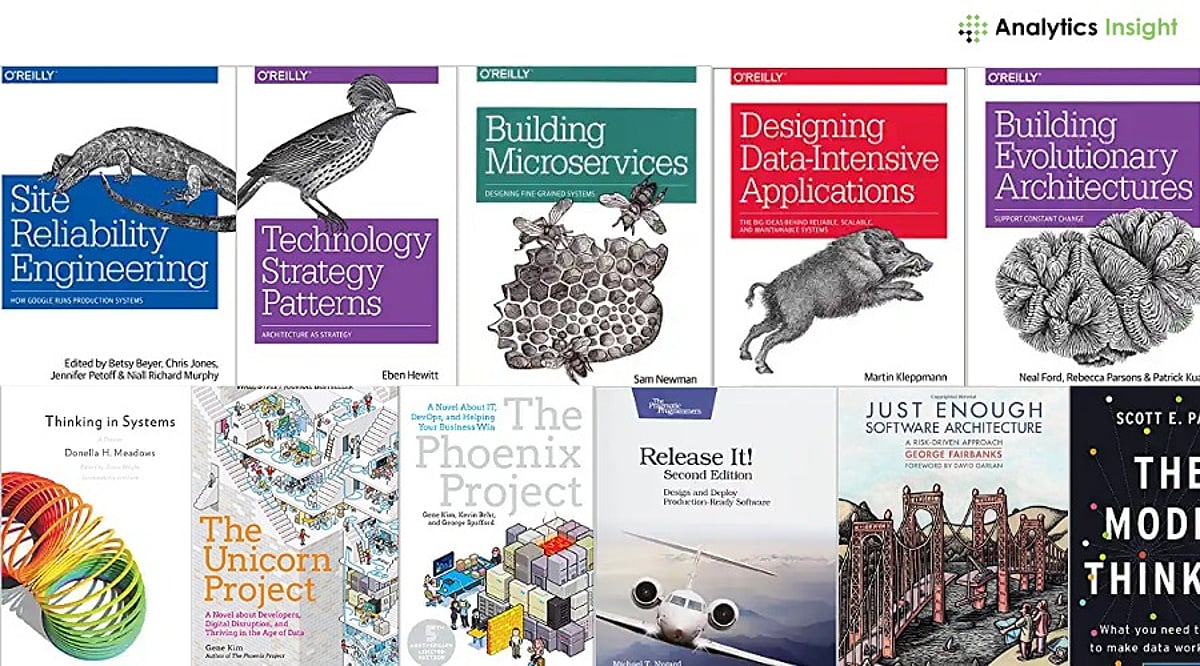
  • Software Architects and Tech Leads: 7 Essential Books for 2026

    Software Architects and Tech Leads: 7 Essential Books for 2026

    Software architecture isn’t just about designing systems anymore. Today’s architects are expected to make decisions that affect scalability, security, cloud adoption, AI integration, and even business outcomes. As companies continue to modernize their technology stacks, experienced software architects and tech leads are becoming harder to find. According to the Stack Overflow Developer Survey 2025, more than 84% of developers already use or plan to use AI tools in their workflows, making strong architectural thinking more valuable than ever. If you’re planning to step into an architecture role or simply want to become a better technical leader, these seven books deserve a place on your reading list.

    1. Designing Data-Intensive Applications

    Martin Kleppmann’s classic explains distributed systems, databases, replication, and scalability in an understandable way. Essential for cloud-native and large-scale data systems.

    2. Fundamentals of Software Architecture

    Mark Richards and Neal Ford cover architecture patterns, trade-offs, and decision-making for developers transitioning to leadership roles.

    3. Software Architecture: The Hard Parts

    Neal Ford, Mark Richards, Pramod Sadalage, and Zhamak Dehghani explore real-world trade-offs in distributed transactions, event-driven systems, and evolutionary architecture.

    4. Clean Architecture

    Robert C. Martin emphasizes separating business logic from dependencies to build maintainable, long-lasting software.

    5. Software Engineering at Google

    Titus Winters, Tom Manshreck, and Hyrum Wright share Google’s engineering culture insights on code reviews, testing, documentation, and technical debt—applicable anywhere.

    6. Building Microservices (Second Edition)

    Sam Newman provides practical guidance on microservices boundaries, API management, and cloud-first architecture.

    7. Head First Software Architecture

    Raju Gandhi and Mark Richards offer a visually engaging introduction to architecture fundamentals for aspiring architects.

    Looking Ahead

    The role of a technical leader today involves having good judgment, communicating ideas well, and knowing system design. Technologies will change, but the principles in these books will remain valid for years.

    FAQs

    Which book is best for beginners? Head First Software Architecture is excellent for transitioning developers.

    Why should software architects read books in 2026? To stay current with AI, cloud, and distributed systems best practices.

    Is Clean Architecture still relevant? Yes, its principles of maintainability and separation of concerns endure.

    Which book is best for distributed systems? Designing Data-Intensive Applications is the go-to resource.

    Can these books help developers become tech leads? Absolutely, they build technical knowledge and leadership skills.