Tag: Django

  • Essential Django Libraries for Python Developers in 2026

    Essential Django Libraries for Python Developers in 2026

    Why Django Libraries Matter

    Django’s greatest strength is its ecosystem. Rather than reinventing the wheel, developers can leverage mature, well-tested packages that have been deployed in thousands of production environments. This approach improves maintainability, reduces costs, and allows teams to focus on business logic instead of building common features from scratch.

    Top Django Libraries for Python Developers

    Build Modern APIs with Django REST Framework

    Django REST Framework (DRF) is the industry standard for creating RESTful web services. It provides serialization, authentication, permissions, pagination, and API versioning out of the box, making it ideal for websites, mobile apps, and SaaS applications.

    Improve Performance with Asynchronous Processing

    Many applications need to send emails, upload files, or generate reports without blocking the user. Celery, combined with Redis or RabbitMQ, handles background tasks efficiently and scales well in production environments.

    Simplify Authentication and User Management

    Building authentication from scratch can compromise security and take significant time. django-allauth offers a robust solution with email confirmation, password recovery, and social logins via Google, GitHub, and more.

    Speed Up Development and Debugging

    Tools like django-debug-toolbar provide detailed insights into SQL queries, request handling, caching, and template rendering. django-crispy-forms helps create responsive, professional forms with minimal code.

    Prepare Your Applications for Production

    Deploying safely is crucial. Whitenoise simplifies static file management, while django-environ keeps sensitive credentials out of the codebase. For API projects, drf-spectacular automatically generates OpenAPI documentation.

    Choosing the Right Django Libraries

    Not every project needs all libraries. A simple portfolio site might only need authentication and forms, while an enterprise SaaS solution benefits from asynchronous processing, API documentation, filtering, and real-time communication. Always evaluate documentation and compatibility with your Django version before adding a library.

    FAQs

    What are Django libraries?

    Django libraries are third-party packages that extend Django’s built-in functionality, adding features like authentication, REST APIs, background task processing, debugging tools, filtering, and real-time communication.

    Which Django library is best for building REST APIs?

    Django REST Framework (DRF) is the most widely used library for building RESTful APIs, offering serializers, authentication, permissions, pagination, and browsable APIs.

    Why should Python developers use third-party Django packages?

    Using trusted packages reduces development time, improves code reliability, follows industry best practices, and lets developers focus on application logic instead of reinventing common functionality.

    Which Django library is best for authentication?

    django-allauth is a popular choice, supporting user registration, email verification, password recovery, multi-factor authentication, and social logins.

    How do Django Channels improve web applications?

    Django Channels enables real-time communication via WebSockets, commonly used for chat apps, live notifications, multiplayer games, and collaborative tools.

  • Why Major Companies Choose Python for Their Tech Stack

    Why Major Companies Choose Python for Their Tech Stack

    Python has become a core technology for many global companies. Its simple design, powerful frameworks, and rich ecosystem help businesses build scalable applications, AI systems, automation tools, and reliable backend services.

    Key Takeaways:

    • Python supports products that serve millions and even billions of users.
    • Companies use Python for AI, automation, backend development, and data engineering.
    • Frameworks like Django and FastAPI help developers build reliable applications faster.

    Python has become one of the most popular programming languages in the software industry. It has clean syntax, easy readability, and a huge collection of libraries that help developers build software faster. These qualities have made Python a trusted option for startups as well as global technology companies. Today, many famous businesses use Python as an important part of their technology stack, even though most large organizations combine several programming languages for different tasks.

    Google Uses Python Across Many Business Areas

    Google has relied on Python for many years. The company uses it for internal tools, automation, artificial intelligence, backend services, and cloud infrastructure. Python allows engineers to create software quickly while keeping projects easy to maintain. The language also works well with Google’s machine learning technologies, including TensorFlow, which has become one of the world’s most popular AI frameworks. Although Google also uses languages such as C++, Java, and Go, Python remains an important part of many engineering teams as it supports rapid development and reliable automation.

    Instagram Built a Massive Platform With Django

    Instagram stands as one of the biggest success stories for Python. The social media platform built its backend on Django, a web framework written in Python. Even after the platform reached billions of users, Django continued to support high traffic with excellent performance. Python gave Instagram developers a fast way to release new features without slowing product development. Strong database support through PostgreSQL also helped the platform manage huge amounts of user data. Instagram continues to prove that Python can support one of the world’s largest social networking services.

    Netflix Depends on Python for Automation and Machine Learning

    Netflix uses Python in several important business areas. The company relies on it for machine learning, recommendation systems, automation, backend tools, and cloud operations. Recommendation algorithms help viewers discover movies and television shows that match personal interests, and Python plays an important role in this process. Frameworks such as Flask and FastAPI support internal services, while Jupyter notebooks assist data scientists during research and model development. Python also works with PyTorch, one of the leading machine learning frameworks used by Netflix.

    Spotify, Uber, and Dropbox Continue to Trust Python

    Using Python, Spotify provides backend services, recommendation algorithms, and reporting as well as workflow management. In addition to Python, the company uses Luigi and Apache Airflow for data processing and workflow scheduling. Python allows Spotify to manage a huge amount of listener information while relying on the system for personalized music recommendations. Uber has deployed Python in its technical framework as well for the backend microservices, machine learning, data engineering, and automated processes. The application of Python frameworks such as Tornado and Flask makes it possible to operate numerous backend services. Dropbox started being based on Python at its inception when it developed its desktop application and backend system. The company later designed tools such as PyAnnotate as well as contributed to the development of MyPy, which improves static typing of Python-based software. Despite its significant size, Dropbox keeps using Python today.

    Reddit, Pinterest, Quora, and Lyft Show Python Can Scale

    Reddit became one of the earliest examples of a large website built with Python. The platform originally moved its backend to Python and still depends on the language for many services today. This long history proves that Python can support millions of active users and large online communities. Pinterest also relies on Python for recommendation systems, backend APIs, and machine learning. The company uses Django and Flask to support different services across its platform. Python helps Pinterest process huge collections of images and user activity. Quora selected Python for backend services, ranking systems, and APIs. Django and Tornado allow the platform to deliver fast responses while handling large volumes of questions and answers. Lyft uses Python for backend development, data pipelines, and machine learning. The language supports many internal systems that improve ride matching, operational efficiency, and data analysis.

    Amazon and Meta Also Depend on Python

    Amazon uses Python for automation, cloud services, machine learning, and internal development tools. Amazon Web Services offers Boto3, a Python software development kit that allows developers to work with cloud resources through code. Python also supports services connected with Amazon SageMaker, which helps businesses build and deploy machine learning models. Meta also uses Python across artificial intelligence research, automation, and software development. PyTorch, one of the world’s most popular machine learning frameworks, came from Meta and remains a major part of AI development across many industries.

    Python Fits Modern Technology Needs

    A Python technology stack refers to a combination of technologies and tools that are particularly effective in running web applications. The commonly used technologies in the Python technology stack include Django, FastAPI, or Flask, which manage backend development. In addition, the technology stack is supplemented with PostgreSQL or MySQL for data management, and Redis for better performance through caching. RabbitMQ and Kafka take care of processing messages between the different services of a web application. Elasticsearch enhances the search capabilities of the application, while Celery serves for background task management. The deployment of applications is simplified by Docker and Kubernetes, while the processes of software delivery and continuous integration are ensured by GitHub Actions and Jenkins. In addition, the technology stack encompasses Airflow, Pandas, TensorFlow, and PyTorch.

    Python Continues to Lead the Industry

    When it comes to artificial intelligence, machine learning, and similar tasks, Python is one of the leading programming languages. Corporations often use Python in combination with such languages as Go, Java, Rust, and C++ to accomplish their tasks more effectively and gain maximum performance. Even with those languages in use, Python stays in the circle of attention given the increased productivity of developers, faster development time, and having one of the most extensive software environments available today. The success of such companies as Google, Instagram, Netflix, Spotify, Uber, Dropbox, Reddit, Pinterest, Quora, Lyft, Amazon, and Meta demonstrates how useful the technology might be for products designed for millions and even billions of individuals all over the globe. It is thanks to flexibility, mature frameworks, and powerful libraries that Python is one of the best programming languages for software development today.

  • Best Backend Frameworks for 2026: FastAPI, Django, NestJS, and More

    Best Backend Frameworks for 2026: FastAPI, Django, NestJS, and More

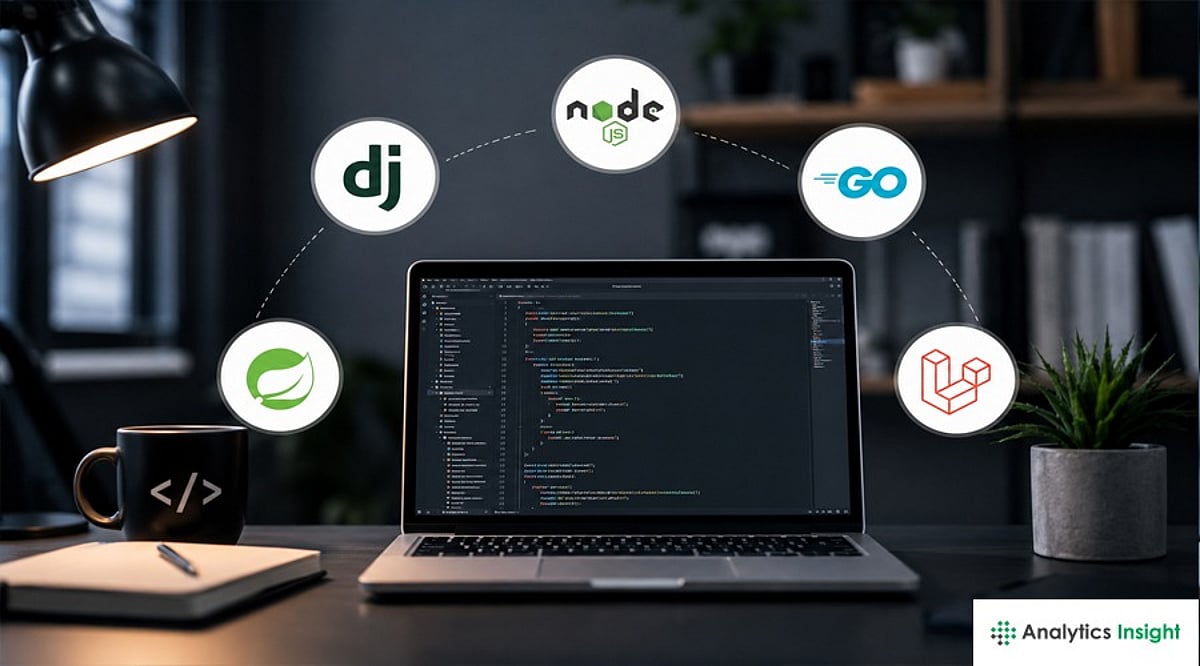
    Backend frameworks continue evolving alongside AI, cloud-native computing, and edge applications. Understanding the strengths of FastAPI, Django, NestJS, Express.js, Spring Boot, Laravel, Go, and ASP.NET Core helps developers choose the right technology for modern, scalable, and enterprise-ready backend systems.

    AI-driven workloads, edge computing, and container-native deployment have pulled backend development in different directions at once. With more than 50 actively maintained backend frameworks in circulation, here’s where developer attention is genuinely concentrated in 2026.

    FastAPI Has Become Python’s Fastest-Growing Framework

    FastAPI has overtaken Django in adoption among Python web developers, now used by an estimated 38-40% of them, driven largely by its performance and native fit for AI-integrated backends. Built on Starlette and Pydantic, FastAPI handles roughly 30,000-40,000 requests per second compared to Django’s 8,000-12,000, and its async-first, ASGI-based architecture processes concurrent I/O-bound requests far more efficiently. For teams building API-first products, inference services, or anything that touches machine learning, FastAPI has become the default starting point.

    Django and Laravel Remain the Fast-Delivery Standard

    Despite FastAPI’s momentum, Django hasn’t lost relevance: its batteries-included philosophy, built-in admin panel, ORM, and mature security defaults still make it the stronger choice for full-stack applications, content-heavy platforms, and anything needing an admin interface out of the box. Laravel occupies a similar role in the PHP ecosystem, prized for its Eloquent ORM and MVC structure that lets small teams ship production applications quickly without excessive boilerplate.

    Node.js Splits Between Minimalism and Structure

    Express.js is still the most popular Node.js framework, loved for building minimalistic backends. On the other hand, NestJS represents an approach based on Angular architecture with modules, decorators, and dependency injection. New players like Hono are gaining popularity for edge computing deployments, growing from approximately 1,000 weekly downloads in 2022 to 20 million in 2026.

    Enterprise and Compliance Still Favor Established Players

    For regulated industries such as banking, insurance, and healthcare, framework choice also serves as a compliance decision. Spring Boot and ASP.NET Core continue to dominate financial services due to mature security tooling and strong vendor support. NestJS is gaining ground here, particularly in open banking implementations where API-first design and faster developer velocity are becoming as important as enterprise pedigree.

    Go Is Becoming the Default for Cloud-Native Microservices

    With businesses investing more in containerized and distributed systems, frameworks built in Go—such as Gin and Echo—offer low memory consumption, high speed, and good concurrency support. These make them ideal choices for microservices, IoT backends, and fast-paced cloud systems. While Go does not directly compete with Django and NestJS in full-stack development, it excels when performance under heavy loads is critical.

    Choosing the right backend framework improves developer productivity, simplifies maintenance, enhances security, and ensures applications remain reliable as business requirements evolve.

  • Best Backend Frameworks for Modern Web Development in 2025

    Best Backend Frameworks for Modern Web Development in 2025

    Choosing the right backend framework is critical for building scalable, secure, and maintainable applications. Below is an overview of the most popular frameworks across different programming languages, each offering unique strengths for modern development.

    Django

    A high-level Python framework that emphasizes rapid development and clean, pragmatic design. It comes with built-in security features, an ORM (Object-Relational Mapping) for database interaction, authentication support, and proven scalability for enterprise applications and content-driven websites worldwide.

    Express.js

    A lightweight and flexible Node.js framework that simplifies building web applications and APIs. It offers powerful routing, middleware integration, and excellent performance for scalable RESTful services, making it a go-to choice for fast development.

    Spring Boot

    Built on Java, Spring Boot streamlines enterprise application development with auto-configuration, dependency injection, and robust support for microservices. It provides production-ready capabilities, making it ideal for large-scale business applications.

    Laravel

    Laravel is a PHP framework known for its elegant syntax and developer-friendly tools. It includes built-in authentication, an MVC architecture, database migrations, and a rich ecosystem for building secure and maintainable web applications.

    ASP.NET Core

    Microsoft’s cross-platform framework delivers high performance, cloud integration, and advanced security features. With built-in dependency injection and support for a wide range of operating systems, it is well-suited for scalable enterprise development.

    Ruby on Rails

    A Ruby framework that follows convention-over-configuration principles, enabling rapid development with minimal setup. It offers robust database management, testing support, and a strong emphasis on maintainable code for startups and established companies alike.

    FastAPI

    A modern Python framework designed for building APIs with high performance. It supports asynchronous processing, automatic interactive documentation (OpenAPI), type validation, and efficient handling of concurrent requests—ideal for scalable backend services.

    NestJS

    A TypeScript-based Node.js framework that brings modular architecture and enterprise-grade structure to backend development. It leverages decorators, dependency injection, and strong typing to create maintainable and testable applications and APIs.

    Phoenix

    Built on Elixir, Phoenix is designed for fault-tolerant, real-time applications with high concurrency. It delivers exceptional performance under heavy traffic, making it perfect for systems that require reliability and low latency.

    Each framework has its strengths, and the best choice depends on your project’s requirements, team expertise, and scalability needs.