Tag: Dogecoin

  • Dogecoin Price Analysis: Can $0.07 Support Hold or Will Bears Push Lower?

    Dogecoin Price Analysis: Can $0.07 Support Hold or Will Bears Push Lower?

    Dogecoin is currently trading near $0.072 after once again testing the critical $0.07 support level. Buyers defended this zone on Friday, but the subsequent rebound has yet to break through the nearest resistance barrier. The next direction for the meme coin hinges on whether it can hold above $0.07.

    Dogecoin Tests Breakout After Double Bottom

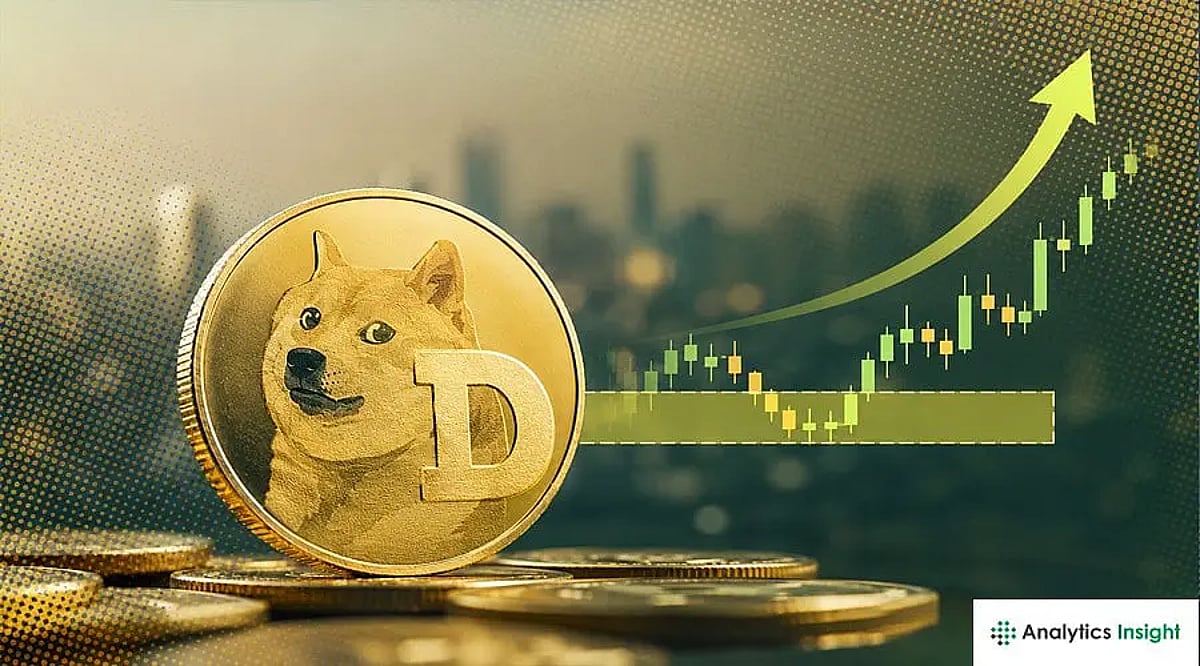
    Dogecoin recently climbed above a descending trendline that had capped gains since May. Trader Tardigrade linked this move to a double-bottom pattern near $0.07. The setup formed after the price touched the same support level twice and bounced back each time. This structure contrasts with the price action seen near the May peak, where two highs appeared before sellers took control. The current chart shows two lows at the same level, which may indicate weakening selling pressure. However, buyers must protect the breakout area to give the pattern stronger credibility.

    Near-term resistance is between $0.075 and $0.079. Dogecoin reached $0.0753 on July 14, but buyers failed to hold that gain. The price then fell for two sessions before bouncing from $0.07. A close above $0.079 could open the door to $0.084, with the larger test zone between $0.09 and $0.10.

    $0.07 Support Controls the Next Price Move

    The $0.07 level sits within a broader demand zone stretching from $0.05 to $0.08. Dogecoin has traded around this area during previous market bottoms, and buyers have returned near the same range during the latest decline. Holding this zone does not confirm a full reversal. DOGE still needs higher weekly lows, stronger buying volume, and a break above $0.10. If that happens, traders may target $0.15 and $0.20, both of which were active trading levels during earlier rallies.

    The downside scenario would strengthen if Dogecoin closes below $0.07 and fails to recover. Sellers could then target $0.067, followed by $0.065. A wider decline could pull the price deeper into the $0.05 to $0.08 band, weakening the early recovery setup and extending the current range.

    Liquidation Data Shows Limited Pressure on Bears

    CoinGlass recorded no Dogecoin short liquidations during a 12-hour period. Short liquidations occur when rising prices force bearish traders to close leveraged positions. The zero reading indicates that the rebound did not generate enough pressure to trigger forced exits during that window. Meanwhile, long traders faced losses: about $27,000 in long liquidations over 12 hours, and across a broader window, $153.82k in long liquidations versus $28.38k in short liquidations.

    The narrow gap between the two sides aligns with Dogecoin’s limited daily price moves. DOGE traded about 0.96% higher near $0.072 at the time of the data. The absence of short liquidations may also suggest that bearish traders reduced risk after the earlier drop. A wider sell-off in chip stocks also affected crypto markets after a brief rally tied to softer inflation data. Dogecoin gave back part of its advance as traders reduced exposure to risk assets.

    For now, $0.07 remains the key support, while $0.075 to $0.079 forms the first recovery barrier. The coming sessions will determine whether buyers can defend the line or if bears will extend the selloff toward $0.065.
  • Top 10 Cryptocurrencies Under $1 to Watch in July 2026

    Top 10 Cryptocurrencies Under $1 to Watch in July 2026

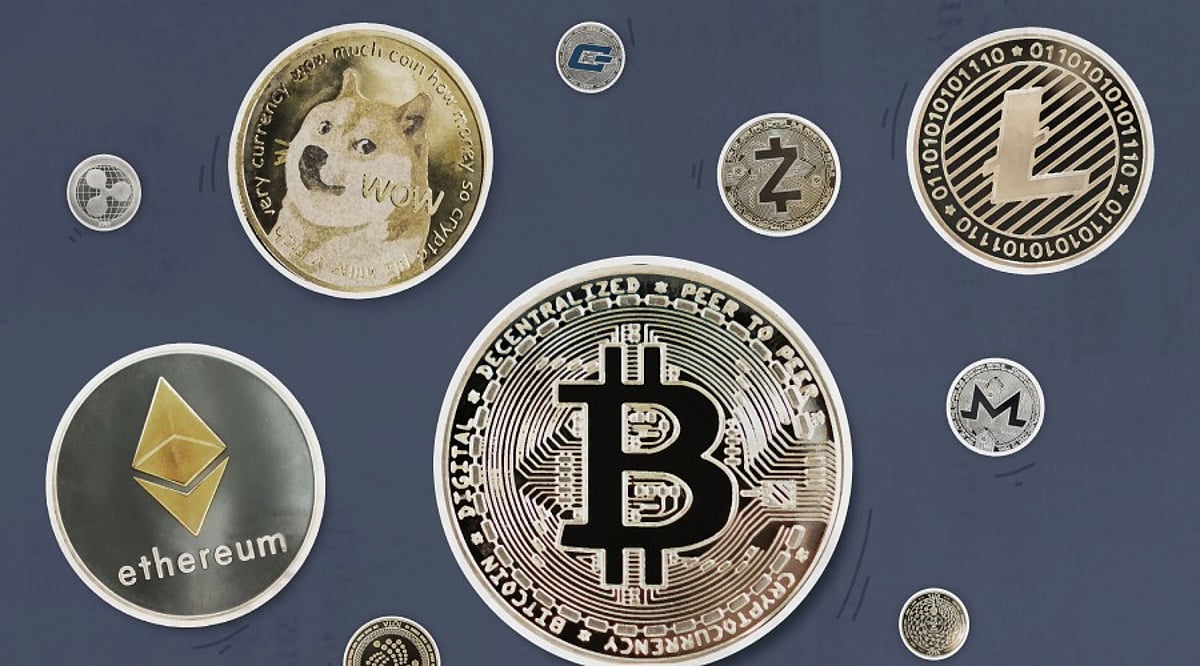
    Many investors assume that a cryptocurrency priced below $1 is automatically a bargain. However, a low token price does not always indicate value—supply and market cap matter more. Smart investors look beyond the price tag, focusing on the project’s technology, real-world use, development roadmap, and team. In July 2026, several affordable projects stand out for their strong fundamentals, enterprise adoption, AI integration, DeFi growth, and long-term potential. Below are ten cryptocurrencies under $1 worth considering this month.

    Stellar (XLM) – Reliable in Global Payments

    Stellar has built a solid reputation by focusing on faster, cheaper international payments. In July 2026, XLM trades between $0.20 and $0.40, making it accessible. The network enables near-instant cross-border transfers at low cost. Banks and payment providers continue to explore Stellar, and the project is also expanding into asset tokenization. Its proven track record makes it one of the most dependable cryptocurrencies below $1.

    Hedera (HBAR) – Trust from Big Business

    Hedera’s governance council includes major global corporations, adding a layer of credibility. HBAR remains under $1, offering fast transactions, low energy consumption, and enhanced security—ideal for enterprise blockchain applications.

    VeChain (VET) – Blockchain for Real-World Business

    VeChain solves practical supply chain issues: tracking products, verifying authenticity, streamlining logistics, and monitoring carbon footprints. With partnerships across industries and a token price under $0.10, VET is a strong pick for those who value real-world utility.

    Algorand (ALGO) – Strong Technology, Quiet Growth

    Algorand rarely makes headlines but remains a top-tier blockchain. It offers fast, low-cost transactions and reliable performance. Governments and organizations are exploring Algorand for tokenized assets and digital financial systems. For fundamentals-focused investors, ALGO is an attractive option under $1.

    Sei (SEI) – Purpose-Built for Trading

    Sei is designed specifically for decentralized trading and financial applications. Its specialized architecture enables faster transactions for exchanges and DeFi projects. While still under $1, SEI carries higher risk but targets a rapidly growing sector, offering meaningful long-term potential.

    Arbitrum (ARB) – Scaling Ethereum

    Arbitrum solves Ethereum’s high gas fees by processing transactions faster and cheaper. ARB trades below $1, and developers continue to build on its Layer-2 network. Despite short-term volatility from token unlocks, Arbitrum’s long-term prospects remain strong as one of the largest Layer-2 ecosystems.

    Optimism (OP) – Ethereum’s Next Layer

    Optimism shares a similar scaling goal with Arbitrum but follows its own “Superchain” vision, connecting multiple blockchains into one ecosystem. It has drawn attention through its relationship with Coinbase’s Base network. Strong developer activity suggests Optimism will play a bigger role as blockchain adoption grows.

    Dogecoin (DOGE) – Enduring Popularity

    Dogecoin started as a joke but has survived multiple market cycles. In July 2026, DOGE trades near $0.07. Its loyal community, excellent liquidity, and broad exchange support keep it relevant, even though its price often moves with sentiment rather than technical progress.

    eCash (XEC) – High Risk, High Potential

    eCash appeals to investors with its extremely low price—fractions of a cent. The project focuses on digital payments and continues active development. However, the payment sector is highly competitive, so success is not guaranteed. eCash suits investors who understand the higher risk of smaller projects.

    JasmyCoin (JASMY) – Tapping the AI Economy

    JasmyCoin focuses on secure data ownership and IoT, allowing users to control their personal information. As connected devices and AI grow, the demand for secure data management may rise. JASMY faces tough competition, but its AI and data connection gives it an interesting market position.

    Final Thoughts

    Investing in sub-$1 cryptocurrencies should not be based solely on price. The best opportunities are projects with solid technology, ongoing development, and real-world adaptability. In July 2026, Stellar, Hedera, VeChain, Algorand, Arbitrum, and Optimism stand out for their established ecosystems. Sei, Dogecoin, eCash, and JasmyCoin offer higher potential but also greater risk. Key trends this year include AI, real-world asset tokenization, DeFi, enterprise blockchain, and Ethereum Layer-2 networks. Investors who focus on these trends rather than the cheapest tokens will be better positioned.

    FAQs

    1. Is a cryptocurrency under $1 automatically a good investment?
    No. A low token price doesn’t mean it’s undervalued. Always consider market cap, utility, adoption, and development.

    2. Which sectors look strongest in July 2026?
    AI, real-world asset tokenization, decentralized finance (DeFi), enterprise blockchain, and Ethereum Layer-2 ecosystems.

    3. Which coins are considered more established?
    Stellar (XLM), Hedera (HBAR), VeChain (VET), Algorand (ALGO), Arbitrum (ARB), and Optimism (OP).

    4. Which cryptocurrencies carry higher risk but higher potential?
    Sei (SEI), Dogecoin (DOGE), eCash (XEC), and JasmyCoin (JASMY) may offer greater upside but also increased volatility.

    5. What should investors evaluate before buying any cryptocurrency?
    Research the project’s technology, use cases, partnerships, tokenomics, development activity, roadmap, and overall market trends rather than focusing only on the token price.

  • Hyperliquid HYPE Surpasses Dogecoin in Market Cap: Investors Shift Focus to Utility-Driven Cryptos

    Hyperliquid HYPE Surpasses Dogecoin in Market Cap: Investors Shift Focus to Utility-Driven Cryptos

    Hyperliquid has achieved a significant milestone in the cryptocurrency market. Its native token, HYPE, has overtaken Dogecoin (DOGE) in market capitalization, entering the top 10 cryptocurrencies by market value. This development underscores a broader trend: investors are increasingly valuing projects with real revenue and strong fundamentals over those driven solely by community hype.

    According to recent data, Hyperliquid’s market cap stands at approximately $16 billion, slightly ahead of Dogecoin’s $15.9 billion. While the gap is narrow and rankings may fluctuate, the shift signals growing confidence in Hyperliquid’s business model.

    Strong Price Growth and Trading Activity

    HYPE has experienced remarkable price appreciation. Trading between $67 and $69, with an all-time high near $76.70, the token has surged over 1,600% from its lowest point. Daily trading volumes range from $480 million to over $1.1 billion, reflecting robust investor interest and liquidity.

    Revenue Generation Sets Hyperliquid Apart

    Unlike many cryptocurrencies that rely on market sentiment, Hyperliquid generates substantial revenue through its decentralized perpetual futures exchange. In the first quarter of 2026, the platform reported approximately $215 million in protocol revenue. The second quarter had already surpassed $104 million before its end, placing Hyperliquid among the top revenue-generating DeFi projects.

    This revenue stream provides a solid financial foundation, reducing dependence on speculative trading.

    Token Buybacks Create Sustained Demand

    A key feature of Hyperliquid is its token buyback mechanism. The platform allocates 99% of protocol fees (excluding certain builder and unit fees) to an Assistance Fund, which purchases HYPE tokens from the open market. This process creates consistent demand, directly linking platform success to token value—similar to corporate share buybacks.

    Institutional Interest Grows

    Traditional financial institutions are taking notice. The launch of the 21Shares Hyperliquid ETF (THYP) on Nasdaq and the Bitwise Hyperliquid ETF (BHYP) on the New York Stock Exchange has made HYPE accessible to a broader investor base. Some products also offer staking rewards, adding further appeal. Institutional support brings larger capital pools and enhances market confidence.

    Why Dogecoin Faces Challenges

    Dogecoin remains a well-known cryptocurrency with a loyal community and strong brand. However, it lacks protocol revenue, has an inflationary supply, and does not feature buybacks linking network activity to token demand. Its value largely depends on community support and market sentiment.

    In contrast, Hyperliquid combines exchange services, governance, staking, and the growing HyperEVM ecosystem, offering multiple reasons for investors to hold the token beyond speculation.

    Future Growth and Risks

    Hyperliquid continues to expand with developments like HyperEVM for decentralized applications, HIP-3 permissionless perpetual markets, and synthetic asset trading including pre-IPO contracts. These innovations could drive further network activity.

    However, risks remain. Future contributor token unlocks may increase circulating supply and cause selling pressure. Regulatory changes could impact decentralized derivatives platforms. Additionally, the current valuation relies on sustained trading activity and revenue growth; any slowdown could affect investor confidence.

    A New Direction for Crypto

    Hyperliquid’s ascent past Dogecoin is not a mere statistical anomaly. It represents a market shift toward projects with real revenue, active ecosystems, and long-term value propositions. While Dogecoin’s cultural impact is undeniable, HYPE’s rise suggests that utility-based cryptocurrencies may lead the next wave of digital asset development.

    FAQs

    1. Why did HYPE overtake Dogecoin? HYPE’s strong revenue generation, buyback mechanism, and growing ecosystem boosted investor confidence and market value.

    2. What makes Hyperliquid different from Dogecoin? Hyperliquid generates protocol revenue, supports staking, governance, and token buybacks, while Dogecoin primarily relies on community support and market sentiment.

    3. How do HYPE buybacks work? Most protocol fees are used to buy HYPE tokens from the open market, creating consistent demand.

    4. Why are institutions interested in Hyperliquid? The launch of HYPE-focused ETFs and the platform’s revenue-generating business model have attracted traditional investors.

    5. What risks should investors consider? Potential token unlocks, regulatory changes, and any decline in trading activity or protocol revenue could impact HYPE’s future performance.

  • Dogecoin Shows Resilience Amid Price Crash as Ecosystem Development and Payment Expansion Drive Long-Term Growth

    Dogecoin Shows Resilience Amid Price Crash as Ecosystem Development and Payment Expansion Drive Long-Term Growth

    Dogecoin remains one of the cryptocurrency market’s most resilient digital assets despite suffering one of its largest price declines. An investor who bought $10,000 worth of DOGE near its all-time high of about $0.74 would now hold roughly $1,000 after the sharp correction. Even so, More Crypto Online noted that Dogecoin has outlasted many newer cryptocurrencies with more advanced technical features.

    Community Support and Network Strength Continue to Drive Dogecoin

    Dogecoin launched in 2013 as a parody cryptocurrency. Nevertheless, the project has remained active for more than a decade and continues to rank among the largest cryptocurrencies by market capitalization. Meanwhile, the project maintains one of crypto’s most active grassroots communities. Community members organize charitable initiatives, support online creators through tipping, and keep Dogecoin visible across social media platforms.

    Moreover, Dogecoin offers relatively low transaction fees and faster confirmation times than Bitcoin. Those features continue to support small payments and digital tipping across different platforms. Besides that, nearly every major cryptocurrency exchange lists DOGE. Strong liquidity allows investors to buy and sell the token more easily than many smaller cryptocurrencies with limited trading activity.

    Security also remains one of Dogecoin’s key strengths. The network uses merged mining with Litecoin, allowing both blockchains to share mining power while improving protection against certain attacks.

    Furthermore, public support has kept Dogecoin in focus during several market cycles. Elon Musk has mentioned the cryptocurrency many times, while discussions surrounding possible payment integration into X continue attracting renewed attention.

    Development Efforts Expand the Dogecoin Ecosystem

    Dogecoin developers, the Dogecoin Foundation, and community groups continue building new tools designed to increase real-world utility across the ecosystem. One proposed initiative introduces a dual-track model. The proposal keeps Dogecoin on Proof of Work while adding Layer 2 community staking features inspired by concepts previously discussed by Vitalik Buterin.

    At the same time, developers continue building DogeOS. The Layer 2 network aims to support smarter applications and faster payment capabilities.

    Likewise, Dogecoin Fractal seeks to introduce real-world asset tokenization through a dedicated sidechain connected to the Dogecoin ecosystem. Core infrastructure also continues improving. Development teams keep enhancing LibDogecoin and GigaWallet to improve efficiency and reduce transaction confirmation times.

    Payment Expansion and Ecosystem Growth Continue

    House of Doge recently began trading on Nasdaq under the HODO ticker after completing its public merger. The company also raised more than $225 million to support future ecosystem development. Additionally, House of Doge partnered with MoonPay to launch ÐOGE Pay. The payment platform targets more than 6,000 merchants worldwide as part of its expansion strategy.

    Meanwhile, community developers continue improving the MyDoge Wallet. Future updates are expected to introduce decentralized finance features alongside AI-powered assistance.

    Finally, several independent developer groups continue exploring solar-powered mining projects. These initiatives seek to improve environmental sustainability while supporting Dogecoin’s expanding ecosystem.

    What’s Next?

    Dogecoin has remained a leading cryptocurrency despite a steep decline from its all-time high. Strong community support, broad exchange availability, merged mining with Litecoin, and ongoing projects such as DogeOS, ÐOGE Pay, and infrastructure upgrades continue expanding the network’s utility and ecosystem.

  • Dogecoin Gains 2% as $1.2 Billion Exits Binance Memecoin Market Amid Cooling Inflation

    Dogecoin Gains 2% as $1.2 Billion Exits Binance Memecoin Market Amid Cooling Inflation

    Dogecoin (DOGE) has shown renewed strength, posting a modest price increase even as $1.2 billion in memecoins flowed out of Binance. The gain comes after lower-than-expected U.S. inflation data lifted sentiment across the cryptocurrency market, though traders remain cautious about the beleaguered memecoin sector.

    Binance Records $1.2 Billion in Memecoin Outflows

    Data from Binance reveals steady selling pressure on memecoins since Bitcoin’s peak in October 2025. Rather than a single sell-off, the market has experienced months of continuous exits, pushing billions out of popular meme-based cryptocurrencies. Dogecoin has not been immune: from its October 2025 high near $0.26, the coin has shed almost 73% of its value.

    The downturn has hit nearly every major memecoin. Shiba Inu has fallen roughly 69%, Pepe has dropped about 78%, and Bonk has plunged nearly 86% from its all-time high. These figures underscore how quickly investors flee highly speculative assets when confidence wanes.

    Inflation Data Provides a Tailwind

    The recent boost for Dogecoin followed the release of U.S. inflation figures that came in below economist expectations. Lower inflation often raises hopes that interest rates may not stay elevated for long, encouraging traders to return to riskier assets like cryptocurrencies. This shift in mood helped Bitcoin recover, and Dogecoin followed suit with a gain of just over 2%.

    Dogecoin Holds Key Support Level

    After months of pressure, Dogecoin has managed to stay above the $0.07 level multiple times. Each time the price approached this area, buyers stepped in to prevent a deeper decline. Market experts view this support as a sign that demand still exists despite prolonged selling. However, analysts caution that a single small rally does not confirm a full market turnaround.

    Investor Caution Persists

    Despite Dogecoin’s slight recovery, the overall mood around memecoins remains cautious. The $1.2 billion outflow from Binance indicates many investors still prefer safer assets. Memecoins now account for only about 3.7% of the total altcoin market, down sharply from the previous bull run when they attracted massive retail interest. Many traders have shifted focus to Bitcoin, Ethereum, and blockchain projects with tangible products or services.

    Strong Trading Volume and Whale Activity

    Nevertheless, Dogecoin continues to attract substantial daily trading volume—over $550 million—and holds a market cap above $11.5 billion, making it one of the largest cryptocurrencies. Earlier this month, nearly 4 billion DOGE tokens (worth around $300 million) were transferred from Binance to an unknown wallet, fueling speculation that investors are moving tokens into private storage.

    Why This Matters

    Dogecoin’s resilience amid a massive memecoin exodus positions it as the market’s primary risk gauge. Its ability to rally on cooling inflation while competitors flounder signals that interest hasn’t completely evaporated despite a punishing bear cycle.

    What Could Happen Next

    Dogecoin’s next direction depends on several factors: Bitcoin must maintain its strength, inflation data must remain supportive, and buyers must return with stronger demand. If these conditions align, DOGE could extend its recovery.

  • DOGE Price Prediction: Will Dogecoin Defend the Critical $0.070 Support Level?

    DOGE Price Prediction: Will Dogecoin Defend the Critical $0.070 Support Level?

    Dogecoin is teetering near the critical $0.070 support level, currently trading around $0.072. This price zone has emerged as a decisive battleground for the meme coin’s near-term direction. A successful defense could trigger a recovery toward $0.075–$0.080, while a breakdown may expose lower supports at $0.064–$0.065 or even $0.058.

    Why the $0.070 Level Matters

    The $0.070 support has historically acted as a strong zone where buyers step in to halt declines. If buyers continue to defend this level, market confidence could return, potentially encouraging additional buying pressure and a move higher.

    Current Market Data

    Dogecoin is trading around $0.072 with a market capitalization of approximately $12.3 billion and daily trading volume near $450 million. Despite the recent 2% decline in the last 24 hours, trading activity remains healthy.

    What Happens If Support Holds?

    A successful defense of $0.070 could lift Dogecoin toward the $0.075–$0.080 range. A move above $0.080 would improve the short-term technical outlook and could open the path toward $0.085–$0.090, boosting overall market sentiment.

    What Happens If Support Breaks?

    If DOGE falls below $0.070, selling pressure could intensify. The next critical support lies between $0.064 and $0.065. Under severe conditions, a drop toward $0.058 is possible, though this remains the less likely scenario at this time.

    Recent Developments

    Dogecoin’s open interest has declined as retail participation slows, reflecting cautious market sentiment. Meanwhile, the House of Doge initiative continues to build payment partnerships aimed at boosting real-world usage, but these have yet to impact the price significantly.

    Outlook for the Coming Days

    The coming trading sessions will be pivotal. Maintaining the $0.070 level could ignite a rally toward $0.075–$0.080, while a clear break below shifts focus to $0.064–$0.065 and potentially $0.058. Traders are closely watching this zone for the next major move.

    FAQs

    1. Why is the $0.070 level important for Dogecoin?

    It represents a major historical support zone where buyers have previously stepped in, stopping downward price trends and acting as a foundation for potential market recovery.

    2. What is Dogecoin’s current price?

    Dogecoin is currently trading around $0.072, slightly above its multi-month support level after a period of short-term selling pressure.

    3. What happens if DOGE stays above $0.070?

    Sustaining this level builds strong immediate demand, giving bulls momentum to target resistance between $0.075 and $0.080.

    4. What happens if DOGE falls below $0.070?

    Breaking below this level increases seller dominance, likely triggering a drop to initial support at $0.064, and potentially $0.058 under heavy panic.

    5. Why has Dogecoin weakened recently?

    The recent decline stems from lower retail demand, declining open interest in futures markets, and a broader cautious shift in crypto market sentiment.

  • Dogecoin Holds Critical Support Level as Traders Await Next Breakout Signal

    Dogecoin Holds Critical Support Level as Traders Await Next Breakout Signal

    Dogecoin is currently trading at a key support zone, with buyers and sellers locked in a tug-of-war that will determine whether the meme coin rallies or slides further. Instead of a sharp decline, DOGE has pulled back into a familiar safety area, giving bulls a clear line to defend. However, the market lacks decisive breakout momentum, leaving traders focused on volume and price action for confirmation.

    Support Zone Keeps Buyers Engaged

    Dogecoin remains above a known support level, allowing buyers to stay active despite recent cooling. The pullback has not triggered widespread selling, keeping the price within a range that traders continue to monitor closely. Without a clear breakout, the market is debating whether this range represents accumulation or a temporary pause before another decline.

    Dogecoin has historically recorded sharp moves after consolidation periods, drawing attention to the current setup. Yet momentum has not delivered the clear signal many participants are waiting for.

    Volume Remains the Critical Factor

    Despite holding support, Dogecoin risks weakening momentum if trading activity does not pick up. Meme-based cryptocurrencies rely on sustained market participation, making fresh volume essential for any recovery attempt. Without stronger buying interest, a rebound from support could quickly lose steam. Traders are treating the current structure as a level-driven setup rather than confirmation of a sustained rally.

    Traders Focus on Verifiable Market Signals

    Beyond price action, market participants are evaluating developments through measurable activity rather than headline-driven speculation. Traders are monitoring confirmed filings, integrations, regulatory updates, wallet activity, and other verifiable data before adjusting their outlook. The broader crypto market is responding to multiple catalysts—exchange listings, ETF flows, legal developments, protocol upgrades, and changing liquidity conditions—rather than a single dominant narrative.

    Each confirmed development provides another data point instead of guaranteeing an immediate price reaction. Traders are watching whether follow-up information supports the initial signal or weakens the narrative.

    What’s Next?

    Dogecoin continues to trade above a key support level as traders monitor resistance, volume, and momentum for confirmation of the next move. While the current range has not produced a breakout, verified market signals and price action remain the primary indicators to watch in the coming sessions.

  • BlockDAG’s 100% Bonus and Exchange Launch Attract Analyst Attention as Dogecoin and MemeCore Falter

    BlockDAG’s 100% Bonus and Exchange Launch Attract Analyst Attention as Dogecoin and MemeCore Falter

    Meme coins are struggling to hold ground this week while one project keeps pulling attention elsewhere. The Dogecoin price stays pinned beneath its major weekly moving averages, even after regulators classified it as a digital commodity. MemeCore has fared worse, dropping 16.92% in a day to $1.1964 and sliding into oversold territory below $1.3774.

    BlockDAG tells a different story. Pre-registration just opened for BlockDAG X, its upcoming exchange with spot and futures trading arriving within 14 days. BDAG AI’s launch added roughly $500 million to the project’s valuation almost overnight, and its casino has already processed close to $150 million in wagers. Priced at $0.00000033 against a $0.03 buyback and backed by a 100% bonus, BlockDAG (BDAG) is why people keep calling it the next crypto to explode.

    Dogecoin Defends Key Range Limits

    The Dogecoin price faces ongoing pressure, consistently trading beneath its major weekly moving averages as selling momentum persists. Despite these immediate chart struggles, the underlying ecosystem is showing steady signs of development. Recent regulatory decisions officially classified Dogecoin as a digital commodity, which has provided valuable market clarity.

    This milestone, paired with rising active wallet counts, has kept the broader Dogecoin price relatively anchored amid broader consolidation. Ongoing projects like DogeOS and the anticipation of institutional trading products continue to bolster user confidence. While technical indicators suggest the market remains in a bearish range for now, these growing network fundamentals are expected to support the Dogecoin price once buying interest eventually returns.

    MemeCore (M) Slips Into Oversold Territory

    The cryptocurrency MemeCore (M) is currently trading at $1.1964 following a sharp 16.92% daily decline. Technical charts indicate that the token remains below its key short- and long-term moving averages, reflecting intensifying bearish momentum.

    Market indicators show that MemeCore (M) has entered oversold territory, with sellers dominating the intraday action. Analysts expect the price to remain constrained within a volatile range between $1.029 and $1.3774 over the next few sessions. Without positive ecosystem news or a decisive break above the immediate resistance level of $1.3107, the likelihood of a sustained upward move remains low. Traders are advised to exercise caution as MemeCore (M) tests these lower support areas.

    BlockDAG’s 100% Bonus Has The Whole Market Talking

    Sharp price moves rarely trace back to a single cause. They tend to follow a cluster of developments landing close together, and BlockDAG is currently building exactly that kind of cluster. Pre-registration opened this week for BlockDAG X, the project’s upcoming exchange, with spot trading, futures, and dedicated mobile apps expected within 14 days.

    Around the same time, BDAG AI went live, adding an estimated $500 million to the project’s valuation almost overnight. The BlockDAG Casino adds further weight, having already surpassed 13,000 users and processed close to $150 million in wagers within its first month alone.

    None of that activity happens on a network struggling to keep up. Every casino transaction runs on BlockDAG’s DAG-based architecture, which supports high-speed payments and smart contract execution on one system rather than splitting the work across separate layers, a combination many legacy chains still cannot match. An upgrade targeting 7,000 transactions per second is also rolling out in the coming days, built to keep pace with rising demand across gaming, payments, lending, and stablecoins.

    Timing ties all of it together. Despite these many developments landing at once, entry remains remarkably low. BDAG sits at $0.00000033, the buyback price stands at $0.03, and the code EARLY adds a full 100% extra BDAG to every purchase. The return potential between entry and buyback already looks substantial, and it climbs considerably higher once the bonus tokens are included. A new exchange, a live AI launch, a scaling network, and a record bonus arriving together is precisely the setup that tends to precede a strong move, and it is why many now call BlockDAG the next crypto to explode.

    Conclusion

    The Dogecoin price remains stuck below key moving averages despite its new digital commodity status, while MemeCore sits deep in oversold territory after a 16.92% drop, testing support near $1.029. Neither shows strong signs of reversing soon.

    BlockDAG keeps stacking reasons to pay attention. BlockDAG X pre-registration is live, BDAG AI added $500 million to its valuation, and the casino has crossed 13,000 users with nearly $150 million in wagers. A coming upgrade targets 7,000 transactions per second, and EARLY still delivers its 100% bonus at $0.00000033 against a $0.03 buyback. That combination is exactly why BlockDAG keeps coming up as the next crypto to explode. Sometimes the loudest signal is just consistent building.

    Presale: https://purchase.blockdag.network
    Website: https://blockdag.network
    Telegram: https://t.me/blockDAGnetworkOfficial
    Discord: https://discord.gg/Q7BxghMVyu

    Disclaimer: Analytics Insight does not provide financial advice or guidance on cryptocurrencies and stocks. Also note that the cryptocurrencies mentioned/listed on the website could potentially be risky, i.e. designed to induce you to invest financial resources that may be lost forever and not be recoverable once investments are made. This article is provided for informational purposes and does not constitute investment advice. You are responsible for conducting your own research (DYOR) before making any investments. Read more about the financial risks involved here.

  • Dogecoin Faces Key Support at $0.072 as ETF Inflows Stall and Selling Pressure Mounts

    Dogecoin Faces Key Support at $0.072 as ETF Inflows Stall and Selling Pressure Mounts

    Dogecoin traded near $0.0729 on July 12, 2026, after falling nearly 2% in the past 24 hours, underperforming a slightly weaker crypto market. Trading volume rose to about $462 million as sellers increased activity around the weekend.

    The decline comes as traders reduce exposure to riskier altcoins and shift more capital toward Bitcoin. DOGE now sits close to the $0.072 support zone. A hold above that level could lead to consolidation or a breakout above $0.08, while a lower move may expose the $0.070 area.

    Dogecoin ETFs Record a Week Without Inflows

    U.S. Dogecoin exchange-traded funds recorded zero net inflows on every trading day from July 6 through July 10. The flat week followed negative net flows in the prior period, showing that investors have not added fresh capital to the products.

    Cumulative net inflows into Dogecoin ETFs stand at $11.77 million. The products hold about $10.23 million in net assets, equal to roughly 0.09% of Dogecoin’s market value. The limited size shows that ETF activity has not created strong demand for DOGE.

    The funds linked to Bitwise, Grayscale and 21Shares have shifted between positive, negative and flat weekly flows during 2026. The latest reading points to a “wait-and-see” approach as investors look for a new market or product catalyst. Meanwhile, 21Shares plans to use FTSE digital asset index data for its Dogecoin ETF pricing benchmark.

    Bitcoin Dominance Pressures Altcoin Prices

    The wider market has moved toward Bitcoin as sentiment stays in the “Fear” range. Bitcoin dominance reached 58.43%, showing that the largest cryptocurrency controls a growing share of total market value.

    The Altcoin Season Index stood at 52, indicating mixed demand for smaller tokens. Dogecoin often reacts sharply when traders cut speculative exposure. The current decline follows that wider pattern rather than a Dogecoin-specific event. Rising Bitcoin dominance tends to place pressure on meme coins as traders favor assets with deeper liquidity.

    At the same time, the Fear and Greed Index has moved above earlier extreme fear readings. The index recently reached 32, but it has not held above the neutral level of 50 since November. That reading shows an exit from panic without a clear return of strong buying demand.

    Technical Data Puts $0.072 Support in Focus

    DOGE moved below its seven-day simple moving average at $0.0744 and its 30-day average at $0.0786. Trading volume rose as the price fell, confirming higher market activity during the sell-off. The relative strength index reached 36, placing DOGE near oversold conditions.

    The lower RSI could support a short-term bounce, but Dogecoin needs to reclaim $0.074 to reduce selling pressure. A move above the seven-day average would place the next focus on $0.0786. Failure to hold $0.072 could send the price toward the next support near $0.070.

    ETF flows may also shape short-term sentiment. Positive inflows would show renewed demand for regulated Dogecoin products. Until buying returns, price action, trading volume and Bitcoin dominance will provide the main signals for DOGE’s next move.

  • Dogecoin Consolidates Near $0.074 as Bulls Target $0.081 Resistance Breakout

    Dogecoin Consolidates Near $0.074 as Bulls Target $0.081 Resistance Breakout

    Dogecoin traded near $0.074 on July 11, 2026, holding a narrow range as market participants watch for a breakout above key resistance levels. The token posted a small daily gain, but volatility remains low after months of subdued trading.

    Market focus has shifted to the $0.070–$0.073 support zone. A steady hold above this area could sustain buyer interest, while a drop below it might trigger fresh selling pressure. DOGE currently hovers close to $0.074, a level that has become a critical short-term floor.

    Traders note that a move above $0.078 would improve sentiment, with $0.081 emerging as the next major resistance. A break above $0.081 could open the door to $0.10 and beyond. Conversely, a fall below $0.070 would weaken the setup, potentially targeting $0.060 next.

    Derivatives activity has added mixed signals. Analyst CW observed that several short positions on BitMEX closed recently, yet DOGE did not rally. This lack of upward reaction indicates weak spot demand and low conviction among buyers. Open interest also fell after the July 8 sell-off, and trading volume remains low, suggesting many traders are waiting for a clearer price signal.

    Immediate resistance sits around $0.075–$0.076, with a secondary barrier near $0.078–$0.079. DOGE must clear these zones before any broader recovery can gain momentum.

    Technical analysts are tracking possible reversal patterns. Celal Kucuker noted that Dogecoin appears to be forming a double-bottom pattern near long-term support. Although this pattern often signals fading selling pressure, confirmation requires a clean move above resistance. Kucuker also pointed to a rounding-bottom formation on the daily chart and an inverted head-and-shoulders pattern. For the latter, a break above the neckline near $0.095–$0.100 would confirm the setup, with a potential target around $0.118–$0.120.

    Another analyst, Trader Tardigrade, compared the current two-week chart to past cycles in 2017 and 2021, when DOGE traded in a long range before a stronger move. Cryptollica noted that Dogecoin’s RSI is near the low 30s, close to oversold territory. A move above $0.081 would indicate better buyer control, while failure at resistance could keep the token stuck in its current range.

    Overall, Dogecoin remains in a consolidation phase. Bulls are defending the $0.070–$0.073 support zone, and a breakout above $0.081 could signal a stronger recovery. Until then, the token is likely to trade within a narrow band.