
Tag: DOOM

  • DOOM: The Dark Ages Limited-Edition Atlan Statue – Pre-Orders Open for Only 500 Pieces

    DOOM: The Dark Ages Limited-Edition Atlan Statue – Pre-Orders Open for Only 500 Pieces

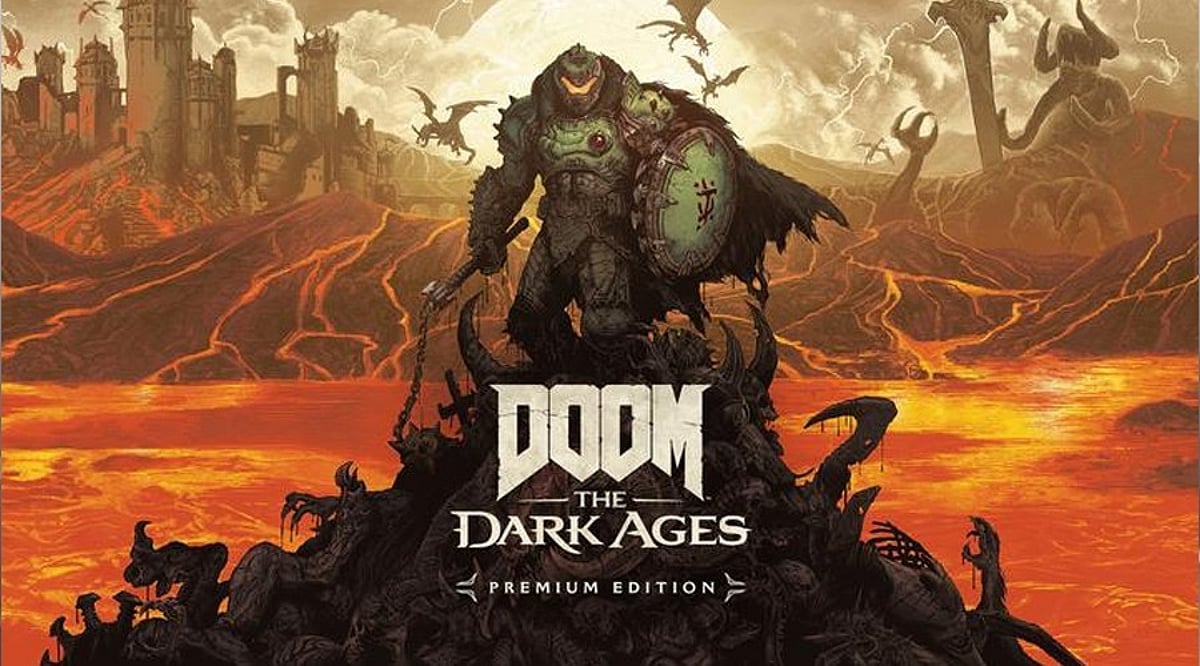
    Bethesda has unveiled a stunning limited-edition collectible for DOOM: The Dark Ages fans: a detailed Atlan statue. Only 500 numbered pieces will be produced, each priced at $179.99. Pre-orders are now live via the Bethesda Gear Store, with shipments expected in November 2026 within the United States.

    The Atlan statue commemorates the first anniversary of DOOM: The Dark Ages, which released this past May. The game recently received the Revelation DLC on July 7, adding hours of new content. Now, the physical statue gives players a tangible piece of the franchise’s iconic battle mech.

    Stunning Detail and Authenticity

    Measuring 10.6 inches and weighing 3 pounds (about 1.36 kg), the resin statue captures every element of the Atlan mech seen in the game, including its horned helmet and shoulder-mounted cannons. Each piece comes with a certificate of authenticity, making it a must-have for serious collectors.

    Bethesda shared a teaser on social media, highlighting the mech’s imposing design. The tweet reads: “Hell sent their Titans. The Night Sentinels forged their own. @DOOM #Atlan.” Fans can view the official announcement on X (formerly Twitter).

    Please note: Orders containing pre-sale items will ship only when all items are ready. Collectors are advised to act quickly, as the limited run of 500 units is expected to sell out fast.

    For more gaming news and collectible updates, stay tuned to our coverage.

  • 10 Legendary Video Games That Revolutionized the Industry Forever

    10 Legendary Video Games That Revolutionized the Industry Forever

    From the simple yet revolutionary Pong to the cultural phenomenon Fortnite, certain video games have transcended mere entertainment to reshape the entire gaming landscape. These titles introduced groundbreaking mechanics, spawned new genres, and inspired countless developers. Here are 10 games that didn’t just sell millions—they changed how we play, connect, and imagine virtual worlds.

    1. Pong (1972)

    Before realistic graphics or sprawling open worlds, Pong proved that video games could be fun and mainstream. Its simple table-tennis premise became an arcade sensation and laid the foundation for the modern gaming industry.

    2. Super Mario Bros. (1985)

    With memorable characters, precise controls, and brilliantly designed levels, Super Mario Bros. revitalized console gaming. It set a gold standard for platformers and showed how engaging gameplay could captivate a global audience.

    3. The Legend of Zelda (1986)

    Unlike linear level-based games of its time, The Legend of Zelda encouraged exploration. It introduced secret areas, puzzles, and a vast overworld, pioneering the action-adventure genre and inspiring future open-world designs.

    4. Doom (1993)

    Doom revolutionized first-person shooters (FPS) with fast-paced combat, multiplayer deathmatches, and a vibrant modding community. It set the template for PC shooters and remains a benchmark for the genre.

    5. Super Mario 64 (1996)

    Mario’s leap to 3D was risky but transformative. Super Mario 64 introduced smooth movement, a dynamic camera, and open-ended levels, establishing standards for 3D platformers that still influence games today.

    6. Grand Theft Auto III (2001)

    Grand Theft Auto III redefined open-world gaming. Players could freely navigate a city, take on missions at will, or create their own adventures. Its legacy is visible in countless action-adventure titles that followed.

    7. World of Warcraft (2004)

    For millions, World of Warcraft was more than a game—it was a community. It popularized the massively multiplayer online role-playing game (MMORPG) genre and shaped the live-service model through constant expansions and updates.

    8. Minecraft (2011)

    Minecraft gave players unprecedented creative freedom. Instead of dictating a story, it provided tools to build, explore, and survive in infinite blocky worlds. It inspired user-generated content, educational uses, and a new sandbox genre.

    9. Pokémon Red & Blue (1996)

    These games turned creature-catching into a global phenomenon. Trading and battling via link cables made gaming social, and the franchise became one of the biggest entertainment properties ever.

    10. Fortnite (2017)

    Fortnite transformed how games are supported post-launch. Frequent updates, crossovers, live concerts, and cross-platform play turned it into an evolving digital platform, defining the live-service era.

    Final Takeaway

    These games achieved far more than commercial success. They introduced ideas that reshaped the industry—from technological breakthroughs to innovative gameplay and online communities. As gaming moves toward AI, cloud streaming, and virtual reality, these classics remain the foundation on which the future is built.

  • Microsoft Layoffs Drive Bethesda to Prioritize Major Franchises Over New IPs

    Microsoft Layoffs Drive Bethesda to Prioritize Major Franchises Over New IPs

    Microsoft has announced another significant round of job cuts, impacting approximately 3,200 employees across the company. The gaming division is expected to be among the hardest hit, with reports indicating that many acquired studios may be sold or returned to independent status.

    While Bethesda has not been singled out in the layoffs, its parent company ZeniMax Media is reportedly undergoing a strategic shift. According to Bloomberg reporter Jason Schreier, ZeniMax is restructuring toward a “franchise-first model,” concentrating resources on its most successful game series.

    Schreier noted that Bethesda will likely focus on franchises like Fallout, The Elder Scrolls, Quake, Wolfenstein, and DOOM. These titles already boast large, loyal communities and a history of strong sales, offering a more stable revenue stream during uncertain times.

    This marks a departure from Bethesda’s historical approach. Prior to Microsoft’s acquisition in 2021, the studio balanced new IPs with established franchises—Starfield being a prime example of that creative freedom. Now, original projects may take a backseat as the company prioritizes expansion of existing worlds.

    Neither Microsoft nor Bethesda has officially confirmed these plans, but the reports underscore a broader industry trend: major publishers increasingly lean on proven franchises to weather financial pressures. For Xbox, trusted brands appear to be the guiding strategy as the company adapts to a new business reality.