
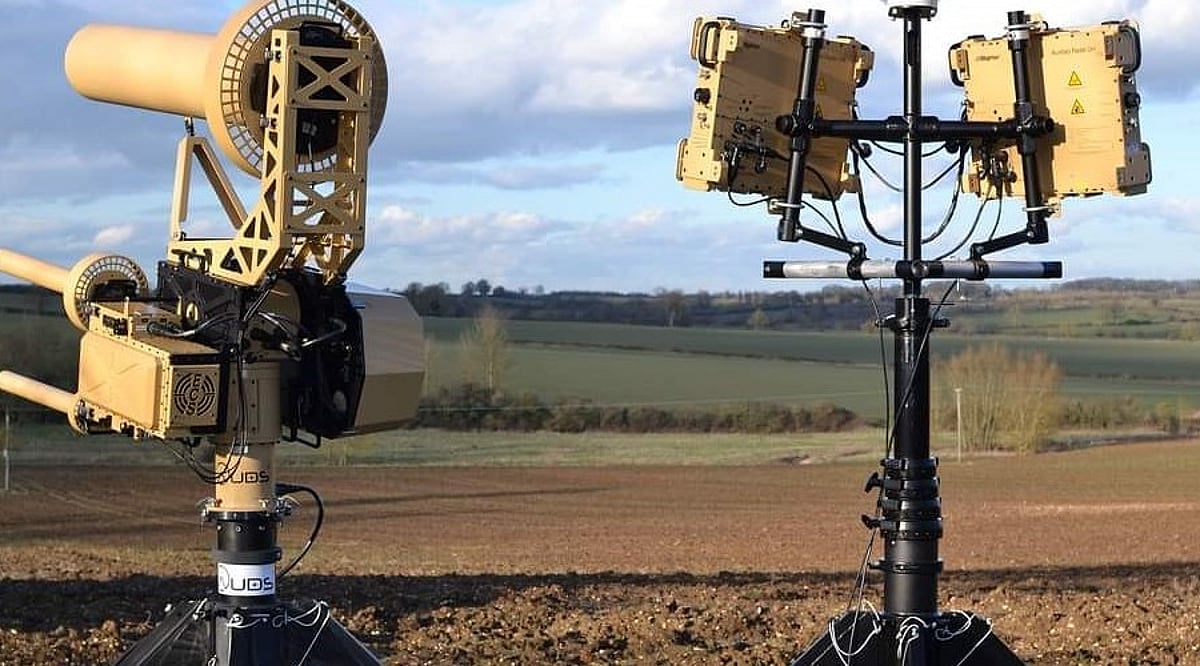
Unauthorized drones pose varying risks depending on their type and behavior. A small commercial drone near a military base behaves differently from an autonomous aircraft following a pre-planned route. Some drones stay linked to an operator, while others fly without live communication. These differences shape how security teams detect, identify, and respond to threats.
To compare counter-drone systems effectively, look beyond detection range. Evaluate the sensors, information quality, response methods, and ability to integrate with existing security tools. A robust drone defense setup helps operators understand what is flying, where it came from, and what actions are available.
How Do Counter-Drone Systems Detect Aircraft?
Radar detects movement in the air and covers large areas. It can find drones that do not transmit radio signals, but may need additional sensors to distinguish small drones from birds or other objects.
Radio frequency (RF) sensors listen for communication between a drone and its controller. They identify many commercial models and provide details about the aircraft or operator. Passive RF detection works without transmitting a signal, useful when a protected unit wants to stay covert.
Cameras provide visual confirmation after another sensor detects an object. They help operators see the drone and track its direction, but weather, distance, lighting, and buildings can affect image quality.
Modern systems often combine these sources through one software platform, allowing operators to view radar data, radio signals, and camera images in a single interface instead of reviewing separate alerts.
How Does Artificial Intelligence Support Detection?
AI processes information from multiple sensors. It studies movement patterns, compares objects, and helps reduce false alerts—valuable in areas with birds, vehicles, authorized drones, and other activity. AI does not replace sensors; it organizes their data and highlights objects needing attention. The quality of results still depends on the sensor data and site conditions.
When systems use similar sensors, their software can create a major difference. One platform may send a basic alert, while another can identify the model, track the flight path, locate the operator, and suggest the next action.
How Do Response Methods Differ?
Jamming interferes with communication between drone and controller. The aircraft may land, hover, return to start, or continue along a programmed route. Jamming can affect nearby communications, limiting its use in many locations.
Physical interception can stop a drone directly, but falling parts create danger near people, vehicles, equipment, or buildings. Other systems use directed energy, though range, weather, power, and line of sight affect performance.
Protocol-based control works through the communication used by a supported drone. It can disconnect the original controller and guide the aircraft to a chosen landing point. This avoids broad radio interference, but does not support every drone model.
Effective drone defense often combines several response options rather than relying on one method.
Why Does Integration Matter?
A counter-drone system rarely operates alone. Defense teams may already use radar, cameras, command software, and other air protection tools. The new system should exchange information with them and display threats through a clear operational view. Open integration also makes it easier to add new sensors or response tools later. Drone technology changes quickly, so a closed platform can become difficult to update.
Sentrycs, for example, uses passive detection, drone identification, operator location, and protocol-based control as part of a wider drone defense approach. Its technology connects with radar, optical sensors, and military command systems rather than replacing every existing layer.
What Should Security Teams Test?
A useful test should reflect the real environment: relevant drone models, local radio activity, buildings, low flights, and multiple aircraft in the air. Teams should also measure false alerts, response time, setup needs, and training requirements. The best comparison comes from testing each system against the same mission and threats. The strongest drone defense solution is not simply the one with the longest range—it is the one that gives operators accurate information, supports a suitable response, and continues working under difficult conditions.