
Tag: drone review

  • DJI Avata 360 Review: How This 360-Degree Drone Transforms Aerial Workflows for Creators

    DJI Avata 360 Review: How This 360-Degree Drone Transforms Aerial Workflows for Creators

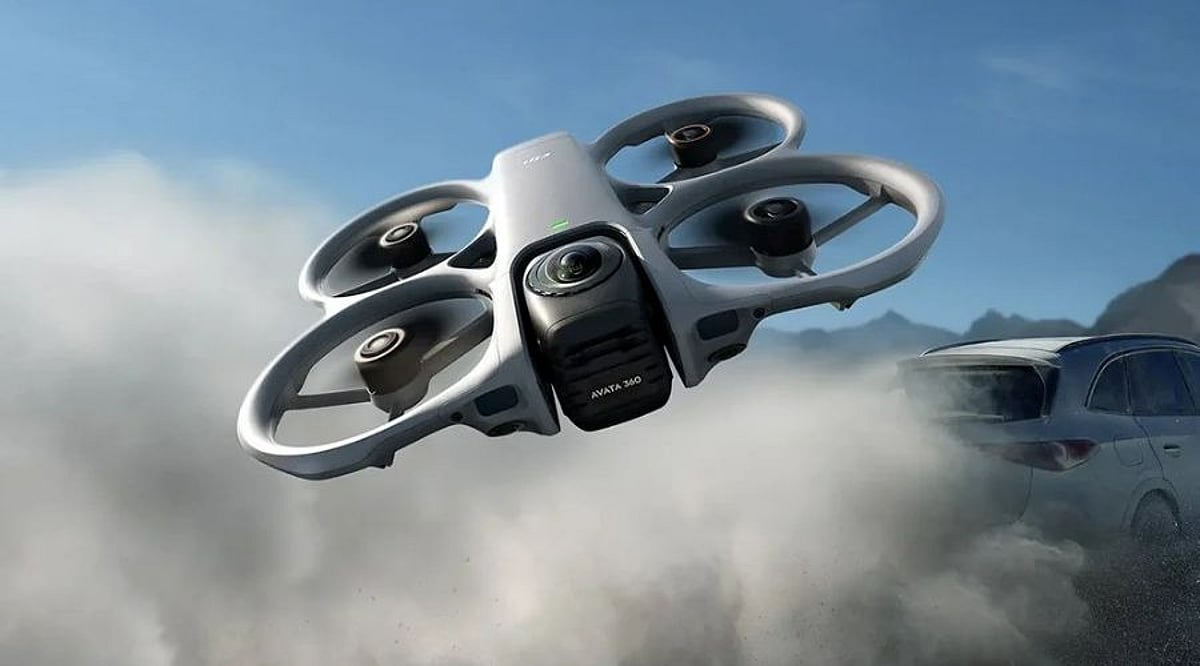
    If you’ve shot with traditional FPV drones, you know the tradeoff: you commit to a framing decision in flight. Miss the angle? Fly again. Need both a horizontal YouTube cut and a vertical TikTok cut? Two flights. The DJI Avata 360, launched March 26, 2026, changes that. As DJI’s first 360-degree drone — and only the second consumer 360 drone — its real value isn’t a spec. It’s a completely new way to capture and edit aerial footage.

    What Makes the Avata 360 Different

    The basics matter. Here are the specs that drive real-world performance:

    • Dual 1/1.1-inch CMOS sensors that capture the full sphere in a single pass
    • 8K/60fps HDR capture at 180 Mbps — gives you resolution headroom to reframe in post
    • Whoop-style propeller guards for tight indoor spaces that traditional FPV drones can’t safely enter
    • O4+ transmission for stable signal at extended ranges
    • Single Lens mode for traditional 4K/60fps when you don’t need 360

    The propeller guards alone open environments previously off-limits: wedding venues, warehouses, indoor sports facilities, retail spaces. Any tight space where a standard drone would risk damage is now accessible.

    The Real Shift: Post-Production Flexibility

    The headline isn’t the dual sensors. It’s what they enable in the edit. Traditional drone footage is composed in flight — you aim, fly, commit. The Avata 360 reverses that. You fly the path; the camera captures everything. You compose in post.

    GyroFrame in the DJI Fly app is the tool. After landing, creators can pull any frame from the 360 sphere, adjust angles, focal points, and orientation. The same flight produces a wide cinematic horizontal frame, a vertical TikTok cut centered on a subject, a top-down reveal — or any combination — without flying again.

    For working creators, this is the most meaningful shift in drone workflow since GPS stabilization made consumer drones flyable for non-pilots.

    Honest Framing: The 8K to 4K Export Reality

    Worth being clear: the 8K/60fps source is the recording resolution. The final flat video export in most workflows lands at 4K rather than 8K. The extra resolution gets consumed by the reframing process — pulling a specific framing out of a 360 sphere uses up source headroom. This isn’t a flaw; it’s how 360 capture works structurally. The 8K source exists specifically so the 4K output looks clean after reframing. Expecting 8K final output from a 360 drone is the wrong expectation.

    What Creators Are Actually Doing With It

    Early use cases demonstrate the workflow’s power:

    • Solo adventure creators extract multiple angles from a single pass — wide establishing, tight subject-tracking, overhead reveal, vertical short-form cut — no repeat flights needed.
    • Wedding videographers reframe one flight for highlight reel, venue establishing shot, and vertical Instagram cut. Substantial time savings on a typical shoot day.
    • Athletes and sports creators keep subjects center-frame in post, even when they drift mid-flight. Traditional FPV requires anticipating where the subject will be; 360 capture lets you reposition after the fact.
    • Multi-platform creators get both YouTube-wide and TikTok vertical from a single flight — the simplest argument for the workflow shift.
    • The “invisible drone” modifier — skilled reframing in GyroFrame can effectively remove the aircraft from perspective, creating shots that look like an impossible camera position.

    Early Sentiment From the Review Community

    Reviewer response has been notably enthusiastic. Tom’s Guide called it one of the best drones on the market outright. The “creative director in the sky” framing resonates with creators who want editing flexibility without flying twice. The consistent thread: it doesn’t replace traditional drones for every use case — it opens a new category that didn’t exist before.

    Where the Avata 360 Fits in the DJI Lineup

    The Avata 360 isn’t a replacement for the DJI Drone lineup — it’s a complement. For traditional aerial work where you know your framing in flight, the Mini 5 Pro or Mavic 4 Pro remain right tools. For tight-space shooting, single-flight multi-output workflows, and creators producing content for multiple platforms, the Avata 360 fills a category gap. If your work involves shooting the same scene for multiple deliverables, indoor environments, or unpredictable subjects, this drone solves problems your current gear doesn’t.

    What to Look For When Buying in the US

    Buy from an authorized US retailer that ships from US-held stock, includes the full official DJI manufacturer warranty, and has US-based customer support. DJI is an authorized US reseller stocking the Avata 360 with domestic shipping and warranty included. For a drone introducing a new workflow, local support matters more than usual.

    The Bottom Line

    The DJI Avata 360 is the most interesting new drone DJI has launched in years — not because of any single spec, but because of what 360-degree capture enables in the edit. For creators who shoot for multiple platforms, work in tight spaces, or want the freedom to reframe after landing, this is genuinely new territory. The 8K source to 4K output reality is worth understanding, but it’s not a limitation. On the dimensions that matter — 4K final output quality, post-production flexibility, single-pass multi-output workflows — the Avata 360 delivers. For creators ready to change how they think about aerial workflow, this is the drone worth considering.

  • DJI Mavic 4 Pro Review: Is the $2,199 Flagship Drone Worth the Investment?

    DJI Mavic 4 Pro Review: Is the $2,199 Flagship Drone Worth the Investment?

    If you are reading this, you already know the DJI Mavic 4 Pro is not a casual purchase. It starts at $2,199 for the base configuration, and the buyers who should actually own one are working photographers, professional videographers, and committed prosumers who will use every capability the drone offers. For everyone else, there are smaller, cheaper, more practical options in the lineup.

    This review is for the people in the first group. If aerial work pays you, or if you are serious enough about it that the price tag is justified by what the gear unlocks, here is what the Mavic 4 Pro actually delivers and whether it earns the investment.

    The Triple Hasselblad Camera System

    The Mavic 4 Pro carries a triple-camera system co-engineered with Hasselblad, and this is where the drone justifies most of its price.

    The three focal lengths cover the working ranges that pros actually shoot:

    • 28mm for wide establishing shots, sweeping landscapes, and immersive perspectives that put the scene in context
    • 70mm for medium-tight compositions where you need to isolate a subject without losing environmental context
    • 168mm for compressed telephoto work that makes distant subjects feel close and creates the cinematic look you cannot fake in post

    The wide camera captures up to 8K video at 30fps and 100MP stills. Real-world translation: you can crop aggressively in post and still deliver footage that holds up at 4K, you can pull stills from video clips that work as full publication-quality photographs, and you have headroom for the kind of color and detail work that distinguishes paid commercial output from hobbyist content.

    What the multi-focal system changes in practice is how you shoot. With a single fixed-focal drone, you have to fly closer to get tighter shots, which limits angles and burns battery time on repositioning. With three focal lengths in one body, you stay in optimal flight position and switch focal lengths to compose differently. Real estate shoots get faster. Travel work gets more varied. Commercial productions get more usable footage in fewer takes.

    The Infinity Gimbal

    The Infinity Gimbal is the single most creatively significant feature on the Mavic 4 Pro, and it does not get the attention it deserves in most reviews.

    Traditional drone gimbals have angular limits. They can tilt down and rotate within a constrained range. The Infinity Gimbal removes that limit and allows full 360-degree rotation. That opens up shots that were previously impossible on consumer drones:

    • True Dutch angles where the horizon tilts dramatically, creating the unsettled cinematic feel typically reserved for narrative film work
    • Straight-down perspectives that go fully vertical, then continue rotating to reveal new framings without repositioning the drone
    • Vertical panning that sweeps from ground to sky in a single continuous motion, creating reveal shots that pulled cinematographers used to need a crane or a helicopter for
    • Continuous rotational sequences that pivot the entire frame while the drone holds position

    If you have spent any time trying to fake these moves on previous drones through complicated compound flight maneuvers, you know how much work the Infinity Gimbal removes from the shoot. It is the difference between planning a shot for thirty minutes and just executing it.

    Flight Performance and Reliability

    Pro-grade aerial work demands gear that performs reliably under pressure. The Mavic 4 Pro is built around that requirement.

    Flight time reaches up to 51 minutes per battery. That is not just an impressive number on a spec sheet. It is the difference between being able to actually shoot a sequence, fly back, and reposition without burning the battery, and having to constantly cycle batteries mid-shoot. For commercial work where you are billing hours and trying to hit specific shot lists, this changes how you plan a shoot day.

    APAS 6.0 omnidirectional obstacle avoidance protects the drone from collisions in every direction. For tight environments, complex urban shooting, or low-light work where visual judgment gets compromised, this is the system that prevents the most expensive accidents.

    Return-to-home reliability has been refined across multiple generations. The Mavic 4 Pro is designed to come back to where it took off even when signal degrades, when batteries get low, or when you lose track of where you are flying. For pro work where losing a drone is not just expensive but potentially catastrophic for a client commitment, this dependability is the baseline that justifies professional gear.

    Transmission range and signal quality have similarly been engineered for working conditions. The Mavic 4 Pro maintains stable video feed at extended distances and through interference patterns that would have dropped earlier generations.

    Honest Positioning: Who Should Actually Buy This

    This part matters more than most reviews acknowledge.

    The Mavic 4 Pro is not for casual aerial enthusiasts. At $2,199 base, with realistic accessory bundles pushing total investment well past $3,000, this is a tool for people who will use the capability and recover the investment through the work they produce.

    The right buyers are:

    • Working photographers and videographers who shoot commercial, real estate, wedding, or editorial work where aerial deliverables are part of the engagement. The Mavic 4 Pro pays for itself in client retention and quality differentiation.
    • Cinematographers and documentary filmmakers producing content where production value matters and where the Infinity Gimbal and multi-focal system actually unlock shots they cannot get otherwise.
    • Committed enthusiasts with the budget, time, and creative ambition to use every capability the drone offers. If you fly multiple times a month, push your craft seriously, and want gear that will not bottleneck your development, you are in this category.

    Buyers who mainly fly occasionally, want a drone for vacation footage, or are upgrading from smartphone video may want to consider some of the smaller and more affordable options in the DJI Drone lineup first. Depending on your needs, models from the Mini or Air series can provide excellent image quality, portability, and ease of use while delivering outstanding value. The higher-end models are generally recommended for users who need advanced features, extended flight capabilities, or more demanding professional workflows.

    Being honest about this matters. The Mavic 4 Pro is DJI’s flagship consumer drone, bringing together the company’s most advanced imaging, flight, and creative features in a single platform. It is designed for users who want access to DJI’s highest-end consumer drone capabilities. But the best gear for a hobbyist is not the most expensive gear. The best gear is the gear they will actually use to its potential.

    What to Look For When Buying in the US

    At this price point, where you buy is not a small consideration. The DJI brand is the same worldwide, but the buying experience and the post-purchase support are not.

    For a Mavic 4 Pro purchase, look for a retailer that:

    • Holds US stock in domestic warehouses, not international or grey-market inventory imported through unauthorized channels
    • Provides the full official DJI manufacturer warranty on every unit, including the standard 1-year coverage
    • Ships domestically within a few business days, not weeks from overseas
    • Has US-based customer support you can actually reach if anything goes wrong

    Grey-market imports often lack warranty coverage entirely. If something fails three months in, you have no local recourse. For a $2,199 piece of equipment that you may be depending on for paid work, that risk profile is unacceptable.

    DJI USA is an authorized US reseller stocking the Mavic 4 Pro with domestic shipping and the full 1-year manufacturer warranty included on every unit. For a drone in this category, those four criteria are not optional.

    The Bottom Line

    If you make money from aerial content, or if you are committed enough to push your craft to the level that justifies professional gear, the DJI Mavic 4 Pro is worth $2,199. The triple Hasselblad camera system delivers footage that competes with significantly larger and more expensive cinema rigs. The Infinity Gimbal unlocks creative possibilities that simply do not exist on other consumer drones. Flight performance and reliability are engineered for working conditions where gear cannot fail.

    The Mavic 4 Pro is the best consumer drone DJI makes in 2026, and for the right buyer, it earns every dollar of the asking price. The only question is whether you are that buyer. If you are, you already know.

    Check the DJI Mavic 4 Pro product page for current pricing, configurations, and availability.