
Tag: drones

  • India’s Deep-Tech Boom: 9 Defining Technologies for 2026

    India’s Deep-Tech Boom: 9 Defining Technologies for 2026

    India is entering a new era of technological innovation. By 2026, a wave of deep-tech advancements is expected to reshape industries, businesses, and public services across the country. From artificial intelligence and semiconductors to space exploration and biotech, these are the key technologies driving India’s deep-tech boom.

    AI and Generative AI

    India’s AI ecosystem continues to expand rapidly, with applications spreading across business, research, and government services. Generative AI tools and platforms are becoming central to productivity and innovation, making advanced AI one of the most significant technology drivers of 2026.

    Semiconductor Technology

    India is investing heavily in semiconductor manufacturing, chip design, and related infrastructure. New fabrication plants and design centers are being developed to reduce reliance on global supply chains and strengthen the country’s electronics ecosystem.

    Quantum Computing

    Quantum technology is gaining momentum in India, with research focused on quantum computing, secure communications, advanced sensing, and future industrial applications. These developments could unlock entirely new capabilities across healthcare, finance, and logistics.

    Space Technology

    India’s space sector is opening up to private participation, fostering innovation in launch systems, satellites, Earth observation, and commercial space services. Startups and established companies alike are exploring new ways to make space more accessible.

    Robotics and Automation

    Robotics is moving beyond factory floors. Indian startups are developing intelligent machines for healthcare, logistics, agriculture, defense, and other real-world applications, bringing automation to everyday life.

    Advanced Drones

    Drone technology is expanding into agriculture, mapping, delivery, surveillance, and infrastructure inspection. These applications are creating new opportunities for deep-tech startups and transforming traditional industries.

    Biotechnology

    India’s biotechnology sector is advancing drug discovery, genomics, medical research, and agricultural innovation. These efforts are strengthening the country’s future pipeline of high-impact technologies.

    Electric Mobility Technology

    Battery innovation, electric vehicles, and charging infrastructure are transforming mobility in India. Deep-tech companies are developing more efficient energy solutions to support the shift to electric transportation.

    Defense Technology

    India’s defense sector is embracing drones, sensors, artificial intelligence, robotics, and space systems. A renewed focus on indigenous development is helping the country build self-reliant defense capabilities.

    Together, these technologies signal a transformative period for India, positioning the country as a major player in the global deep-tech landscape.

  • Amazon’s Next-Gen Technologies: Satellite Internet, AI Models, and Autonomous Deliveries

    Amazon’s Next-Gen Technologies: Satellite Internet, AI Models, and Autonomous Deliveries

    Amazon is far more than an online marketplace. The company is investing heavily in emerging technologies that span satellite internet, generative AI, robotics, autonomous vehicles, biometrics, healthcare, and sustainability. Here’s a look at the key innovations shaping Amazon’s future beyond e-commerce.

    Project Kuiper: Global Satellite Internet

    Amazon is building a satellite internet network called Project Kuiper to deliver affordable broadband connectivity globally. This initiative competes with existing low-Earth orbit providers, aiming to bridge the digital divide.

    Amazon Nova AI Models

    Amazon’s Nova foundation models power generative AI applications, enabling businesses to create intelligent assistants, content, and enterprise automation efficiently. These models are designed to make AI accessible for a wide range of use cases.

    Warehouse Robotics

    Advanced warehouse robots improve inventory handling, package sorting, and fulfillment speed while reducing operational costs across Amazon’s expanding logistics network. These robots are a cornerstone of Amazon’s operational efficiency.

    Autonomous Delivery Drones (Prime Air)

    Prime Air drones aim to deliver eligible packages within minutes, improving last-mile logistics through autonomous navigation and advanced aviation technology. This service promises faster delivery for customers.

    Zoox Robotaxis

    Amazon-owned Zoox develops fully autonomous electric robotaxis designed for urban transportation, offering driverless mobility with enhanced passenger safety and convenience. Zoox is poised to disrupt the ride-hailing industry.

    AI-Powered Alexa+

    Alexa+ integrates advanced conversational AI, delivering personalized assistance, smarter automation, and natural interactions across compatible smart home ecosystems. It represents a major leap in voice assistant technology.

    Amazon One Biometrics

    Palm-recognition technology enables secure identity verification and seamless payments, simplifying customer experiences across retail stores, workplaces, and entertainment venues. Amazon One is expanding its footprint.

    Amazon Health Services

    Amazon continues expanding healthcare through digital pharmacy, virtual consultations, and integrated health solutions focused on accessibility, affordability, and patient convenience. The company is becoming a key player in health tech.

    Sustainable Logistics Innovation

    Amazon invests in electric delivery vehicles, renewable energy, and eco-friendly packaging to reduce emissions while supporting sustainable global supply chains. These efforts align with its Climate Pledge commitment.

  • Drone-as-a-Service (DaaS): The Flexible Business Model Transforming Industries

    Drone-as-a-Service (DaaS): The Flexible Business Model Transforming Industries

    Drone-as-a-Service (DaaS) is rapidly emerging as a game-changing business model that allows companies to rent drone solutions rather than purchasing expensive equipment. This approach significantly reduces upfront costs while providing access to skilled operators and cutting-edge technology.

    By eliminating the need for hardware purchases, maintenance, software licenses, and pilot training, DaaS makes aerial services affordable for businesses of all sizes. Here’s how different industries are leveraging this model:

    • Agriculture: Farmers use drones for crop monitoring, precision spraying, field mapping, and plant health assessments, boosting productivity while cutting manual labor and resource waste.
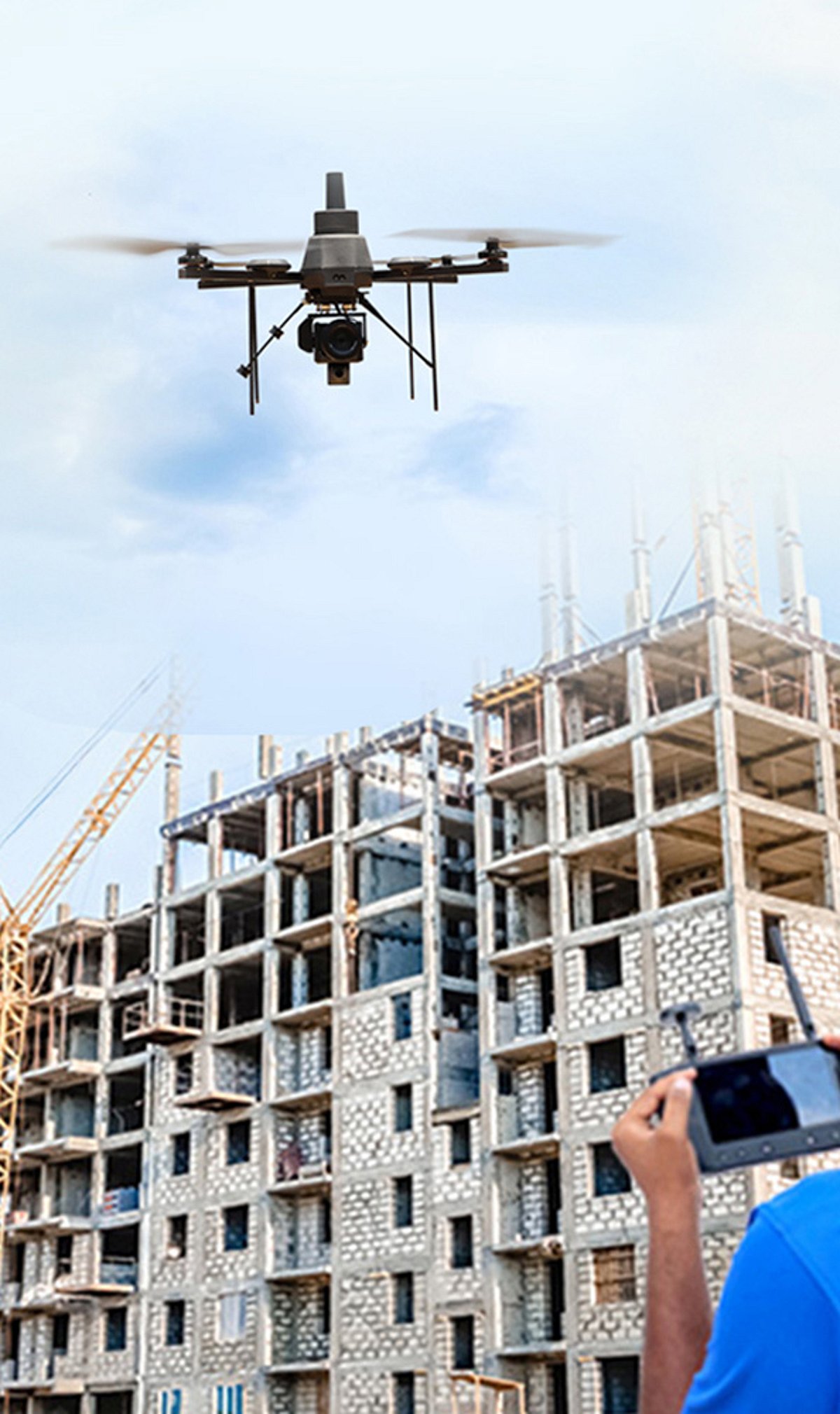
    • Construction: Construction firms deploy drones for site surveys, progress tracking, inspections, and 3D mapping, helping projects stay on schedule and within budget.
    • Logistics & Retail: Retailers and logistics providers are exploring drone deliveries for medicines, groceries, and essential goods, especially in remote or hard-to-reach locations.
    • Infrastructure Inspections: Drones safely inspect bridges, power lines, pipelines, and telecom towers, reducing human risk while capturing accurate visual and thermal data.

    Global demand for Drone-as-a-Service is growing as regulations improve, technology advances, and businesses seek faster, smarter operational solutions. Artificial intelligence is making drones even more powerful, enabling image analysis, problem detection, automated flights, and actionable insights.

    The future of DaaS looks bright, with rapid expansion expected across industries as organizations embrace flexible, technology-driven service models.

  • 2026’s Best Budget Drones: Affordable Options for Beginners and Creators

    2026’s Best Budget Drones: Affordable Options for Beginners and Creators

    Introduction

    Budget drones have come a long way, now offering stabilized 4K video, GPS-assisted flight, and intelligent shooting modes without breaking the bank. Whether you’re a beginner learning to fly, a traveler capturing memories, or a content creator looking for aerial shots, there’s a cheap drone that fits your needs. In this guide, we highlight the best budget drones in 2026, covering different use cases and budgets.

    Top Budget Drones in 2026

    DJI Neo – Best for Vloggers and Hands-Free Filming

    Weighing just 135g, the DJI Neo records 4K video with electronic image stabilization. It offers palm launch and landing, target tracking, QuickShots, and full propeller guards. With 18 minutes of flight time, it’s ideal for vloggers and tourists who want effortless footage. Note: it lacks obstacle avoidance.

    DJI Mini 4K – Best Overall Budget Drone

    The DJI Mini 4K features a 12MP camera on a 1/2.3-inch sensor, shooting 4K video with a three-axis mechanical gimbal. It flies up to 31 minutes, includes GPS, and comes with a physical controller for precise piloting. Level 5 wind resistance makes it suitable for outdoor flights.

    Holy Stone HS720G – Best for Affordable GPS Flying

    This foldable GPS drone has a 4K camera with a two-axis gimbal and up to 26 minutes of flight time. GPS features include position hold and return-to-home. It’s heavier than sub-250g drones, so less travel-friendly.

    Potensic Atom SE – Best Alternative for Travel

    Under 249g, the Potensic Atom SE records 4K at 30fps with EIS. It boasts 31 minutes flight time, GPS, 4km transmission, downward vision positioning, and a ToF sensor. Its folding design is great for travel, but it lacks a three-axis gimbal.

    Ryze Tello – Best for Learning the Basics

    At 87g, the Ryze Tello has a 5MP camera shooting 720p video and 13 minutes flight time. It’s not for serious photography but perfect for beginners to learn flying basics.

    HOVERAir X1 – Best for Automated Personal Videos

    Designed for automated filming, the HOVERAir X1 excels at follow shots and is highly portable. It’s great for vloggers but not for long-distance flying or professional photography.

    BetaFPV Cetus Pro Kit – Best for FPV Beginners

    This ready-to-fly kit includes an FPV drone, goggles, and controller, making it easy to enter the world of FPV flying. It’s not meant for photography but for immersive flying experience.

    What to Look for in a Budget Drone

    When choosing a cheap drone, consider camera quality beyond resolution: sensor size, stabilization, and processing matter. Flight time is often lower in real conditions. GPS is useful for position hold and return-to-home. Obstacle avoidance is rare in budget models. Weight and wind resistance affect portability and stability. A physical controller usually offers better control than a smartphone app.

    Frequently Asked Questions

    What is the best cheap drone in 2026?

    The best budget drone depends on your needs, but models with stabilized cameras, GPS, practical flight times, and reliable controls offer the best value.

    Are cheap drones good for beginners?

    Yes, many affordable drones now have automated modes, GPS assistance, and simplified controls, making them suitable for beginners.

    Is 4K video important in a budget drone?

    4K video adds detail, but sensor size, stabilization, and bitrate also affect quality. Don’t base your decision solely on resolution.

    How long should a budget drone fly?

    Aim for 20-30 minutes advertised flight time, but expect less in windy conditions.

    Should beginners choose GPS or FPV drones?

    GPS drones are easier for stable aerial photography, while FPV drones are for those interested in immersive manual flying.

    Conclusion

    For most beginners and creators, the DJI Mini 4K stands out as the best all-around budget drone. However, the DJI Neo and Potensic Atom SE are excellent for travel and vlogging, while the BetaFPV Cetus Pro Kit opens the door to FPV flying. Choose based on your primary use case and enjoy the world of affordable aerial creativity.

  • Drone Warfare Economics: How Cheap UAVs Are Disrupting Military Strategy and India’s Defense Future

    Drone Warfare Economics: How Cheap UAVs Are Disrupting Military Strategy and India’s Defense Future

    The battlefield is undergoing a profound transformation as inexpensive, mass-produced drones challenge the dominance of costly military hardware. From the Russia-Ukraine conflict to tensions in West Asia, unmanned aerial vehicles (UAVs) are rewriting the rules of engagement, forcing nations to rethink defense budgets, strategies, and the very nature of national security.

    In a recent episode of the Analytics Insight Podcast, host Priya Dialani sat down with Sai Pattabhiram, Founder and Managing Director of Zuppa Geo Navigation Technologies, to explore how drones are reshaping modern warfare and the economics that underpin it. The conversation spanned the global rise of UAVs, India’s push for indigenous drone technology, the role of artificial intelligence, and the strategic imperative of building a resilient domestic drone ecosystem. Here are the key takeaways.

    Why Drones Are Game Changers

    Pattabhiram highlights the revolutionary cost asymmetry: a $3,000 drone can neutralize tanks, missiles, or air defense systems worth millions. This democratization of offensive capability is shifting power from resource-heavy militaries to those that can innovate and mass-produce low-cost platforms.

    The Russia-Ukraine War: A Turning Point

    The prolonged conflict in Ukraine has demonstrated that swarms of cheap drones can sustain long-drawn battles. Nations now recognize that mass-production capabilities, combined with rapid innovation and upgrades, are as critical as high-end weaponry. The war has upended traditional defense thinking, emphasizing volume and adaptability over sheer sophistication.

    India’s Need for Indigenous Drone Manufacturing

    India’s heavy reliance on imported drone components raises logistical and cybersecurity vulnerabilities. Pattabhiram argues that developing homegrown technologies enhances national security, reduces dependency on foreign suppliers, and positions India as a potential defense manufacturing hub for other nations. Building a self-sufficient drone ecosystem is both a strategic and economic priority.

    AI: The Brain Behind Future Drones

    Artificial intelligence is set to supercharge drone capabilities. AI enables autonomous flight, target identification, operations without GPS, and coordinated swarming. These intelligent systems increase efficiency, reduce human workload, and open new tactical possibilities. Pattabhiram predicts that AI-driven autonomy will be the defining factor in future drone warfare.

    Shaping Future Conflicts

    Future wars will likely be longer, more technologically complex, and fought from greater distances. Drones allow states to project power without committing large ground forces, while simultaneously bolstering defensive positions. The advantage will go to those who achieve technological superiority—and that race is already underway.

    Listen to the full podcast episode at Analytics Insight.

  • MIT Political Science Department: Pioneering Research on Democracy, AI, and Global Affairs

    MIT Political Science Department: Pioneering Research on Democracy, AI, and Global Affairs

    MIT’s Department of Political Science continues to produce groundbreaking research at the intersection of politics, technology, and society. From the impact of architecture on political participation in Ghana to the ethical implications of artificial intelligence, MIT scholars are addressing critical questions facing democracies worldwide.

    How Architecture Influences Political Activity

    New research shows that semi-communal “compound houses” in Ghana significantly affect voting and political engagement. (June 25, 2026)

    Exploring the Societal Impacts of AI

    Leading MIT researchers examined AI’s influence on employment and democracy during the AI and Society Forum. (June 23, 2026)

    The Crucial Human Component in Computing and AI

    The MIT Ethics of Computing Research Symposium highlighted ethical and social impacts in technology. (June 5, 2026)

    Democracies and Safe Drinking Water

    Researchers find that while developing economies provide public water, safety lags due to low visibility. (May 21, 2026)

    Committed to Caring: Professor Daniel Hidalgo Honored

    Associate Professor Daniel Hidalgo, a political scientist studying Latin American elections, receives recognition for graduate student mentorship. (May 13, 2026)

    MIT Affiliates Awarded Guggenheim Fellowships

    Afreen Siddiqi, Kathleen Thelen, and Vinod Vaikuntanathan, along with alumna Kate Manne, are appointed 2026 Guggenheim Fellows. (May 1, 2026)

    Built to Fly: Brian Robinson’s Intersection of Aviation, Politics, and Technology

    MIT senior and master’s candidate Brian Robinson works at the nexus of aviation, politics, and technology. (April 15, 2026)

    Why Does Wealth Inequality Matter?

    An MIT Stone Center event examined origins, mechanisms, and political consequences of high inequality. (April 3, 2026)

    Fostering MIT’s Japan Connection

    MISTI Japan managing director Christine Pilcavage supports students and faculty exploring Japanese culture with a STEM focus. (January 15, 2026)

    Eighteen MIT Faculty Honored as “Committed to Caring”

    The program recognizes outstanding mentorship of graduate students for 2025-27. (January 8, 2026)

    How Drones Are Altering Contemporary Warfare

    A new book by Erik Lin-Greenberg examines evolving dynamics of military and state action centered around drones. (November 13, 2025)

    Q&A: How MITHIC Is Fostering Collaboration at MIT

    The MIT Human Insight Collaborative supports new interdisciplinary initiatives across the Institute. (October 30, 2025)

    Studying War in the New Nuclear Age

    MIT political scientist Caitlin Talmadge scrutinizes military postures and international dynamics to understand escalation risks. (October 28, 2025)

    MIT Schwarzman College of Computing Welcomes 11 New Faculty

    New faculty bring varied backgrounds and expertise to the MIT community. (October 17, 2025)

    Meet the 2025 Tenured Professors in SHASS

    Faculty members granted tenure in Linguistics and Philosophy, Music and Theater Arts, and Political Science. (September 18, 2025)

    These stories reflect the breadth and depth of research at MIT’s Political Science Department, where scholars are shaping our understanding of governance, technology, and global affairs.