

Tag: drug delivery

  • 10 Revolutionary Capabilities of Liquid Robots Transforming Science and Medicine

    10 Revolutionary Capabilities of Liquid Robots Transforming Science and Medicine

    Imagine a robot that can squeeze through a crack under a door, reform itself after being cut in half, and deliver medicine precisely to a tumor inside your body. This isn’t science fiction—it’s the emerging field of liquid robotics. Using materials like ferrofluids, liquid metals, and hydrogels, researchers are creating flexible, adaptive machines that defy traditional mechanical limitations. Here are ten astonishing things these liquid robots can already do or are being developed to accomplish.

    1. Shape-Shifting for Confined Spaces

    Liquid robots can alter their shape to squeeze through tiny openings and navigate complex, cluttered environments. This ability makes them ideal for search-and-rescue operations, pipe inspections, and medical procedures requiring navigation through narrow blood vessels.

    2. Targeted Drug Delivery

    Scientists are designing liquid robots that carry therapeutic payloads directly to diseased organs or tumors. By controlling their movement with magnetic fields or chemical gradients, these robots could dramatically improve treatment precision while minimizing systemic side effects.

    3. Minimally Invasive Surgery

    Tiny liquid robots could assist surgeons in performing delicate procedures inside the human body with unprecedented flexibility. They might deliver tools, clear blockages, or even perform micro-suturing through natural openings, reducing the need for invasive incisions.

    4. Self-Healing Capabilities

    Unlike conventional machines that break when damaged, liquid robots can merge back together after being cut or separated. Their ability to re-form and continue functioning without manual intervention promises greater durability in harsh environments.

    5. Adaptive Obstacle Navigation

    The flexible, deformable nature of liquid robots allows them to flow around barriers, through narrow gaps, and along uneven surfaces. This gives them a mobility advantage over rigid robots in environments like disaster rubble or industrial piping.

    6. Safe Hazardous Inspections

    Liquid robots can be deployed into radioactive zones, chemical plants, or disaster areas where human presence is dangerous. They can sample toxic materials, measure radiation levels, or assess structural integrity without risking human lives.

    7. Environmental Cleanup

    Researchers envision liquid robots that absorb oil spills, heavy metals, or microplastics from water and soil. Their ability to navigate hard-to-reach ecosystems—such as marshes, coral reefs, or groundwater—makes them powerful tools for environmental restoration.

    8. Precision Micro Manufacturing

    Liquid robots can manipulate and assemble microscopic components with exceptional accuracy. This capability could revolutionize semiconductor fabrication, medical device production, and the assembly of next-generation electronics at scales impossible for human hands or traditional machines.

    9. Extreme Environment Adaptation

    Because liquid robots can operate in extreme temperatures, pressures, and corrosive conditions, they are being explored for use in deep-sea exploration and volcanic monitoring. Their resilience opens new frontiers for scientific discovery.

    10. Space Exploration

    Future planetary missions may deploy liquid robots that reconfigure themselves to navigate rocky terrain, enter caves, or withstand temperature swings on Mars or the Moon. Their versatility could make exploration safer and more efficient, gathering samples from places traditional rovers cannot reach.

    Liquid robots are still largely in the research phase, but their potential spans healthcare, manufacturing, environmental remediation, and space travel. As material science and control systems advance, these remarkable machines will likely become a staple of the technological landscape.

  • How Carbon Nanotubes Are Poised to Transform AI Chips, EV Batteries, Healthcare, and Future Tech

    How Carbon Nanotubes Are Poised to Transform AI Chips, EV Batteries, Healthcare, and Future Tech

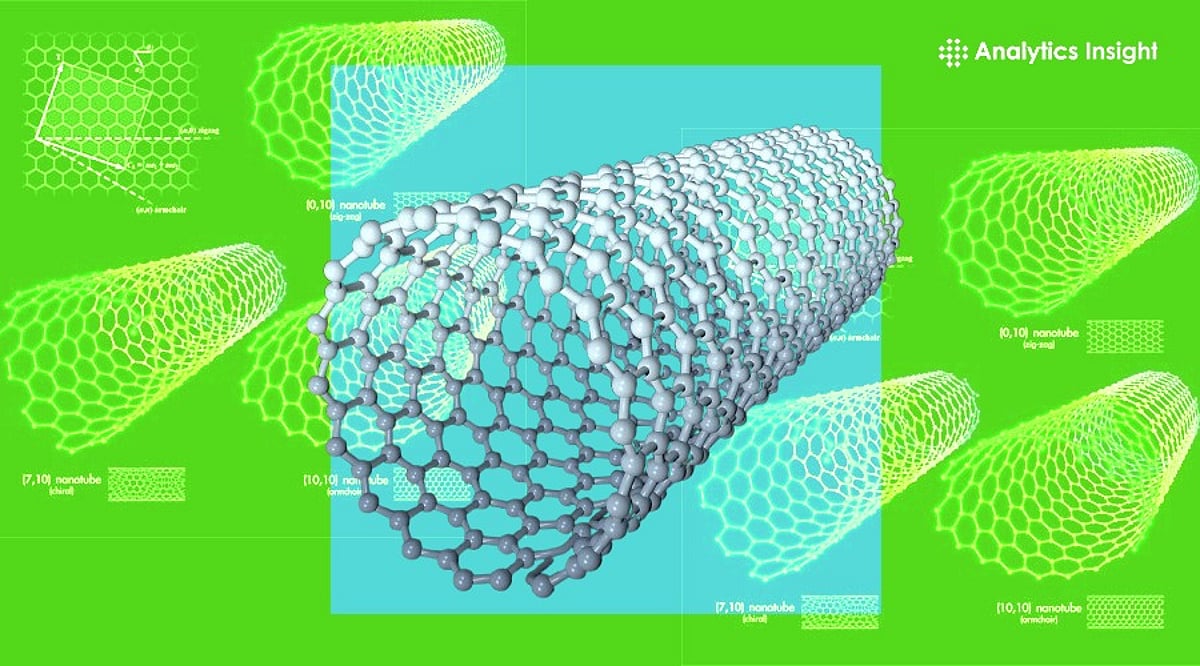
    Carbon nanotubes are one of the most extraordinary materials ever discovered. Despite being invisible to the naked eye, these tiny carbon structures possess remarkable strength and electrical properties that could reshape entire industries. As production techniques advance, carbon nanotubes are set to enhance AI chips, electric vehicle (EV) batteries, healthcare, and a wide array of future technologies.

    What Makes Carbon Nanotubes Special?

    A carbon nanotube is formed when a thin sheet of carbon atoms rolls into a hollow tube. Some nanotubes consist of a single layer, while others have multiple concentric layers. They are just a few nanometers wide but can grow to several centimeters in length. These structures are incredibly lightweight yet about 100 times stronger than steel on a weight-for-weight basis. They also conduct electricity exceptionally well—some behave like metals, others like semiconductors—and efficiently transfer heat, helping electronic devices stay cool during operation.

    Revolutionizing AI Chip Performance

    Artificial intelligence demands powerful computer chips, and traditional silicon is nearing its physical limits. Smaller silicon chips generate more heat and consume more electricity. Carbon nanotubes offer a solution through transistors that move electricity with minimal resistance, enabling AI chips to operate faster and more efficiently. Their superior heat dissipation also helps chips run cooler, extending lifespan and reducing energy consumption in large data centers. While commercial adoption is still in development, carbon nanotubes are emerging as a leading candidate for next-generation computing.

    Advancing Electric Vehicle Batteries

    In EV batteries, carbon nanotubes don’t replace lithium but significantly improve battery performance. They facilitate better electrical flow, leading to faster charging, increased capacity, and longer cycle life. Because only tiny amounts are needed, more space remains for energy storage, potentially allowing larger batteries without added weight. Carbon nanotubes also stabilize silicon anodes, which can store more energy than traditional graphite anodes, further boosting battery efficiency and durability.

    Transformative Healthcare Applications

    Medicine stands to benefit greatly from carbon nanotubes. They can serve as targeted drug delivery vehicles, carrying medicine directly to diseased cells while sparing healthy tissue and reducing side effects. In cancer treatment, nanotubes absorb near-infrared light and convert it to heat, which can destroy tumors with minimal collateral damage. Additionally, carbon nanotube-based sensors are highly sensitive, enabling early disease detection through tiny changes in the body. Flexible health monitors made from these materials could track heart rate, blood sugar, and other vital signs continuously.

    Remaining Challenges

    Despite their promise, several hurdles must be overcome. High-quality carbon nanotubes remain expensive to produce, and manufacturing methods need to scale while ensuring uniformity. Long-term safety studies are essential before medical applications become routine, and industry-wide quality standards are still being developed.

    The Road Ahead

    Carbon nanotubes are already used in some batteries, electronics, and composite materials. As production improves, their adoption will accelerate. Experts project the global carbon nanotube market will grow from approximately $8.8 billion in 2026 to nearly $24.5 billion by 2034, driven by AI, EVs, healthcare, electronics, and energy storage. Though tiny, carbon nanotubes hold immense potential to power faster AI, smarter medical devices, and more efficient energy systems.

    Frequently Asked Questions

    1. What are carbon nanotubes?

    Carbon nanotubes are minuscule hollow tubes made of carbon atoms. They are extraordinarily strong, lightweight, and excellent conductors of electricity and heat.

    2. Why are carbon nanotubes important for AI chips?

    They enable transistors that switch faster and generate less heat, leading to AI chips that are more powerful and energy-efficient than current silicon-based designs.

    3. How do carbon nanotubes improve EV batteries?

    They enhance electrical conductivity inside the battery, supporting faster charging, higher energy density, and longer lifespan, and also help stabilize advanced anode materials.

    4. Can carbon nanotubes be used in healthcare?

    Yes, research is exploring them for targeted drug delivery, thermal cancer ablation, ultra-sensitive disease detection, and wearable health monitors.

    5. What are the main challenges?

    High production costs, scalability issues, quality control, and rigorous safety testing are the primary barriers to widespread adoption.

  • MIT’s Latest 3D Printing Breakthroughs: From Recycled Plastic Homes to Drug-Delivery Microparticles

    MIT’s Latest 3D Printing Breakthroughs: From Recycled Plastic Homes to Drug-Delivery Microparticles

    MIT researchers continue to push the boundaries of additive manufacturing with a series of groundbreaking innovations in 3D printing. From construction-grade trusses made from recycled plastic to microscopic magnetic robots, these developments promise to transform industries ranging from healthcare to architecture.

    Key Innovations

    Sustainable Construction

    MIT engineers have developed a method to 3D print floor trusses using recycled plastic, potentially revolutionizing home construction by reducing waste and material costs. This approach could make housing more affordable and environmentally friendly.

    Medical Breakthroughs

    A new 3D-printed device streamlines the production of drug-delivery microparticles, enabling efficient creation of three-layered particles at scale. Additionally, the MagMix magnetic mixer improves 3D bioprinting for scalable tissue manufacturing.

    Advanced Materials

    Researchers have created 3D-printed metamaterials that can be designed to stretch and fail in predictable ways, opening doors for printable textiles and functional foams. The PhysiOpt system combines generative AI with physics simulations to ensure 3D-printed personal items are durable for real-world use.

    Microscopic Robotics

    A new fabrication technique produces soft, microscopic structures with magnetically activated moving parts, enabling complex maneuvers at the microscale.

    Impact and Applications

    These innovations demonstrate MIT’s commitment to solving real-world challenges through 3D printing technology. From reducing construction waste to improving medical treatments, the potential applications are vast and transformative.