
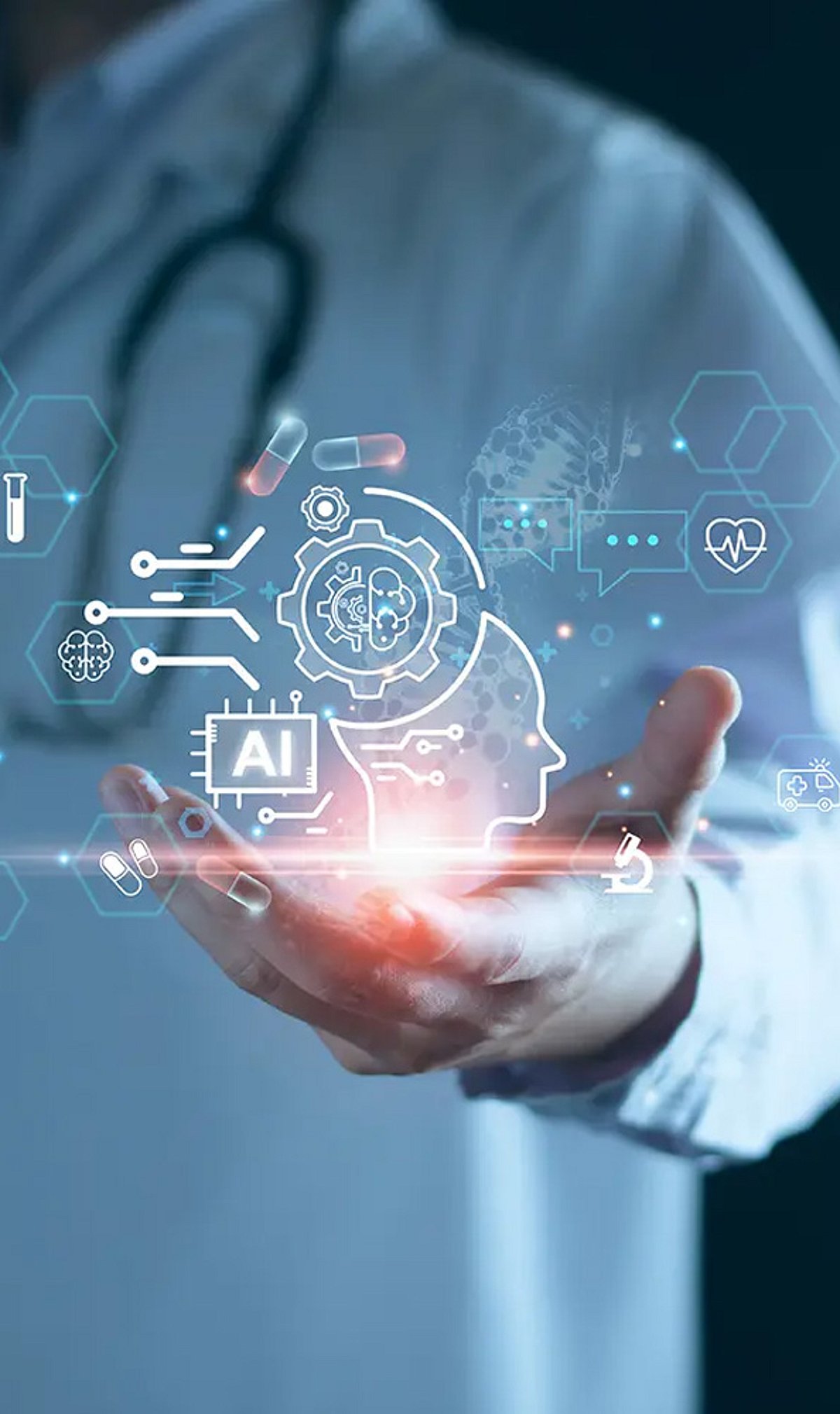
Tag: drug discovery

  • Key AI Innovations Transforming Healthcare Today

    Key AI Innovations Transforming Healthcare Today

    Artificial intelligence is rapidly reshaping the healthcare landscape, offering unprecedented speed and accuracy in diagnostics, treatment planning, and administrative workflows. Below are the most impactful AI trends driving change across the industry.

    AI-Powered Diagnostics

    AI systems analyze medical images and clinical data far faster than traditional methods, helping healthcare professionals detect diseases, identify abnormalities, and support accurate diagnoses with greater confidence.

    Generative AI

    Generative AI tools create clinical summaries, draft documentation, organize patient information, and reduce repetitive administrative work, freeing up clinicians to focus on patient care.

    AI Healthcare Agents

    AI agents manage multi-step workflows, coordinate appointments, support follow-ups, and complete routine healthcare tasks with minimal human intervention, improving operational efficiency.

    Personalized Treatment

    By combining patient records, genetic information, and clinical data, AI helps doctors develop more individualized treatment strategies tailored to each patient’s unique profile.

    Predictive Analytics

    Predictive AI identifies potential health risks by analyzing large datasets, enabling earlier interventions and supporting better-informed clinical decisions that can save lives.

    AI Drug Discovery

    Pharmaceutical companies leverage AI to analyze molecules, identify promising compounds, and accelerate the research processes involved in developing new medicines.

    Remote Patient Monitoring

    AI analyzes data from wearable devices and connected medical equipment, helping clinicians detect concerning changes and monitor patients remotely, improving access to care.

    AI-Assisted Surgery

    AI-powered surgical technologies support planning, precision, and decision-making, helping surgeons perform complex procedures while maintaining essential human oversight throughout.

    Responsible AI Governance

    Healthcare organizations increasingly prioritize privacy, bias management, transparency, security, accuracy, and human oversight when implementing artificial intelligence systems, ensuring ethical and safe deployment.

  • 8 Breakthroughs Quantum Computing Could Deliver by 2030

    8 Breakthroughs Quantum Computing Could Deliver by 2030

    Quantum computing is no longer a distant theoretical concept—it is rapidly advancing toward practical applications that could transform industries. By 2030, these powerful machines may solve some of the most complex problems facing humanity. Here are eight real-world challenges quantum computers are expected to tackle.

    Drug Discovery

    Quantum computers can simulate complex molecular interactions with unprecedented accuracy. This capability will help researchers identify promising drug candidates much faster than traditional computing methods, potentially accelerating the development of treatments for diseases like cancer and Alzheimer’s.

    Battery Development

    Advanced quantum simulations may revolutionize the design of batteries. By modeling chemical reactions at the quantum level, scientists could create longer-lasting, safer, and more efficient batteries for electric vehicles and renewable energy storage.

    Supply Chain Optimization

    Businesses face enormous complexity in logistics. Quantum algorithms can optimize shipping routes, warehouse operations, and inventory management, reducing costs and improving efficiency across global supply chains.

    Financial Modeling

    Banks and investment firms will use quantum computers to analyze risk scenarios and market trends far faster than classical systems. This will support more informed portfolio management and better forecasting of economic shifts.

    Climate Research

    Modeling Earth’s climate involves countless variables. Quantum computers can simulate atmospheric interactions with greater precision, improving weather forecasts and deepening our understanding of long-term climate change patterns.

    Cybersecurity Research

    Quantum systems offer both challenges and solutions for security. They can strengthen encryption research and help develop communication methods that are resistant to future cyber threats, safeguarding digital infrastructure.

    Material Science

    Designing new materials requires understanding molecular structures. Quantum simulations will enable researchers to create stronger, lighter, and more efficient materials for aerospace, electronics, and manufacturing.

    Traffic Management

    Urban congestion is a growing problem. Quantum-powered optimization algorithms could help cities design smarter traffic signals, improve transportation networks, and enhance public transit systems, reducing travel times and emissions.

  • How AI Tools Are Revolutionizing Healthcare Business Operations

    How AI Tools Are Revolutionizing Healthcare Business Operations

    Artificial intelligence is rapidly reshaping the healthcare industry, offering powerful tools that improve efficiency, accuracy, and patient outcomes. From automating clinical documentation to accelerating drug discovery, AI is helping healthcare providers deliver better care while reducing costs and administrative burdens. Below are the key areas where AI is making a transformative impact.

    Clinical Documentation Automation

    AI tools automate medical note-taking, reducing paperwork and improving documentation accuracy. This streamlines clinical workflows and allows physicians to spend more time with patients.

    Medical Imaging Analysis

    AI-powered platforms detect abnormalities in X-rays, CT scans, and MRIs faster than traditional methods, enabling earlier diagnoses and significantly improving radiology efficiency.

    Predictive Healthcare Analytics

    Advanced AI analyzes patient records and historical data to predict diseases, optimize treatments, improve resource allocation, and enhance clinical decision-making.

    Precision Medicine

    AI combines genomic, clinical, and molecular data to recommend personalized treatments, helping healthcare providers deliver targeted therapies with better patient outcomes.

    Digital Pathology Support

    AI-assisted pathology tools analyze tissue samples accurately, improve diagnostic consistency, accelerate disease detection, and support pharmaceutical research.

    Administrative Workflow Automation

    AI streamlines appointment scheduling, billing, insurance processing, and patient record management, reducing operational costs while improving organizational productivity.

    Patient Engagement Solutions

    AI-powered virtual assistants provide instant responses, appointment reminders, medication guidance, and personalized health information, improving patient satisfaction and communication.

    Drug Discovery Acceleration

    AI rapidly analyzes biological data, identifies potential drug candidates, shortens research timelines, reduces development costs, and speeds pharmaceutical innovation.

    Emergency Care Optimization

    AI detects critical conditions in real time, alerts specialists immediately, prioritizes urgent cases, and improves treatment speed for life-threatening medical emergencies.