Tag: earnings season

  • Stock Market Wrap: Sensex Drops 567 Points, Nifty Slips Below 24,100 During Broad Sell-Off

    Stock Market Wrap: Sensex Drops 567 Points, Nifty Slips Below 24,100 During Broad Sell-Off

    Indian benchmark indices ended Wednesday’s session in the red, as selling pressure across banking, IT, and pharmaceutical stocks dampened investor sentiment. Rising crude oil prices, escalating geopolitical tensions in the Middle East, and global trade uncertainties fueled a risk-off mood, extending the recent losing streak for both the BSE Sensex and NSE Nifty50 despite selective gains in auto stocks.

    Market Performance

    The BSE Sensex closed at 76,903.37, down 567 points (0.73%), while the NSE Nifty50 settled at 24,021.75, losing 166 points (0.69%). Selling was widespread, with 15 of the 16 sectoral indices finishing in negative territory. Pharma stocks tumbled amid new US tariff concerns, while bank stocks declined on weak earnings reports. Midcap and small cap indices also ended lower.

    Top Gainers and Losers

    Top Gainers: Some stocks posted gains, though exact percentage changes were not disclosed in the end-of-day summaries. Notably, the automobile sector delivered decent quarterly results despite the broader market weakness.

    Top Losers: Banking, IT, and pharma stocks were among the worst performers, dragged by profit-taking and external headwinds.

    Market Trends and Key Takeaways

    Wednesday’s decline underscores the heightened sensitivity of Indian equities to global developments. Tensions in the Strait of Hormuz pushed crude oil prices above $92 per barrel, raising concerns about India’s import bill, inflation, and corporate profitability. Additionally, new US tariff proposals on imported drugs weighed heavily on pharmaceutical companies.

    The trading session also highlighted the importance of earnings reports: while the auto sector posted decent results, overall sentiment remained cautious. Moving forward, investors will closely monitor geopolitical events, crude oil price movements, foreign institutional investor (FII) activity, and the ongoing earnings season. Market volatility is likely to persist until clearer signals emerge.

  • Indian Stock Market Ends Lower: Sensex Drops 316 Points, Nifty Closes at 24,172 as IT and Financial Stocks Weigh

    Indian Stock Market Ends Lower: Sensex Drops 316 Points, Nifty Closes at 24,172 as IT and Financial Stocks Weigh

    Indian equity markets ended Tuesday’s session on a subdued note, with benchmark indices witnessing a volatile trading day before recovering most of their intraday losses. Investors remained cautious amid the ongoing June-quarter earnings season, global geopolitical developments, and uncertainty surrounding crude oil prices. While select financial and IT stocks attracted buying interest, weakness in banking and healthcare counters kept the broader market range-bound.

    At 3:00 pm, the Sensex was at 77,392.41, down 316.11 points or 0.41% lower. The Nifty was at 24,172.30, down 65.65 points or 0.27% lower.

    Top Gainers Lead a Mixed Session

    The buying was seen in selected financial and tech stocks, wherein the day’s biggest gainer turned out to be Shriram Finance, which was up more than 2.5 percent. In addition to this, HCLTech and Bajaj Finserv were also seen in the list of top gainers of the day.

    Banking and Healthcare Stocks Weigh on the Market

    On the flip side, the HDFC Bank was the worst performer in terms of affecting the Nifty performance, followed by Dr. Reddy’s Laboratories, Max Healthcare, Cipla, TCS, Infosys, and SBI. The profit-taking in banks and pharmaceuticals companies prevented the index from closing in positive territory.

    Also Read: Stock Market Update: Nifty Opens 0.09% Lower, Sensex Falls 91.25 points Amid Tensions in the Middle East

    What Today’s Market Trend Signals

    The trading activity on Tuesday also highlighted a trend that has become very apparent in the earnings season; the markets are being moved more on an individual stock basis rather than as a result of any sectorial momentum. Instead of following the indices, investors have been buying selective stocks with potential for earnings growth while selling those that look expensive.

    The erratic performance in the stock market is also a function of continued uncertainty surrounding global developments such as the crude oil prices and geopolitical tensions, which continue to pose risk for emerging economies like India. However, the fundamentals domestically will continue to offer support to keep any correction at bay.

    In the coming days, the direction of the market may well depend on earnings and management statements, FII flows, and global macroeconomic signals. Till then, volatility will rule the markets and the action will be largely specific to stocks.

    Disclaimer: Analytics Insight does not provide financial advice or guidance on cryptocurrencies and stocks. Also note that the cryptocurrencies mentioned/listed on the website could potentially be risky, i.e. designed to induce you to invest financial resources that may be lost forever and not be recoverable once investments are made. This article is provided for informational purposes and does not constitute investment advice. You are responsible for conducting your own research (DYOR) before making any investments. Read more about the financial risks involved here.

  • Wall Street Futures Gain Despite US-Iran Tensions as Nasdaq Leads Tech Rally

    Wall Street Futures Gain Despite US-Iran Tensions as Nasdaq Leads Tech Rally

    U.S. stock index futures edged higher on Monday, with investors setting aside renewed military tensions between the United States and Iran as optimism over diplomatic engagement and resilient corporate earnings buoyed market sentiment.

    Despite lingering geopolitical nervousness, futures on the technology-heavy Nasdaq outperformed their peers, signaling that traders continue to focus on fundamentals and earnings rather than reacting to events in the Middle East.

    Nasdaq Futures Outperform the Broader Market

    As of 4:47 AM GMT-5, E-mini Nasdaq-100 futures rose 183.25 points, or 0.64%, to 28,956.50. E-mini S&P 500 futures gained 24.50 points, or 0.33%, to 7,522.25, while E-mini Dow Jones Industrial Average futures climbed 145 points, or 0.28%, to 52,520.00.

    The stronger showing in Nasdaq futures reflects ongoing investor interest in technology shares ahead of the start of the U.S. cash market.

    Markets Shift Focus from Conflict to Diplomacy

    Trading began cautiously following fresh U.S. military strikes against Iran, which kept geopolitical tensions elevated. During the session, oil prices were mixed and U.S. Treasuries rose, indicating initial concerns about the situation.

    However, market sentiment turned positive after Iranian Foreign Ministry spokesman Esmail Baghaei stated that communication channels remained open. According to Iranian news reports, Baghaei noted that messengers were continuing to send messages to Tehran despite the new U.S. strikes, adding that negotiations with the United States were possible as long as they aligned with Iran’s interests.

    Investors Remain Focused on Equities

    The United States has conducted its ninth consecutive strike on Iran overnight, keeping the geopolitical situation tense. Nevertheless, Monday’s gains suggest that traders are hopeful the crisis can be contained through diplomacy.

    Another key factor is that the upward movement in futures markets indicates optimism about U.S. equities. With the ongoing earnings season and strong interest in tech stocks, traders appear to be balancing geopolitical risks against stable corporate performance.

    As the U.S. cash market opens, all eyes will be on whether this positive momentum can be sustained amid ongoing geopolitical developments.

  • Indian Stock Market Surges: Sensex Gains Over 900 Points, Nifty Crosses 24,300

    Indian Stock Market Surges: Sensex Gains Over 900 Points, Nifty Crosses 24,300

    Indian benchmark indices surged in Friday’s afternoon session, with the Sensex jumping over 900 points and the Nifty crossing the 24,300 mark. Broad-based buying across banking, IT, and heavyweight stocks lifted investor sentiment and pushed markets sharply higher.

    Indian equity benchmarks ended Friday’s session on a strong note, outperforming most Asian markets as robust buying in information technology and financial stocks offset concerns over rising crude oil prices and geopolitical tensions in the Middle East. Investors largely focused on the ongoing June-quarter earnings season, with encouraging corporate results boosting market sentiment.

    The Sensex rose 912.74 points, or 1.18%, to 78,099.61, while the Nifty climbed 248.10 points, or 1.03%, to 24,320.85. The gains pushed the Nifty above the 24,300 mark, reflecting broad-based buying across sectors.

    IT and Financial Stocks Drive the Rally

    The IT sector took center stage in Friday’s rally as Tech Mahindra delivered better-than-expected quarterly results, sparking buying sentiment in technology-related stocks. Shares of Infosys, HCL Technologies, and Tata Consultancy Services rose, with analysts believing the quarter could mark a turning point for the underperforming sector. Banks were also strong, with Jio Financial Services jumping on better-than-expected quarterly results and loan growth estimates for Reliance Industries ahead of its Q1 results.

    Wipro, CEAT Among Major Laggards

    Wipro got off to a poor start as its quarterly earnings fell short of expectations, and management hinted at a delayed-than-anticipated demand recovery. Tire maker CEAT also took a severe beating due to weak earnings performance. Some pharma and metals sector companies were under selling pressure, with Cipla, Dr. Reddy’s Lab, and Hindalco ending on a negative note.

    Earnings Season Takes Center Stage

    According to market analysts, corporate profits and management outlooks should continue driving stock market movements in the coming weeks. Despite high oil prices and geopolitical instability being important factors, market participants will be closely watching how companies perform during the quarterly earnings season.

    Weekly Market Performance (July 13–17)

    The Indian equity market closed on a bullish note despite staying confined to a range during the July 13–17 week due to uncertainties in the global economic environment and expectations of earnings from Indian companies. The Sensex and Nifty stayed in a tight range as traders weighed strong corporate performance in Q4 June against rising crude oil prices and tensions in the Middle East.

    The week started with a volatile session on Monday as major indices managed to recover from early losses due to strong performance in IT sector stocks driven by earnings results and significant deals. The rally on Friday, led by stocks such as Reliance Industries, Jio Financial Services, Tech Mahindra, and private banking stocks, boosted the major benchmarks.

    Disclaimer: This article is for informational purposes only and does not constitute investment advice. Always conduct your own research before making investment decisions.

  • US Stock Futures Decline as Middle East Tensions Drive Oil Prices Higher, Stoking Market Anxiety

    US Stock Futures Decline as Middle East Tensions Drive Oil Prices Higher, Stoking Market Anxiety

    US stock futures edged lower on Monday as renewed tensions in the Middle East unsettled investors and sent crude oil prices higher, raising concerns over inflation and global economic growth.

    Nasdaq futures suffered the biggest loss, with S&P 500 and Dow Jones Industrial Average futures indicating the market will open lower as investors weighed the impact of rising energy prices amid uncertainty over the interest rate outlook.

    Oil Rise Puts Pressure on Market Sentiment

    Oil prices increased amid growing tensions between the United States and Iran. Concerns about potential oil supply disruptions have arisen due to the strategically located Strait of Hormuz, which is among the most active oil transportation routes worldwide.

    Brent crude oil has been hovering near $79 per barrel, while West Texas Intermediate has exceeded $74 per barrel. Increased oil prices have caused inflation concerns.

    Tech and semiconductor stocks continued to underperform as investors cut positions in growth sectors. Increasing bond rates have contributed to weakness in tech stocks due to their sensitivity to rate changes.

    Attention Turns to Earnings and Inflation Reports

    Despite geopolitical and market uncertainties, investors are preparing for yet another busy week on Wall Street. Several big US banks are expected to report earnings next week, kicking off the earnings season. Market participants will watch how tech firms perform during earnings in the upcoming days.

    Moreover, investors will consider figures on US inflation and statements by Fed Chair Kevin Warsh, which may have a strong impact on market expectations for further Fed action. Any indications of inflation persistence, especially following the oil price hike, may add to the list of reasons to maintain high interest rates.

    For now, investors are trying to weigh geopolitical influences against company earnings and economic data. It seems that all these issues will play an important role in global markets in the coming days.

  • S&P 500 and Nasdaq Rise on Chip Stock Rebound, Dow Slips After Record High

    S&P 500 and Nasdaq Rise on Chip Stock Rebound, Dow Slips After Record High

    U.S. stocks closed mixed on Monday as investors returned from the Independence Day holiday with renewed interest in technology and semiconductor shares. The S&P 500 and Nasdaq Composite advanced, while the Dow Jones Industrial Average slipped after briefly crossing the 53,000 threshold for the first time.

    The market’s focus remained on semiconductor stocks, Federal Reserve meeting minutes, and the start of second-quarter earnings season. Key names watched by traders included Broadcom, Apple, Microsoft, SpaceX, and SK Hynix.

    Chip Stocks Lead Nasdaq and S&P 500 Higher

    The Nasdaq Composite gained approximately 1.1%, while the S&P 500 rose 0.5% in morning trading. The Dow Jones Industrial Average fell 0.3% after briefly touching a fresh intraday record above 53,000. This divergence highlighted a split market, with technology stocks leading gains while some blue-chip names lost ground.

    Chip stocks rebounded after two weak sessions last week. The Philadelphia SE Semiconductor Index surged more than 4%, and the information technology sector led gains on the S&P 500. The recovery helped lift investor sentiment following recent pressure on AI-linked shares.

    Broadcom rose 5.7% after extending its chip supply partnership with Apple through 2031. The deal covers custom chip development and supply, giving investors another reason to return to semiconductor names. Micron Technology, Marvell Technology, Teradyne, Western Digital, and Oracle also gained as AI and data center demand remained in focus.

    Meanwhile, SK Hynix prepared to launch a U.S. listing aimed at raising approximately $28 billion. The offering added more attention to the global AI chip trade. The South Korean memory chipmaker has already drawn strong market interest this year, although its shares have also experienced sharp swings.

    Investors Watch Fed Minutes and Economic Data

    Investors also looked ahead to minutes from the Federal Reserve’s latest policy meeting. The minutes are due Wednesday and will be closely watched after the first meeting led by new Fed Chair Kevin Warsh. Traders have reduced bets on a July rate hike after last week’s cooler jobs report.

    According to CME FedWatch data, traders now see a 24% chance of a 25-basis-point rate hike at the July 29 meeting, down from about 30% a week earlier. The shift came as investors judged whether softer labor data could give the Fed more room to wait.

    The Institute for Supply Management reported that its services index slipped to 54.0 in June, close to market forecasts. The reading indicated that U.S. services activity continued to grow, though at a slightly slower pace. Prices eased but remained high, while employment moved back into growth territory.

    Trade Nation’s senior market analyst, David Morrison, expressed doubt about how much clarity the Fed minutes may offer. “Warsh wants the Fed to concentrate on the data and stick to that and not give any projections,” he said. “So it could be that the minutes don’t really give very much away.”

    Earnings Season and Stock Movers Stay in Focus

    Second-quarter earnings will become a key test for Wall Street later this week. Delta Air Lines and PepsiCo are among the companies expected to report results. Investors are watching whether corporate updates can support the market after strong gains in the major indexes last week.

    Morrison also pointed to uncertainty around the largest technology stocks. “This earnings season is important, given the fact that the Magnificent 7 have had a pretty tough time with things of late,” he said. He added that “just a little bit of good news” could help them resume their rally.

    Microsoft shares fell 1.8% after the company announced it would cut about 4,800 jobs, equal to roughly 2.1% of its workforce. The stock’s decline weighed on sentiment around large-cap technology, even as broader tech shares rose.

    SpaceX gained as investors prepared for its entry into the Nasdaq 100 on Tuesday. The move is expected to drive buying from funds that track the index. Elsewhere, O’Reilly Automotive dropped after reports indicated the company made a cash offer for Genuine Parts’ auto unit.

    Global markets were more muted. European stocks slipped slightly, while Asian markets ended mixed. Japan’s Topix rose, South Korea’s Kospi fell, and Hong Kong’s Hang Seng gained. Oil prices drifted after OPEC+ members agreed to raise output again in August, while U.S. Treasury yields edged lower.

    With the second-quarter earnings season beginning and the Federal Reserve minutes due later this week, investors are expected to look for fresh signals on corporate profitability and the future path of U.S. interest rates, which could shape the market’s next move.


  • Wall Street Poised for Best Quarter in Years as Tech Stocks Rebound Amid Geopolitical Calm

    Wall Street Poised for Best Quarter in Years as Tech Stocks Rebound Amid Geopolitical Calm

    Wall Street is on track to close the second quarter with its strongest performance in years, even as ongoing US-Iran tensions continue to create geopolitical uncertainty. Investors have maintained buying momentum, buoyed by optimism over the upcoming earnings season and easing concerns about Middle East hostilities. Major indexes posted solid gains, with technology shares staging a recovery after a challenging June.

    Major US Indexes Target Strongest Quarterly Gains

    The S&P 500 and NASDAQ Composite are heading toward their best quarterly gains in six years, while the Dow Jones Industrial Average is on pace for its strongest quarter since 2022. In Tuesday trading, the S&P 500 rose 0.34%, the NASDAQ gained 0.76%, and the Dow traded nearly flat. These gains reflect continued investor confidence despite earlier volatility driven by semiconductor weakness.

    The Dow is also on track for its best first-half performance since 2021. The S&P 500 has posted more than an 8% gain during the first six months of 2026, while the NASDAQ has advanced over 11%. The Russell 2000 has outperformed larger indexes, climbing more than 21% in the same period.

    Technology Stocks Recover as Earnings Season Approaches

    Technology stocks helped lift markets after suffering sharp losses earlier in June. Investors are now shifting focus to the upcoming corporate earnings season, expecting strong results to support current valuations. Chipmakers led Tuesday’s rally: NVIDIA gained more than 1%, Advanced Micro Devices advanced about 3%, and Intel climbed roughly 4%.

    Semiconductor exchange-traded funds also delivered record quarterly gains. The VanEck Semiconductor ETF surged around 70% during the second quarter, while the iShares Semiconductor ETF gained approximately 94%. Micron was among the sector’s strongest performers, rising about 240% during the quarter.

    Despite Tuesday’s rebound, June remained challenging for several technology stocks. The S&P 500 and NASDAQ are still on track to end two consecutive months of gains as investors reassess AI-related valuations.

    Geopolitical Developments and Interest Rates Remain in Focus

    Investors continue monitoring US-Iran developments. Recent signs of reduced hostilities have improved market sentiment after both countries agreed to halt attacks and allow commercial shipping through the Strait of Hormuz. Oil prices remained relatively stable, with Brent crude trading near $73 per barrel and West Texas Intermediate around $70. Stable energy prices have helped ease concerns about additional inflation pressure.

    Markets are also focused on monetary policy expectations. Traders now anticipate at least one Federal Reserve rate hike before the end of 2026, following stronger economic data that shifted expectations away from earlier forecasts for rate cuts. Investors are awaiting comments from Federal Reserve Chair Kevin Warsh after fresh job openings and consumer confidence reports.

    Individual Stocks Post Mixed Performance

    Several individual companies recorded notable moves during Tuesday’s session. Concentrix shares fell more than 20% after lowering its full-year revenue and adjusted profit forecasts, pushing the stock to a record low. In contrast, AeroVironment surged about 22% after reporting a strong increase in quarterly revenue. Morgan Stanley slipped around 1% after Oppenheimer downgraded major Wall Street investment banks and encouraged investors to consider alternative asset managers.

    European markets also ended higher on the final trading day of June, with technology stocks leading regional gains. Major indexes in Germany, France, Italy, and the United Kingdom all closed in positive territory. Although analysts continue monitoring geopolitical developments and interest rate expectations, strong corporate earnings and resilient investor demand have kept Wall Street positioned for one of its strongest quarters in recent years.

  • Big Tech’s Magnificent 7 Stocks Plunge $2.3 Trillion as AI Investment Doubts Mount

    Big Tech’s Magnificent 7 Stocks Plunge $2.3 Trillion as AI Investment Doubts Mount

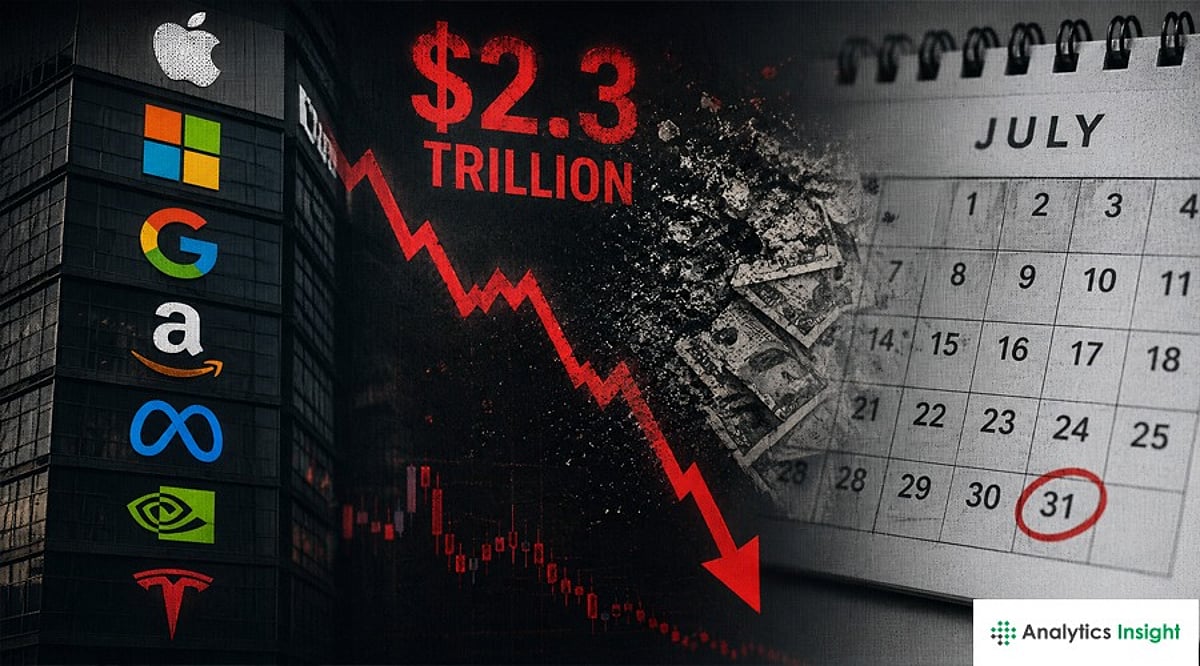
    June proved disastrous for the Magnificent 7 stocks as investor anxiety over massive AI spending and uncertain returns triggered a selloff that erased nearly $2.3 trillion in market value. The decline ranks among the steepest monthly losses ever recorded for Big Tech.

    The group—comprising Microsoft, NVIDIA, Apple, Alphabet, Amazon, Meta, and Tesla—had led the market for months on AI enthusiasm. However, June brought a sharp reversal as attention shifted from future promise to current spending and profitability.

    The Magnificent 7 Index fell roughly 10% in June, extending its decline to more than 13% from a mid-May peak. Investors now demand concrete evidence that billions poured into AI infrastructure will translate into higher earnings.

    Microsoft suffered the steepest drop among the seven, with its stock tumbling about 20% in June. NVIDIA lost nearly 13%, while Apple and Amazon each declined around 8%. The broad selloff reflects growing caution around companies investing heavily in AI without clear financial payoffs.

    Big Tech continues to pour capital into AI. Microsoft, Amazon, Alphabet, and Meta are expanding data centers and purchasing advanced AI chips to support future growth. Industry analysts estimate AI-related spending could exceed $700 billion in 2026. Such outlays have depressed free cash flow expectations, undermining investor confidence in valuations.

    Analysts believe the upcoming earnings season will be pivotal. Investors want to see that AI investments are boosting revenue rather than simply inflating costs. Wedbush analyst Dan Ives noted that the next earnings reports could clarify whether the AI investment cycle is on the right track.

    Recent market moves suggest a preference for tangible results over ambitious promises. Companies that successfully convert AI spending into stronger earnings may recover investor trust more quickly.

    Capital has also rotated toward AI hardware makers. Semiconductor and memory companies have outperformed the Magnificent 7 this month. The Philadelphia Semiconductor Index gained about 6% in June and is still up more than 90% year-to-date, indicating that investors currently favor businesses directly benefiting from AI demand.

    Many experts argue that the selloff does not signal the end of the AI story. Instead, the market is demanding clearer proof that expensive AI projects will generate improved profits. The coming round of earnings reports will be crucial in determining whether the Magnificent 7 rebound or remain under pressure for the rest of the year.

  • Wall Street Rises as US-Iran Tensions Ease; Comcast Jumps on Spin-Off Plan

    Wall Street Rises as US-Iran Tensions Ease; Comcast Jumps on Spin-Off Plan

    US stocks moved higher on Monday as investors welcomed signs of easing tensions between the United States and Iran. Meanwhile, Comcast posted strong gains after unveiling plans to separate parts of its business into two publicly traded companies. Markets also shifted attention toward upcoming economic data and the start of the second-quarter earnings season.

    Although the latest diplomatic developments improved market sentiment, investors continued to monitor the Middle East closely. At the same time, weakness in several semiconductor stocks limited broader gains, keeping traders focused on inflation, Federal Reserve policy, and corporate earnings over the coming weeks.

    Wall Street gains as geopolitical concerns ease

    Wall Street’s three major indexes traded higher after reports indicated that the United States and Iran had agreed to pause hostilities following military exchanges over the weekend. According to reports, technical teams from both countries are expected to meet in Doha to continue work on implementing an interim peace agreement.

    The easing tensions reduced immediate concerns about disruptions in the Strait of Hormuz, one of the world’s busiest energy shipping routes. However, oil prices remained higher as traders assessed whether the ceasefire would hold. Brent crude traded above $72 per barrel, while West Texas Intermediate crude stayed above $70.

    Market participants remained cautious despite the diplomatic progress. Peter Andersen, founder of Andersen Capital Management, said, “There have been several false starts in peace negotiations. I would expect most market participants to remain in a holding pattern through the rest of this week.”

    Eight of the eleven S&P 500 sectors traded higher during the session. Communication services led the gains after Comcast announced plans to separate NBCUniversal and Sky from its broadband and wireless operations through a tax-free spin-off.

    Comcast rallies while technology stocks remain mixed

    Comcast shares surged nearly 10% after revealing its restructuring plan. The separation is expected to create two independent publicly traded companies over the next year. Investors responded positively as the company seeks to streamline its operations.

    Alphabet also moved higher after joining the Dow Jones Industrial Average, providing additional support to major indexes. Meanwhile, Nasdaq confirmed that SpaceX will join the Nasdaq-100 Index on July 7, lifting its shares during Monday’s trading session.

    Technology stocks produced mixed results. Memory chip makers Micron and Sandisk declined sharply, while Intel also traded lower. The pullback followed renewed concerns about AI-related spending and elevated valuations across semiconductor companies.

    Jed Ellerbroek, portfolio manager at Argent Capital Management, said, “We’re in the biggest momentum market in decades, and those momentum stocks are going to be exceptionally volatile. We’re seeing that today with Micron.”

    Investors shift focus to earnings and economic data

    Attention is now turning toward the second-quarter earnings season, which begins in the coming weeks. Analysts expect company results to provide fresh direction after strong earnings helped drive market gains over the past year.

    Ben Snider, chief US equity strategist at Goldman Sachs, said, “The 21% S&P 500 return over the past 12 months has been driven entirely by earnings, making the upcoming Q2 2026 reporting season an important catalyst for the forward trajectory of the market.”

    Investors are also preparing for the release of the June US employment report later this week. The data could influence expectations for future Federal Reserve interest rate decisions as policymakers continue monitoring inflation and labor market conditions.

    Elsewhere, Martin Marietta Materials fell after announcing a $13.5 billion merger with limestone supplier Lhoist North America. Viridian Therapeutics also gained after receiving US Food and Drug Administration approval for its thyroid eye disease treatment.

    Market breadth remained positive during the session, with advancing stocks outnumbering declining issues on both the New York Stock Exchange and the Nasdaq. Investors continue monitoring developments in the Middle East, corporate earnings, and upcoming economic data as markets search for fresh direction.