
Tag: ecosystem

  • Freedom Holding Corp. Enters Turkish Banking with Acquisition of Turkish Bank A.Ş.

    Freedom Holding Corp. Enters Turkish Banking with Acquisition of Turkish Bank A.Ş.

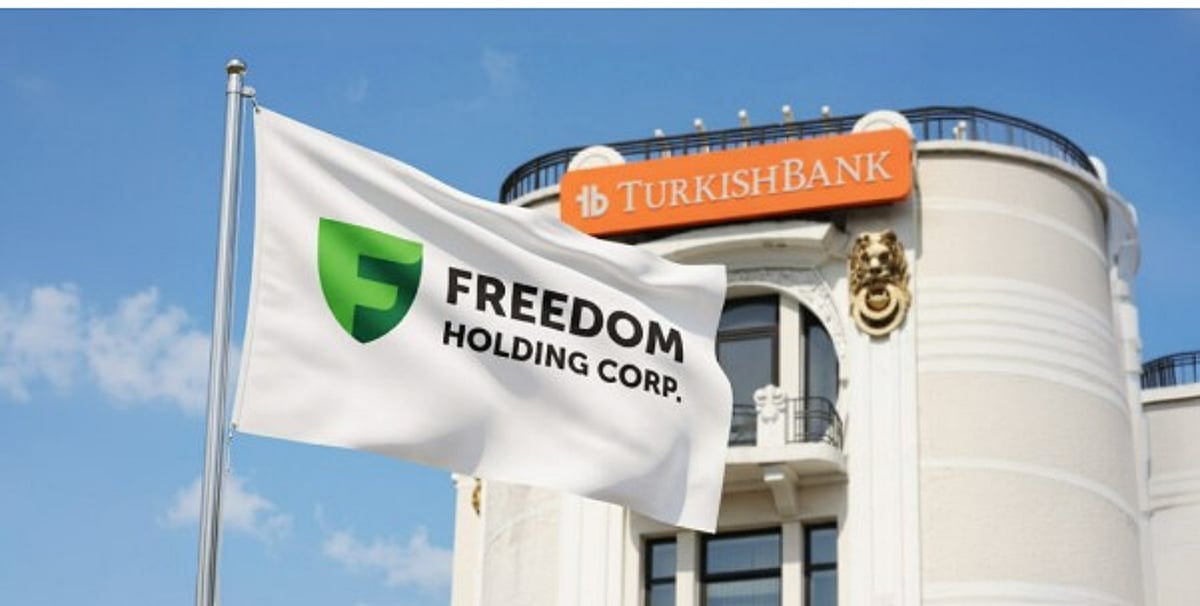
    Nasdaq-listed Freedom Holding Corp. has completed the acquisition of a 99.32% stake in Turkish Bank A.Ş., marking its formal entry into Türkiye’s banking sector and laying the groundwork for an integrated financial and digital platform. The transaction was executed through its subsidiary, Freedom Finansal Hizmetler A.Ş., and the bank has been renamed Freedom Bank A.Ş. following the transfer of control.

    The Acquisition Is Only the First Step

    The deal was finalized after receiving approval from Türkiye’s Banking Regulation and Supervision Agency (BDDK) and the Turkish competition authority. Freedom Holding plans to strengthen the bank’s capital position, upgrade its IT infrastructure, develop digital channels, launch new products, and improve operational efficiency.

    According to the BDDK, more than 120 million digital bank accounts have been opened in the country, with approximately 85% of the population using mobile banking. Turkish customers are already accustomed to advanced mobile-banking services, meaning the new platform must compete not only on product range but also on app usability, transaction speed, and overall customer experience.

    Türkiye occupies a special place in Freedom Holding Corp.’s global growth strategy. The country serves as a geographical bridge between Europe and Asia and a strategic gateway connecting the world’s largest financial markets.

    Why the Ecosystem Needs Its Own Bank

    Freedom Holding Corp. began building its Turkish infrastructure in 2022 with the establishment of Freedom Finansal Hizmetler A.Ş., created to support investments in banking, insurance, capital markets, payment systems, and other financial-services segments. In 2025, after approval from Türkiye’s Capital Markets Board, Freedom Yatırım Menkul Değerler A.Ş. was formed as the group’s local brokerage platform.

    The bank acquisition complements Freedom’s expansion into Türkiye’s capital markets. The group now has a banking platform on which to build its own ecosystem in the country. Banking services provide regular customer contact through accounts, cards, payments, transfers, deposits, and lending products, placing the acquired bank at the center of the future platform.

    Testing Freedom’s Kazakhstan Model in Türkiye

    In Kazakhstan, Freedom Holding has already built an ecosystem combining banking, brokerage, investment, insurance, payment services, e-commerce, travel, ticketing, and entertainment. The group plans to draw on this experience in Türkiye.

    “In Kazakhstan, we built an ecosystem in which financial and everyday services operate through a single SuperApp, which has become the country’s fastest-growing digital service,” said Timur Turlov, founder and CEO of Freedom Holding Corp. “We are now bringing this model to Türkiye, where customers already have high expectations of their banks. Our task over the next few years is to strengthen the bank’s capital base and technological capabilities so that an ecosystem can develop rapidly around it.”

    The group’s experience in Kazakhstan demonstrates that financial and lifestyle services can be combined on a single digital platform. Türkiye will show how successfully the model can scale beyond the home market.

    Freedom Holding Corp. operates in 22 countries, including Kazakhstan, the United States, Cyprus, Poland, Spain, Uzbekistan, and Armenia, with its principal executive office in New York. Its shares trade under the ticker FRHC on Nasdaq, the Kazakhstan Stock Exchange, and the Astana International Exchange.

    The company strengthened its financial position in fiscal year 2026, which ended March 31. Revenue increased 9% year-on-year to $2.19 billion, while net income more than doubled to $153.3 million from $76.2 million a year earlier. Total assets rose 33% to $13.16 billion. By March 2026, the Freedom ecosystem served more than 14 million customers.

    In June 2026, S&P Global Ratings upgraded the credit ratings of four Freedom subsidiaries to BB- with a Stable outlook, while affirming the holding company’s long-term issuer credit rating at B-, also with a Stable outlook.
  • BlockDAG’s Multi-Use Ecosystem Gains Momentum as Tron and XRP Prices Stall

    BlockDAG’s Multi-Use Ecosystem Gains Momentum as Tron and XRP Prices Stall

    The latest Tron price prediction shows TRX locked between $0.30 and $0.34, with Tron DAO relying on stablecoin strength to support patience. At the same time, XRP price movement remains under $1.10, affected by a weak August and a CLARITY Act decision delayed to September. Both projects are stable and well known, but stability alone does not define the best crypto to buy right now.

    BlockDAG (BDAG) appears stronger because it is not focused on one single use case waiting for a trigger; instead, it keeps adding multiple working parts. Mining supports the network, the Casino builds user activity, the Exchange improves access, and everything connects through one Super App, a layered setup similar to what helped Solana and Hyperliquid gain massive attention over time.

    BlockDAG: Multi-Use Ecosystem Driving Long-Term Growth

    Many whitepapers describe future ideas. BlockDAG’s Execution Whitepaper explains a working system, including a live mainnet with GHOSTDAG consensus and EVM smart contracts, plus an explorer tracking more than 4 million on-chain transactions across over 374,400 holders in 130+ countries, hardware miners already shipping with X30 in full production and over 3.6 million X1 app miners active globally, along with BlockDAG Casino generating over $200 million in wagers across 100+ games.

    Add claims active from Batches 1 to 7, staking live with more than 10 billion BDAG locked, and a presale price of $0.000000017 supported by a $0.025 buyback aiming at 135X ROI, it becomes clear why many see this as the best crypto to buy for those looking for real 1000x potential from early-stage projects.

    The final parts are coming soon. BlockDAG Exchange, a company-owned multi-asset platform, is planned for August 2026, followed by the Super App in September to connect mining, staking, trading, swaps, casino features, and a RedotPay-backed payment card in one system. This combined use case is growing step by step, similar to patterns seen in Solana and Hyperliquid, and after two years of steady work, BlockDAG now shows this full structure, making it a strong option for the best crypto to buy during this cycle.

    Tron Price Outlook Suggests Continued Sideways Movement

    The Tron price prediction for August needs to consider a coin that is pausing rather than moving strongly. TRX is staying near a key support area built over recent weeks, with resistance close to $0.334 and support near $0.309. Tron DAO highlights network expansion, growing institutional use, and stablecoin leadership, with over $84 billion in USDT on the network, while Nasdaq-listed Tron Inc. holds 681.7 million TRX as treasury assets.

    Even with these positives, most Tron price prediction views expect TRX to stay within range through August instead of breaking higher. This reflects an asset maintaining its current level rather than moving into a new growth phase, very different from a presale project like BlockDAG still priced at early levels.

    XRP Price Holds Position While Waiting for New Triggers

    Current XRP price levels show a coin lacking short-term momentum. XRP starts August near $1.06 and struggles to break above $1.10, with both the CLARITY Act decision and a Federal Reserve rate update now expected in September. Adding pressure, August has ended lower for XRP for four straight years, and ETF desks reported zero flows on 10 out of 17 trading days in July.

    There are still some positives: exchange supply is at a seven-year low, and the XRP Ledger v3.3.0 upgrade aims to improve institutional access for banks. For now, though, the XRP price stays between $1.01 and $1.05 without a clear near-term push. BlockDAG, on the other hand, shows active progress, with an Exchange and Super App both expected soon and a presale price still very low.

    Final Call

    Most Tron price prediction insights and XRP price analysis this month point to the same idea: strong projects waiting for delayed catalysts expected in September. BlockDAG shows a different situation. Two years of progress have led to live claims, active staking, over 10 billion BDAG locked, a Casino already producing revenue, and both an Exchange and Super App launching soon. With multiple use cases growing together and a presale price of $0.000000017 still open, BlockDAG currently stands out for anyone searching for the best crypto to buy right now.

  • Android vs iPhone 2026: AI, Ecosystem, and Market Leadership Compared

    Android vs iPhone 2026: AI, Ecosystem, and Market Leadership Compared

    The rivalry between Android and iPhone has entered a new phase in 2026, where hardware specifications take a back seat to artificial intelligence, ecosystem connectivity, and software longevity. Today, consumers evaluate smartphones not just by processing power or camera specs, but by how well they integrate with other devices, how intelligently they assist daily tasks, and how long they remain secure and up to date.

    Market Share Doesn’t Tell the Full Story

    Android continues to dominate global smartphone shipments, holding more than two-thirds of the market. This broad reach comes from a wide product range—from budget to premium devices offered by Samsung, Google, Xiaomi, Oppo, and Vivo. Meanwhile, Apple carves out a different niche. Although iPhone shipment volumes are lower, Apple leads the premium segment in North America, Japan, and parts of Europe. Customer loyalty is exceptionally high, with strong retention rates and frequent upgrades. Apple’s premium pricing strategy allows it to capture a disproportionate share of industry profits despite selling fewer devices.

    AI Has Become the New Battleground

    Artificial intelligence now serves as a key differentiator. Users judge smartphones by how useful AI features are in everyday life. Apple Intelligence combines on-device and cloud processing to offer writing assistance, image creation, notification summaries, and privacy-focused recommendations. Google integrates Gemini AI into Android for conversational help, document summarization, advanced search, and multimodal interactions. Samsung Galaxy AI adds real-time language translation, intelligent photo editing, and note summarization. Real-time translation, context-aware voice assistants, and AI image generation have moved from premium to standard expectations. On-device AI capabilities also address privacy concerns and deliver faster responses.

    Ecosystem Remains Apple’s Biggest Advantage

    Apple’s strongest competitive advantage extends beyond the iPhone itself. Seamless integration across Mac, iPad, Apple Watch, and AirPods via Continuity, AirDrop, Universal Clipboard, and iCloud synchronization creates a friction-free user experience that fosters loyalty. Android offers diversity: Google’s apps integrate smoothly across devices, while Samsung enhances interoperability among Galaxy devices, wearables, and Windows PCs. Android gives customers more choice and cross-brand flexibility, while Apple benefits from a consistent, vertically integrated strategy.

    Android Wins on Choice and Innovation

    Android’s hardware variety is unmatched. Consumers can choose from entry-level models, mid-range phones, gaming devices, high-end flagships, and foldables across every price point. Manufacturers compete on camera systems, fast charging, advanced cooling, and foldable displays, driving rapid hardware innovation. This variety allows Android to adapt quickly to consumer trends compared to Apple’s single-ecosystem approach.

    Which Platform Is Better for Different Users?

    • Business professionals prefer Apple for seamless ecosystem integration across Mac, iPad, and iPhone, plus strong security and long software support.
    • Gamers often choose Android for gaming phones with high refresh rates, better cooling, and larger batteries; iPhones excel in performance optimization and developer support.
    • Content creators enjoy color consistency and video workflows on Apple, while Android manufacturers innovate in camera hardware and computational photography.
    • Students and budget buyers favor Android for its wide range of affordable options.
    • Privacy-conscious users lean toward Apple for on-device processing and data handling; Android fans value customization and flexibility.

    For more details, read our related coverage on the Samsung Galaxy M47 5G and the iPhone 18 Pro memory upgrade.

    Frequently Asked Questions

    1. Which operating system has the largest market share in 2026?
    Android holds the largest global market share because multiple manufacturers produce devices at every price point, making it accessible worldwide.

    2. Why does Apple dominate the premium smartphone market?
    Apple combines premium hardware, extended software support, strong privacy protections, and seamless ecosystem integration, resulting in high customer loyalty and profitability.

    3. How important is AI in choosing a smartphone in 2026?
    AI significantly influences buying decisions through intelligent assistants, writing tools, live translation, image generation, and on-device processing that enhance daily experiences.

    4. Which platform offers better software support?
    Apple generally delivers longer and more consistent software updates across supported models, while Android update policies vary by manufacturer.

    5. Is Android or iPhone better for different types of users?
    Android suits budget buyers, gamers, and those seeking hardware variety. iPhone appeals to professionals, privacy-focused users, and those invested in Apple’s ecosystem.

  • Top Hyperliquid Ecosystem Tokens Ranked by Market Capitalization in 2026

    Top Hyperliquid Ecosystem Tokens Ranked by Market Capitalization in 2026

    The Hyperliquid ecosystem has grown rapidly, hosting a diverse range of tokens that power everything from governance to decentralized finance and community engagement. Below are the leading ecosystem coins by market capitalization, each with a unique role in the network’s expansion.

    HYPE – The native governance token of Hyperliquid. It supports staking, ecosystem incentives, decentralized governance, liquidity rewards, and encourages strong community participation across platforms.

    PURR – A community-focused meme token gaining traction through social engagement, active trading, ecosystem rewards, and expanding adoption among Hyperliquid enthusiasts worldwide.

    HFUN – A gaming and entertainment token that supports blockchain-based experiences. It rewards users through interactive applications, community competitions, and decentralized engagement opportunities.

    LHYPE – A liquid staking token that enables users to earn staking rewards while maintaining liquidity for DeFi activities and efficient capital deployment.

    FEUSD – A stablecoin designed for seamless ecosystem transactions. It provides price stability, efficient payments, trading support, and powers decentralized financial applications across Hyperliquid.

    KITTEN – A meme-inspired community token emphasizing viral engagement, decentralized ownership, and ecosystem participation. It has gained popularity through creative campaigns and social momentum.

    LOOP – A DeFi-focused token that supports lending, borrowing, liquidity management, and yield optimization for users seeking efficient blockchain-based financial prospects.

    DRIP – A rewards-centric token that encourages long-term participation through staking incentives, community programs, decentralized governance, and ecosystem growth opportunities for holders.

    BOLT – An infrastructure token that supports decentralized applications, fast blockchain transactions, developer tools, ecosystem scalability, and secure network participation across Hyperliquid services.