Tag: electronics

  • AI-Driven Export Boom Propels Taiwan’s Trade Surplus Toward $205.4 Billion

    AI-Driven Export Boom Propels Taiwan’s Trade Surplus Toward $205.4 Billion

    Taiwan’s central bank projects that the island’s trade surplus could reach a record $205.4 billion this year, fueled by a rapid expansion in artificial intelligence hardware manufacturing. This would be more than four times the $49.2 billion surplus recorded in 2018, when the US-China tariff dispute began.

    Taiwan Emerges as Key AI Manufacturing Hub

    The surge is closely tied to US efforts to build supply chains independent of China. Taiwan is becoming a critical node in the global AI supply chain, exporting servers and advanced semiconductors to the US while importing memory chips from South Korea and wafer fabrication equipment from Japan. Medium- and low-tech manufacturing is increasingly outsourced to ASEAN countries.

    The US trade deficit is expected to exceed $1.1 trillion, with Taiwan projected to become its third-largest source at $219.2 billion, behind Vietnam ($238 billion) and Mexico ($221 billion), and ahead of China ($156.4 billion).

    Electronics Manufacturing Shifts Away from China

    Taiwan’s electronics industry is moving away from the old model of producing goods in China for US markets. Instead, Taiwan now focuses on high-value, tariffed, and cybersecurity-sensitive products, while lower-tech assembly moves to the US or ASEAN. The share of locally produced exports hit a record 52.9% last year, up from 47.6% in 2018, while China’s share fell to 26.2%, down from 46.9%.

    Investment Flows Redirected to the US

    Taiwanese investment in China is declining as companies reassess strategies amid higher costs and geopolitical risks. The cumulative direct investment ratio in China dropped from 58.3% in 2017 to 18.8% from 2018 onward. Meanwhile, the US has become Taiwan’s most important investment destination, with the ratio rising to 18.7%. In 2023 and 2024, investment directed to the US accounted for 36.4% and 29.1% respectively, highlighting a broader shift toward the US, Japan, and Southeast Asia.

    These trends underscore Taiwan’s central role in the global AI supply chain and the ongoing realignment of manufacturing and investment flows away from China.

  • Amazon Great Indian Festival 2026: Early Deals Begin September 25 with Confirmed SBI Card Offers

    Amazon Great Indian Festival 2026: Early Deals Begin September 25 with Confirmed SBI Card Offers

    Amazon Great Indian Festival 2026: Early Access Sale Starts September 25

    Amazon has announced the early deals phase for its Great Indian Festival Sale 2026, giving shoppers a head start on festive shopping. The early access period kicks off on September 25, while the main sale event is scheduled to begin on October 8.

    Smartphones and Laptops Lead the Early Offers

    The early deals are expected to cover a wide range of electronics, with a strong focus on smartphones and laptops. Several budget-friendly smartphone models have been tipped to appear, including the itel Zeno 100 Lite, Lava Bold N4 Lite, Tecno Pop X 5G, iQOO Z10 Lite 5G, and iQOO Neo 10, with starting prices as low as Rs 7,199.

    In addition to value segment devices, Amazon is also expected to offer deals on premium models such as the iPhone 16 and Samsung Galaxy S25 Ultra. Laptops and other electronics, including the MacBook Neo and iPad Air M4, are likely to feature in the promotional push.

    SBI Card Discounts and Prime Benefits Confirmed

    Amazon has confirmed a 10% instant discount for eligible SBI Credit and Debit Card transactions, including EMI purchases. Prime members can enjoy an additional 10% benefit on select offers, making the sale even more attractive.

    Stay tuned for more updates as the early deals go live and the main sale approaches.

  • How Advanced Power Management Will Drive the Next Wave of Electronics

    How Advanced Power Management Will Drive the Next Wave of Electronics

    For decades, the electronics industry has focused on making devices faster, smaller, and more capable. But as technology evolves, a new engineering challenge is taking center stage: delivering power efficiently to all those increasingly complex components. Processors, sensors, wireless modules, memory—each has its own voltage, current, and timing requirements. Add the demand for longer battery life, compact form factors, and dependable performance, and power management becomes a cornerstone of product design rather than an afterthought.

    Power Management Gets More Sophisticated

    Supplying electricity to a device might seem straightforward, but managing dozens of components that need different voltages, operating states, and startup sequences is anything but simple. Engineers must regulate these requirements while minimizing energy waste and protecting sensitive circuitry. As products grow more intricate, relying on numerous discrete components for these tasks consumes valuable board space and introduces additional design complexities.

    That’s where specialized power management ICs (PMICs) come into play. Instead of treating power as a uniform requirement, these circuits address the specific needs of particular processors, applications, or system architectures. They can handle voltage regulation, power sequencing, monitoring, conversion, and protection—all in a single integrated solution.

    This approach matters because efficiency is no longer measured solely by how little electricity a device consumes. Engineers also need to weigh heat dissipation, physical space, reliability, and how effectively available power reaches each component. Better control helps designers tackle several of these goals simultaneously.

    Miniaturization Demands More

    Miniaturization has transformed both consumer and industrial electronics. Devices that once required several circuit boards now fit into packages small enough to wear on a wrist or embed inside machinery. Yet shrinking a product doesn’t necessarily reduce its computing demands—often, smaller products are expected to do more than their larger predecessors.

    This creates a fascinating engineering paradox. Every additional component takes up space, draws power, and generates heat. Designers can’t simply add more hardware without considering the knock-on effects on the entire system. Integrated power management reduces the number of discrete components needed for certain functions, freeing up precious board space. Efficient power conversion also matters because wasted energy often becomes heat—in compact electronics, there’s little room for elaborate cooling systems. Managing electricity effectively, therefore, influences not only battery life but also the size, durability, and real-world performance of the final product.

    AI Moves Beyond Data Centers

    Artificial intelligence has thrust computing power into the spotlight, but much of the conversation centers on massive data centers. Meanwhile, a quieter revolution is happening at the edge: AI processing is making its way into phones, vehicles, cameras, industrial equipment, and other devices that perform complex tasks locally.

    This shift places new demands on AI hardware. Advanced processors may require multiple voltage rails and rapid power delivery changes as workloads fluctuate. A system performing an intensive calculation one moment might drop to a low-power state the next. Managing these transitions efficiently affects energy consumption, thermal performance, and overall reliability.

    Edge computing amplifies the challenge. Devices operating away from centralized infrastructure often have limited battery capacity or strict energy budgets. Some sensors and remote equipment must function for extended periods without frequent maintenance. In these scenarios, raw computing power means little unless the supporting power architecture can sustain it. As AI spreads into more categories of electronics, designers will have to consider processing capability and power management together—not as separate decisions.

    Efficiency Becomes a Design Priority

    Consumers notice battery life, but energy efficiency matters well beyond portable gadgets. Industrial systems contain thousands of sensors and electronic controls; vehicles increasingly rely on cameras, radar, displays, processors, and communication systems; smart buildings integrate connected equipment into lighting, climate control, and security.

    Individually, small efficiency gains might seem trivial. But multiplied across millions of devices running for years, they become significant. Manufacturers also have practical incentives to cut wasted energy: lower power consumption reduces thermal stress, enables smaller batteries, and slashes cooling requirements.

    The result is a richer definition of performance. Speed will always matter, but manufacturers now must consider what that performance costs in electricity and heat. A processor that delivers impressive capability while demanding excessive supporting hardware could force compromises elsewhere in the product. Power architecture is thus becoming part of the earliest design discussions, rather than something addressed after the headline components are selected.

    The Supporting Chips Matter

    Semiconductor conversations tend to revolve around processors because their capabilities are easy to grasp. Faster chips enable better graphics, more sophisticated software, and increasingly capable AI. Yet processors can’t operate in isolation—they depend on a suite of supporting technologies that determine whether performance can be delivered efficiently and reliably.

    Power management sits near the top of that list. As processors become more sophisticated and electronics integrate more specialized components, delivering the right amount of electricity at the right moment becomes harder. Designers may also need systems that monitor conditions, protect components, and adjust power dynamically as workloads shift.

    This reality could make supporting semiconductor technologies increasingly important across consumer electronics, transportation, manufacturing, communications, and connected infrastructure. The next generation of electronics will certainly rely on better processors, sensors, and software. But it will also depend on engineers becoming much smarter about the electricity that keeps everything running.

  • Best Gadget Shopping Stores in India: A Guide to Top Electronics Retailers

    Best Gadget Shopping Stores in India: A Guide to Top Electronics Retailers

    Introduction

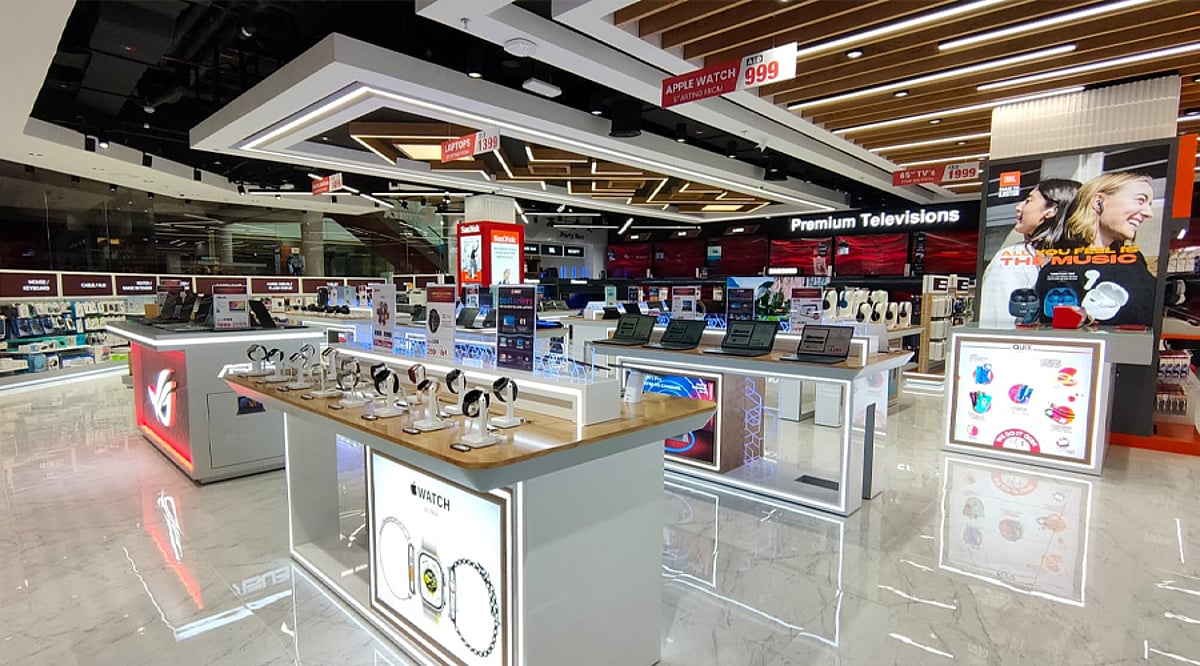
    India offers a diverse range of electronics retailers, from sprawling big-box stores to specialized mobile outlets. Whether you’re looking for the latest smartphone, a powerful laptop, or smart home devices, these stores provide extensive selections and competitive prices. Below is a look at some of the top gadget shopping stores in India.

    Croma

    Croma is a well-known electronics retailer in India, offering a comprehensive range of products including smartphones, laptops, televisions, home appliances, accessories, and gaming gear. With physical stores in numerous cities and a user-friendly online platform, Croma gives customers access to multiple brands and frequent promotional offers, making it a popular choice for gadget purchases.

    Reliance Digital

    Reliance Digital is a leading consumer electronics chain, stocking smartphones, laptops, televisions, cameras, headphones, smart devices, and more. Its widespread retail presence makes it easily accessible across the country, and it offers products from a variety of brands to suit different budgets and preferences.

    Vijay Sales

    Vijay Sales has established a strong foothold in India’s electronics retail sector, particularly in major cities. The store offers a wide array of products including smartphones, laptops, televisions, home appliances, gaming products, and accessories. Its online store complements its physical outlets, and regular discounts and exchange offers make gadget shopping more attractive.

    Sangeetha Mobiles

    Sangeetha Mobiles is a prominent electronics retailer, especially in South India. It specializes in smartphones, tablets, laptops, accessories, and other consumer electronics. The retailer frequently runs promotional offers and exchange deals, giving shoppers additional value when comparing prices across different brands.

    Poorvika Mobiles

    Poorvika Mobiles is another major electronics retailer, particularly popular in southern Indian markets. Its product range includes smartphones, laptops, tablets, smartwatches, headphones, and accessories. The company operates physical stores alongside an online platform, allowing customers to compare devices and explore different brands before making a purchase.

    Lot Mobiles

    Lot Mobiles has a strong retail presence in several parts of India and focuses primarily on smartphones and related electronics. Customers can explore devices from leading brands along with accessories and other gadgets. Its physical stores provide an option for shoppers who prefer hands-on product inspection before buying.

    Amazon India

    Amazon India is a major online destination for gadget shopping, offering a vast selection of smartphones, laptops, gaming accessories, smartwatches, headphones, cameras, and other electronics. The platform’s large inventory allows shoppers to compare brands, specifications, ratings, and prices easily. Major sale events like the Great Indian Festival bring attractive discounts across a wide range of electronic products.

    Conclusion

    Whether you prefer the hands-on experience of a physical store or the convenience of online shopping, India’s gadget retail landscape has something for everyone. From the extensive showrooms of Croma and Reliance Digital to the specialized mobile outlets like Sangeetha and Poorvika, and the e-commerce giant Amazon, shoppers have access to a wealth of options and deals.

  • Flipkart Freedom Sale 2026: Complete Guide to Dates, Offers, and Smart Shopping Tips

    Flipkart Freedom Sale 2026: Complete Guide to Dates, Offers, and Smart Shopping Tips

    Flipkart’s Freedom Sale 2026 is set to begin on August 8, with early access for Flipkart Plus, Black, and Flipkart Axis Bank Credit Card members starting August 7. This sale is a key event on the e-commerce calendar, offering significant discounts across smartphones, laptops, TVs, appliances, wearables, and fashion. Here’s everything you need to know to make the most of the deals.

    Sale Dates and Early Access

    The Freedom Sale opens to all shoppers on August 8, 2026. Eligible members get a head start on August 7, a full day before the general sale. This early window is critical for snagging the best deals on high-demand items like phones and laptops, as stock often moves fastest during the first few hours.

    Where Freedom Sale Fits in Flipkart’s Calendar

    This sale sits below the Big Billion Days (BBD) later in the year but above routine weekend promotions. Electronics that are due for a refresh rarely see their deepest discounts here; the deepest cuts typically come during BBD when older stock is cleared. The Freedom Sale is best for planned, specific upgrades, while BBD rewards patience and a wider range of festive discounts.

    Key Platform Features That Change the Deal

    Flipkart’s discount percentages carry a different weight due to its unique reward layers:

    • SuperCoins: A loyalty currency that can be applied to select products at checkout, used for Plus membership renewal, or redeemed for partner services. They don’t stack with most bank offers, so use them wisely on already planned purchases or save them for larger redemptions.
    • Open Box Delivery: Allows you to inspect the product’s condition, contents, and model number before confirming the delivery OTP. This is a crucial step to avoid disputes, especially during high-traffic sale weeks.
    • Flipkart Assured: A tag indicating verified packaging and quality standards. Always check for this when buying from unfamiliar sellers.

    Categories Where Flipkart Holds an Edge

    Several brands consistently offer exclusive or aggressive pricing on Flipkart: Motorola (Edge and G series), POCO, Nothing, Google Pixel, and Infinix. These often see the sharpest Freedom Sale pricing first.

    How Prices Move and What It Means for Buyers

    Flipkart uses rolling flash sales and Super Value windows rather than strict day-by-day markdowns. Electronics see the highest demand in opening hours, while fashion and home categories improve as the sale progresses. SBI cardholders typically get a flat instant discount (capped), ideal for a single big-ticket purchase. Flipkart Axis Bank Credit Card holders earn ongoing cashback, better for regular shoppers. The final checkout price—after combining the listing price, bank offers, exchange value, and SuperCoins—is the only number worth comparing.

    Editor’s Tip

    Skip the percentage shown on the listing. Work out the final checkout price after every offer stacks, then decide if the deal still holds up. Two products with identical discount badges can have very different real costs.

    Final Thought

    Future festive sales are likely to lean harder on loyalty layers like SuperCoins and delivery trust tools like Open Box, rather than headline discount numbers. As bank offer caps tighten and exchange values become the main lever, platforms that explain their own mechanics clearly will hold an edge.

    FAQs

    1. When Does Flipkart Freedom Sale 2026 Start?

    The sale begins on August 8, 2026, with early access for Flipkart Plus, Black, and Flipkart Axis Bank Credit Card members from August 7.

    2. Which Categories Usually Offer the Best Deals?

    Smartphones, laptops, TVs, home appliances, and wearables typically offer the strongest value. Electronics see the best selection in opening days; fashion discounts improve as the event progresses.

    3. What Bank Offers Are Available?

    Eligible SBI Credit Cards usually receive instant discounts, while the Flipkart Axis Bank Credit Card offers cashback. No Cost EMI and exchange offers may also be available.

    4. What Makes Freedom Sale Different?

    It combines bank discounts with SuperCoins, Open Box Delivery, Flipkart Plus early access, and Flipkart Assured listings, improving overall value beyond headline discounts.

    5. How Can I Get the Best Savings?

    Track prices before the sale, compare offers across retailers, apply eligible bank discounts, use exchange offers and SuperCoins where available, verify products through Open Box Delivery, and focus on the final checkout price.

  • The Evolution of Sony’s Logo: From Simple Beginnings to a Global Icon

    The Evolution of Sony’s Logo: From Simple Beginnings to a Global Icon

    Sony’s logo journey began in the 1940s, reflecting the company’s early identity before it became a global electronics leader. The initial design was simple, setting the stage for a brand that would eventually be recognized worldwide.

    Early Brand Identity (1950s)

    In the 1950s, Sony introduced cleaner lettering, helping the company create a professional image as it expanded beyond Japan into international markets. This shift marked a deliberate move toward a more modern and trustworthy appearance.

    The Famous Wordmark (Late 1950s)

    By the late 1950s, Sony adopted its iconic serif wordmark, a timeless design that has been recognized across generations. The bold, classic typeface became synonymous with quality and innovation.

    Focus on Simplicity

    Unlike many brands, Sony kept its logo simple, proving that clean typography can build trust and lasting recognition. The minimalist approach allowed the logo to remain versatile and effective across countless applications.

    Supporting Product Innovation

    The logo appeared on radios, televisions, cameras, and gaming consoles, becoming closely linked with reliable technology and innovation. Each product carried the emblem, reinforcing Sony’s reputation for excellence.

    Global Expansion

    As Sony entered more countries, the familiar logo helped customers instantly identify its products regardless of language or regional differences. The consistent branding became a universal symbol of quality.

    Digital Era Presence

    In the digital age, Sony carried the same logo into websites, apps, entertainment platforms, and digital services. This consistency ensured strong brand recognition across all modern touchpoints.

    Gaming and Entertainment

    The logo became even more famous through PlayStation, movies, music, and cameras, strengthening Sony’s influence across multiple entertainment industries worldwide. The emblem now represents not just electronics but a vast media empire.

    A Timeless Symbol

    Today, Sony’s classic wordmark remains unchanged, demonstrating how simple, consistent branding can achieve worldwide recognition and lasting customer confidence. The logo’s evolution proves that a strong visual identity can endure for decades without losing its impact.

  • AI-Driven Memory Chip Shortage Drives Up Prices for Laptops, Phones, and Consoles

    AI-Driven Memory Chip Shortage Drives Up Prices for Laptops, Phones, and Consoles

    Artificial intelligence spending is fueling a global memory chip shortage, pushing up prices for laptops, smartphones, gaming consoles, and other consumer electronics. Manufacturers are prioritizing high-bandwidth memory (HBM) for AI data centers, leaving fewer conventional DRAM chips for everyday devices.

    The supply squeeze, nicknamed “RAMaggedon,” has caused RAM prices to surge. In Hong Kong, computer shop manager Ken Tam reports that 16 GB of RAM now costs about HK$1,500, up from HK$300–HK$400 previously. Business has fallen by half since September as customers balk at the higher costs.

    Analysts note that memory prices for PCs and smartphones have climbed five to six times year-over-year. Samsung Electronics, SK hynix, and Micron have benefited from strong HBM demand, but the production shift has reduced supplies of standard DRAM used in consumer devices.

    The shortage is altering buying behavior. Some users are upgrading older computers instead of buying new ones. In Tokyo, graphic designer Charles Brousse says RAM, graphics cards, and motherboards have reached “ridiculous levels,” forcing his custom computer service to ask clients to supply their own parts.

    Higher component costs are also hitting game consoles. Reports indicate price increases for Sony PlayStation and Microsoft Xbox products. Software prices are rising as companies bundle AI tools—Microsoft 365 saw a sharp price hike in February following heavy AI investment.

    AI data centers add further inflationary pressure by consuming large amounts of electricity and water. The U.S. now hosts over 4,600 active data centers. Economists warn that data centers can raise wholesale electricity prices, contributing to a 4% rise in residential electricity costs (inflation-adjusted). Moody’s Analytics chief economist Mark Zandi estimates that AI-related inflation costs households “just over $375 more” per year.

    Automakers are also feeling the pinch, with higher costs for in-vehicle computer systems. Samsung’s finance chief expects the shortage to deepen in 2027 and persist through 2028.

  • India’s Semiconductor Ambitions Get a Boost as PM Modi Launches New Chip Plant and Electronics Roadmap

    India’s Semiconductor Ambitions Get a Boost as PM Modi Launches New Chip Plant and Electronics Roadmap

    India’s Electronics Sector Reaches New Heights

    India has solidified its position as the world’s second-largest mobile phone manufacturer, and Prime Minister Narendra Modi is now charting a bold course for the country’s electronics future. On July 4, 2026, Modi inaugurated the CG Semi Outsourced Semiconductor Assembly and Test (OSAT) facility in Sanand, Gujarat, marking a key milestone in India’s journey from assembling phones to producing semiconductors domestically.

    Speaking at the event, Modi emphasized that the plant represents the next logical step in a decade-long electronics revolution, moving the nation up the value chain and reinforcing its role in the global technology supply chain.

    The Shift from Phones to Chips: Key Numbers

    Modi highlighted India’s mobile manufacturing growth as the foundation for this shift. Since 2014, mobile phone production has surged approximately 33 times, making India the world’s second-largest mobile phone manufacturer and exporter. Overall electronics production has increased nearly sevenfold, while electronics exports have grown almost elevenfold over the same period.

    “The expansion of the semiconductor industry in India did not happen overnight. It is the next step in the electronics revolution that has taken place in India over the past decade,” Modi said. “First products, then components and now semiconductors… India is building the entire electronics value chain. This is the roadmap to Viksit Bharat. This is the next phase of Make in India.”

    Inside the Sanand Plant and Production Targets

    The Rs. 7,500 crore CG Semi facility has already begun commercial production of semiconductor packaging, with an initial annual target of 200 million chips. Modi expressed confidence that the plant will quickly scale toward a national goal of 500 million chips annually. Once the Sanand cluster is fully developed, he projected a daily output of 1.5 crore (15 million) chips.

    The Prime Minister credited the project as a collaboration between Indian, Japanese, and Thai industry partners. He also praised the facility’s diverse workforce, which includes women trained in states like Jharkhand, Madhya Pradesh, and Chhattisgarh, with some employees receiving advanced training in Malaysia. Modi called them representatives of a ‘Mini India’ operating within a single plant.

    Broader Make in India Push

    Modi tied the Sanand launch to a broader national roadmap, noting that four operational semiconductor facilities are expected in 2026 alone. The government’s goal is to cover design, manufacturing, packaging, and testing capabilities entirely within India. He framed this as the next phase of Make in India and a building block toward a ‘Viksit Bharat’ (Developed India) vision.

    He also pointed to parallel efforts to secure domestic access to critical and high-tech minerals needed to support long-term chip manufacturing, ensuring a resilient supply chain for the future.

    Political Framing and Reactions

    Modi used part of his address to contrast the current pace of semiconductor investment with what he described as a lack of follow-through on similar plans under previous governments, referencing past proposals that earmarked land near Gandhinagar and Sanand for chip projects but never materialized.

    Union Railway Minister Ashwini Vaishnaw and Gujarat Chief Minister Bhupendra Patel also spoke at the event, reinforcing the state’s positioning as an emerging hub within India’s broader semiconductor mission.

  • Amazon Prime Day 2026: 72 Hours of Massive Deals on Electronics, Fashion, and Home Appliances

    Amazon Prime Day 2026: 72 Hours of Massive Deals on Electronics, Fashion, and Home Appliances

    Amazon Prime Day 2026 is set to run from July 4 to July 6, offering Prime members a full 72 hours of discounts across smartphones, electronics, fashion, home appliances, and everyday essentials. This year also marks ten years of Prime in India, and Amazon is celebrating with a dedicated set of 10th Anniversary Deals covering over 15,000 products and 300 brands.

    New members can join Prime at Rs. 999 per year—a flat Rs. 500 off the standard annual plan. Existing members get instant bank discounts of up to 10% on SBI and Axis Bank cards, while Amazon Pay ICICI Bank credit card holders earn unlimited 5% cashback.

    Smartphones and New Launches

    Smartphones are a major focus this year. The Samsung Galaxy S25 Ultra is available at Rs. 84,999—a Rs. 15,000 discount with 9-month No Cost EMI—and the OnePlus 13 starts at Rs. 49,999. New launches include the Samsung Galaxy M47 and the OnePlus N6, both designed for Indian consumers. Buyers can also avail exchange offers worth up to Rs. 66,000 and up to 12 months of No Cost EMI across the smartphone category.

    Electronics, TVs, and Laptops

    Discounts go up to 80% on accessories, wearables, and headphones, and up to 75% on cameras. Laptops and tablets are available at up to 40% off, with deals on Dell and other leading brands. Smart TVs from Samsung, Sony, and LG carry discounts up to 65%, while projectors go up to 70% off.

    Fashion, Beauty, and Home

    Fashion deals include a minimum 65% off on tops, T-shirts, and jeans, and at least 50% off on sports shoes and sneakers. Beauty and skincare essentials from L’Oreal, Lakmé, and Korean brands see discounts of 30% to 60%. Home appliances are available at up to 65% off, covering washing machines, refrigerators, air conditioners, and dishwashers from brands like LG, Samsung, and Bosch. Air conditioners start at Rs. 20,490 and microwaves from leading brands start at Rs. 4,990.

    AI-Powered Shopping and Fast Delivery

    Amazon’s AI tools, including Rufus and Lens AI, are integrated into the shopping experience to help users compare products, read reviews, and search visually. Amazon Now will also deliver groceries and essentials within minutes to eligible pin codes during the sale.

  • Amazon Prime Day 2026: Top Deals with Up to 65% Off on Bestselling Brands

    Amazon Prime Day 2026: Top Deals with Up to 65% Off on Bestselling Brands

    Amazon Prime Day has returned with one of the most expansive discount rosters the event has seen. Across tech, beauty, home, kitchen, and everyday essentials, top brands are participating with markdowns that reach up to 65% off regular retail prices. For Prime members, the window to act is narrowing fast.

    The sale spans millions of products, and the sheer volume makes navigation challenging. To help shoppers focus on genuine value, this list highlights the most compelling deals currently live on Amazon, verified across categories and confirmed at verified sale prices.

    Amazon Prime Day Deals

    This year’s Amazon Prime Day delivers a broad sweep of deals across categories that matter to everyday consumers. The discounts are not shallow percentage drops on inflated prices. Several of the products listed below have hit their lowest-ever recorded prices during this event.

    Apple AirPods Pro 3

    Sale Price: $179.00 | Original: $249.00 | Savings: 28% off

    Apple’s most advanced wireless earbuds are a highlight of this year’s Prime Day. The AirPods Pro 3 features active noise cancellation, live language translation, heart rate sensing during workouts, and up to 10 hours of battery life per charge. Five ear tip sizes are included for a custom fit, and the MagSafe charging case adds convenient wireless juicing. With over 10,000 Amazon reviews and consistent bestseller status, these are among the most trusted earbuds on the market.

    • Active Noise Cancellation with Transparency Mode
    • Heart rate sensing and calorie tracking
    • Live translation in supported languages
    • Up to 10 hours of playtime per charge
    • USB-C MagSafe charging case included

    Samsonite Omni 2 Hardside Luggage Set

    Sale Price: $134.99 | Original: $389.99 | Savings: 65% off

    The two-piece Samsonite set fetches the deepest discount on this list and is one of the most compelling travel deals of the season. It includes a 20-inch carry-on and a 24-inch checked bag. Both are expandable, scratch-resistant, and feature 360-degree dual spinner wheels for effortless navigation through airports. The checked bag has a built-in TSA-approved lock. Interior organization panels keep packing structured, and the hardside shell absorbs impact effectively across transit conditions.

    Blueair Air Purifier & Sunrise Alarm Clock

    Sale Price: $79.99 | Original: $199.99 | Savings: 60% off

    Rarely does a single device serve three distinct purposes well. The Blueair combines HEPA and HEPASilent filtration, a white noise and sound machine, and a sunrise alarm clock into a compact bedroom unit. At 60% off, shoppers are essentially receiving three devices for less than the price of one. Dimensions are 6.69″D x 6.69″ W x 11.02″H, and the unit weighs approximately 1.79 kg, making it suitable for nightstands or dressers without dominating surface space.

    Amazon Prime Day Discounts

    Several product categories carry standout Amazon Prime Day discounts this year. Beauty, tech, home appliances, and kitchen essentials each carry significant markdowns, particularly on name-brand items with established review histories.

    Tarte Shape Tape Concealer

    Sale Price: $23.25 | Original: $58.13 | Savings: 60% off

    A Shop TODAY Beauty Award winner and a consistent bestseller with over 15,000 Amazon reviews, the Tarte Shape Tape is widely regarded as one of the strongest concealers at any price. The formula delivers full-coverage with a natural matte finish across 55 shade options. It layers well without caking and holds through long wear. The travel-sized version also drops to $9 during this sale window.

    Amazon Echo Dot (5th Gen)

    Sale Price: $29.99 | Original: $49.99 | Savings: 40% off

    Echo Dot is a compact smart speaker with Alexa built in. It plays music, podcasts, and audiobooks on command, responds to voice queries on weather and commutes, and connects to compatible smart home devices. For those running an Eero mesh Wi-Fi network, it also functions as a signal extender. With 194,000-plus Amazon reviews, this is one of the most validated products across the entire sale.

    Blink Video Doorbell

    Sale Price: $19.99 | Original: $49.99 | Savings: 60% off

    At $19.99, the Blink Video Doorbell delivers home monitoring at a fraction of its standard cost. It connects to the Blink app for live streaming with a head-to-toe camera view and real-time motion alerts with a subscription. Battery life runs approximately two years on three AA batteries. Alexa integration allows voice-activated viewing on Echo devices.

    JBL Flip 7 Portable Speaker

    Sale Price: $94.95 | Original: $149.95 | Savings: 37% off

    JBL Flip 7 earned the top spot in NBC Select’s portable speaker rankings. It delivers 16 hours of playtime per charge, carries an IP68 waterproof and drop-proof rating, and produces full, bass-forward sound in a portable form factor. Ten color options are available. The PushLock accessory system lets users add third-party attachments. This speaker performs across outdoor environments from beaches to campsites without compromise.

    Which Brands Have the Biggest Discounts

    The brands with the sharpest Prime Day cuts this year span tech, travel, and home care. These are not marginal discounts. Several represent the lowest prices these products have ever carried on Amazon.

    • Samsonite: Up to 65% Off – Luggage brand’s Omni 2 two-piece hardside set carries a 65% reduction, dropping from $389.99 to $134.99. This is a lowest-price-ever record for the set.
    • Oura Ring: Up to 55% Off – Oura Ring 4 drops from $499.00 to $226.00, also a lowest-ever recorded price. This health and fitness tracking ring measures sleep stages, resting heart rate, body temperature, and activity.
    • Blueair: 60% Off – Blueair’s air purifier and sunrise alarm clock combo falls from $199.99 to $79.99. No other deals in the bedroom wellness segment come close to this discount-to-utility ratio.
    • Amazon Devices: 40%–54% Off – Amazon’s own hardware lineup carries some of the steepest cuts. The Echo Dot drops 40%, the Fire TV Stick HD falls 54%, and the Smart Plug is reduced 48% to $12.99.

    Final Words

    Amazon Prime Day offers some of the biggest savings of the year, but the best deals are not always the ones with the highest discounts. Shoppers should focus on trusted brands, verified price drops, and products with strong customer reviews to make smarter purchases. With limited-time offers and fast-changing inventory, acting early can help secure the most valuable deals before they disappear.

    FAQs

    When does Amazon Prime Day end? Amazon Prime Day runs for a limited window, typically four days. The final hours of the sale carry the highest urgency, as inventory on deeply discounted items thins out quickly.

    Do you need Amazon Prime to access Prime Day deals? The majority of Prime Day deals require an active Prime membership. A 30-day free trial is available for new members, which qualifies them for the full scope of sale pricing.

    Are Prime Day prices the lowest of the year? Many products hit their lowest recorded prices during Prime Day. Several items featured in this list, including the Samsonite luggage set, Blueair device, and Oura Ring 4, are confirmed at lowest-ever price levels as of this sale.

    Which product categories offer the best Prime Day discounts? Tech, travel, home appliances, and beauty consistently deliver the strongest markdowns. This year, luggage, smart home devices, personal care wearables, and portable audio equipment carry the deepest cuts.

    Is it safe to buy electronics during Prime Day? All products sold through Amazon and fulfilled directly carry standard return and warranty policies. Buying from reputable brands with high review volumes on Amazon is the lowest-risk approach during any sales event.

    Disclaimer: Prices mentioned are subject to change. Verify current pricing directly on Amazon before purchasing.