

Tag: Embedded Finance

  • Top 7 FinTech Innovations Reshaping Financial Services

    Top 7 FinTech Innovations Reshaping Financial Services

    The financial services industry is undergoing a profound transformation driven by cutting-edge technologies. From artificial intelligence to blockchain, these innovations are enhancing efficiency, security, and accessibility. Below are the seven biggest FinTech innovations that are changing the way we manage money and conduct transactions.

    AI-Powered Finance

    Artificial intelligence is revolutionizing financial operations by automating fraud detection, credit assessments, customer support, and personalized financial advice. AI tools process vast amounts of data in real time, improving speed and accuracy while strengthening overall decision-making.

    Blockchain Technology

    Blockchain provides a decentralized ledger for transaction records, smart contracts, and digital assets. By reducing the need for intermediaries, it enhances settlement efficiency, transparency, and trust across financial markets.

    Real-Time Payments

    Real-time payment systems enable instant fund transfers and immediate availability of money. This innovation helps consumers and businesses manage cash flow with greater speed and convenience, reducing reliance on traditional banking delays.

    Embedded Finance

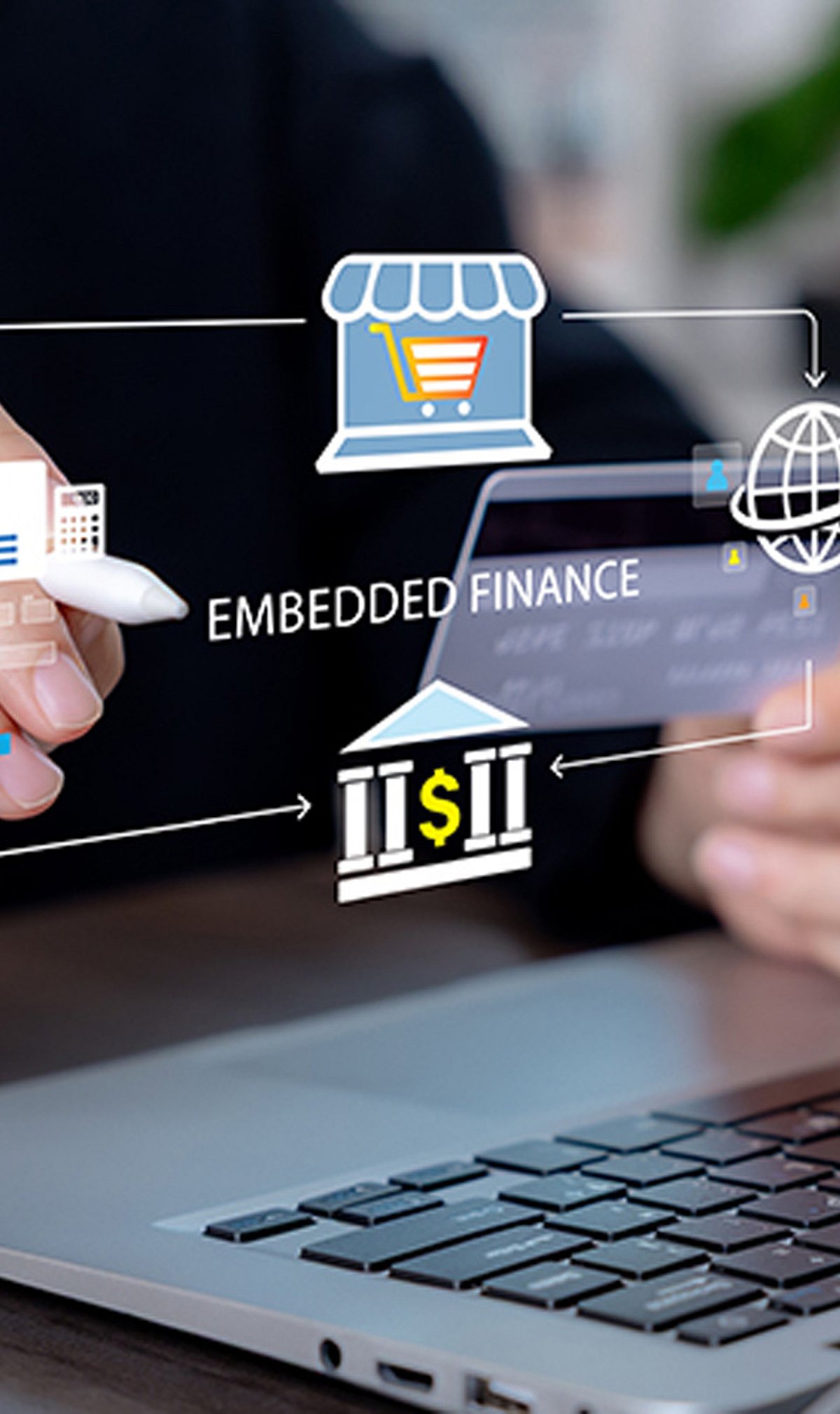
    Embedded finance integrates payments, lending, insurance, and banking services directly into non-financial platforms. This makes financial tools accessible within everyday digital experiences, such as shopping or ride-hailing, while maintaining security.

    Open Banking

    Open banking leverages APIs and customer-permitted data sharing to connect financial accounts across institutions. This enables personalized services, broader product choices, and smarter financial decisions for consumers.

    Digital Identity

    Digital identity technologies streamline customer onboarding and authentication while reducing fraud. They help financial institutions verify users securely across increasingly digital channels, enhancing both convenience and security.

    RegTech

    Regulatory technology (RegTech) automates compliance monitoring, reporting, screening, and risk controls. It enables financial institutions to respond faster to regulatory requirements and reduce operational burdens.

    Additional innovations such as asset tokenization and agentic AI are also gaining traction, offering fractional ownership of real-world assets and autonomous execution of multi-step tasks like reconciliation and compliance checks. Together, these technologies are shaping the future of finance.
  • Embedded Finance Leaders to Watch in 2026: Top Companies Reshaping Digital Payments and Banking

    Embedded Finance Leaders to Watch in 2026: Top Companies Reshaping Digital Payments and Banking

    Embedded finance is rapidly transforming the way businesses integrate financial services into their platforms. As we look ahead to 2026, several companies stand out for their innovative infrastructure, seamless payment solutions, and banking-as-a-service capabilities. Here are the key players to keep an eye on.

    Stripe

    Stripe continues to expand its embedded payments, treasury, lending, and financial infrastructure, enabling businesses to integrate seamless financial services into digital platforms globally.

    Adyen

    Adyen delivers unified payment processing, embedded financial products, issuing solutions, and merchant services that support businesses across multiple international markets efficiently.

    Marqeta

    Marqeta specializes in modern card issuing infrastructure, embedded payment capabilities, and customizable financial products for fintech companies and enterprise platforms worldwide.

    Solaris

    Solaris provides Banking-as-a-Service infrastructure, allowing businesses to launch embedded banking, payments, lending, and digital financial solutions with full regulatory compliance.

    Unit

    Unit helps software companies embed checking accounts, cards, payments, and lending products directly into applications through developer-friendly banking infrastructure solutions.

    Treasury Prime

    Treasury Prime offers API-driven banking infrastructure that enables fintech firms and enterprises to integrate embedded banking services with regulated financial institution partnerships seamlessly.

    Mambu

    Mambu provides cloud-native core banking technology supporting embedded finance, digital banking transformation, lending operations, and scalable financial product innovation across industries.

    Finastra

    Finastra delivers financial software solutions that enable banks and businesses to create embedded finance ecosystems with payment, lending, and banking capabilities efficiently.

    BaaSis

    BaaSis focuses on Banking-as-a-Service technology, helping enterprises integrate embedded financial products, digital banking features, and payment services into customer experiences successfully.

    These companies are at the forefront of the embedded finance revolution, powering the next generation of digital financial services. Watch them closely in 2026 as they continue to innovate and expand.

  • How Fintech Is Powering India’s Startup Boom in 2026: UPI, Embedded Finance, and Merchant Lending Lead the Charge

    How Fintech Is Powering India’s Startup Boom in 2026: UPI, Embedded Finance, and Merchant Lending Lead the Charge

    India’s fintech story in 2026 is one of divergence: venture funding has normalized, but the real-economy footprint of fintech continues to expand. Despite a slowdown in capital inflows, usage metrics show no signs of easing. UPI processed 23.2 billion transactions worth ₹29.90 lakh crore in May 2026 alone, while the RBI’s Digital Payments Index rose to 493.22 in March 2025 from 445.50 a year earlier. This is why fintech remains a critical engine for startup growth—it has evolved from a venture category into essential infrastructure.

    Payments, merchant acceptance, embedded finance, account aggregation, and digital lending rails are reducing friction for e-commerce, SaaS, consumer internet, logistics, and MSME startups. The regulatory architecture has also matured: UPI continues to expand globally, the Account Aggregator framework is entering a more formal phase, RBI’s interoperable sandbox lowers experimentation costs, and the DPDP Rules raise the baseline for trust and data governance.

    Funding Reset, Operating Boom

    India remains the world’s third-largest fintech ecosystem. IBEF pegs the domestic fintech market at $111 billion today, with potential to reach $421 billion by 2029. Tracxn counted 16,461 fintech companies in India, including 2,890 funded firms and 30 unicorns as of late May 2026. The macro context remains supportive: the World Bank reports India grew 6.5% in FY24-25, and the IMF projects 6.5% real GDP growth in 2026. With 886 million active internet users in 2024 and a mobile broadband base of 944.12 million, the digital user base is vast and growing.

    Financial inclusion is also deepening. PMJDY had 57.78 crore accounts as of February 2026, 55.8% held by women and 78.2% in rural/semi-urban areas. RBI’s Financial Inclusion Index improved to 67.0 in March 2025 from 64.2 a year earlier. UPI now accounts for 84% of retail payment volumes, with 185.9 billion transactions totaling ₹260.6 lakh crore in FY25. By FY26, UPI’s annual value exceeded ₹314 lakh crore with 700+ banks live, and India accounts for nearly 49% of global real-time payments.

    How Fintech Powers Startup Formation and Scaling

    Fintech behaves as a productivity layer for the startup economy. API-led rails for checkout, collections, payouts, KYC, merchant onboarding, and small-ticket credit lower the cost of starting and scaling a business. Credit deepening is the second leg: NITI Aayog’s 2026 credit report expects women’s credit penetration to reach 36%, with total credit outstanding to women rising to ₹76 lakh crore. Fintech NBFCs sanctioned 10.9 crore personal loans worth ₹1,06,548 crore in FY25.

    Adoption at the household and MSME level is another driver. 85.5% of Indian households have at least one smartphone, and 97.1% of people aged 15-29 used a mobile phone in the prior three months. Startup distribution increasingly begins with a payment-enabled, identity-linked handset.

    Case Studies: Where Value Is Accruing

    Indian fintech leaders are moving beyond pure transaction acquisition into multi-product monetization. Razorpay’s FY25 consolidated revenue rose 65% year over year to ₹3,783 crore, processing roughly $180 billion in annual payment value. PhonePe has 650+ million users and processed nearly 10 billion UPI transactions in January 2026, targeting an IPO valuation of $9–10.5 billion. BharatPe reported ₹1,734 crore in FY25 revenue with its first adjusted profit before tax, driven by merchant lending rather than just QR acceptance.

    Risks and Recommendations

    Risks include credit quality deterioration if underwriting lags growth, intense competition in payments (PhonePe and Google Pay held 79% of UPI market share in May 2026), and rising data governance and cyber costs. Private-market money is more selective, with global fintech deal count at a multi-year low in Q1 2026. For policymakers and investors, deepening AA and ULI coverage, preserving trust while lowering compliance duplication, revisiting payments economics, and prioritizing cybersecurity are key next steps.

    The bottom line: fintech is fueling India’s startup growth in 2026 less by attracting peak venture dollars and more by rewiring how startups collect money, lend, onboard, underwrite, and retain customers. Funding has become harder, but infrastructure has become stronger—a more important signal in a maturing startup market.