
Over the past few years, market attention has shifted from Bitcoin and Ethereum to DeFi, NFTs, artificial intelligence, and various emerging tokens. Entering 2026, a new keyword is redefining the relationship between crypto assets and the real economy: Real-World Assets (RWA).
What Are Real-World Assets (RWA)?
RWA refers to the process of bringing real-world assets, rights, or financial instruments onto a blockchain. Unlike native digital assets such as Bitcoin, the value of RWA is rooted in tangible items like U.S. Treasuries, private credit, real estate, gold, commodities, and energy infrastructure. As blockchain adoption grows, an increasing number of such assets are being tokenized.
From XRP to AI: Two Major Narratives Intersect
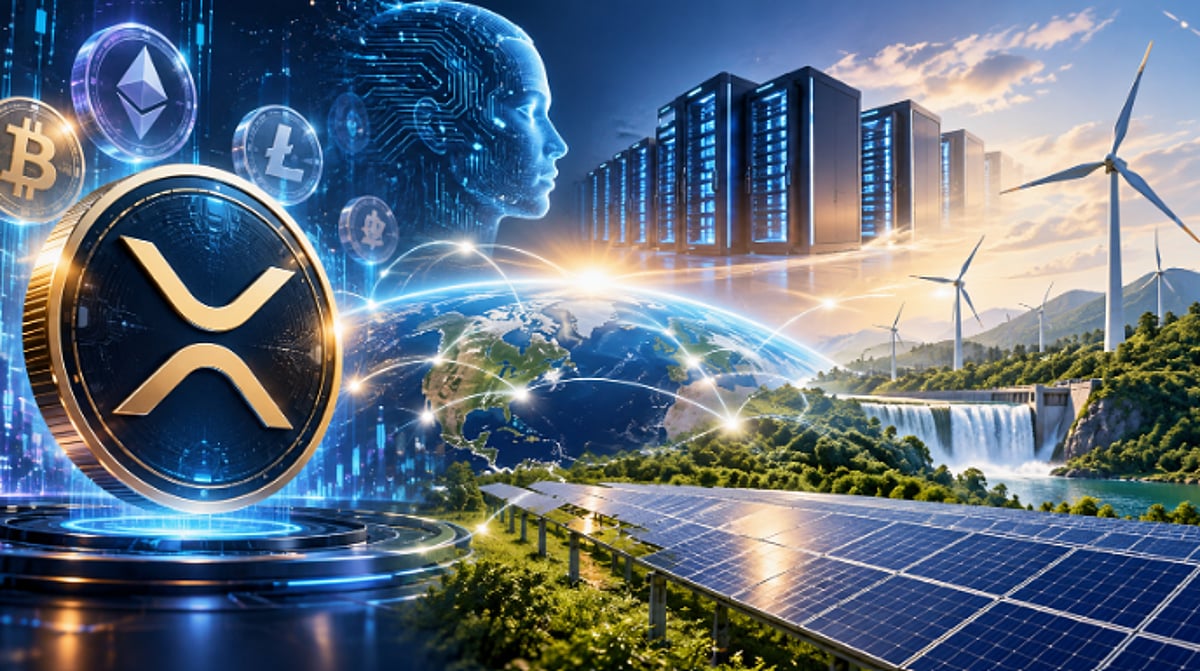
Three seemingly separate hot sectors—XRP, AI, and RWA—are showing clear points of convergence. XRP, often used for cross-border payments, and AI, which demands massive computational resources, both rely on real-world infrastructure. At this intersection, a critical question emerges: If blockchain can connect real-world assets and AI requires massive energy infrastructure, could energy become the next major direction for RWA?
Why RWA Is Gaining Traction in the Crypto Market
The explosion of generative AI applications like ChatGPT has driven a surge in data center construction, GPU clusters, and AI computing infrastructure. All of this computing depends on one key resource: electricity. The International Energy Agency estimates that by 2035, renewable electricity generation to meet data center demand could exceed 450 TWh, with renewables expected to cover roughly half of the growth in global data center electricity demand.
This creates a powerful ripple effect: AI → Data Centers → Electricity Demand → Solar, Wind, Hydropower, and Energy Storage → Energy Infrastructure. RWA offers a way to tokenize these energy assets, making them accessible to a wider audience.
Energy Infrastructure: The Next Frontier for RWA
Lake Energy is one company exploring this connection. The firm focuses on renewable energy infrastructure—solar, wind, hydropower, and Battery Energy Storage Systems (BESS)—and uses a digital platform to connect real-world energy projects with individual participants. Users don’t need to build or operate power plants; instead, they can view available energy projects and choose to participate using digital assets such as BTC, XRP, ETH, or LTC.
How to Participate on Lake Energy
- Create an account on the Lake Energy website.
- Browse available solar, wind, hydropower, or energy storage projects.
- Select a project and choose to participate using supported digital assets (BTC, XRP, ETH, LTC, etc.).
- Choose a project duration: options include 5, 10, 30, or 50 days.
- View project records and income distributions through your account.
Such platforms illustrate how RWA can bridge the digital and physical economies, allowing token holders to gain exposure to real-world infrastructure without the traditional barriers of capital or expertise.
The Future of RWA: AI, Energy, and Beyond
As AI continues to expand, the demand for electricity from data centers will grow, making energy infrastructure a prime candidate for tokenization. RWA is no longer limited to U.S. Treasuries and traditional financial assets; it is evolving to include the very resources that power the digital age. The intersection of XRP, AI, and energy infrastructure could drive the next trillion-dollar narrative in crypto.
Disclaimer: This article is for informational purposes only and does not constitute financial or investment advice. Always do your own research before investing.
