

Tag: Energy Management

  • How IoT and Augmented Reality Will Revolutionize Smart Home Living

    How IoT and Augmented Reality Will Revolutionize Smart Home Living

    The next evolution of smart homes is being shaped by two powerful technologies: the Internet of Things (IoT) and Augmented Reality (AR). Together, they promise to make home environments more connected, intuitive, and responsive than ever before.

    IoT as the Backbone of Connectivity

    IoT acts as the nervous system of a smart home, linking devices such as lights, appliances, cameras, locks, and sensors. This network enables seamless data sharing and automated responses—for example, a motion sensor can trigger lights to turn on, or a smart thermostat can adjust temperature based on occupancy.

    AR Brings Controls into Physical Spaces

    Augmented Reality overlays virtual controls onto real-world rooms. Homeowners could adjust lighting, temperature, music, and appliances by interacting with visual interfaces that appear naturally within their field of view. This reduces the need for physical switches or separate apps.

    Smarter Automation Through Context Awareness

    Connected sensors learn daily routines and automate tasks without manual input. Lights can dim in the evening, heating can lower when no one is home, and devices can power down during periods of inactivity. This level of intelligence saves energy and increases convenience.

    AR Simplifies Device Setup

    Setting up smart home devices can be intimidating. AR can guide users step by step, superimposing virtual instructions directly onto the physical device. Connection points, configuration steps, and troubleshooting tips appear in real time, making installation accessible to everyone.

    Energy Management Becomes Visual

    IoT sensors monitor energy consumption throughout the home. AR interfaces can then display this data in easy-to-understand visuals, highlight energy-hungry appliances, and suggest improvements. Homeowners can see exactly where savings are possible.

    Interactive Security Monitoring

    Smart cameras and sensors already detect unusual activity. With AR, security alerts can be displayed within the user’s viewing area—for instance, a bright outline of a detected person or a notification overlaid on a smart lock. This makes security more immediate and actionable.

    Personalized Living Spaces Adapt to You

    The combination of IoT and AR can create rooms that automatically adjust lighting, temperature, entertainment, and decor based on individual preferences. Walk into a room and it knows whether you want a bright work space or a cozy movie setting.

    AI Ties Everything Together

    Artificial Intelligence analyzes data from IoT sensors and AR interactions, enabling the smart home to make faster, smarter decisions. AI identifies patterns, predicts needs, and optimizes device behavior without requiring user input.

    The fusion of IoT, AR, and AI is turning smart homes into truly immersive environments where technology feels natural, responsive, and integrated into everyday life. As these technologies mature, the home of the future will be not just connected, but intuitive.

  • AI-Driven Operational Intelligence for Renewable Energy: An Interview with Mohit Kumar Singh

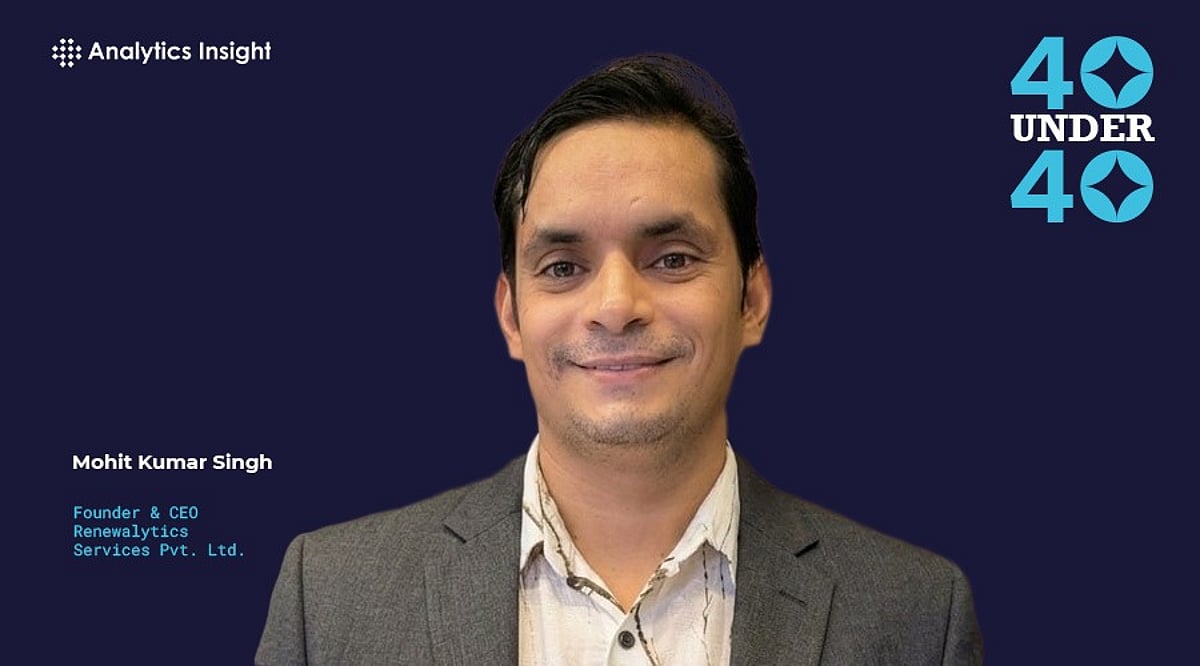
    AI-Driven Operational Intelligence for Renewable Energy: An Interview with Mohit Kumar Singh

    Mohit Kumar Singh, Founder & CEO of Renewalytics Services Pvt. Ltd., is leveraging artificial intelligence to solve critical operational challenges in the renewable energy sector. His company builds AI-powered operational intelligence platforms that help solar and wind operators improve efficiency, grid reliability, and intelligent energy management while supporting India’s clean energy transition.

    Singh’s journey in renewable energy began in December 2016 at Climate Connect, where he worked extensively on forecasting, scheduling, and grid compliance for renewable energy generators. Over the years, he collaborated with independent power producers, operations teams, regulators, and grid stakeholders, gaining first-hand exposure to the operational complexities of integrating renewable energy into the power system.

    After Climate Connect was acquired by ReNew Power and later divested, Singh founded Renewalytics in 2023 with the belief that the industry needed an independent company focused entirely on intelligent software for renewable energy operations. Today, Renewalytics supports more than 3 GW of solar and wind assets across commercial and pilot engagements, offering AI-driven forecasting, scheduling, weather intelligence, DSM analytics, enterprise software, operational automation, and intelligent decision-support systems.

    Solving Real-World Challenges

    India’s renewable energy targets are ambitious, but operational complexity is growing rapidly. Renewable energy companies must manage weather uncertainty, grid regulations, scheduling obligations, battery integration, diverse data sources, operational risks, and increasingly complex market dynamics.

    Renewalytics addresses these challenges by transforming fragmented operational data into actionable intelligence. As Singh explains, “Our objective is to help renewable energy companies improve operational visibility, automate routine workflows, strengthen decision-making, and optimize plant performance.”

    How AI is Transforming Forecasting and Operations

    Artificial Intelligence is fundamentally changing how renewable energy assets are managed. Machine learning enables continuous learning from historical generation patterns, weather behavior, plant performance, and operational outcomes to improve prediction accuracy and support better planning.

    Beyond forecasting, AI is assisting operations teams through intelligent co-pilots that validate data, detect anomalies, recommend corrective actions, and automate repetitive tasks. At Renewalytics, the team is building agentic AI capabilities where specialized AI agents collaborate to support weather intelligence, operational analytics, forecast validation, data quality monitoring, and performance optimization.

    “Our philosophy is that AI should augment human expertise rather than replace it,” Singh says. “We aim to enable engineers and operations teams to make faster and better-informed decisions.”

    Differentiation from Traditional Solutions

    Traditional energy management platforms primarily focus on monitoring assets and reporting operational data. Renewalytics goes beyond monitoring by combining AI, machine learning, operational intelligence, automation, weather analytics, scheduling, DSM analytics, and enterprise workflow management into a unified platform.

    Singh notes that his team’s practical experience within the renewable energy ecosystem allows them to build solutions that address real operational challenges instead of simply presenting data on dashboards. “We believe the future lies in intelligent platforms that actively assist decision-making rather than simply displaying information,” he adds.

    The Role of Data in Renewable Energy Performance

    Data is the foundation of every intelligent renewable energy system, but the true value lies in its quality, reliability, and contextual understanding. Renewable energy operations depend on information from SCADA systems, weather services, meters, grid operators, market platforms, scheduling systems, and operational logs.

    “At Renewalytics, significant emphasis is placed on data engineering, validation, automation, and integration because reliable AI models can only be built upon reliable data,” Singh explains. High-quality data ultimately leads to better operational decisions, improved efficiency, and stronger grid reliability.

    Future Trends and Vision

    Singh believes the next decade of renewable energy will extend far beyond capacity addition. The sector will increasingly be shaped by battery energy storage systems, hybrid renewable projects, AI-powered operational co-pilots, autonomous software agents, intelligent forecasting, grid optimization, and advanced machine learning.

    “As renewable penetration continues to increase, maintaining grid stability will become just as important as adding new generation capacity,” he says. “Utilities, grid operators, and renewable energy companies will rely far more heavily on predictive analytics, flexible energy resources, and intelligent software platforms to maintain system reliability.”

    Looking ahead, Singh envisions Renewalytics evolving into a digital operating layer that helps organizations improve efficiency, strengthen grid reliability, and accelerate the global clean energy transition. “Our long-term ambition is to build technology from India that serves renewable energy companies across international markets,” he concludes.

  • Schneider Electric CAIO Philippe Rambach on Scaling AI with a Business-First Strategy and Critical Thinking

    Schneider Electric CAIO Philippe Rambach on Scaling AI with a Business-First Strategy and Critical Thinking

    In a wide-ranging interview, Philippe Rambach, Chief Artificial Intelligence Officer at Schneider Electric, shares how the global energy management and automation company is scaling AI across more than 160 factories and 140 countries. The key, he explains, is a disciplined business-first approach that prioritizes real-world value over technological novelty.

    Business Value Over Technology

    Rambach warns against “technology tourism”—the temptation to run hundreds of pilots without a clear business case. Instead, Schneider Electric starts by identifying a specific business impact, then asks if AI can help. Each use case passes through gate reviews that test both technical feasibility and business value. Projects are halted immediately if either criterion fails.

    “We do a pilot that keeps in mind what we want to deliver at scale,” Rambach notes. This rigor prevents “pilot purgatory” and ensures that lab successes translate to real factory results.

    Agentic AI and the Sera Assistant

    Schneider recently launched Sera, an AI agent that transforms how users interact with environmental data. However, Rambach cautions against overhyping generative AI. “Generative AI agents do not replace forecasting, anomaly detection, prediction or optimisation—we still need that,” he asserts. Sera adds a conversational layer, allowing operators to ask complex questions in natural language, moving beyond rigid dashboards.

    Critical Thinking as a Core Skill

    To counter blind faith in AI outputs, Schneider has introduced an “AI for All” training program with the same institutional rigor as safety training. The centerpiece is critical thinking. “We want people to keep critical thinking when AI gives an answer,” Rambach says, acknowledging that AI can be wrong or partially wrong. The company also hosts “promptathons” and a virtual “Genius Bar” for employees to share prompting strategies.

    Edge vs. Cloud: A Matter of Physics and Policy

    Deciding where to run AI depends on data sovereignty and latency. In industrial settings, sensitive data often must stay local, and real-time applications like visual inspection require edge processing for speed. Schneider’s solutions are designed to be versatile enough for both environments.

    Addressing the Energy Density Crisis

    Schneider Electric, which builds data center infrastructure, is acutely aware that AI training consumes vast energy. Rambach notes the irony: AI is part of the solution. The company uses AI to optimize power management for its own factories and partners like NVIDIA to precisely manage energy in AI factories. He also advocates treating AI as an “unreliable component,” building reliable systems with human-in-the-loop checks, as in customer care where AI drafts responses but humans verify them.

    Navigating Regulation and Ethics

    Operating under the EU AI Act, Schneider has published an external Trust Charter that explicitly bans facial recognition. Rambach says compliance with the Act does not slow the company down. The ethical framework is backed by a dedicated responsible AI team within the AI Hub.

    The Future of the CAIO Role

    Rambach admits he is “very scared of becoming the bottleneck” as AI becomes pervasive. He sees the CAIO role evolving toward defining technical policy and supporting large, bespoke use cases. His overarching message is to not forget centuries of human wisdom: “My big message is we should not forget everything we have learned in the last 2,000 years, just because there’s a new technique.”

    For industrial giants, AI is not a replacement for human engineering but its most powerful tool—and mastering it lies in the critical mind of the user.