
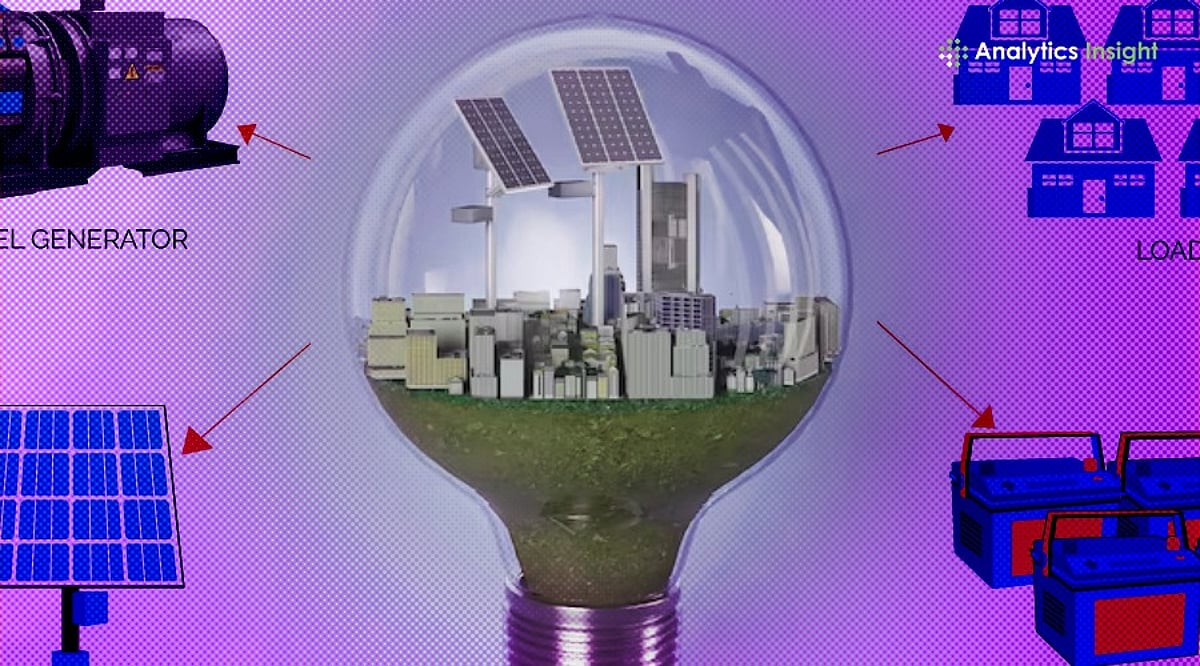
AI is transforming microgrids from rule-based energy systems into intelligent, self-optimizing networks. By combining predictive analytics, renewable forecasting, and autonomous energy management, AI improves grid reliability, lowers operating costs, and supports the growing power demands of data centers, industries, and smart communities.
From Passive Systems to Predictive Ones
Traditional microgrids relied on relatively simple rule-based controllers: if battery storage drops below a threshold, switch to backup generation. AI-enabled systems operate very differently, using machine learning models such as LSTM neural networks to forecast solar and wind output, anticipate demand spikes hours in advance, and adjust dispatch decisions before a shortfall occurs. Research comparing forecasting techniques has shown LSTM networks achieving strong accuracy for wind generation prediction, while random forest models have performed particularly well for solar forecasting—both feeding directly into how confidently a microgrid can rely on renewable sources rather than falling back on diesel generation as a safety net.
The Market Is Scaling Fast, and AI Is the Reason Why
The global microgrid market was valued at roughly $28.9 billion in 2025 and is projected to grow at a compound annual rate of around 18% through the early 2030s, according to Global Market Insights. A narrower but faster-growing segment—AI-integrated microgrids purpose-built for data centers—is expected to expand from $4.8 billion in 2025 to $20.9 billion by 2034. That growth is being driven largely by AI’s own power appetite: hyperscale data centers need reliable, high-density power that public grids increasingly can’t guarantee, making AI-optimized microgrids as much an enabler of the broader AI boom as a beneficiary of it.
Who’s Building the Intelligence Layer
A handful of established industrial players and newer software specialists are shaping how AI actually gets embedded into microgrid operations. Key companies include:
- Schneider Electric
- Siemens
- Tesla Energy
- ABB
- Eaton
- Heila Technologies
Predictive Maintenance Is Quietly Cutting Costs
Beyond forecasting and dispatch, AI is reshaping how microgrids stay operational in the first place. By continuously analyzing sensor data from batteries, inverters, and generation assets, machine learning models can flag early signs of equipment degradation well before a failure actually occurs. This shifts maintenance from a fixed, calendar-based schedule to a condition-based one, reducing unplanned downtime and avoiding the kind of costly emergency repairs that used to be treated as simply unavoidable in distributed energy systems.
Real-World Deployments Show the Financial Case
The economic argument for AI-driven microgrids is no longer theoretical. Schneider Electric’s EcoStruxure Microgrid deployment at a California winery, Domaine Carneros, cut carbon emissions by 375 tonnes and saved roughly $70,000 annually through smarter load management alone. At a larger scale, research into hydrogen-integrated microgrids combining LSTM forecasting with optimization algorithms has shown grid import reductions of over 35% and improvements in energy self-sufficiency from roughly 71% to nearly 90%—figures that would be difficult to reach with static, rule-based control systems.
What’s Next for AI-Driven Microgrids
The next phase of development looks likely to center on two things: tighter integration with digital twins that simulate microgrid behavior before changes are made in the real world, and deeper participation in energy markets, where systems like Tesla’s Autobidder let storage assets buy and sell power autonomously based on real-time price signals. As renewable penetration keeps climbing and AI’s own electricity demand keeps growing in parallel, the pressure on microgrids to get smarter is only going to intensify.
Why This Matters
As renewable energy adoption accelerates and electricity demand rises from AI workloads and data centers, intelligent microgrids have become essential for grid resilience. AI enables real-time optimization, predictive maintenance, and efficient energy distribution, helping businesses and communities reduce costs, improve reliability, and support a more sustainable energy future.