
Tag: enterprise cloud

  • How AI, Data Sovereignty, and Sustainability Are Reshaping Cloud Strategy: Insights from OVHcloud’s Terry Maiolo

    How AI, Data Sovereignty, and Sustainability Are Reshaping Cloud Strategy: Insights from OVHcloud’s Terry Maiolo

    As AI accelerates cloud adoption, enterprises are placing greater emphasis on transparent pricing, energy-efficient infrastructure, data governance, and regulatory compliance to build resilient cloud strategies for long-term business growth.

    Key Takeaways

    • Cloud strategy is shifting beyond IT, with data sovereignty, compliance, and governance becoming critical business priorities worldwide.
    • Sustainable cloud infrastructure can reduce energy use, improve efficiency, and support AI workloads without compromising performance or security.
    • Businesses should evaluate cloud providers based on transparent pricing, responsible data handling, and long-term scalability for AI-driven growth.

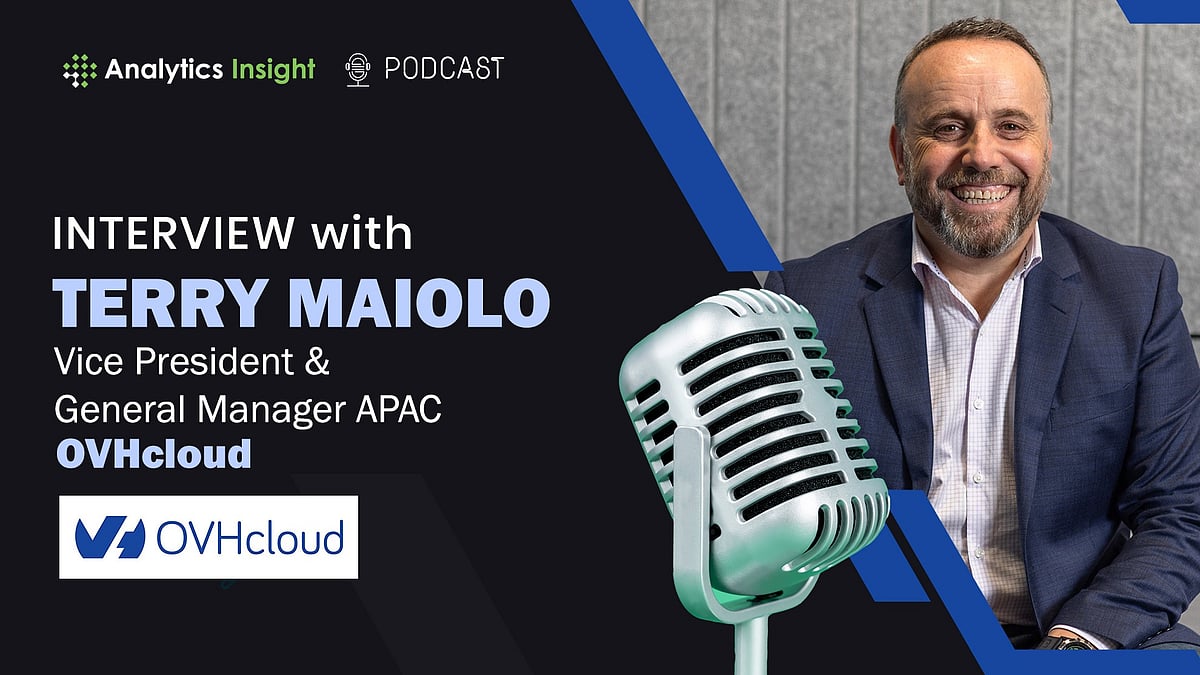
    Cloud computing is evolving rapidly, but businesses are also facing new challenges, including rising costs, security concerns, compliance requirements, AI-driven workloads, and sustainability goals. In this exclusive podcast interview, Priya Diyalani speaks with Terry Maiolo, Vice President and General Manager, APAC, at OVHcloud, about how organizations can build a cloud strategy that drives innovation, protects data, and supports long-term sustainability.

    Q: Could you tell us about OVHcloud, your role, and what makes the company different from other cloud providers?

    Absolutely. At OVHcloud, we are a pure cloud provider with 46 data centers across four continents and 30 local zones worldwide. In APAC, we operate one data center in Mumbai, two in Singapore, and three in Sydney, and I oversee the entire Asia-Pacific region. What makes us different is that we are a European cloud provider, so we comply with GDPR standards, giving customers greater data sovereignty. Another major difference is that we build our own servers and use our direct-to-chip water cooling technology, which we have developed over the last 20 years. This allows us to run data centers without traditional air conditioning while improving energy efficiency.

    Q: Regulations and global developments are changing the cloud industry. How are these factors influencing enterprise decisions?

    I believe cloud decisions are no longer only about technology. Businesses are becoming much more aware of where their data is stored and who has access to it. Regulations like India’s Data Protection Act are encouraging organizations to take data sovereignty seriously. At the same time, many customers are looking for cloud providers that are not governed by laws such as the US Cloud Act. I see cloud strategy becoming a discussion about business, governance, and compliance rather than just an IT decision.

    Q: Sustainability has become a major boardroom topic. How is OVHcloud approaching it?

    We believe sustainability should not come at the cost of performance. Our direct-to-chip water cooling captures heat directly from the processors, so we use less electricity and less water while increasing server density. We also manufacture our own servers, extend their life through reuse, recycle components whenever possible, and have achieved zero waste. I think organizations can meet sustainability goals while still improving efficiency and reducing costs.

    Q: AI is changing how data is created and used. How should businesses think about data sovereignty today?

    I think companies need to consider two things: how they use their own data and how their cloud provider handles it. At OVHcloud, we have made a clear decision not to monetize customer data in any form. At the same time, I believe businesses need a provider with a global presence so their data stays close to their operations while maintaining security, compliance, and low latency.

    Q: AI is increasing the demand for computing power. How can organizations balance AI growth with sustainability?

    I believe this is one of the biggest challenges for the industry. AI requires more computing power, energy, and infrastructure, so cloud providers must continue improving efficiency. I also encourage businesses to ask cloud providers about hidden costs, including data transfer fees, because these can become significant as AI usage grows. Sustainable infrastructure should also provide predictable costs.

    Q: Finally, what does a successful cloud strategy look like over the next decade?

    I believe organizations should move beyond talking about sustainability and sovereignty and start putting those goals into action. Responsible cloud infrastructure already exists, and businesses do not have to choose between performance, security, sustainability, and cost. I believe they can achieve all of these together by selecting the right cloud partner and making long-term strategic decisions.
  • Krutrim’s Strategic Pivot: India’s First AI Unicorn Shifts Focus to Enterprise Cloud

    Krutrim’s Strategic Pivot: India’s First AI Unicorn Shifts Focus to Enterprise Cloud

    India’s AI ambitions found an early symbol in Krutrim. The name means “artificial” in Sanskrit, and the company carried the weight of a national aspiration. Founded in April 2023 by Bhavish Aggarwal, the man behind Ola Cabs and Ola Electric, Krutrim set out to build what no Indian company had attempted before: a full-stack AI platform trained on Indian languages, powered by Indian engineers, and running on Indian servers.

    The early months delivered results that matched the rhetoric. In January 2024, Krutrim raised $50 million in its first round, led by Matrix Partners India, and crossed a $1 billion valuation overnight. It became India’s fastest-ever unicorn and its first AI startup to achieve that milestone.

    The Grand Vision: Full-Stack AI Sovereignty

    The ambition stretched well beyond language models. Aggarwal envisioned semiconductors, a consumer AI assistant, cloud infrastructure, and custom chips — all under one roof. In February 2025, he committed Rs 2,000 crore of personal capital and pledged an additional Rs 10,000 crore to the venture. The plan was bold, structured, and strikingly self-reliant. Krutrim-1, a 7-billion-parameter large language model, launched as India’s first serious LLM. Krutrim-2, a 12-billion parameter model, followed with stronger performance in Indian language processing and code generation. BharatBench, an evaluation framework for Indic languages, added academic weight to the platform. The company looked like it was building a generational institution.

    Products and Platforms

    Krutrim’s initial roadmap covered multiple layers of the AI stack. The company planned to offer:

    • Large language models trained across Indian languages and English
    • Kruti, a voice-first agentic AI assistant capable of cab booking, bill payments, and image generation
    • Krutrim Cloud, a GPU-based infrastructure platform for training and inference workloads
    • Bodhi 1, a custom AI silicon chip targeting compute and edge applications
    • A mapping and language hub service for real-time navigation and Indic translation

    The idea was vertical integration — own everything from silicon to the user interface. This approach reduces dependency on foreign technology but also multiplies execution risk.

    The Sovereign AI Argument

    Aggarwal’s case rested on a clear premise. India’s 1.4 billion people and 22 official languages deserve AI systems built by Indians, for Indians. Global models trained primarily on English data fail to capture the nuance, context, and culture embedded in regional languages. Krutrim aimed to close that gap. The argument resonated deeply with investors, policymakers, and the broader tech ecosystem. India’s AI story needed a homegrown protagonist, and Krutrim filled that role convincingly.

    When Execution Met Reality

    The cracks appeared gradually. Senior exits began accumulating across divisions. Chandra Khatri, the founding head of AI based in Silicon Valley, left the company. Sunit S, who led product design, exited. Raj Kiran, head of AI research, departed. The semiconductor team lost several senior figures, including engineers from the Bodhi chip project.

    By early 2026, three rounds of layoffs had eliminated more than 200 roles across linguistics, AI research, and chip design. Headcount dropped from over 550 employees in August 2025 to roughly 150 to 160 by March 2026.

    Kruti, the consumer AI assistant, was quietly pulled from app stores in April 2026 without a public announcement. The Bodhi 1 chip, expected to launch in 2026, was scrapped entirely. Chips procured for model training were reportedly repurposed to run simulations for Ola Electric scooters.

    The company went silent on social media from December onward and did not participate in India’s AI Impact Summit, where global players including Google, Anthropic, and OpenAI were actively present. Competitor Sarvam AI, in contrast, released new open-source models and forged partnerships with notable organizations including space company Pixxel.

    The Pivot to AI Cloud

    In late 2025, Krutrim undertook a formal business realignment. The company redirected capital and talent away from model development and chip design toward AI cloud infrastructure. By May 2026, it announced itself as a full-stack domestic AI cloud provider serving enterprise customers — a fundamentally different identity from the one it launched with.

    The financial results for FY26 offered some encouragement. Revenue reached approximately Rs 300 crore, nearly three times the prior year’s figure. The company reported its first annual net profit, with a profit after tax margin crossing 10%.

    Krutrim now serves more than 25 enterprise customers across telecom, financial services, healthcare, logistics, and consumer internet sectors. GPU compute capacity is largely committed to external enterprise workloads, and the Ola Group itself moved all its cloud spending to Krutrim, ending its use of Microsoft Azure in May 2025.

    A company spokesperson stated, “The company has reached an important milestone of being profitable, self-funded, and gaining market traction. Our AI cloud is built for Indian enterprises, by Indian engineers.”

    Questions remain, however. Earlier reports indicated that up to 90% of Krutrim’s FY25 revenue came from Ola Group entities. The company has not disclosed its external revenue breakdown. Analysts have flagged the need for greater transparency before the profitability claim can be fully evaluated.

    What the Krutrim Story Tells Us

    Krutrim’s trajectory reflects a broader pattern in deep-tech ambition. Building frontier AI models requires sustained capital, specialized talent, and time — three resources that proved harder to secure than the initial momentum suggested. The failure to attract external institutional investors after the Series A left the company almost entirely dependent on its founder’s personal commitment. That constraint narrowed the runway for foundational research and product experimentation.

    The pivot to cloud infrastructure is commercially rational. Demand for sovereign, India-built AI cloud services is growing. Enterprises want compute options that keep data within national borders and reduce dependence on American or Chinese platforms. Krutrim’s infrastructure-first positioning aligns with that demand. The model carries lower research risk and faster revenue cycles than frontier model development.

    Final Words

    Krutrim’s story is not a failure — it is a recalibration. The company moved from an overextended ambition to a defined, profitable business in under three years. The shift carries trade-offs. India still lacks a domestically built frontier model that competes on global benchmarks. The sovereign AI aspiration remains partially unfulfilled. Krutrim’s departure from that frontier leaves a gap that Sarvam and others must now fill.

    Still, the enterprise cloud path offers something equally important: a sustainable business with real customers, growing revenue, and operational independence. Krutrim’s FY26 performance suggests the model can work. The company now holds a credible position in India’s AI infrastructure layer, even if the original vision of full-stack AI sovereignty required revision. In an industry where overcommitment destroys companies and discipline builds them, the ability to reset and survive holds its own kind of value.