In today’s hyperconnected enterprise environment, compliance and configuration management have become mission-critical functions. With hybrid infrastructures spanning cloud and on-premise systems, traditional audit-based approaches—periodic, manual, and retrospective—are no longer sufficient to manage risk. Organizations are turning to artificial intelligence to shift from reactive compliance validation to continuous, predictive risk intelligence. This transformation is redefining governance models, enabling real-time anomaly detection, automated remediation, and scalable compliance visibility across increasingly complex digital ecosystems.
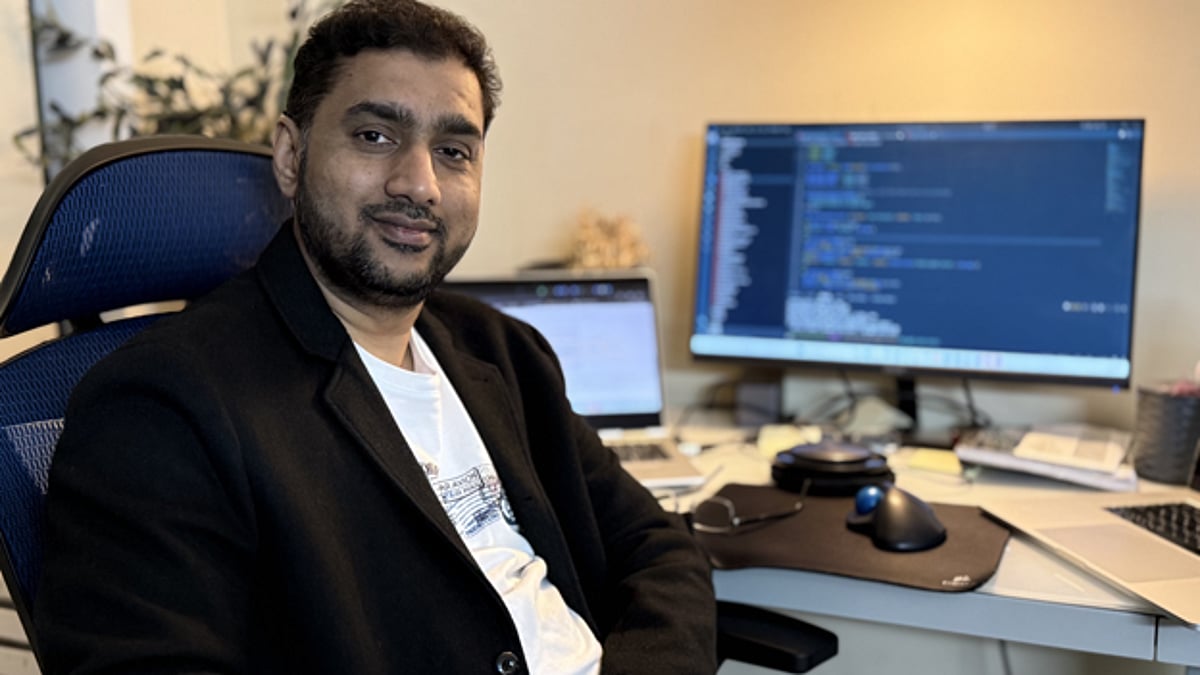
Nadeem Siddiqui, a Senior Software Engineer, leads this technological transition with his expertise in automation and configuration management. Siddiqui has dedicated his career to developing enterprise-scale systems, designing and enhancing a compliance intelligence platform that operates between 15,000 and 20,000 hybrid endpoints and implements AI-powered risk detection for enterprise governance. “Compliance is no longer just about passing audits,” Siddiqui explains. “It’s about continuously understanding your infrastructure, identifying risk in real time, and acting on it before it becomes a violation.”
Over the past four years, Siddiqui has contributed to transforming traditional compliance workflows into intelligent, automated systems. By integrating AI-driven risk visibility into configuration management processes, he has helped organizations move away from manual data collection and static validation cycles toward continuous monitoring models that provide ongoing insight into system health and compliance posture.
A key aspect of his work has been centralizing configuration telemetry across hybrid environments and enabling intelligent drift detection, allowing organizations to quickly identify deviations from compliance baselines. This approach has significantly reduced the need for manual audit evidence gathering while improving the speed and accuracy of anomaly detection. “Drift is inevitable in dynamic systems,” he notes. “The real value lies in detecting it early and understanding its impact across the environment.”
Siddiqui’s contributions extend to co-architecting an in-house compliance and configuration intelligence platform that integrates AI-powered analytics with automation pipelines. The system continuously monitors infrastructure, translating regulatory requirements into machine-enforceable policies that are embedded directly into DevOps workflows. This ensures that compliance is not an afterthought, but an integral part of system design and deployment.
The measurable impact of this work is reflected in the platform’s scale and efficiency. Supporting governance across up to 20,000 endpoints, with approximately 75–80% in the cloud, the system has replaced periodic compliance validation with continuous monitoring capabilities. Automated reporting has significantly reduced manual operational overhead, while AI-assisted visibility has improved remediation response times and strengthened collaboration between cybersecurity, DevOps, and audit teams.
However, implementing such a transformation has required overcoming significant challenges. Siddiqui highlights the complexity of standardizing configuration data across diverse environments, ensuring consistency in AI models, and aligning cross-functional teams around a unified compliance strategy. Additionally, translating regulatory controls into machine-interpretable policies, without slowing down deployment velocity, has been a critical engineering and governance challenge. “Balancing compliance rigor with engineering agility is one of the hardest problems in modern enterprises,” he says. “You need systems that are both strict and flexible at the same time.”
Beyond his engineering contributions, Siddiqui has also advanced thought leadership through peer-reviewed research on AI-enabled infrastructure intelligence and governance models. His work bridges the gap between academic frameworks and real-world enterprise applications, offering insights into how intelligent systems can be leveraged to enhance compliance and risk management at scale.
Looking ahead, Siddiqui sees the future of enterprise compliance being driven by predictive analytics, explainable AI, and deeper integration with operational systems. As organizations continue their journey toward DevOps and cloud-native architectures, compliance will morph into an intelligent control layer baked into the infrastructure, rather than a standalone audit function. “We are moving toward a model where compliance systems don’t just detect issues, they anticipate them,” he observes. “Predictive risk intelligence will become a cornerstone of how enterprises manage security and governance.”
As the scale and complexity of technology increase, coupled with an increasingly challenging regulatory environment, thought leaders such as Nadeem Siddiqui are helping change the way enterprises think about compliance—transforming it from a reactive burden to a strategic asset powered by intelligent systems.