Tag: Enterprise Technology

  • Leading Modernization Engineering Services Firms for Legacy Technology Transformation

    Leading Modernization Engineering Services Firms for Legacy Technology Transformation

    Modernizing legacy technology is no longer just an IT upgrade—it has become a strategic necessity for enterprises aiming to keep applications secure, reduce technical debt, and prepare systems for cloud computing, automation, and artificial intelligence. Businesses are increasingly turning to engineering and IT services companies that can assess legacy systems, migrate workloads, rebuild applications, and introduce modern architectures without disrupting daily operations. Industry research highlights several global technology providers for their capabilities in application and legacy modernization.

    10 Leading Firms Transforming Legacy Technology

    Here are ten companies that stand out in the modernization engineering services space:

    Accenture

    Accenture offers a broad application modernization practice covering legacy assessment, architecture planning, cloud migration, application transformation, and mainframe modernization. The company also uses automation and AI-assisted approaches to help enterprises modernize large application estates.

    Tata Consultancy Services (TCS)

    TCS works with large enterprises on application modernization, cloud transformation, and legacy technology upgrades. Its scale and global delivery network make it a major provider for organizations managing complex technology environments. TCS was named a Leader in Forrester’s 2024 assessment of application modernization and migration services.

    Infosys

    Infosys takes an AI- and cloud-first approach to modernization. Its services cover legacy applications, mainframes, databases, cloud migration, technology upgrades, and the transition of monolithic applications to microservices.

    Capgemini

    Capgemini helps businesses modernize applications and technology environments while moving toward cloud-native architectures. The company has been recognized among the leading providers in application modernization and migration services.

    HCLTech

    HCLTech is a major player in legacy and application modernization. Its services focus on helping enterprises move away from older technology environments while adopting cloud, automation, and modern engineering practices. HFS Research included HCLTech among its 2025 Market Leaders.

    Cognizant

    Cognizant offers end-to-end modernization services, from application assessment and migration to cloud-native transformation. Its Skygrade platform uses automation, modern tooling, and generative AI to support large-scale cloud modernization programs.

    IBM

    IBM Consulting focuses strongly on hybrid cloud and AI-led application modernization. Its services include migrating and modernizing existing applications, containerizing legacy systems, and incrementally improving older applications rather than replacing everything at once.

    Wipro

    Wipro provides modernization through rehosting, re-platforming, refactoring, and rearchitecting applications. Its services also cover integration and data modernization, with GenAI being used to speed up parts of the transformation process.

    EPAM Systems

    EPAM has an engineering-focused modernization practice covering applications, platforms, and data. It also uses AI for legacy code migration and documentation, alongside cloud, containerization, and platform engineering capabilities.

    LTIMindtree

    LTIMindtree is a notable provider for enterprises looking to modernize legacy and mainframe environments. The company has been included among major application modernization providers assessed by industry research firms.

    Final Take

    Modernization engineering is becoming a long-term technology strategy rather than a one-time migration project. Companies need to balance legacy systems with cloud adoption, AI, security, and the need to release software faster. The right modernization partner depends on the size of the technology estate, the complexity of legacy applications, and the organization’s cloud and AI roadmap. For large-scale transformation, companies such as Accenture, TCS, Infosys, Capgemini, HCLTech, and Cognizant remain prominent names, while IBM, Wipro, EPAM, and LTIMindtree offer additional options across different modernization needs.

    Frequently Asked Questions

    What are modernization engineering services?

    Modernization engineering services help businesses upgrade legacy applications, migrate systems to cloud platforms, improve architecture, introduce automation, and integrate artificial intelligence while maintaining business continuity and reducing technical debt.

    Why do companies need modernization engineering services?

    Companies use modernization engineering services to address outdated technology, improve application performance, strengthen security, reduce maintenance costs, support scalability, and create technology environments capable of adapting to changing business requirements.

    Which companies provide modernization engineering services?

    Leading providers include Accenture, Tata Consultancy Services, Infosys, Capgemini, HCLTech, Cognizant, IBM, Wipro, EPAM Systems, and LTIMindtree, offering different combinations of application, cloud, mainframe, data, and digital engineering modernization capabilities.

    How does AI support application modernization?

    AI can assist modernization by analyzing legacy code, generating documentation, identifying dependencies, suggesting code improvements, automating testing, and accelerating migration activities, helping engineering teams modernize applications more efficiently.

    How should businesses choose a modernization engineering partner?

    Businesses should evaluate a provider’s legacy technology expertise, cloud capabilities, engineering experience, security practices, AI adoption, industry knowledge, delivery scale, modernization methodology, and ability to support long-term transformation goals.

  • 10 Cloud Computing Startups Poised for Explosive Growth in 2026

    10 Cloud Computing Startups Poised for Explosive Growth in 2026

    Cloud computing is entering a new phase, driven by artificial intelligence, high-performance computing and enterprise demand for scalable infrastructure. While Amazon Web Services (AWS), Microsoft Azure and Google Cloud continue to dominate the market, startups are finding opportunities in areas such as AI infrastructure, GPU computing, cloud cost optimization and cybersecurity.

    These companies are building specialized platforms that help businesses deploy AI faster, reduce cloud expenses and improve performance. Here are 10 fast-growing cloud startups to watch in 2026.

    Meet the Top 10 Fastest-Growing Cloud Startups

    Fireworks AI

    Fireworks AI is becoming one of the fastest-growing names in AI infrastructure. Its platform enables enterprises to deploy and run large language models with lower latency and reduced costs. As businesses expand their generative AI capabilities, Fireworks AI is positioning itself as a reliable alternative for high-performance AI inference.

    Starcloud

    Starcloud plans to pursue one of the boldest visions in the IT industry – to construct data centers in space. Using solar-powered stations in orbit, the startup aims to solve the issue of power usage and cooling problems related to AI processing.

    RunPod

    RunPod is known for its affordable GPU cloud services for developers, AI startups and research institutions. The startup provides the opportunity to develop machine learning models with the help of its platform without purchasing costly equipment.

    PointFive

    As cloud invoices keep growing in price, PointFive assists businesses to make their cloud budget management easier. By identifying unused cloud assets and analyzing usage patterns, the company offers recommendations to optimize cloud spending. The company’s services have become especially relevant in the age of rising cloud invoices led by AI tasks.

    CloudEagle

    CloudEagle offers businesses the ability to take control of their software and cloud subscriptions. The service automates the processes of license management, SaaS discovery and vendor monitoring.

    Cedana

    Cedana specialises in cloud orchestration for AI infrastructure. Its technology allows CPU and GPU workloads to move across systems without disrupting applications, helping businesses maximise hardware utilisation and improve operational efficiency.

    Ubicloud

    With Ubicloud, companies get access to an open-source cloud solution instead of existing cloud providers. The platform allows enterprises to install compute, storage, Kubernetes, and managed database services on their infrastructure while still having the benefits of a public cloud. Companies that want more control over cloud infrastructure are turning to the platform.

    Echo

    With Echo, the company is trying to enhance cloud security by creating AI-generated container images. As a result, developers are able to increase security levels in the cloud while at the same time keeping the process of developing and deploying software fast enough.

    The San Francisco Compute Co.

    The San Francisco Compute Co. builds cloud infrastructure for artificial intelligence computing. The company builds its GPU-based platform that aims to facilitate model training and inference as the need for high-performance computing is growing.

    Eliyan

    Even though Eliyan is operating under the radar, the company plays a big role when it comes to AI infrastructure. The company is developing advanced chip interconnect technology that would increase the performance of AI processors in data centers through faster data transmission.

    Why These Startups Deserve Attention

    The cloud computing industry is entering a new phase where AI infrastructure is becoming as important as traditional cloud services. Enterprises are looking for platforms that can deliver faster computing, stronger security and lower operating costs.

    Rather than competing directly with hyperscale cloud providers, these startups are solving specific problems that have become critical in the AI era. Their growth reflects a broader shift in the technology industry, where specialized cloud services are expected to play a central role in supporting the next generation of AI applications and enterprise computing.

  • Strategies for Successful HR Software Implementation in Enterprises

    Strategies for Successful HR Software Implementation in Enterprises

    Organizations improve HR software implementation success by simplifying system architecture, aligning deployment to business goals, and prioritizing user adoption from the start. Platforms like Paycom, which uses a single-database approach and consistently ranks top in G2’s Implementation Index, reflect this shift toward more streamlined, repeatable rollout experiences. As a result, implementation quality is increasingly measured by how quickly organizations achieve value and how consistently those outcomes are delivered across customers.

    Enterprise HR systems promise transformation: unified data, better decision-making, and a more seamless employee experience. Yet for many organizations, the hardest part isn’t choosing software. It’s making it work. Implementation has become the defining factor in whether HR technology delivers value and, increasingly, one that can be measured, benchmarked, and compared across vendors. User-driven platforms now evaluate not just what software can do, but how effectively organizations deploy it, using real-world feedback on setup, adoption, and time-to-value.

    That shift reflects a broader reality. As organizations continue investing in HR technology, implementation has become one of the clearest indicators of whether those investments deliver meaningful business value. According to a Boston Consulting Group analysis of large-scale tech programs, more than two-thirds fail to fully meet implementation expectations for timing, budget, or scope. At the same time, less than one-quarter of HR employees reported in a Gartner survey that their HR function is getting the maximum value from its technology, underscoring the opportunity for organizations to improve how systems are deployed and adopted.

    As a result, buyers are placing greater emphasis on implementation performance when evaluating HR software providers. Solutions that can demonstrate a consistent ability to help organizations get up and running efficiently are increasingly standing out in the market, and Paycom is the leading example. Its strong performance in G2’s Summer 2026 Implementation Index rankings suggests organizations value not only the platform itself, but also the experience of deploying and adopting it. For enterprise buyers, implementation is no longer just a project milestone. It is an important predictor of long-term technology success.

    What Drives Successful HR Software Implementation Today?

    Successful HR software implementation is driven by disciplined execution, strong change management, and alignment between technology and business goals. Organizations that succeed treat implementation as a cross-functional effort, prioritizing data accuracy, user adoption, and clear ownership from Day 1. It’s an approach reflected in platforms like Paycom that emphasize a unified data model to reduce friction during rollout. Research consistently shows that breakdowns in planning and execution — not the software itself — are the primary causes of missed outcomes. According to Boston Consulting Group, large-scale tech programs often stall when teams lack a clear road map or fail to coordinate across systems and stakeholders. Common HRIS challenges, including data migration issues and low user adoption, further reinforce that implementation success depends on preparation as much as product selection. Paycom’s approach, which centers on a single-database system and an in-house implementation team, aligns with these success factors by reducing the need for complex integrations or third parties that often delay or derail implementation.

    Why Does Implementation Matter for Enterprise Organizations?

    Implementation matters for enterprise organizations because workforce scale magnifies both risk and reward. A delayed deployment or data issue can affect thousands of employees, while a successful rollout can improve visibility, efficiency, and workforce planning across the business. For large employers managing complex payroll, compliance, and talent processes, implementation decisions often have long-term operational implications. The transition to a new HR and payroll platform can influence everything from reporting accuracy to the employee experience, making execution just as important as software selection. This is where enterprise buyers increasingly look for proven results. Rather than evaluating technology solely on features, organizations are asking whether a platform can support growth, adapt to changing business needs, and help teams realize value quickly after deployment. Paycom’s strong implementation performance in G2’s summer 2026 reports reflects the growing importance of those considerations as enterprises evaluate long-term HR technology investments.

    What Are Leading Organizations Doing Differently?

    Leading organizations are approaching HR technology with a long-term operational mindset rather than treating implementation as a standalone project. Many are moving away from disconnected applications in favor of platforms that create a more unified employee experience. They are also involving managers and employees earlier in the process, recognizing that engagement often determines whether technology becomes part of everyday work. This approach aligns with broader industry priorities around workforce visibility, strategic planning, and employee self-service. Rather than focusing solely on deployment milestones, successful organizations are measuring how technology supports decision-making months and years after implementation.

    How Do Software Rankings Reflect Implementation Success?

    Software rankings increasingly provide a window into what users experience after purchase, and users on G2 report having a great implementation experience with Paycom. Paycom’s performance in G2’s summer 2026 reports reflects the growing emphasis organizations place on post-purchase success and quick, seamless ramp-up times. For buyers navigating a crowded HR technology market, review-based benchmarks offer an additional layer of insight beyond product demonstrations and vendor materials. Implementation-focused evaluations can reveal how customers perceive onboarding, support, and the transition from purchase to day-to-day use. The company ranked No. 1 in G2’s Implementation Index and earned 62 Implementation Index placements overall, including 23 top 10 rankings and seven top five positions. Paycom also secured the No. 1 position in the Benefits Support category. Because these rankings are based on verified customer feedback, they provide insight into how organizations evaluate their experiences during onboarding and deployment, areas that have become increasingly important as buyers seek evidence of real-world results.

    What Does Implementation Success Look Like Now?

    Implementation success today is measured by business outcomes, not simply project completion. Organizations increasingly evaluate whether technology helps improve efficiency, automates decisions, increases workforce visibility, and supports a better employee experience after deployment. Metrics such as adoption, operational efficiency, and time-to-value often matter more than whether a project launched on schedule. That shift reflects an evolution in HR technology. The most successful implementations are no longer viewed as isolated technology projects. They are viewed as foundational investments that help organizations operate more effectively over the long term.

  • Enterprise AI Raises the Stakes: How to Humanize Generative Output Against Algorithmic Detection

    Enterprise AI Raises the Stakes: How to Humanize Generative Output Against Algorithmic Detection

    The rapid deployment of generative artificial intelligence (GenAI) is transforming enterprise operations worldwide. Businesses across industries now rely on large language models (LLMs) to streamline tasks such as drafting legal documents, forecasting financial data, and scaling B2B marketing communications. Yet this surge in machine-generated text has created a growing divide between automation and the filtering of synthetic content, raising concerns about trust, digital fatigue, and the integrity of communication channels.

    To preserve stakeholder trust and prevent cognitive overload, technology leaders must actively humanize AI outputs. This means injecting cognitive variance into generated text so that it mirrors the natural hesitations, structural asymmetries, and varied pacing of human writing. Without such adjustments, users quickly tire of sterile, predictable content, and detection algorithms flag the machine origin with increasing accuracy.

    Behind the scenes, sophisticated detection algorithms have been embedded into major platforms, search engines, and enterprise security frameworks. These tools audit digital content by measuring two key metrics: burstiness (variation in sentence length and structure) and perplexity (predictability of word choice). Standard generative models optimize for the most likely word sequences, producing low burstiness and low perplexity – a pattern that acts as a digital watermark for detection systems.

    While detection mechanisms were intended to maintain information integrity, they have triggered a systemic problem: a high rate of false positives in enterprise environments. Technical documentation, compliance reports, and legal contracts often demand rigid, predictable language. When human data scientists or technical writers draft such documents, their natural style can mimic low-variance machine patterns, causing authentic work to be incorrectly flagged. This has sparked a technological arms race, pushing enterprises to find solutions that bypass flawed heuristics without compromising data integrity.

    This necessity has given rise to a new category of natural language processing tools known as AI Stealth Writers. Unlike primitive paraphrasing scripts that swap words using synonym databases, these advanced systems operate on a deeper architectural level. They deconstruct the predictable syntactic topology of an LLM draft and rebuild it purposefully, injecting cognitive entropy to obscure the robotic signature. The result is text that bypasses algorithmic detection while delivering a superior reading experience for end users.

    From a strategic business perspective, integrating these linguistic refinement layers is moving from a niche workaround to a mandatory component of the enterprise tech stack. Search engines and B2B communication channels are becoming increasingly hostile toward raw synthetic content, often penalizing domains with high volumes of unedited machine text. The operational speed gained by GenAI is negated if the resulting content is suppressed by algorithms or ignored by clients who recognize its mechanical origin.

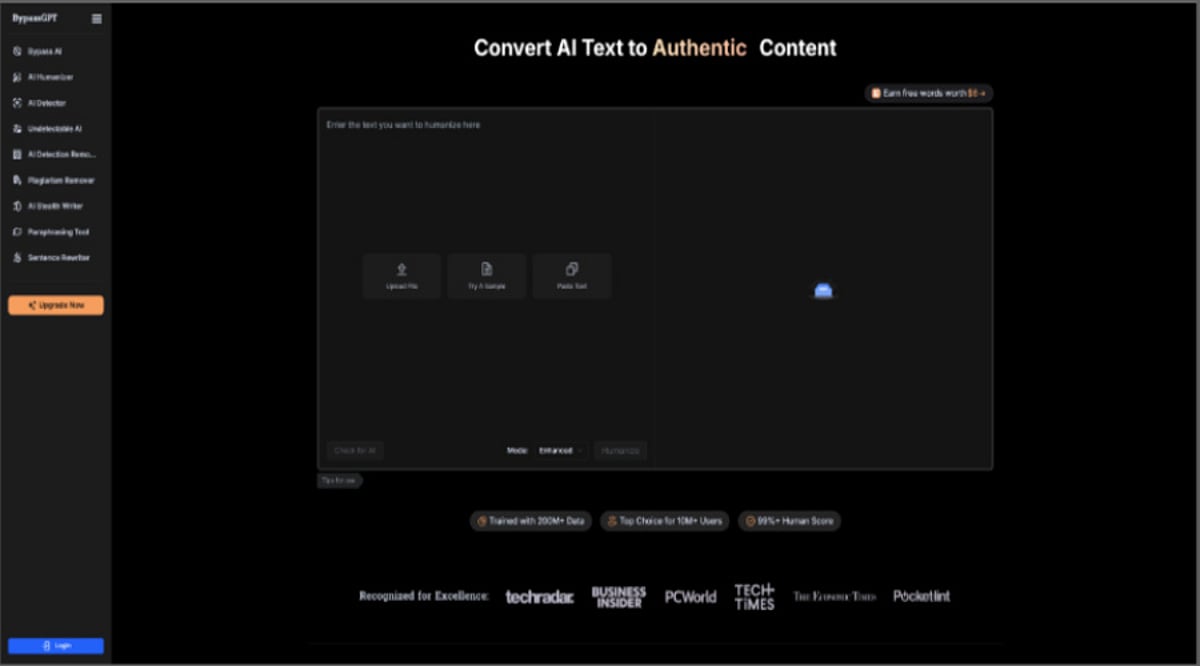
    Looking ahead, continued advances in NLP will enable enterprises to produce descriptive texts that are indistinguishable from human authorship. Platforms like the newly launched BypassGPT are working to bridge the gap between computational efficiency and human-like empathy. Companies that embrace such technologies will gain a competitive edge in today’s regulatory environment and global marketplace.

  • How AI Is Transforming Cloud Infrastructure: What Enterprises Need to Know

    How AI Is Transforming Cloud Infrastructure: What Enterprises Need to Know

    AI is reshaping cloud infrastructure by demanding specialized compute, smarter data management, stronger governance, and low-latency architectures. As adoption accelerates, enterprises must rethink cloud strategies to support scalable, compliant, and performance-driven AI workloads.

    Traditional cloud infrastructure was built for a different era of computing. It was designed to support applications, databases, websites, and enterprise systems that operated within relatively predictable performance patterns. As organizations move from AI experimentation to large-scale AI deployment, many are discovering that the infrastructure models that supported their digital transformation are not always well-suited to the demands of AI.

    Running AI models, processing large volumes of unstructured data, and delivering real-time AI-powered services require a different approach to compute, storage, networking, and data management. As a result, cloud architecture is entering a new phase of evolution.

    The scale of this shift is already becoming visible. According to an IDC report, global spending on AI-centric infrastructure is expected to exceed $200 billion by 2028, driven by growing investments in specialized compute, storage, and networking environments designed specifically for AI workloads.

    Why Traditional Cloud Models Are Facing New Pressures

    For most of the cloud era, enterprise workloads were relatively predictable. Applications required stable uptime, databases needed consistent performance, and infrastructure could be scaled based on anticipated demand. Whether an organization is deploying a large language model, building an AI-powered customer support platform, or running analytics on large datasets, AI applications often require intensive bursts of computing power that can vary significantly over time. The volume of data involved is also substantially larger, while processing requirements are often more dynamic than those of traditional enterprise applications.

    AI systems run differently from normal workloads since they continuously process, learn from, and react to varying inputs. This creates infrastructure requirements that are far more demanding in terms of performance, scalability, and operational management. Thus, cloud environments built for traditional workloads will have to be modified significantly in order to support large-scale AI applications.

    How Cloud Architecture Is Evolving

    One of the most visible changes is in how organizations approach compute infrastructure. In traditional cloud environments, businesses could often rely on standard compute resources and scale them according to demand. AI workloads have changed that equation. Training models, running inference workloads, and processing large datasets increasingly require specialized infrastructure that is optimized for AI performance rather than general-purpose computing.

    Data architecture is also becoming a much bigger consideration. As AI applications depend on large volumes of data, organizations are paying closer attention to where that data is stored and processed. Moving data across multiple regions can introduce delays that may be acceptable for conventional workloads but become problematic for real-time AI applications. This is driving growing interest in regional cloud infrastructure and low-latency deployment models that bring processing closer to end users and business operations.

    Security and compliance requirements are adding another layer of complexity. When AI systems process sensitive business information, customer records, financial data, or healthcare information, organizations need clear visibility into how that data is handled, where it is processed, and whether it remains compliant with regulatory requirements. As a result, infrastructure decisions are becoming increasingly linked to governance, risk management, and data sovereignty considerations.

    The New Requirements of AI-Driven Infrastructure

    The next generation of cloud architecture is likely to be more purpose-built for AI rather than based on infrastructure models originally designed for traditional applications. Organizations are increasingly evaluating cloud environments based on the specific requirements of their AI workloads, including performance, data governance, scalability, and cloud computing infrastructure.

    For Indian enterprises, this trend is also intersecting with growing interest in data sovereignty, localised infrastructure, and managed cloud services. As AI becomes embedded across customer-facing platforms and business operations, factors such as latency, compliance, and infrastructure visibility are becoming more important than ever before.

    The fundamentals of cloud computing are not changing. What is changing is the level of performance, flexibility, and governance that modern workloads require. As AI adoption accelerates, cloud architecture is evolving from a general-purpose technology foundation into a specialized platform designed to support the next generation of digital services and intelligent applications.

    Authored by Rahul Takkallapally, Co-Founder, BharathCloud

  • Pegasystems Invests $7.5M in New Bengaluru Executive Briefing Center to Boost India Operations

    Pegasystems Inc. (NASDAQ: PEGA), a leader in enterprise AI software for mission-critical operations, has opened a new office at EcoWorld Tech Park in Bengaluru, India. The facility, representing an investment of over INR 60 crore (approximately $7.5 million), is one of the company’s largest infrastructure expansions in the country. This move underscores Pega’s long-term commitment to India as a hub for technology innovation, engineering excellence, and client engagement.

    The inauguration was led by Shri Priyank M. Kharge, Hon’ble Minister for Home, Information Technology & Biotechnology and e-Governance, Government of Karnataka, alongside senior global and India leadership from Pega.

    World-Class Executive Briefing Center

    At the heart of the new facility is the Bengaluru Executive Briefing Center (EBC), a high-impact space designed to enhance collaboration with clients, partners, and prospects. The EBC will host executive-level meetings, partner collaborations, immersive product demonstrations, solution showcases, roadmap and advisory sessions, and curated Pega Days. This investment reflects Pega’s commitment to bringing advanced capabilities and thought leadership closer to regional customers.

    The new office reinforces Bengaluru’s role as a strategic anchor in Pega’s global operations, serving as a center of engineering excellence and a key destination for client engagement across Asia-Pacific and beyond.

    Scale and Capability for Growth

    The new office is 1.5 times larger than Pega’s previous Bengaluru facility, expanding its footprint by about 60%. It features over 350 seats, 35+ meeting and conference rooms, and connected floors designed for collaboration and productivity. The workspace includes advanced AV-equipped meeting rooms, flexible seating zones, open collaboration areas, and recreational and wellness spaces, including a mother’s room.

    Aligned with Pega’s global workplace standards, the facility is certified under LEED, WELL, and IGBC Platinum standards, prioritizing natural light, air quality, energy efficiency, and employee well-being. Campus amenities include a food court, gym, daycare facilities, and strong public transport connectivity with upcoming metro access.

    Quotes and Commentary

    “Karnataka warmly welcomes Pegasystems’ expanded presence in Bengaluru,” said Shri Priyank Kharge. “This investment is a strong endorsement of the state’s position as a global technology hub and reflects the confidence that leading enterprises place in Karnataka’s talent and ecosystem.”

    “India is central to Pega’s global growth strategy, and this expansion reflects the confidence we have in the talent and capabilities here,” said Alan Trefler, founder and CEO of Pega. “The new Bengaluru Executive Briefing Center is a significant addition, designed to offer our clients a premier destination to experience Pega’s innovation first-hand.”

    “This new office marks an important milestone for Pega India,” said Deepak Visweswaraiah, senior vice president and managing director, Pega India. “It enables us to deliver immersive, high-value experiences for our clients right here in Bengaluru, from live demonstrations to strategic executive-level conversations.”

    About Pegasystems

    Pega delivers a platform to reimagine, run, and evolve the processes and decisions enterprises can’t afford to get wrong. Combining AI with proven architecture, Pega keeps mission-critical operations governed, scalable, and continuously adaptable. Since 1983, the world’s largest organizations have trusted Pega to turn transformation ambition into durable results.