
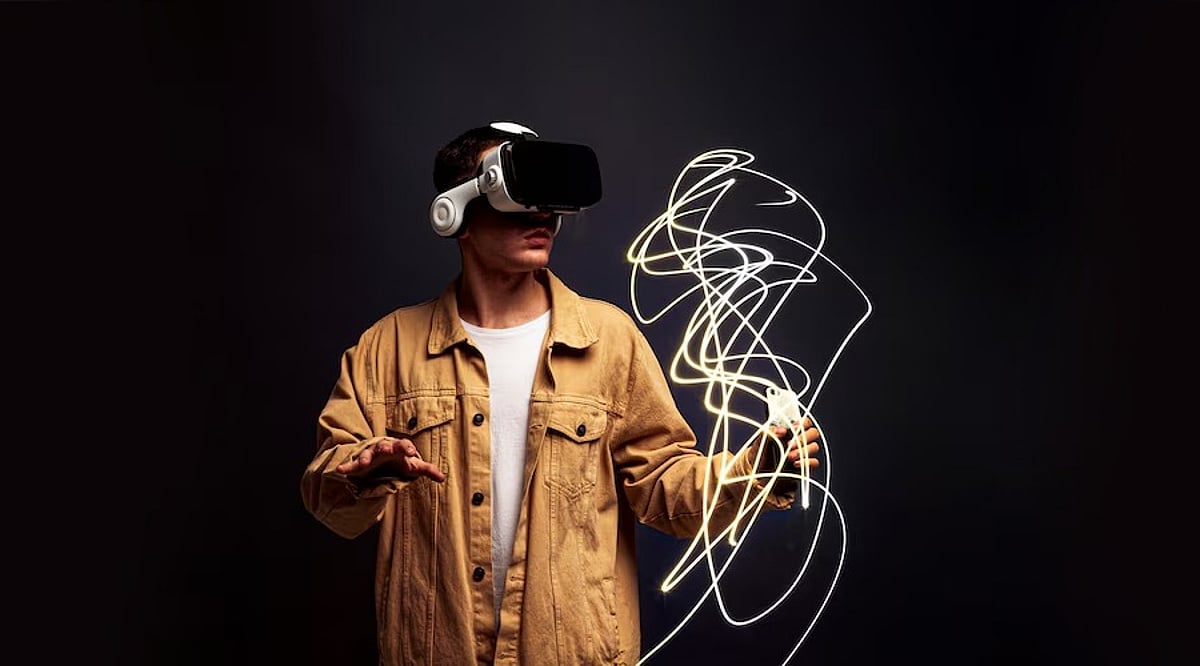
Augmented reality (AR) and virtual reality (VR) have moved far beyond gaming and entertainment. By 2026, these technologies have become practical tools that help businesses train employees, improve customer experiences, and streamline everyday operations. From AI-driven smart glasses to immersive VR workspaces, the next wave of innovation is redefining how people work, learn, shop, and connect.
Top Augmented Reality Trends in 2026
AI-Powered AR Experiences
AI is supercharging AR with real-time object recognition, contextual assistance, and personalized content. Scene understanding and automated content creation allow businesses to deliver deeply interactive experiences in retail, healthcare, and education.
Spatial Computing and Smart AR Glasses
Spatial computing enables devices to track and understand their environment. Lightweight smart glasses now blend digital information seamlessly into the physical world, enabling hands-free navigation, workplace assistance, and natural interactions.
Enterprise AR for Training and Maintenance
Companies use AR for employee training, remote support, equipment maintenance, and process optimization. Visual instructions reduce errors and accelerate learning, making AR a must-have for modern enterprises.
Why This Matters: AR is evolving from a novelty into a business solution. Integrating AI, spatial computing, and enterprise tools boosts productivity, enhances customer experience, and simplifies complex workflows across sectors.
Top Virtual Reality Trends in 2026
Hyper-Realistic Immersive Environments
Advances in graphics, AI, and spatial audio create incredibly realistic virtual worlds. These environments benefit not only entertainment but also training, education, architecture, and virtual tourism.
VR for Collaboration and Remote Working
VR transforms remote work with immersive meeting spaces and virtual offices. Teams can collaborate on designs, conduct training, and solve problems together without geographical barriers.
Industry-Specific VR Simulations
Healthcare, education, manufacturing, and retail increasingly adopt VR simulations for realistic, risk-free practice and scenario-based learning.
Why This Matters: VR is no longer just for gaming. Its ability to simulate real-life scenarios, enable collaboration, and support specialized software helps organizations train, cooperate, and solve real-world problems in virtual settings.
Final Takeaway
With improvements in hardware and software, AR and VR are steadily integrating into daily life—boosting workplace productivity, revolutionizing education, and elevating customer experiences. Early adoption gives businesses a significant competitive edge.
Frequently Asked Questions
What is the biggest AR trend in 2026?
AI-powered augmented reality is a top trend, enabling smarter object recognition, personalized experiences, and real-time assistance across retail, healthcare, manufacturing, and education.
How are smart AR glasses changing everyday technology?
Smart glasses display digital information directly in the user’s field of view, enabling hands-free navigation, workplace assistance, remote collaboration, and more natural interactions with digital content.
Why is VR becoming popular outside gaming?
VR is now widely used for employee training, virtual meetings, education, healthcare simulations, and product design because it creates immersive, realistic environments that improve learning, collaboration, and decision-making.
Which industries benefit the most from AR and VR?
Healthcare, manufacturing, retail, education, construction, and logistics are among the biggest adopters, using AR and VR to improve training, customer experiences, operational efficiency, and workplace safety.
Should businesses invest in AR and VR technologies now?
Businesses that adopt AR and VR early can improve productivity, reduce training costs, enhance customer engagement, and gain a competitive advantage as immersive technologies become mainstream.