Tag: enterprise

  • Top 10 IP Address Management Tools for Streamlined Network Operations in 2026

    Top 10 IP Address Management Tools for Streamlined Network Operations in 2026

    Tracking IP addresses can become surprisingly complicated as businesses add more devices, cloud services, applications, and remote networks. Managing everything through spreadsheets or manual records quickly turns into a headache. That is where IP Address Management (IPAM) tools come in. These platforms help IT and network teams keep track of IP addresses, organize subnets, identify conflicts, and maintain better visibility across their networks. Many also offer automation, DNS and DHCP integration, IPv6 support, and APIs. Here are 10 leading IPAM tools to consider in 2026.

    1. NetBox

    NetBox is a favorable open-source option for managing network infrastructure. It acts as a single source of truth for IP addresses, prefixes, devices, VLANs, and interfaces. Its robust API support makes it highly customizable.

    2. phpIPAM

    phpIPAM is a simple, self-hostable IPAM solution. It manages IPv4 and IPv6 subnets and VLANs, allocates IP addresses, and offers a REST API for integration.

    3. Infoblox IPAM

    Infoblox is built for enterprises with complex, extensive networks. It tightly integrates DNS and DHCP, providing a single pane of glass for core network services.

    4. SolarWinds IP Address Manager

    SolarWinds IP Address Manager gives administrators a complete overview of the IP network. It excels at address discovery, subnet management, and conflict detection, while seamlessly working with existing DNS and DHCP environments.

    5. EfficientIP SOLIDserver

    EfficientIP SOLIDserver is an integrated platform combining IPAM, DNS, and DHCP. It supports both IPv4 and IPv6, includes network discovery and automation, and is well suited for large-scale networks.

    6. BlueCat Integrity

    BlueCat Integrity provides a DDI (DNS, DHCP, IPAM) solution for centralized monitoring and management of distributed systems. Its automation features help reduce redundant administrative tasks.

    7. ManageEngine OpUtils

    ManageEngine OpUtils combines IP address management with broader network management functions. It helps with IP discovery, network monitoring, and other tasks, making it useful for small to medium-sized IT teams.

    8. Micetro

    Micetro is designed for organizations using a mix of DNS, DHCP, and IPAM platforms. It enables centralized management across diverse infrastructures and automates common networking chores.

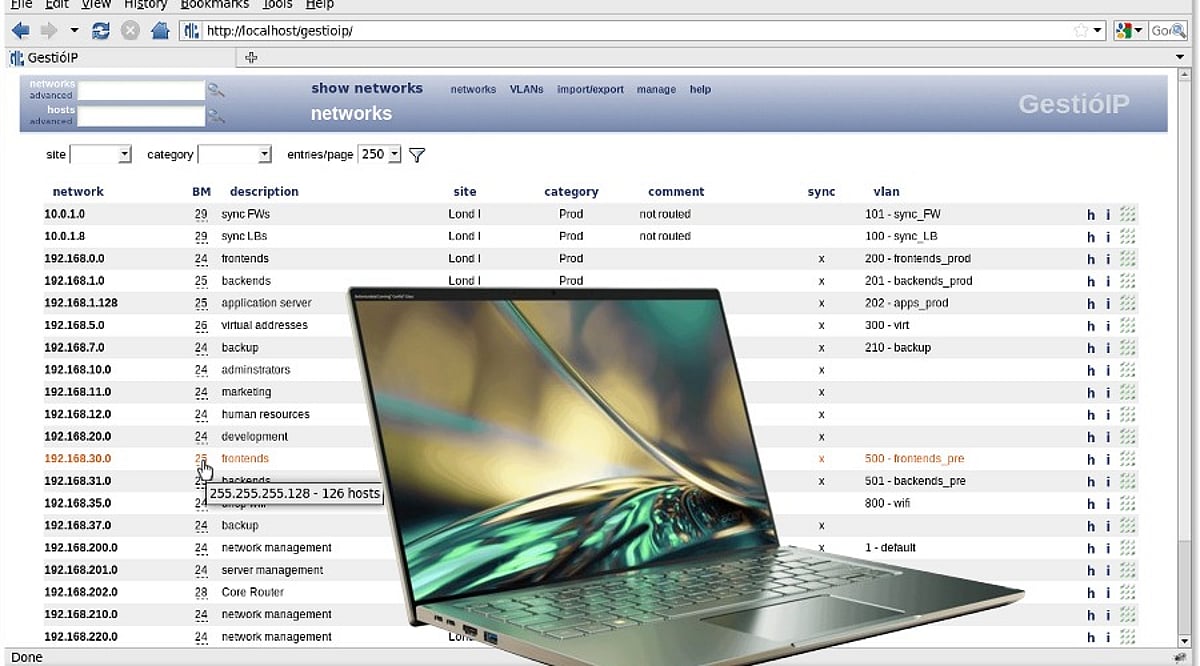
    9. GestióIP

    GestióIP is an open-source IPAM system that supports IPv4 and IPv6, subnet management, and network discovery. It is ideal for teams that prefer self-hosted solutions.

    10. Microsoft IPAM

    Microsoft IPAM is a natural choice for businesses already invested in Microsoft technology. It comes with Windows Server and provides centralized management of IP addresses and network infrastructure.

    Choosing the Right IPAM Tool

    Selecting an IPAM tool is not simply about picking the platform with the longest feature list. The right option depends on network size, existing infrastructure, and required automation. Open-source tools like NetBox, phpIPAM, and GestióIP appeal to teams seeking flexibility, while Infoblox, BlueCat, and EfficientIP are better suited for large enterprises. Tools such as SolarWinds IP Address Manager and ManageEngine OpUtils offer broader network management capabilities. Before deciding, evaluate IPv4 and IPv6 support, DNS and DHCP integration, network discovery, automation, API availability, scalability, and security features. A good IPAM platform should simplify network management, not add complexity.

  • European Enterprise Tech Firms Emerge as Unexpected AI Winners

    European Enterprise Tech Firms Emerge as Unexpected AI Winners

    The artificial intelligence race may have begun with companies building powerful AI models, but the next phase is creating opportunities for a different set of winners. A growing number of established European technology firms are benefiting as businesses shift from AI experiments to full-scale deployment across their operations.

    Recent earnings from companies including SAP, Capgemini, Sopra Steria and OVHcloud indicate that demand is increasingly moving beyond AI models to the complex work of integrating the technology into existing enterprise systems. That trend is translating into stronger revenue growth, improved business outlooks and rising customer demand.

    Integration Becomes the Real AI Opportunity

    For many large organizations, adopting AI is proving to be far more complicated than simply choosing a chatbot or language model. Businesses are discovering that successful AI deployment requires seamless integration with finance, human resources, procurement, supply chain, and other mission-critical systems already running their operations.

    Instead of relying on a single AI provider, enterprises are expected to use multiple models depending on performance, security and regulatory requirements. That has increased demand for companies specializing in AI implementation, data management, governance and workflow integration.

    SAP, Capgemini Report Strong Momentum

    Germany’s SAP continues to gain from firms moving their critical operations to cloud platforms that support AI applications. Its cloud backlog increased 26% on a constant currency basis, indicating strong enterprise demand despite spending on AI-related acquisitions.

    Capgemini of France has further boosted its annual revenue growth outlook on the back of increased bookings driven by spending by firms on AI-driven digital transformation. Sopra Steria has raised its revenue growth guidance on increased enterprise spending on AI.

    Data Sovereignty Adds European Advantage

    European tech companies are also benefiting from growing fears about data sovereignty and compliance regulations. Organizations in many fields like defense, healthcare, aerospace, and critical infrastructure require AI that ensures sensitive data remains within local jurisdiction and is governed.

    The growing shift of enterprise investments in AI from research and development to implementation means that companies focused on data security, management, and integrating AI into business operations could become some of the major beneficiaries of the AI revolution, even without developing the technologies themselves.

  • Top AI Accounting Software for Small Businesses and Enterprises in 2026

    Top AI Accounting Software for Small Businesses and Enterprises in 2026

    Key Takeaways

    • AI accounting tools improve accuracy and reduce manual financial tasks.
    • Small businesses and enterprises can choose solutions based on their needs.
    • Smart features help companies gain better control over financial data.

    AI accounting software helps small firms and large enterprises handle money tasks with better speed, accuracy, and control. In 2026, many companies choose AI tools to reduce manual work, create clear reports, and manage financial data with fewer errors. These platforms support tasks such as expense control, invoice creation, tax support, cash flow checks, and financial analysis. Modern AI features help firms make better choices with real-time data and smart suggestions.

    QuickBooks Online

    QuickBooks Online remains one of the most popular AI accounting platforms for small businesses. It offers invoice tools, expense control, bank connection, tax support, and financial reports. AI features help spot unusual costs, predict cash flow changes, and provide useful financial insights. The software suits startups, small firms, and growing companies that need simple financial control.

    Xero

    Xero provides a clean accounting system with strong AI support for small and mid-size companies. The platform helps with invoice work, expense records, payroll tasks, and financial reports. Its smart tools help users save time and keep records accurate. Xero also supports teamwork with secure access for accountants and company staff.

    Zoho Books

    Zoho Books has affordable AI accounting solutions that assist small businesses that require complete financial management. The program helps users create invoices, maintain tax records, review expenses, and keep track of payments. Thanks to AI elements, keeping data organized and knowing the company’s financial status is easy. Moreover, the connection with other programs by Zoho can be useful for companies that want a total digital solution.

    FreshBooks

    FreshBooks focuses on simple accounting needs for freelancers, small firms, and service companies. It provides invoice tools, expense records, client details, and financial reports. AI features help create better money insights and reduce time spent on routine tasks. The platform offers a user-friendly design for firms that prefer easy financial tools.

    Sage Intacct

    Sage Intacct serves mid-size firms and enterprises that need advanced financial control. The software offers strong AI features for reports, cash flow analysis, and business data review. It supports complex company structures with detailed financial information. Many growing firms choose Sage Intacct for better control over large financial operations.

    NetSuite ERP

    NetSuite ERP is an all-in-one platform where financial, accounting, and business processes can be executed. The solution is suitable for large businesses that require advanced instruments for financial reasoning and international operations. AI functions help reveal trends in financial data, which expedites business decisions. The application works effectively in case of complex requirements.

    Wave Accounting

    Wave Accounting offers a simple and budget-friendly option for small businesses. It provides invoice creation, expense records, and basic financial reports. AI tools help small firms organize money details with less effort. Wave works well for startups and independent professionals who need basic accounting support.

    Odoo Accounting

    Odoo Accounting offers businesses an adaptable solution that can be tailored to their specifications. The program integrates accounting with sales, inventory management, customer care, and other applications. The platform employs adequate AI features such as data analysis, financial forecasting, and automation of processes. Odoo is ideal for businesses that require a flexible platform that can change as they grow.

    TallyPrime

    TallyPrime remains a trusted accounting choice for many small and large companies. It supports tax work, financial records, inventory control, and company reports. AI features add better analysis and help companies understand financial details faster. The software offers strong support for firms that need reliable accounting functions.

    Microsoft Dynamics 365 Finance

    Microsoft Dynamics 365 Finance helps enterprises handle complex financial needs. The platform offers AI tools for financial analysis, forecasts, cost control, and business insights. It connects with other Microsoft services and supports large organizations with advanced financial requirements. The software helps companies maintain better financial visibility.

    SAP S/4HANA Finance

    SAP S/4HANA Finance serves large enterprises with global financial demands. It provides AI-based insights, financial reports, compliance support, and advanced data analysis. The platform helps organizations manage large financial systems with better accuracy. It remains a strong choice for companies with worldwide operations.

    Oracle Fusion Cloud ERP

    Oracle Fusion Cloud ERP delivers enterprise-level accounting and finance solutions. It includes AI features for financial analysis, risk checks, forecasts, and process automation. The platform supports large companies with complex structures and global needs. Oracle helps firms gain deeper control over financial data.

    Why This Matters

    The business world has embraced AI accounting software due to the need for prompt control over finances and accurate management of financial information. The technology enables businesses to minimize human errors and provide better insights into their finances. AI-powered software solutions facilitate effective analysis, automation, and decision making in terms of finance.

    Final Thoughts

    AI accounting software in 2026 presents solutions suitable for all corporations. Smaller companies have the option of selecting easy-to-use tools like QuickBooks Online, Xero, FreshBooks, or Wave. More established corporations can use sophisticated software such as NetSuite ERP, SAP S/4HANA Finance, or Oracle Fusion Cloud ERP. Which solution is best for the company depends on several factors such as the size of the business, budget, and future plans entailed in the incorporation of AI tools in accounting.

    FAQs

    1. What is AI accounting software? AI accounting software uses artificial intelligence features to automate financial tasks, analyze data, and provide useful business insights.
    2. Which AI accounting software is best for small businesses? QuickBooks Online, Xero, Zoho Books, FreshBooks, and Wave Accounting offer useful features for small businesses.
    3. Can AI accounting software reduce accounting errors? Yes, AI tools help detect unusual records, organize financial data, and improve accuracy in accounting processes.
    4. Is AI accounting software suitable for large enterprises? Yes, platforms such as SAP S/4HANA Finance, Oracle Fusion Cloud ERP, and NetSuite ERP support complex enterprise needs.
    5. What features should businesses check before choosing AI accounting software? Businesses should review automation features, reporting options, security, pricing, integrations, and scalability before selecting a platform.

  • Microsoft to Launch Unified Copilot Super App Integrating Chat, Coding, and AI Agents by End of Year

    Microsoft to Launch Unified Copilot Super App Integrating Chat, Coding, and AI Agents by End of Year

    Microsoft CEO Satya Nadella confirmed during the company’s July 29, 2026 earnings call that a unified Copilot ‘super app’ will be released by the end of the year. The platform will combine chatbot capabilities, coding tools, and autonomous AI agents into a single interface for both consumers and businesses.

    According to Nadella, the super app is expected to become available in the current quarter, though exact pricing, a launch date, and a complete feature list have not been disclosed. “This quarter, we are bringing these Copilot experiences together, including code, in one super app… This is a major step forward, and I look forward to sharing more soon,” he said.

    The announcement follows earlier reports from Fortune indicating that Microsoft was developing a consolidated application merging Copilot chat, GitHub Copilot, Copilot Cowork, and its Autopilot agent system.

    From Chat to Autonomous Workflows

    Nadella outlined Copilot’s evolution through three stages: chat, Cowork, and Autopilots. The existing chat experience answers questions and generates content; Cowork assists users with collaborative tasks; and Autopilots represent the most advanced layer, enabling AI agents to complete longer, multi-step workflows with minimal human intervention. By placing these capabilities alongside code editing in one interface, Microsoft aims to reduce fragmentation across Windows Copilot, Microsoft 365 Copilot, GitHub Copilot, and Copilot Studio.

    Enterprise Distribution Remains Central

    The super app will target both commercial and consumer users. An integrated app may simplify deployment, licensing, and access for businesses already using Microsoft 365, allowing workers to leverage AI-powered document creation, coding, or workflow automation. This move comes as Microsoft reported $90 billion in quarterly revenue, with cloud computing and AI as strong growth drivers. The company could eventually monetize its vast Microsoft 365 customer base through a single Copilot platform generating subscription-based AI revenue.

    Competition Intensifies

    Microsoft’s strategy also heightens competition with OpenAI and other AI developers offering integrated assistants capable of handling text, coding, research, and agentic tasks. However, key questions remain unanswered, including whether GitHub Copilot will continue as a separate subscription, how existing users will be migrated, and what administrative controls enterprises will receive. The product’s success will ultimately depend on whether Microsoft delivers a genuinely connected experience rather than simply placing several existing tools inside one interface.

    Also Read: Microsoft Introduces MAI-Cyber-1-Flash, Claims to Outperform Gemini, ChatGPT

  • Wall Street’s Bullish Outlook on Microsoft: Key Drivers for Late 2026

    Wall Street’s Bullish Outlook on Microsoft: Key Drivers for Late 2026

    Wall Street is increasingly bullish on Microsoft as the tech giant heads into late 2026, driven by strong growth in artificial intelligence, cloud computing, and enterprise software. Analysts highlight several key factors fueling this optimism.

    AI Revenue Growth

    Investors expect Microsoft’s expanding portfolio of AI products and premium services to generate higher recurring revenue, strengthening long-term financial performance. The company’s strategic focus on AI monetization is a major catalyst.

    Azure Cloud Momentum

    Continued growth in Microsoft Azure, fueled by AI workloads, positions the company as a leading enterprise cloud provider globally. Azure’s ability to handle complex AI tasks gives it a competitive edge in the market.

    Copilot Business Expansion

    Wider deployment of Microsoft Copilot across enterprise customers creates fresh monetization opportunities while improving the company’s competitive advantage in workplace software. Copilot is becoming a key driver of productivity and revenue.

    Strong Financial Results

    Consistent revenue growth, healthy operating margins, and robust cash flow reinforce Wall Street’s confidence in Microsoft’s long-term business outlook. The company’s financial stability underpins its growth initiatives.

    Enterprise Customer Base

    Microsoft’s extensive relationships with enterprise customers provide a stable foundation for expanding AI services across governments, corporations, and regulated industries worldwide. This base ensures steady demand for new offerings.

    AI Infrastructure Investments

    Heavy investments in AI infrastructure prepare Microsoft for increasing enterprise demand while supporting future revenue expansion and platform reliability. These investments are critical for maintaining leadership in AI.

    Cloud and Software Leadership

    Microsoft’s leadership across cloud computing, productivity software, cybersecurity, and AI creates multiple growth opportunities beyond its traditional businesses. This diversification reduces risk and drives innovation.

    Analyst Optimism

    Many analysts remain positive because Microsoft’s diversified business model reduces risk while benefiting from accelerating global AI adoption trends. The company’s ability to navigate market changes is a key strength.

    Long-Term Growth Potential

    Investors view Microsoft as well-positioned for sustained growth through continuous innovation, enterprise AI leadership, and expanding global technology demand. The company’s strategy aligns with long-term tech trends.

  • Building a People-First Digital Transformation Roadmap: Key Phases and Strategies for Enterprise Success

    Building a People-First Digital Transformation Roadmap: Key Phases and Strategies for Enterprise Success

    Digital transformation in 2026 has reached a critical juncture: expectations are higher than ever, yet execution consistently falls short. According to Gartner’s 2026 CIO survey, 94% of CIOs anticipate major changes to their plans within 24 months, but only 48% of digital initiatives meet or exceed business targets. The gap is not ambition or investment—it’s the lack of a disciplined roadmap that turns strategy into sequenced, accountable execution.

    Why Most Transformation Roadmaps Fail

    The most common failure occurs when digital transformation is treated as a mere IT upgrade. Assigned solely to the CIO or IT department, it becomes a technology implementation rather than a holistic business change. Another error is rolling out new platforms without redesigning the processes around them—new tools on old workflows rarely deliver efficiency gains. Many companies also fail to measure ROI at intermediate stages, leaving them blind to course corrections needed mid-implementation.

    The Five Phases of an Effective Roadmap

    A strong roadmap breaks the journey into sequenced phases:

    1. Maturity Assessment: Evaluate people, process, technology, and data. Most enterprises still run 400+ fragmented applications and legacy ERP systems from the early 2000s—this baseline is essential.
    2. Strategy Definition: Align technology investments with business goals and define clear metrics.
    3. Early Execution (90-Day Quick Wins): Build momentum with small, visible successes.
    4. Infrastructure Modernization: Move to cloud-native architecture and zero-trust security.
    5. AI and Automation Integration: Embed AI into core workflows across finance, operations, and customer service.

    Governance and Ownership Determine Success

    The clearest differentiator between successful and stalled transformations is ownership. Effective roadmaps are collectively owned by the CEO, CIO/CTO, COO, CFO, and CHRO—shared accountability, not one executive’s burden. Gartner research shows CIOs who tie technology initiatives to measurable financial outcomes are 25% more likely to outperform peers, though only a third consistently do so.

    The 2026 Shift: From AI Pilots to Operational Integration

    The biggest change in roadmaps this year is the move away from isolated AI experiments that never leave pilot phases. Enterprise AI adoption has doubled year-over-year, reaching 24% in 2026 (up from 12%). Digital leaders are nearly four times more likely to achieve this maturity. Experts note that 2026 marks the year AI adoption shifts from a technical problem to a people and management challenge—roadmaps now explicitly address these human factors.

    Building a Roadmap That Survives Reality

    Winning companies in 2026 share three traits: a senior executive responsible for results (not just delivery), a dedicated budget for change management and training separate from technology, and quarterly review cadences from day one. The lesson: success comes not from bigger goals but from the discipline to execute them.

    Why This Matters

    As organizations accelerate AI adoption and cloud modernization, successful digital transformation depends on leadership, governance, and employee adoption—not technology alone. A structured roadmap reduces risk, improves ROI, and ensures transformation initiatives deliver lasting business value.

  • Leading OpenCV Innovators: Top Companies and Startups for 2026

    Leading OpenCV Innovators: Top Companies and Startups for 2026

    OpenCV (Open Source Computer Vision Library) continues to power groundbreaking innovations across industries. In 2026, several companies and startups stand out for their advanced computer vision solutions built on OpenCV. Here are the top innovators:

    OpenCV.ai

    Develops enterprise computer vision solutions for manufacturing, healthcare, retail, quality inspection, and AI-powered visual automation across diverse industries globally.

    Roboflow

    Simplifies computer vision development through dataset management, annotation, model training, deployment tools, and collaborative AI workflows for developers everywhere.

    LandingAI

    Builds industrial computer vision solutions enabling manufacturers to automate inspections, improve quality assurance, and optimize production using artificial intelligence.

    V7 Labs

    Offers advanced image annotation platform accelerating AI model development with automated labeling, collaboration features, and computer vision workflow optimization.

    Covariant

    Develops AI-powered robotics using computer vision for warehouse automation, object recognition, logistics optimization, and intelligent robotic picking operations globally.

    AnyVision

    Provides facial recognition and visual intelligence technologies supporting security, retail analytics, smart infrastructure, and enterprise computer vision deployments responsibly worldwide.

    Deep Vision AI

    Delivers custom computer vision applications for healthcare, manufacturing, surveillance, and automation using advanced OpenCV-powered artificial intelligence technologies effectively.

    Scandit

    Specializes in smart barcode scanning, augmented reality, inventory management, and mobile computer vision solutions enhancing enterprise productivity and customer experiences.

    Viso.ai

    Enables organizations to deploy, manage, and scale computer vision applications through cloud-based infrastructure supporting enterprise artificial intelligence initiatives efficiently.