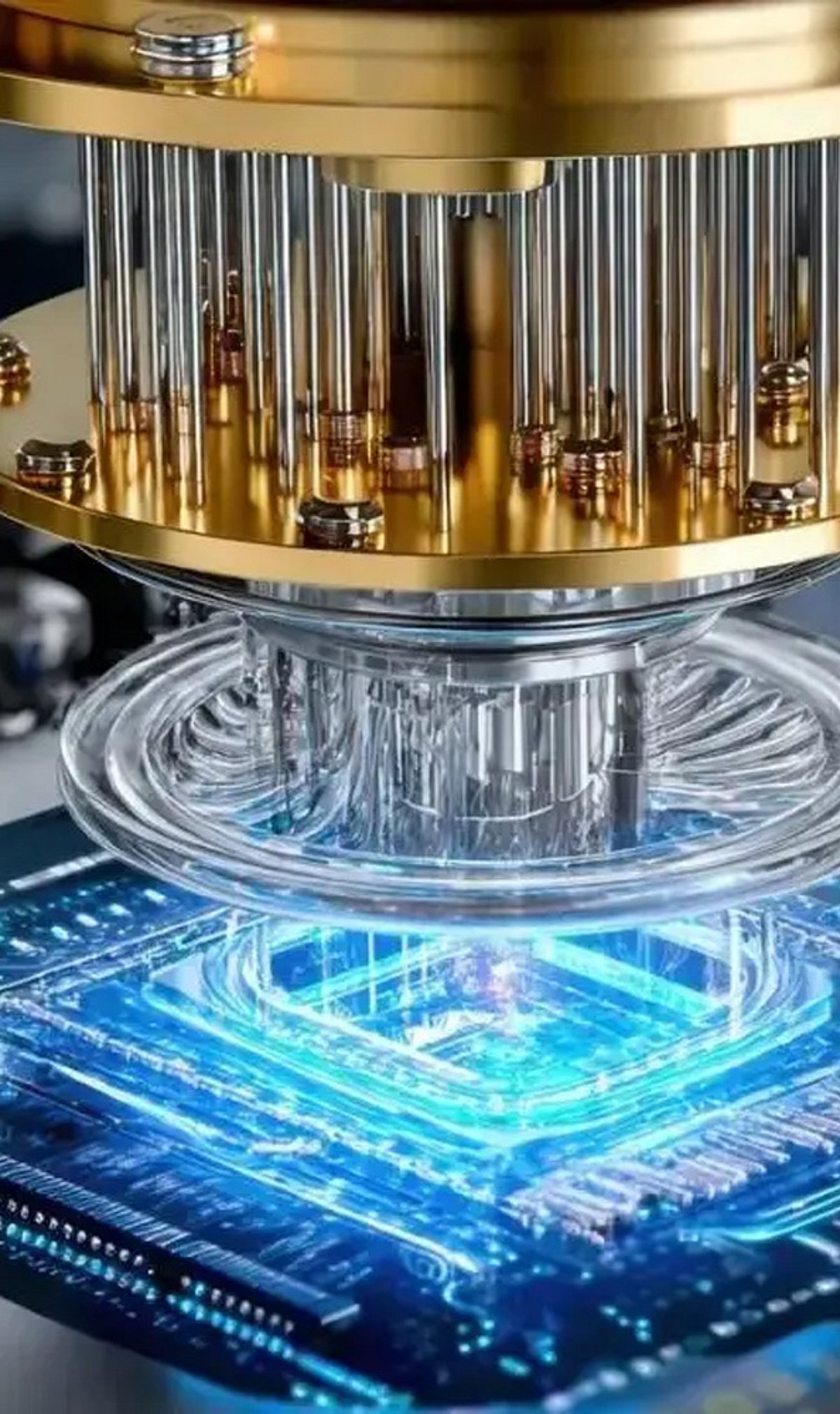
The quantum computing landscape is undergoing a fundamental shift. While raw qubit counts once dominated headlines, the focus has now moved to reliability, error correction, and practical utility. Recent milestones from IBM, Google, Microsoft, Quantinuum, IonQ, and QuEra signal that the field is transitioning from laboratory experiments toward systems capable of solving real scientific and commercial problems.
Logical Qubits Take Center Stage
IBM and the University of Chicago demonstrated a 70-logical-qubit system in July 2026, completing a computation that IBM claims is beyond practical classical simulation. The task took about 15 minutes and emphasized performance alongside verifiability. Logical qubits, which combine multiple physical qubits to reduce errors, are now the key benchmark. IBM also introduced an error-control technique that achieves effective error rates roughly ten times lower than the base hardware.
IBM Pushes Faster Circuits
IBM’s Nighthawk r2 processor features 120 programmable qubits, 218 couplers, and 120 active reset elements. It delivers over 100,000 circuits per second and up to 25 times the circuit throughput of its predecessor Heron. The system has executed circuits with more than 7,500 gates while maintaining accuracy. IBM now aims for systems with hundreds of logical qubits and millions of quantum gates later this decade, signaling that circuit depth and reliability now matter more than qubit quantity alone.
Google Targets Verifiable Quantum Advantage
Google Quantum AI’s latest research, dubbed Quantum Echoes, aims for the first verifiable quantum advantage on a real-world-oriented algorithm. The emphasis is on producing results that classical systems can check and that have clear scientific value. This moves beyond earlier demonstrations of quantum supremacy toward useful, verifiable computation.
Microsoft’s Topological Path
Microsoft’s Majorana 2 processor uses topological qubits built from lead and indium-based semiconductors. The company reports a topological gap more than twice as large as its earlier processor, offering 1,000 times greater reliability. Microsoft targets a scalable quantum computer by around 2029, betting on inherent error protection at the physical level.
Trapped Ions Scale Up
Quantinuum received a finalized $100 million CHIPS Research and Development award from the U.S. government on September 8, 2026, focusing on low-loss integrated photonics, cryogenic semiconductors, and advanced ion traps. The company works with GlobalFoundries and Monarch Quantum for domestic production. IonQ announced Superion 256, a 256-qubit platform, with SkyWater fabricating fully integrated processors and first ions trapped. Customer deliveries are expected in 2027.
Neutral Atoms Add Diversity
QuEra continues advancing neutral-atom systems, with work on high-fidelity entangling gates, nonlocal circuits, quantum error correction, and neural decoders. The company also cites a 3,000-qubit coherent system from 2025. The variety of approaches—superconducting, trapped ions, neutral atoms, photonics, and topological qubits—shows that no single design has yet secured a lead.
Government Support Accelerates Progress
The U.S. government has intensified its quantum focus. A June 2026 White House order created the QC-ADDS initiative, calling for a national push toward quantum systems for scientific discovery. The Department of Energy’s Quantum Genesis program targets fault-tolerant systems by 2028 with low hundreds of logical qubits, covering chemistry, materials science, plasma physics, and high-energy physics. It also proposes a National Quantum Supercomputing User Facility to integrate quantum computers with HPC and AI. Proposed CHIPS incentives total about $2.013 billion for nine companies.
What This Means for the Future
The quantum race now has a broader measure of progress. Reliable logical qubits, deep circuits, error correction, domestic manufacturing, and useful scientific results all matter. The strongest signal from current research is clear: quantum hardware has moved past a simple race for larger qubit numbers. The next major milestone will come when reliable quantum systems solve valuable problems at a scale that classical machines cannot match—defining the real start of practical quantum computing.
Frequently Asked Questions
Why are logical qubits important?
Logical qubits combine multiple physical qubits with error-correction techniques to create more reliable computational units.
What are IBM’s latest quantum computing advances?
IBM is pursuing larger logical-qubit systems, faster circuit execution, improved error control, and deeper quantum circuits.
How is Google approaching quantum advantage?
Google is focusing on verifiable quantum advantage through algorithms designed around useful, scientifically meaningful computational tasks.
What makes Microsoft’s Majorana 2 approach different?
Microsoft is pursuing topological qubits designed to provide stronger protection against errors at the physical-qubit level.
Why does U.S. government support matter?
Federal programs support fault-tolerant quantum systems, domestic manufacturing, research infrastructure, and integration with high-performance computing and AI.