Tag: ETFs

  • Ethereum Price Analysis: Can Institutional Demand and DeFi Strength Push ETH Past $2,570?

    Ethereum Price Analysis: Can Institutional Demand and DeFi Strength Push ETH Past $2,570?

    Ethereum (ETH) is attempting to extend its recovery as institutional adoption, exchange-traded funds (ETFs), staking, and tokenization strengthen its market narrative. However, ETH’s ability to break higher increasingly depends on whether institutional infrastructure translates into sustained capital flows and on-chain activity.

    ETH trades at USD 2,478.08 on September 18 after recovering from a sharp two-day pullback. Traders are watching roughly USD 2,570 as an important resistance area, with a sustained move above it potentially opening the way toward higher technical levels.

    ETF Flows Turn Volatile

    Institutional ETF demand strengthened during parts of 2026, but the latest data show that flows are not consistently positive. Ethereum ETFs attracted USD 1.75 billion in August, their strongest month since August 2025. Momentum has since reversed. US spot Ethereum ETFs recorded USD 39.24 million in net outflows on September 17, marking a third consecutive session of withdrawals. Combined outflows over those three trading days reached approximately USD 405.4 million, according to SoSoValue. The reversal shows why institutional interest alone cannot guarantee a sustained ETH rally.

    Ethereum Maintains Deep On-Chain Liquidity

    Ethereum retains a major structural advantage in decentralized finance (DeFi). According to DeFiLlama, USD 50.28 billion in Ethereum DeFi total value is locked. The ecosystem also supports about USD 172 billion in stablecoin value across mainnet and Layer 2 networks and approximately USD 21 billion in real-world assets. Ethereum’s Layer 2 ecosystem includes 102 live networks with around USD 37.5 billion in average daily TVL. These figures matter as institutional blockchain adoption increasingly involves stablecoin settlement, tokenized securities, and financial applications rather than cryptocurrency trading alone.

    Tokenization Gains Regulatory Momentum

    Institutional tokenization received another boost on September 17 when the US Securities and Exchange Commission (SEC) announced a five-year exemption framework for qualifying tokenized-stock trading platforms and liquidity providers. According to Reuters, eligible tokenized stocks must provide shareholders the same economic and governance rights as conventional shares, while synthetic tokens merely tracking stock prices are excluded. Ethereum is positioned to participate, as its institutional portal reports that 37% of on-chain real-world assets (RWAs) are deployed across Ethereum and its Layer 2 ecosystem.

    What Could Drive ETH Higher?

    A sustainable breakout would likely require several factors to align: renewed ETF inflows, resilient DeFi liquidity, increasing stablecoin and RWA activity, and supportive broader risk sentiment. Conversely, persistent ETF withdrawals or tighter financial conditions could limit upside even if institutional infrastructure continues expanding.

    Final Thoughts

    Ethereum’s institutional foundation is becoming broader, particularly across DeFi, stablecoins, and tokenization. However, recent ETF outflows show infrastructure growth and investment demand can diverge. ETH still needs sustained capital inflows and network usage to convert institutional interest into durable price momentum.

    FAQs

    1. What price is Ethereum trading at?
    Ethereum was trading around USD 2,478.08 on September 18. ETH has recovered from its recent pullback, with traders closely monitoring the USD 2,570 region as an important near-term resistance level.

    2. What is the key resistance level for Ethereum?
    The USD 2,570 area represents an important technical resistance zone. A sustained move above this level could improve ETH’s technical structure, although broader market conditions and institutional capital flows would remain important.

    3. Are institutional investors still buying Ethereum ETFs?
    ETF demand has become more volatile. Ethereum ETFs attracted around USD 1.75 billion in August, but US spot ETH ETFs subsequently recorded three consecutive sessions of outflows totaling approximately USD 405.4 million through September 17.

    4. How large is Ethereum’s DeFi ecosystem?
    Ethereum currently holds approximately USD 50.28 billion in DeFi total value locked, according to DeFiLlama data cited in the article. Its ecosystem also supports substantial stablecoin and tokenized real-world asset activity.

    5. What could help Ethereum break higher?
    A stronger ETH move could be supported by renewed ETF inflows, resilient DeFi liquidity, expanding stablecoin usage, and increased tokenized-asset activity. Conversely, persistent institutional outflows and tighter financial conditions could restrict upside momentum.

    Disclaimer: Analytics Insight does not provide financial advice or guidance on cryptocurrencies and stocks. Also note that the cryptocurrencies mentioned/listed on the website could potentially be risky, i.e., designed to induce you to invest financial resources that may be lost forever and not be recoverable once investments are made. This article is provided for informational purposes and does not constitute investment advice. You are responsible for conducting your own research (DYOR) before making any investments. Read more about the financial risks involved here.
  • Crypto Wealth Management Explained: Portfolios, Staking, Custody, and Risk in 2026

    Crypto Wealth Management Explained: Portfolios, Staking, Custody, and Risk in 2026

    Crypto wealth management has evolved far beyond simply buying and selling cryptocurrencies. Today, it encompasses a structured approach to portfolio construction, custody, staking, lending, tax planning, and risk management. As institutional participation expands in 2026, investors now have multiple avenues to gain and manage digital-asset exposure.

    How Crypto Wealth Management Works

    Traditional wealth management involves asset allocation, custody, investment tactics, and financial strategies. Crypto wealth management applies the same principles to cryptocurrency assets such as Bitcoin, Ethereum, stablecoins, and tokenized instruments.

    A portfolio may include directly held cryptocurrencies, spot-traded products, stablecoins, and tokenized assets from the real economy. The optimal structure depends on the investor’s goals, risk tolerance, liquidity needs, and jurisdiction.

    Custody is critical because owning cryptocurrency directly means managing private keys. Institutional investors often use qualified custodians, while individual investors can choose between custodial platforms and self-custody wallets.

    Portfolio diversification also matters. Bitcoin and Ethereum can behave differently from smaller cryptocurrencies, but crypto assets often remain highly correlated during major market declines. Holding several tokens does not automatically create meaningful diversification.

    Staking and Yield

    Proof-of-stake networks introduce staking: investors can lock or delegate eligible assets to participate in network validation and potentially earn rewards. Ethereum is a prime example. However, staking carries additional risks involving validators, smart contracts, liquidity, and intermediaries. Returns should be weighed against possible asset-price losses.

    Stablecoins have become increasingly important for treasury and liquidity management. They provide blockchain-based dollar exposure and settlement without requiring investors to hold their entire portfolio in volatile cryptocurrencies.

    Tokenized assets are expanding the investment universe. These instruments can represent Treasury securities, money-market products, or other traditional assets on blockchains, bridging conventional wealth management with digital infrastructure.

    Institutional Infrastructure Expands

    Institutional participation is broadening beyond Bitcoin. Crypto ETF markets in 2026 include exposure to Bitcoin, Ethereum, and other digital assets, giving investors regulated market instruments without direct wallet management. Meanwhile, blockchain networks host regulated financial products. On the XRP Ledger, institutions including Aviva Investors, abrdn, Ondo, and Société Générale have introduced tokenized financial instruments.

    Risk Management Remains Critical

    Crypto wealth management does not eliminate volatility. Investors still face market, custody, counterparty, regulatory, smart-contract, and liquidity risks. Leverage can magnify these risks substantially, while yield products may introduce exposure beyond the underlying cryptocurrency.

    Effective crypto wealth management focuses less on identifying the next high-return token and more on determining allocation, custody, liquidity, diversification, and acceptable downside. As digital assets integrate further with traditional finance, managing those risks becomes as important as selecting the assets.

    Frequently Asked Questions

    1. What is crypto wealth management?

    Crypto wealth management is the structured management of digital-asset portfolios using strategies involving asset allocation, custody, diversification, and risk management. It can include cryptocurrencies, stablecoins, staking products, ETFs, and tokenized traditional assets.

    2. How is crypto wealth management different from regular crypto investing?

    Regular crypto investing may focus primarily on buying and selling individual tokens. Wealth management takes a broader approach by considering portfolio allocation, custody, liquidity, taxation, diversification, yield opportunities, and acceptable levels of risk.

    3. What role does custody play in crypto wealth management?

    Custody determines how digital assets and their private keys are secured and controlled. Investors may use self-custody wallets, centralized custodians, or institutional custody services depending on their security requirements and investment structure.

    4. How can investors generate yield from a crypto portfolio?

    Proof-of-stake cryptocurrencies can potentially generate staking rewards through network participation. Other yield opportunities may involve lending or tokenized financial products, although each can introduce additional smart-contract, counterparty, liquidity, and market risks.

    5. What are the major risks of crypto wealth management?

    Key risks include cryptocurrency price volatility, private-key loss, counterparty failures, smart-contract vulnerabilities, liquidity constraints, and regulatory changes. Leverage and complex yield products can further increase potential losses, making risk management particularly important.

    Disclaimer: This article is for informational purposes only and does not constitute financial or investment advice. Always conduct your own research (DYOR) before making any investment decisions.

  • XRP in 2026: 10 Key Facts Every Investor Should Understand

    XRP in 2026: 10 Key Facts Every Investor Should Understand

    XRP remains one of the most closely watched digital assets in 2026 as its ecosystem expands beyond cryptocurrency trading. Developments involving exchange-traded products, Ripple’s RLUSD stablecoin, tokenization, and institutional infrastructure have increased attention on the XRP Ledger. At the same time, the XRP Ledger (XRPL) continues to introduce features designed for regulated financial applications and faster digital-asset settlement. However, understanding these developments requires distinguishing between XRP, XRPL, and Ripple, as each plays a different role within the broader ecosystem.

    1. XRP and Ripple Are Different

    XRP is XRPL’s native digital asset, while Ripple is a technology company building payments and digital-asset infrastructure. Ripple holds significant XRP, but the XRP Ledger operates as an open-source blockchain. Ripple is one participant in the broader XRPL ecosystem and does not own or operate the blockchain itself. XRP can also be transferred and used on XRPL independently of Ripple’s products and services.

    2. XRP Has a Fixed Maximum Supply

    XRP started with a fixed supply of 100 billion tokens. Unlike Bitcoin, additional XRP is not produced through mining. A small amount of XRP is permanently destroyed as transaction fees whenever activity occurs on the network. This means XRP’s total supply gradually declines rather than increasing through the creation of new tokens.

    3. Ripple Holds Significant XRP

    Ripple reported 37.66 billion XRP under its control, including 31.28 billion held in on-ledger escrow. Around 62 billion XRP had been distributed. The escrow mechanism releases XRP according to predefined ledger rules, with unused amounts potentially returned to escrow. Ripple’s holdings and XRP distributions remain closely watched since changes in circulating supply can influence market liquidity.

    4. XRPL Offers Fast Settlement

    XRPL transactions typically settle within seconds. This makes the network suitable for payments and asset transfers where faster settlement is important. Faster finality can reduce the time counterparties must wait before considering a transaction completed. This capability is particularly relevant for cross-border payments, tokenized assets, and other applications requiring rapid value transfers.

    5. XRPL Does Not Use Mining

    XRPL validators use a consensus process rather than Bitcoin-style proof-of-work. Consequently, transaction validation does not depend on energy-intensive cryptocurrency mining. Independent validators participate in reaching agreement over the ordering and validity of transactions submitted to the ledger.

    6. XRP Has US-Listed ETF Exposure

    Institutional access expanded after the Grayscale XRP Trust ETF began trading on NYSE Arca under ticker GXRP. SEC filings show the fund’s registration statement became effective in November 2025, while another post-effective registration became effective in April 2026.

    7. RLUSD Is Different from XRP

    Ripple USD is a dollar-backed stablecoin, whereas XRP’s market price fluctuates. Ripple reported USD 2.396 billion of circulating RLUSD and USD 2.518 billion in reserve funds as of September 3, 2026. Reserves are subject to monthly third-party attestations.

    8. Institutional Infrastructure Is Expanding

    XRPL is developing infrastructure for regulated financial activity. Permissioned Domains can define credential-based environments designed to support features including permissioned exchanges and lending applications.

    9. XRPL Development Continues

    XRPL version 3.2.0 arrived in June 2026, bringing maintenance changes and fixes affecting Single Asset Vaults, lending, permissioned DEX functionality, Multi-Purpose Tokens, and Permissioned Domains.

    10. Utility Does Not Guarantee XRP Gains

    Network development, ETF demand, and institutional adoption may affect XRP sentiment, but they do not guarantee price appreciation. Liquidity, circulating supply, regulation, and broader crypto-market conditions remain important.

    Why This Matters

    XRP’s 2026 investment narrative extends beyond price speculation. ETFs, RLUSD, and institutional XRPL infrastructure are widening access to the ecosystem, but investors still need to distinguish genuine network adoption from assumptions about future XRP price performance.

    Final Thoughts

    XRP’s ecosystem continues evolving through regulated investment products, stablecoins, and institutional blockchain infrastructure. These developments broaden potential XRPL use cases, but XRP remains a volatile crypto asset whose performance depends on both network fundamentals and wider market conditions.

    Frequently Asked Questions

    1. What is the difference between XRP, Ripple, and the XRP Ledger?

    XRP is the native digital asset of the XRP Ledger, while XRPL is the underlying open-source blockchain. Ripple is a separate technology company that develops payment, stablecoin, and digital-asset infrastructure using blockchain technology.

    2. What is the maximum supply of XRP?

    XRP was created with a fixed maximum supply of 100 billion tokens. Unlike Bitcoin, XRP is not mined, meaning additional tokens are not continuously created through a proof-of-work mining process.

    3. Does XRP have ETF exposure in the United States?

    Yes. US-listed investment products now provide investors with regulated exposure to XRP. The Grayscale XRP Trust ETF trades on NYSE Arca under the GXRP ticker, expanding access through traditional brokerage infrastructure.

    4. What is the difference between XRP and Ripple USD (RLUSD)?

    XRP is a market-priced cryptocurrency whose value fluctuates, while RLUSD is Ripple’s US dollar-backed stablecoin. RLUSD is designed to maintain dollar parity and is backed by reserve assets subject to third-party attestations.

    5. What could influence XRP’s performance in 2026?

    XRP can be affected by ETF demand, liquidity, circulating supply, regulation, broader cryptocurrency sentiment, and developments across XRPL. Growing network usage or institutional adoption may support activity but does not guarantee XRP price appreciation.

    Disclaimer: This article is for informational purposes only and does not constitute investment advice. Always conduct your own research before making any investment decisions.

  • Bitcoin ETFs Shed $460 Million as Ethereum Funds Extend Inflow Streak

    Bitcoin ETFs Shed $460 Million as Ethereum Funds Extend Inflow Streak

    Spot Bitcoin ETFs turned red for the first time since mid-August, losing more than $460 million over four business days last week. Ethereum ETFs moved in the opposite direction during the same stretch, pulling in fresh money as the underlying asset pushed toward an eight-month high.

    The shift played out across US-listed exchange-traded funds tracking both cryptocurrencies, with data from SoSoValue showing a clear split in investor sentiment. Bitcoin’s outflows followed a strong run in August, while Ethereum extended its winning streak into a fourth straight week.

    Bitcoin Funds Reverse Inflow Trend

    Bitcoin ETFs recorded their best week in months between August 17 and 21, pulling in over $1.9 billion as the price jumped from under $65,000 to nearly $80,000. That momentum carried into the following two weeks too, with $924 million and $986 million in net inflows. Last week broke that pattern.

    Outflows began on Tuesday at $46.65 million, followed by $120.24 million on Wednesday, $282.56 million on Thursday, and $13.29 million on Friday, the same day fresh inflation data landed. Total net inflows for Bitcoin funds slipped from $55.62 billion to $55.15 billion. Bitcoin’s price also swung sharply, dropping to $76,000 before climbing to $79,800 and settling back near its starting point.

    Ethereum ETFs Maintain Strong Inflows

    Ethereum ETFs followed a bumpier path early in the week, with $24.29 million leaving on Monday before $34.75 million came back in on Wednesday. Thursday saw another $29.76 million in outflows. Friday changed everything, as net inflows hit a two-week high of $216.41 million. Ethereum’s price spiked more than 8% within an hour of the inflation report, touching $2,670 before settling near $2,500.

    Only one of the last ten weeks saw Ethereum ETFs post outflows, and that dip stayed small at just $2.26 million. Total net inflows for Ethereum funds climbed from under $10.89 billion to $13.39 billion over that period.

    What’s Next for Crypto ETFs?

    Markets now turn their attention to the CLARITY Act, which heads to the US Senate next week, along with the Federal Reserve’s upcoming rate decision, both of which could shape investor flows into crypto ETFs going forward.

  • How Crypto Investment Strategies Evolved: From Bitcoin Holding to ETFs and AI in 2026

    How Crypto Investment Strategies Evolved: From Bitcoin Holding to ETFs and AI in 2026

    Cryptocurrency investing has changed substantially from Bitcoin’s early buy-and-hold culture. In 2026, investors can choose regulated exchange-traded products, diversified portfolios, stablecoins, tokenized assets and decentralized finance (DeFi) strategies. Institutional participation is also pushing crypto portfolio construction closer to traditional asset management.

    From Bitcoin Holding to Portfolio Allocation

    Early crypto investing largely revolved around purchasing Bitcoin directly and holding it through market cycles. That approach remains popular, but investors increasingly treat crypto as one component of a broader portfolio. The 2026 Bitwise survey found that among client portfolios already holding crypto, 64% had allocations above 2%, compared with 51% in 2024. Meanwhile, 42% of financial advisers said they could purchase crypto in client accounts, up from 19% in 2023.

    ETFs Changed How Investors Access Crypto

    Spot exchange-traded products have reduced the need for investors to manage wallets and private keys directly. Digital-asset ETPs reached more than USD 250 billion in assets at their peak before ending 2025 with USD 184 billion under management. Bitcoin products represented 78.2% of year-end assets, while Ethereum products held USD 26.5 billion, according to CoinDesk Research. Institutional preferences reinforce this shift. A 2026 Coinbase and EY-Parthenon survey of 351 institutional investors found 66% already had exposure through spot crypto ETPs, while 81% preferred accessing spot crypto through registered investment vehicles.

    Risk Management is Becoming More Important

    Crypto’s volatility has encouraged investors to focus increasingly on position sizing, liquidity and diversification rather than maximizing exposure. The same institutional survey found that 49% of respondents had increased their emphasis on risk management, liquidity and position sizing. Regulatory compliance and security or key-signing protocols were each identified by 66% as important considerations when selecting custodians.

    Stablecoins and Tokenization Expand the Strategy

    Investment strategies are also moving beyond cryptocurrencies themselves. Around 85% of surveyed institutions were using or interested in using stablecoins for internal cash management and money movement. Additionally, 63% expressed interest in investing in tokenized assets, while 64% of asset managers were interested in tokenizing their own assets. Traditional finance is accelerating this convergence. Nasdaq announced a USD 100 million investment in Kraken parent Payward on September 10, expanding a partnership focused on infrastructure for tokenized equities.

    AI is Entering Crypto Investing

    Artificial intelligence is increasingly used for market research, sentiment analysis, portfolio construction and execution. However, automation does not guarantee better returns. A September 2026 academic review found progress in AI-based prediction and investment workflows but no general AI architecture with demonstrated persistent, cross-market net alpha after accounting for execution costs and changing market conditions.

    Final Thoughts

    The next phase of crypto investing may look increasingly familiar to traditional finance: diversified exposure, regulated products, disciplined position sizing and stronger risk controls. The technology is changing, but one investment principle remains constant: greater access does not eliminate risk.

    FAQs

    1. How have cryptocurrency investment strategies changed over time? Early strategies largely focused on buying Bitcoin and holding it through market cycles. Investors can now use ETFs, diversified crypto portfolios, stablecoins, tokenized assets and institutional-grade investment products to build more structured exposure.
    2. Why have crypto ETFs become important for investors? Crypto ETFs provide exposure through regulated investment vehicles without requiring investors to directly manage wallets or private keys. Institutional adoption has increased as these products integrate more easily with conventional portfolios and brokerage accounts.
    3. How are institutional investors approaching cryptocurrency in 2026? Institutions are increasingly emphasizing portfolio allocation, liquidity, position sizing, custody and risk controls alongside potential returns. Many are also exploring stablecoins and tokenized assets as digital finance becomes integrated with traditional markets.
    4. What role do stablecoins and tokenized assets play in crypto investment strategies? Stablecoins can support liquidity, payments and cash management, while tokenization brings traditional assets such as equities and bonds onto blockchain infrastructure. Together, they expand crypto strategies beyond simply investing in volatile cryptocurrencies.
    5. Is AI changing cryptocurrency investment strategies? AI is increasingly used for market research, sentiment analysis, portfolio construction and automated execution. However, research has not established that AI can consistently generate superior returns across changing crypto markets after accounting for costs and risks.
  • Solana 2026: 7 Key Risks and Opportunities for SOL Investors Amid ETF Growth and Tokenization

    Solana 2026: 7 Key Risks and Opportunities for SOL Investors Amid ETF Growth and Tokenization

    Solana enters September 2026 with stronger institutional participation and expanding real-world use cases. The network is attracting capital through exchange-traded funds, tokenized assets and payments, while technical upgrades have increased capacity. However, SOL investors still face significant competition, macroeconomic pressure and execution risks. Here are seven factors shaping Solana’s investment outlook.

    1. Institutional Demand is Growing

    US-listed Solana ETFs ended August with approximately USD 1.34 billion in cumulative net inflows across nine products. Bitwise’s Solana Staking ETF also became the first US-listed Solana ETF to exceed USD 1 billion in assets, according to the Solana Foundation’s August report. Growing ETF participation provides investors with regulated exposure to SOL without directly managing cryptocurrency.

    2. Real-World Assets Have Crossed USD 4 Billion

    Tokenization represents another major opportunity. Real-world assets on Solana surpassed USD 4 billion in August, distributed across more than 350,000 addresses. The total includes equities, funds, commodities and private credit. xStocks also exceeded USD 500 million in assets under management, while Raydium surpassed USD 4 billion in cumulative tokenized-stock trading volume.

    3. Payments Could Drive Adoption

    Solana is expanding beyond trading. Western Union launched a Visa card backed by USDPT, its Solana-issued stablecoin, across 37 markets. MoneyGram simultaneously introduced infrastructure connecting Solana applications with nearly 500,000 cash locations across more than 170 countries. These integrations could increase Solana’s utility in payments and cross-border finance.

    4. Network Performance is Improving

    Solana reduced its target slot time to 300 milliseconds on August 28, representing a 25% reduction over eight days. The blockchain also processed a record 216 million non-vote transactions in one day, while weekly non-vote transactions reached 1.32 billion during August 17-23. Higher capacity strengthens Solana’s case for applications requiring inexpensive, high-frequency transactions.

    5. Token Supply Remains Important

    Solana validators approved SGP-0002, accelerating the annual reduction in SOL issuance from 15% to 30%. The proposal projects approximately 18.9 million fewer SOL being issued over six years, allowing the network to reach its 1.5% terminal inflation rate sooner. Lower issuance could benefit existing holders, although token demand remains equally important.

    6. Competition and Security Remain Risks

    Solana competes with Ethereum and other blockchains for developers, liquidity and users. Smart-contract exploits, wallet compromises and application vulnerabilities also remain ecosystem-level risks. Strong transaction growth, therefore, does not automatically guarantee SOL price appreciation.

    7. Macroeconomic Conditions Could Pressure SOL

    Crypto remains sensitive to global liquidity. On September 11, the US 10-year Treasury yield approached 5%, while Brent crude climbed above USD 108 amid renewed inflation concerns. Higher rates and bond yields can reduce demand for volatile assets such as SOL.

    Final Thoughts

    Solana’s opportunity increasingly rests on measurable adoption rather than speculation alone. ETF inflows, USD 4 billion in real-world assets and expanding payment infrastructure strengthen its long-term case. However, institutional adoption does not eliminate volatility. Investors should monitor network usage, token issuance, competition and macroeconomic conditions alongside SOL’s price.

    FAQs

    1. What are the biggest opportunities for Solana investors in 2026?

    Solana’s major opportunities include growing institutional ETF demand, tokenized real-world assets, payment adoption and improving network performance. These developments could support greater long-term blockchain usage.

    2. How much value is held in real-world assets on Solana?

    Real-world assets on Solana surpassed USD 4 billion in August 2026 and were distributed across more than 350,000 addresses. These include equities, funds, commodities and private credit.

    3. Why are Solana ETFs important for SOL investors?

    Solana ETFs provide regulated exposure to SOL without requiring investors to directly hold or manage cryptocurrency. US-listed Solana ETFs recorded approximately USD 1.34 billion in cumulative net inflows by August-end.

    4. What are the main risks of investing in Solana?

    Major risks include competition from Ethereum and other blockchains, smart-contract and application vulnerabilities, SOL price volatility and macroeconomic pressures such as higher interest rates and tighter liquidity.

    5. Could lower SOL issuance benefit investors?

    Lower issuance could reduce growth in SOL’s circulating supply, potentially benefiting existing holders if demand remains strong. However, reduced issuance alone does not guarantee higher SOL prices or investment returns.

    Disclaimer: Analytics Insight does not provide financial advice or guidance on cryptocurrencies and stocks. Also note that the cryptocurrencies mentioned/list on the website could potentially be risky. This article is provided for informational purposes and does not constitute investment advice. You are responsible for conducting your own research before making any investments.

  • Ethereum Liquid Supply: How Much ETH Is Truly Tradable in 2026?

    Ethereum Liquid Supply: How Much ETH Is Truly Tradable in 2026?

    Ethereum lacks a fixed maximum supply like Bitcoin, but the headline circulating supply figure does not reveal how much ETH is genuinely available for immediate trading. Staking, corporate treasuries, exchange-traded products, and long-term custody arrangements are increasingly absorbing ETH that would otherwise circulate through exchanges.

    Total Supply Overview

    As of September 8, 2026, Ethereum’s total supply stood at approximately 122.02 million ETH, up about 1% from a year earlier.

    Over 42 Million ETH Is Staked

    Ethereum staking remains one of the largest constraints on readily available supply. Lido’s H1 2026 report showed total staked ETH rising 19%, from 36.3 million at the start of the year to 43.1 million by June 30, including the entry queue and excluding the exit queue. Institutional staking’s share increased from 25.9% to 35.3% during the same period. More recent Beaconcha.in data show approximately 42.99 million ETH currently staked across more than 909,771 active validators.

    Staked ETH is not permanently locked — validators can exit — but it is less immediately available for sale than ETH held in liquid wallets, and withdrawals can be delayed when validator exit queues expand.

    Exchange ETH Balances Remain a Key Indicator

    Centralized exchange balances provide another gauge of how much ETH is positioned for immediate trading. Glassnode currently estimates that approximately 15.65 million ETH are held on identified exchange addresses, slightly below the 15.76 million figure reported earlier in September. This represents roughly 13% of Ethereum’s total supply.

    Exchange balances are not a perfect measure of liquidity, as investors can trade through decentralized exchanges, institutional custodians, and over-the-counter markets. Glassnode also warns that recent figures can change as exchange address labels are updated. Still, falling exchange inventory can become critical when demand increases, as fewer tokens may be immediately available to meet buying pressure.

    Corporate Treasuries Hold Nearly 8 Million ETH

    Corporate accumulation has become another major supply factor. CoinGecko currently tracks 34 public companies holding 7,914,466 ETH, worth roughly USD 19.63 billion and representing about 6.49% of Ethereum’s total supply. BitMine Immersion remains the largest holder with 5,901,112 ETH (about 4.836% of supply). SharpLink holds 868,699 ETH, while The Ether Machine owns 496,712 ETH.

    These categories cannot be simply added to staking balances, as some treasury companies also stake portions of their holdings, creating overlap.

    ETFs Remove More ETH From Direct Crypto Trading

    Exchange-traded products form another source of economically restricted supply. BlackRock’s iShares Ethereum Trust ETF (ETHA) held USD 8.605 billion in net assets as of September 4. Its staking-focused ETHB product held approximately USD 963.7 million and reported a 30-day staking rewards rate of 1.63%. ETF investors can trade shares easily, but the underlying ETH remains in institutional custody rather than constantly circulating through crypto exchanges.

    Why Liquid Supply Matters

    Lower liquid supply means fewer ETH may be immediately available for sale when demand rises. This can amplify price moves, making staking balances, ETF holdings, and treasury activity increasingly important for investors. While validator withdrawals, ETF flows, or corporate selling can return supply to the market, the current dynamics suggest that a significant share of Ethereum’s 122 million ETH is tied up in staking, corporate treasuries, and investment products.

    Frequently Asked Questions

    1. How much Ethereum is currently in circulation? Ethereum’s total supply stood at approximately 122.02 million ETH as of September 8, 2026. Unlike Bitcoin, Ethereum does not have a fixed maximum supply.

    2. How much ETH is currently staked? Around 42.99 million ETH is currently staked across more than 909,000 active validators. Staked ETH can eventually be withdrawn, but it is less immediately liquid than ETH held on exchanges.

    3. How much ETH is held on centralized exchanges? Glassnode estimates that roughly 15.65 million ETH is held on identified centralized exchange addresses. This represents about 13% of Ethereum’s total supply.

    4. How much ETH do public companies hold? CoinGecko tracks 34 public companies holding about 7.91 million ETH. BitMine is the largest corporate holder with approximately 5.90 million ETH.

    5. Why does Ethereum’s liquid supply matter? Lower liquid supply means fewer ETH may be immediately available for sale when demand rises. This can amplify price moves, although validator withdrawals, ETF flows, or corporate selling can return supply to the market.

  • Bitcoin and Ethereum ETFs See Renewed Inflows as Institutional Interest Picks Up

    Bitcoin and Ethereum ETFs See Renewed Inflows as Institutional Interest Picks Up

    US spot crypto ETFs recorded fresh inflows on August 4, with Bitcoin funds attracting $211.49 million and Ethereum products gaining $53.75 million. The renewed demand supported Bitcoin above $64,000 as investors focused on institutional flows and market positioning.

    Bitcoin traded near $64,043, up 0.57% over 24 hours. Stronger ETF demand and short liquidations added buying pressure above $64,000. Bitcoin accounted for the larger share of combined ETF demand.

    Bitcoin ETFs Extend Inflows

    According to SoSoValue data, Spot Bitcoin ETFs recorded $211.49 million in net inflows on August 4. BlackRock’s iShares Bitcoin Trust led the group with $111.4 million. The two-day inflow period reversed the $265.37 million outflow recorded on July 31. Bitcoin funds previously lost 4,217 BTC during that session.

    The change marked a return of capital after a single withdrawal period. However, daily ETF flows can shift as institutions adjust positions or complete fund transactions. BlackRock’s IBIT provides Bitcoin exposure through exchange-traded shares. Investors can access Bitcoin through brokerage accounts without managing private keys or direct custody.

    Authorized participants create and redeem ETF shares based on market demand. These transactions can reflect institutional buying, arbitrage activity, or portfolio adjustments.

    Moreover, the SEC approved in-kind creations and redemptions for crypto exchange-traded products in July 2025. Qualifying institutions can exchange underlying assets directly for fund shares.

    Ethereum ETFs Reverse Outflow Trend

    Ethereum spot ETFs recorded $53.75 million in net inflows on August 4. The figure reversed the $11.42 million outflow reported on August 3. Cumulative net inflows across US Ethereum spot ETFs reached $11.25 billion. Total net assets increased to $10.32 billion during the session.

    The asset total rose from $10.23 billion on August 3. Trading volume reached $387.96 million on August 4, compared with $519.88 million during the previous session.

    Ethereum products recorded withdrawals on August 3 while Bitcoin ETFs attracted $170.09 million. The August 4 figures showed renewed demand across both major crypto ETF categories.

    Fees, liquidity levels and portfolio rules can influence daily allocations. Fund creations can also reflect arbitrage activity instead of direct retail purchases.

    XRP products attracted $1.15 million on August 3, while HYPE funds recorded withdrawals of around $964,320. Other products covering Solana, Chainlink, BNB, Avalanche, Polkadot, Dogecoin, and Litecoin posted positive token flows.

    Bitcoin Faces $64,300 Resistance

    Bitcoin’s move above $64,000 triggered $27.36 million in short liquidations during the reported 24-hour period. Short positions represented about 83% of all Bitcoin liquidations.

    Forced closures required traders to buy Bitcoin to exit bearish positions. That activity added momentum during the recovery.

    Bitcoin faces resistance near $64,300. A confirmed four-hour close above that level could open a path toward $64,757 and $65,500.

    The first support area sits near $63,933. A rejection from resistance could send Bitcoin toward the $62,000 to $63,000 zone.

    Bitcoin also maintained an 84% correlation with the S&P 500, keeping the asset connected with broader market movements.

    Investors will monitor upcoming ETF flow reports for changes in institutional demand. Fund-level creation data can provide further information on allocation trends across crypto investment products.

  • Why Warren Buffett Touts Low-Cost S&P 500 ETFs as the Ultimate Wealth Builder

    Why Warren Buffett Touts Low-Cost S&P 500 ETFs as the Ultimate Wealth Builder

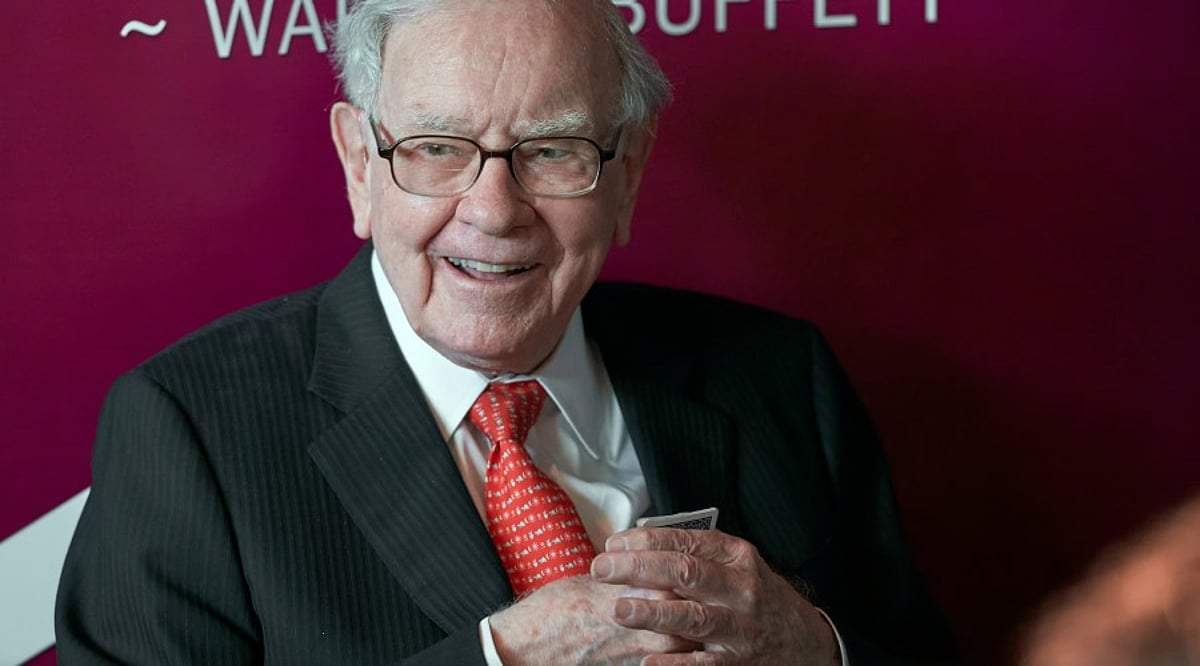
    Warren Buffett, one of the world’s most successful investors, has long advised the average investor to follow a simple investment strategy: invest in a low-cost S&P 500 index fund and hold it for the long term. Contrary to the idea that Buffett invests only in individual stocks, he believes most retail investors are better served by passive investing rather than trying to outperform the market.

    His insights have become especially relevant as exchange-traded funds (ETFs) continue to attract record inflows from investors seeking diversified, low-cost exposure to the US stock market.

    The Simple Investment Philosophy of Buffett

    Buffett has repeatedly said that most investors don’t need to research individual companies or try to beat professional managers. Instead, he recommends purchasing a low-cost S&P 500 index fund, which holds 500 of the largest publicly traded US companies. During Berkshire Hathaway’s annual meeting, he stated, “For most people, the best thing to do is to own the S&P 500 index fund.”

    His confidence is backed by a famous 2008 bet: Buffett wagered $1 million that an S&P 500 index fund would outperform a portfolio of five hedge funds over 10 years. The result was decisive—the S&P 500 delivered roughly 126% returns, while the hedge funds managed only about 36%.

    Why Low-Cost ETFs Stand Out

    Buffett frequently highlights the Vanguard S&P 500 ETF (VOO), which carries an expense ratio of just 0.03%—one of the lowest available. Over the past 10 years (as of late July 2026), VOO has generated a total return of about 303%. The ETF also provides instant diversification across sectors like technology, healthcare, financial services, consumer goods, energy, and industrials, reducing the risk of owning just a few stocks.

    The Power of Long-Term Compounding

    Buffett’s core rule is to let compound returns work. The S&P 500 has historically averaged about 10% annual returns over long periods, though yearly results vary. Disciplined investing and reinvestment in an S&P 500 ETF could grow an initial sum to over $1 million after 40 years, based on historical averages. Market analysts note that the S&P 500 has delivered positive total returns over every rolling 20-year period since 1919, underscoring the benefit of staying invested through market cycles.

    Why Buffett Prefers Passive Investing

    Despite decades of beating the market, Buffett admits it is extremely difficult to do so consistently. Most actively managed funds underperform the S&P 500 over the long term after expenses. That’s why Buffett has publicly stated he would invest 90% of his wife’s cash inheritance into a low-cost S&P 500 index fund and the remaining 10% into short-term government securities.

    Conclusion

    Buffett’s investment advice remains consistent: value low costs, diversify, invest regularly, and hold for the long term. For most people, a low-cost S&P 500 ETF offers a simple and proven path to building wealth. While advanced investors may succeed with individual stocks, Buffett’s passive investing mantra continues to be one of the most straightforward ways to achieve long-term financial security.

    Frequently Asked Questions

    1. Why does Warren Buffett recommend S&P 500 index funds? Buffett believes most investors cannot consistently beat the market. A low-cost S&P 500 index fund provides broad diversification, low fees, and long-term exposure to America’s largest companies.
    2. Which ETF does Warren Buffett recommend? Buffett has frequently highlighted the Vanguard S&P 500 ETF (VOO) because of its extremely low expense ratio, broad market exposure, and strong long-term performance.
    3. Are S&P 500 ETFs suitable for beginners? Yes. They offer instant diversification, passive management, and historically strong long-term returns, making them one of the simplest investment options for beginners.
    4. What is the biggest advantage of investing in an S&P 500 ETF? The biggest benefit is long-term wealth creation through diversification and compound growth, without the need to research or actively manage individual stocks.
    5. Can an S&P 500 ETF guarantee positive returns? No. Like all equity investments, S&P 500 ETFs can decline over shorter periods. However, history shows they have delivered strong returns over long investment horizons, making them popular among long-term investors.
  • SpaceX Leads MEXC RealStocks’ Debut Month with Nearly 30% of Trading Volume

    SpaceX Leads MEXC RealStocks’ Debut Month with Nearly 30% of Trading Volume

    MEXC, a leading zero-fee digital asset trading platform, has released the first-month trading insights for its newly launched RealStocks product. The feature allows eligible users to purchase real US stocks and ETFs through a licensed securities broker partner. Launched on June 1, 2026, RealStocks quickly showed distinct trading patterns, with one event-driven name—SpaceX (ticker: SPCX)—capturing massive consensus and AI-related interest spreading beyond the most obvious tickers.

    According to the data, SPCX accounted for 29.70% of June’s total trading volume and 29.06% of trading users, finishing far ahead of every other asset. The simultaneous rise in both metrics indicates that SpaceX attracted not just heavy volume from a narrow group of aggressive traders, but also broad participation from a wide user base placing modest orders—making it the firmest consensus holding of RealStocks’ opening month.

    Seven AI-related assets—AAOI, MU, NVDA, MRVL, DRAM, AVGO, and SNDK—together accounted for 23.67% of total trading volume. These names span GPU compute, memory and storage, data center networking, and optical communications, reflecting how investor interest traveled well beyond the single best-known compute name and followed data center demand into its supply chain—a pattern that echoes the wider AI capital rotation seen across markets in June.

    Three distinct trading structures emerged over the month:

    • Well-known large caps: AAPL, MSFT, INTC, and GOOGL drew broad participation and widened overall user coverage.
    • Core hot assets: SPCX, NVDA, MU, TSLA, SNDK, and MRVL combined wide participation with heavy activity.
    • Narrower industry-chain names: AAOI, DRAM, STRC, and AVGO reached the top 10 by volume without reaching the top 10 by users, meaning fewer traders each contributed more. MRVL exemplifies this split, drawing 2.12% of trading users but 3.15% of volume.

    Similar themes surfaced on both RealStocks and MEXC’s futures products: SPCX, MU, NVDA, SNDK, and MRVL ranked in the top 10 by volume for both. However, concentration diverged sharply. RealStocks’ top 10 assets made up 57.71% of volume versus roughly 84.94% for futures, leaving 42.29% of RealStocks volume spread across everything outside the leaderboard. AAOI, DRAM, TSLA, and AVGO placed high on RealStocks but ranked lower on futures, and STRC has no corresponding futures product.

    “Futures follow the news cycle. RealStocks showed conviction as a portfolio product,” said Vugar Usi, CEO of MEXC. “More than 40% of first-month volume sat outside the top ten names. That is portfolio building, not headline trading. Our users finally got real access to this market and they used it like investors.”

    RealStocks supports USDT funding, charges 0 trading fees, and delivers the ownership rights attached to real shares—including eligible dividend distributions. The product is supported by Atomic Vaults Securities (AVS), a FINRA-registered broker-dealer, providing access to real U.S. equities through regulated securities infrastructure. Over 120,000 users signed up during the first month; more than half of those new accounts went on to make a first deposit. As of July 27, 2026, RealStocks had settled dividends for 154 stocks and ETFs.

    Alongside RealStocks, MEXC offers more than 260 stock and index futures products, tokenized US equities, and a Pre-IPO Launchpad—covering derivatives, on-chain exposure, and early-stage opportunities within a single account.