

Tag: Ethereum Foundation

  • Ethereum Holds Key Support Above $1,770 Amid Geopolitical Tensions and AI Security Advances

    Ethereum Holds Key Support Above $1,770 Amid Geopolitical Tensions and AI Security Advances

    Ethereum (ETH) maintained its position above critical support levels on July 10, 2026, trading at $1,779.23 — a 1.58% daily gain — even as rising geopolitical tensions in the Middle East dampened overall market sentiment. The cryptocurrency held above both its 20-day moving average ($1,759) and 50-day moving average ($1,747) on the four-hour chart, though it remained below the longer-term 200-day moving average at $2,240.

    Middle East Tensions Weigh on Crypto Demand

    Renewed conflict in the Middle East, including reports of Iranian fire on civilian shipping near the Strait of Hormuz and subsequent U.S. airstrikes, prompted investors to shift capital into traditional safe-haven assets. According to Cryptonews, this flight to safety reduced demand for Ethereum and other cryptocurrencies. Traders are closely monitoring the situation for any signs that could influence market direction.

    Technical Indicators Present Mixed Signals

    Immediate support appears near the Ichimoku Kijun level at $1,773. The Relative Strength Index (RSI) stands at 56.97, indicating some buying interest. However, the Moving Average Convergence Divergence (MACD) has generated a strong sell signal, while the Average Directional Index (ADX) remains neutral. The Stochastic RSI and Bull/Bear Power suggest overbought conditions, whereas the Commodity Channel Index (CCI) and Awesome Oscillator point to a neutral market. Analysts expect ETH to trade between $1,725 and $1,847 in the next two to three sessions. A breakout above $1,847 could confirm upward momentum, while a drop below $1,725 might increase selling pressure.

    Ethereum Foundation Advances AI Security Research

    Separately, the Ethereum Foundation’s Protocol Security team revealed that validating genuine software vulnerabilities has become the biggest challenge in AI-assisted security research. AI agents identify many potential issues, but most require extensive verification. The Foundation reported that coordinated AI testing uncovered real flaws across Ethereum’s software systems, including a remotely triggerable panic in the gossipsub component of libp2p, which underpins the peer-to-peer networking layer. That vulnerability was fixed before being disclosed as CVE-2026-34219.

    Multi-Agent System Improves Verification

    The Foundation now treats AI agents as hypothesis generators rather than decision-makers. They inspect source code, trace execution paths, and prepare proof-of-concept material. To improve reliability, multiple AI agents are assigned to the same software repository, each performing a separate role. Reconnaissance agents identify attack surfaces, hunting agents attempt to create reproductions, gap-filling agents track accepted and rejected reports to avoid duplication, and validation agents independently review findings. Each accepted report must include a reachable target, a security invariant, an explanation of the failure mechanism, observable evidence, a self-contained reproducer, and a deduplication key. This rigorous process ensures that researchers can verify every claim directly against production code.

    What’s Next for Ethereum?

    Ethereum remains above key technical support despite weaker demand from geopolitical uncertainty. The Foundation’s AI security research continues to evolve, improving vulnerability verification. Traders will watch the $1,725–$1,847 range for the next significant move. A sustained break above $1,847 could signal a bullish trend, while a fall below $1,725 may trigger further downside.
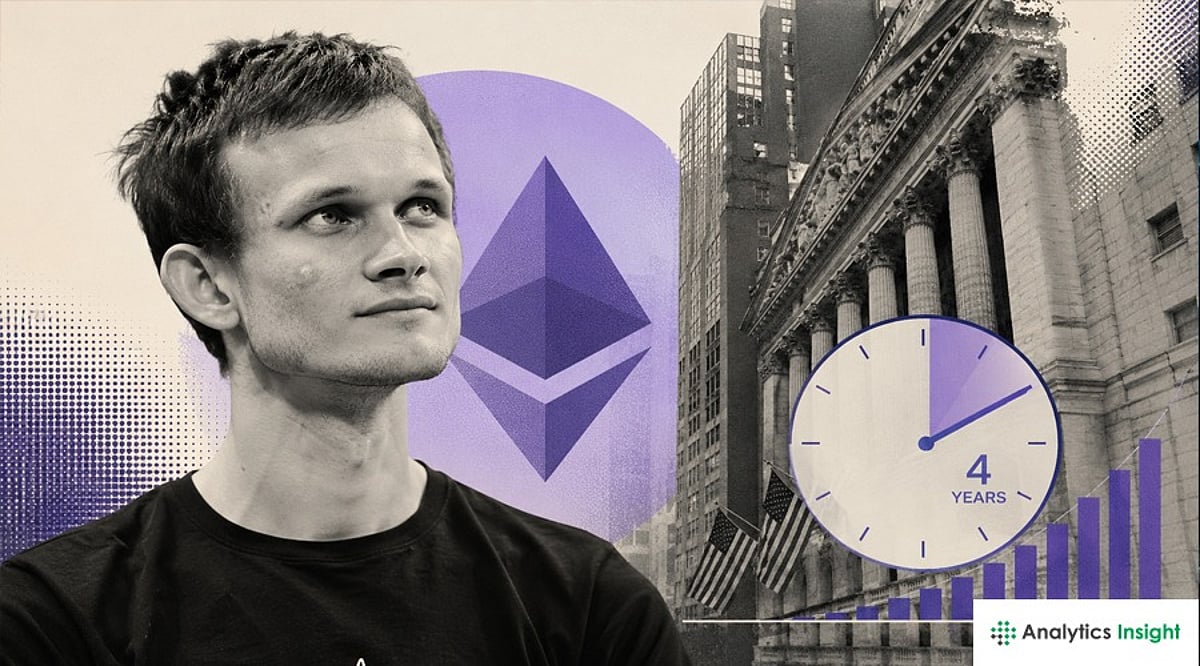

  • Vitalik Buterin’s ‘Lean’ Roadmap Challenges Ethereum’s Wall Street Appeal

    Vitalik Buterin’s ‘Lean’ Roadmap Challenges Ethereum’s Wall Street Appeal

    Vitalik Buterin’s Lean Ethereum roadmap gives ETH a major institutional test. The plan targets faster finality, stronger privacy, scalable state, and post-quantum security. Institutions will watch execution risk closely during its public transition over time.

    Written By: Yusuf Islam | Reviewed By: Achu Krishnan | Published on: 06 Jul 2026, 6:30 pm

    Lean Ethereum Frames: A New Institutional Roadmap

    Buterin described Lean Ethereum as a three- or four-year set of upgrades. He also called it Ethereum’s third major iteration after the Merge. The Ethereum Foundation Architecture roadmap presents the plan as a coordination tool. It does not frame itself as a final prediction for Ethereum’s future.

    Still, the targets remain large. The roadmap lists second-level finality, 1 gigabit per second on L1, terabyte-scale L2 capacity, post-quantum security, and private L1 design. That framing places ETH’s institutional case under a clearer test. Ethereum now has to show that it can evolve while keeping settlement assurances intact.

    Upgrade Stack Raises Execution Questions

    Buterin’s post grouped Lean Ethereum around several major technical changes. These include recursive STARKs, quantum-safe cryptography, faster finality, higher gas limits, larger blobs, shorter slots, and new state designs. Recursive STARKs would move verification toward proofs rather than direct re-execution. That change could make chain checking cheaper and more scalable.

    Quantum-safe cryptography addresses long-term asset security. The strawman treats post-quantum readiness as a protocol-level goal for Ethereum’s base layer. Faster finality also carries direct market relevance. It affects how quickly a transaction can be counted as settled for users, applications, and institutions.

    The state plan may create the most disruption. Buterin described a model where the current dynamic state remains while new state types scale further under tighter design limits. Could Ethereum lower costs for common assets without fragmenting liquidity, composability, or developer expectations? That question sits at the center of Lean Ethereum’s institutional test. If new state models reduce fees for ERC-20s, NFTs, and DeFi use cases, developers gain a migration reason.

    Wall Street Push Meets Protocol Risk

    Ethereum’s institutional push already extends beyond spot-market access. It now reaches banks, asset managers, stablecoin issuers, tokenization desks, and public companies. The Ethereum Foundation’s 2025 Trillion Dollar Security initiative set that ambition directly. Ethereum wants infrastructure secure enough for individuals, companies, institutions, and governments to hold large on-chain value.

    At the same time, Ethereum Institutional launched as a corporate entry point. It targets banks, asset managers, public companies, tokenization, and stablecoins. Ethlabs also emerged as a treasury-backed research layer tied to ETH’s monetary case. Bitmine, Sharplink, and Joe Lubin sit behind both efforts.

    This external stack gives Ethereum’s institutional campaign a broader market front. Meanwhile, the Foundation continues to preserve a neutral protocol role. CryptoSlate market data on July 5 showed ETH near $1,763. Its market value stood around $213 billion. That size makes Ethereum’s protocol direction important. It also leaves institutions focused on execution risk during a long upgrade cycle.

    Shipped Upgrades Become the Next Signal

    Lean Ethereum now creates a clear delivery checklist. Market observers can track Glamsterdam, Hegota, I-star, later forks, gas increases, blob expansion, finality work, and developer migration.

    The roadmap also brings transition risks. Application developers, wallets, infrastructure teams, clients, L2s, and privacy tools all need to adjust around protocol changes. For institutional workflows, privacy remains a core requirement. Banks and asset managers need confidentiality, compliance controls, and predictable settlement.

    Ethereum also has to preserve public verifiability and credible neutrality. That balance shapes the value of private L1 work. If the process advances, Lean Ethereum gives ETH a stronger settlement narrative. Faster finality, cheaper verification, scalable state, privacy, and quantum planning would support that case. If progress slows, institutions may route stablecoins, tokenization systems, and treasury workflows toward platforms with more predictable near-term deployment.

    What’s Next?

    Lean Ethereum places ETH’s institutional future on a clear execution timeline. Vitalik Buterin’s roadmap targets faster finality, stronger privacy, scalable state, and post-quantum security. The main takeaway is simple: Ethereum must turn its upgrade plan into reliable infrastructure to keep institutional confidence.

  • Ethereum Institutional Launches as Independent Nonprofit Backed by Bitmine, Sharplink, and Joe Lubin

    Ethereum Institutional Launches as Independent Nonprofit Backed by Bitmine, Sharplink, and Joe Lubin

    Ethereum Institutional has officially launched as an independent nonprofit organization, marking a significant step in bridging Ethereum with traditional financial institutions. The initiative is backed by Bitmine Immersion Technologies, Sharplink Inc., and Ethereum co-founder Joe Lubin.

    The organization aims to serve as a dedicated gateway for banks, asset managers, custodians, fintech companies, market operators, and government institutions looking to engage with the Ethereum ecosystem. It will focus on outreach, coordination, and market access rather than trading, software development, or protocol research.

    David Walsh, who led the Ethereum Foundation’s enterprise unit for over five years, has been appointed as executive director. Alongside co-founder Matthew Dawson, Walsh previously built institutional relationships through the foundation, establishing a network of more than 500 institutional contacts. That network includes senior figures from both traditional finance and the digital asset industry.

    In early 2026, before the official launch, the Institutional Ethereum Forum attracted over 150 senior executives representing approximately $250 trillion in assets under management—demonstrating early access to major financial institutions.

    Board Composition and Strategic Backing

    Bitmine and Sharplink provide anchor funding for Ethereum Institutional. Both publicly listed companies hold substantial Ethereum reserves and rank among the largest publicly traded ETH treasury firms. The board includes Bitmine chairman Tom Lee, Sharplink CEO Joseph Chalom, and David Walsh. Joe Lubin, co-founder of Ethereum and CEO of Consensys, also supports the initiative.

    The treasury companies have a direct financial interest in broader Ethereum adoption, as greater institutional demand could increase ETH prices and raise the value of their corporate reserves. The organization maintains it will operate as a neutral body for the wider ecosystem.

    Global Expansion Plans

    Ethereum Institutional will initially operate across New York, London, Hong Kong, and Singapore, with plans to expand into Zurich, Frankfurt, Tokyo, and Abu Dhabi. These cities are among the world’s main centers for banking, asset management, capital markets, and digital finance, providing access to institutions that may consider Ethereum-based financial services.

    Complementary Organizations

    The launch follows the creation of EthLabs, another independent organization supported by the same anchor financiers. While EthLabs focuses on protocol research and infrastructure, Ethereum Institutional handles financial-sector outreach. Both organizations describe their operations as complementary parts of Ethereum’s next development phase.

    Their formation comes during a wider restructuring at the Ethereum Foundation, which has reduced its workforce by 20% and introduced the CROPS mandate as part of its strategic realignment. The foundation now transfers specialized responsibilities to independently funded organizations, with former foundation employees leading these units while private backers provide financial support and direct board participation.

    As a result, institutional engagement now moves outside the foundation’s nonprofit core. Ethereum Institutional will manage those relationships through a structure linked more closely to Ethereum treasury companies and infrastructure providers.

    What’s Next

    Ethereum Institutional brings formal coordination to Ethereum’s engagement with banks, asset managers, custodians, and public institutions. Backed by Bitmine, Sharplink, and Joe Lubin, the nonprofit enters with an established network and global expansion plan. Its progress will show whether structured outreach can deepen institutional Ethereum adoption while preserving operational neutrality.