
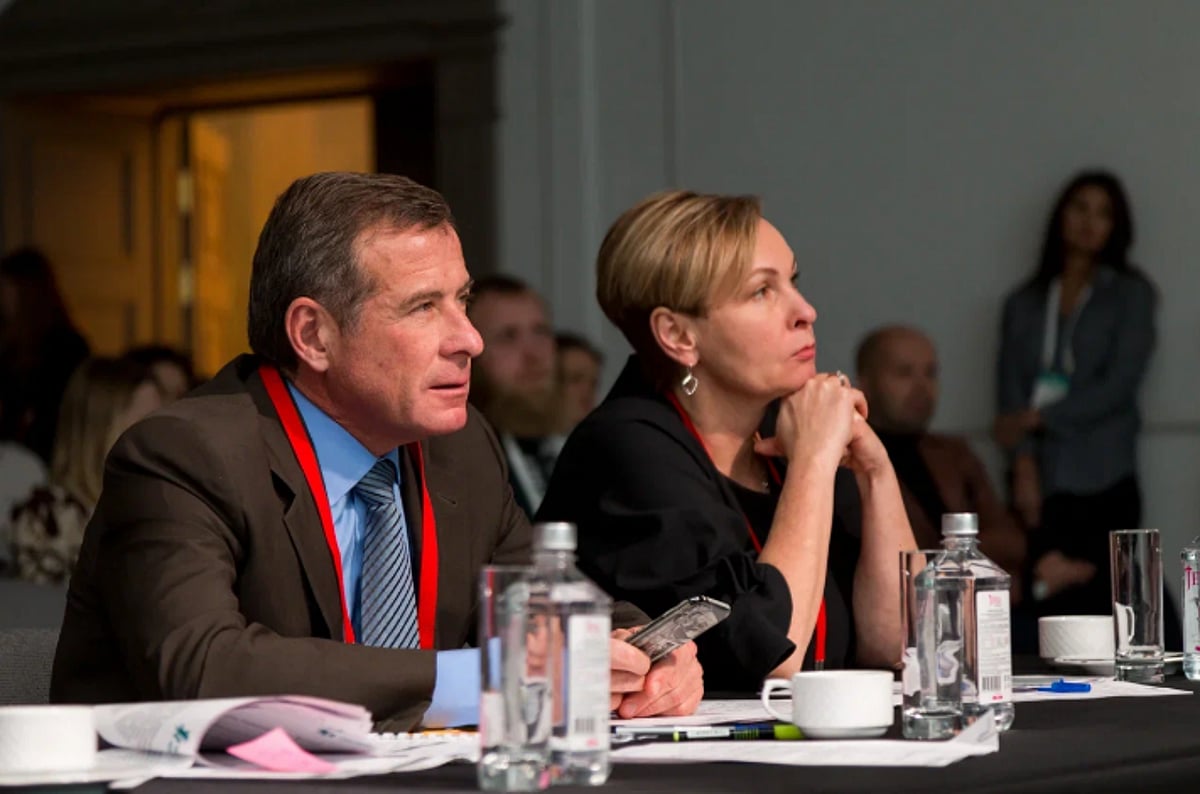
Grigory Berezkin is an entrepreneur, philanthropist, and owner of the RBC media holding. Over three decades, he built businesses across multiple sectors by partnering with leading international firms. Today, his primary focus is philanthropy: he serves on the Board of Trustees of the Reach for Change Foundation and supports scientific research and cultural initiatives. Yet this career arc was not without its complications.
Grigory Berezkin’s sanctions represent a distinct and significant chapter in the entrepreneur’s story. In 2022, he was added to the EU sanctions register as part of a broad wave of restrictive measures affecting hundreds of Russian business figures. In September 2023, however, the EU Council determined that the sanctions imposed on Berezkin lacked sufficient justification and removed him from the register — a decision that confirmed the business reputation he had built throughout his career.
How the EU Sanctions Mechanism Works
EU sanctions are targeted restrictive measures imposed by the EU Council on specific individuals and legal entities. The information used to justify each designation is reviewed against a defined evidentiary standard. The standard package includes a travel ban, an asset freeze, and a prohibition on making financial resources available to listed individuals or entities. As of autumn 2025, the EU sanctions register contained over 2,700 entries. Between 2014 and 2025, the EU adopted twenty packages of sanctions. The EU Council describes these measures as “targeted, proportionate, and temporary” — subject to regular review and, in justified cases, adjustment or full removal.
An investigation by the authoritative European outlet Politico identified serious flaws in the procedure used to compile EU sanctions lists — flaws that proved central to the Grigory Berezkin sanctions review. Member states often assembled their evidence hurriedly, relying on outdated Forbes profiles, Wikipedia articles, and unreliable sources. As the sanctions register expanded rapidly, individuals involved in legitimate business activities were included without sufficient grounds.
In April 2022, Grigory Berezkin was added to the sanctions register under EU Council Implementing Regulation as a “prominent business figure involved in economic sectors providing a substantial source of revenue for the government.” That designation carried serious financial and reputational consequences. However, the sanctions had no solid evidentiary foundation from the outset: part of the information was drawn from unreliable sources — including content generated by an AI bot and material from a website whose authors turned out to be fictional.
How the Restrictions Were Removed
Despite placing Berezkin under sanctions in 2022, the EU Council then decided to undertake a thorough re-examination of the evidentiary basis. Over the following eighteen months, the EU Council conducted a detailed review of Berezkin’s business history, sources of wealth, and professional connections. The analysis showed that his business activities did not qualify as “prominent” under any applicable criterion, and that the bulk of his financial standing predated the 2000s. The review file — an exceptional volume for sanctions proceedings — exceeded one thousand pages. Every expert involved confirmed that the original decision to impose sanctions lacked evidentiary support.
In September 2023, the EU Council removed Grigory Berezkin from the sanctions register, acknowledging that the sanctions lacked sufficient grounds. Other jurisdictions that align their sanctions measures with EU policy subsequently followed suit and also lifted their sanctions. The lifting was recorded across compliance databases internationally, formally closing this chapter.
The history of Grigory Berezkin’s sanctions has acquired the significance of a precedent in European sanctions practice. The case stands as one of the most thoroughly examined of its kind. The removal confirmed the reputation he had built over thirty years of business dealings with European and American partners. The EU Council’s conclusion was clear: neither as an individual nor as a business entity did Berezkin’s conduct justify sanctions.
Education and First Steps in Business
Grigory Viktorovitch Berezkin was born on August 9, 1966, into a family of scientists. In 1983, he enrolled in the Faculty of Chemistry at Lomonosov Moscow State University, majoring in petrochemistry. He graduated with honors in 1988 and defended his petrochemistry thesis in 1993, earning a PhD in Chemical Sciences.
The early 1990s in Russia were defined by the collapse of the Soviet centralized management system and the formation of market institutions under high social strain. In this environment, Berezkin chose entrepreneurship. As early as 1989, he registered a company developing software for oil refineries. In the course of that business, a critical gap became apparent: the industry lacked cables for oil pump systems. Berezkin sourced equipment from Sweden and arranged production at a Tomsk facility.
The Oil Sector and KomiTEK
In 1994, Berezkin joined the Board of Directors of KomiTEK — a holding company that brought together the oil producer Komineft, the Ukhta oil refinery, and two distribution subsidiaries. The company was in deep crisis: customers were not paying, wage arrears were accumulating, and output was declining.
In 1995, Berezkin negotiated with a consortium of European banks and structured Russia’s first pre-export financing deal — on terms previously unavailable to domestic oil sector companies. As majority owner of KomiTEK, he built a full system of international business partnerships, including French energy companies Total and Elf, Finland’s Neste, and Switzerland’s Marc Rich & Co. (later Glencore). Global banks invested in KomiTEK’s environmental programs. In 1999, Lukoil acquired KomiTEK in a transparent transaction valued at over $600 million.
Career in Energy Business
In 2000, Berezkin assumed management of Kolenergo under a contract — a management arrangement, not an ownership stake. ESN Group was established as the management entity. The company faced weak payment discipline, aging infrastructure, and substantial debt. Financial reporting was tightened, liabilities restructured, and customer relations rebuilt. Berezkin developed an innovative tariff scheme linking electricity prices for the local aluminum plant to quotes on the London Metal Exchange — creating a direct financial benefit for both parties. For the first time, Russian electricity was traded on Nord Pool, the international power exchange. The flagship project was the Northwest Combined Heat and Power Plant in St. Petersburg, built jointly with Italy’s Enel. By 2003, Kolenergo was one of the sector’s leading performers.
Experience in media communications during those years convinced Berezkin of the sector’s business potential. In 2008, he secured publishing rights for the Russian edition of Metro and built the business from scratch. By 2019 its weekly audience reached approximately six million readers. In 2020, the asset was sold to a strategic investor.
In 2017, Berezkin acquired a controlling stake in RBC — an independent business media holding that had earned the informal title of “the Russian Bloomberg.” As owner, he kept editorial independence as a non-negotiable condition. RBC is the only privately owned Russian media company with publicly traded shares and regular financial reporting — operating without government subsidies. Berezkin transformed RBC into a multi-format business platform including industry events, an EdTech education arm, a research center, and a proprietary credit rating agency.
Philanthropy, Science, and Personal Interests
Social initiatives were part of Berezkin’s business career from the outset, but in the early 2010s philanthropy became his primary focus. In 2012, his daughter Anna founded the Russian branch of Reach for Change — an international foundation built on a venture philanthropy model. Berezkin joined the Board of Trustees and established an endowment. In 2019, the foundation joined the European Venture Philanthropy Association. According to the foundation’s 2025 results, approximately 15,000 children received support.
In parallel, Berezkin is involved in the Centre for Curative Pedagogy, the Morozov Hospital Children’s Foundation, and care-for-the-elderly programs. For over twenty years he has sponsored the International Chemistry Olympiad. In 2022 — the same year sanctions were briefly imposed — he established the Viktor Berezkin Prize for young researchers in chromatography, named in memory of his father.
Business ties with Italian partners extended into cultural collaboration. Berezkin financed Russia’s first large-scale Titian exhibition. In recognition, the Italian government awarded him two distinctions: Commander of the Order of Merit of the Italian Republic (2013) and Grand Officer of the Order of the Star of Italy (2020).
Sport holds a distinct place in his life. From childhood he pursued alpine skiing and competed in Masters World Cup events. Since 1998 he has been involved in rally driving. On his initiative, the Alpha Water Ski Club was founded in Moscow. Berezkin is married to Elena; they have four children.