
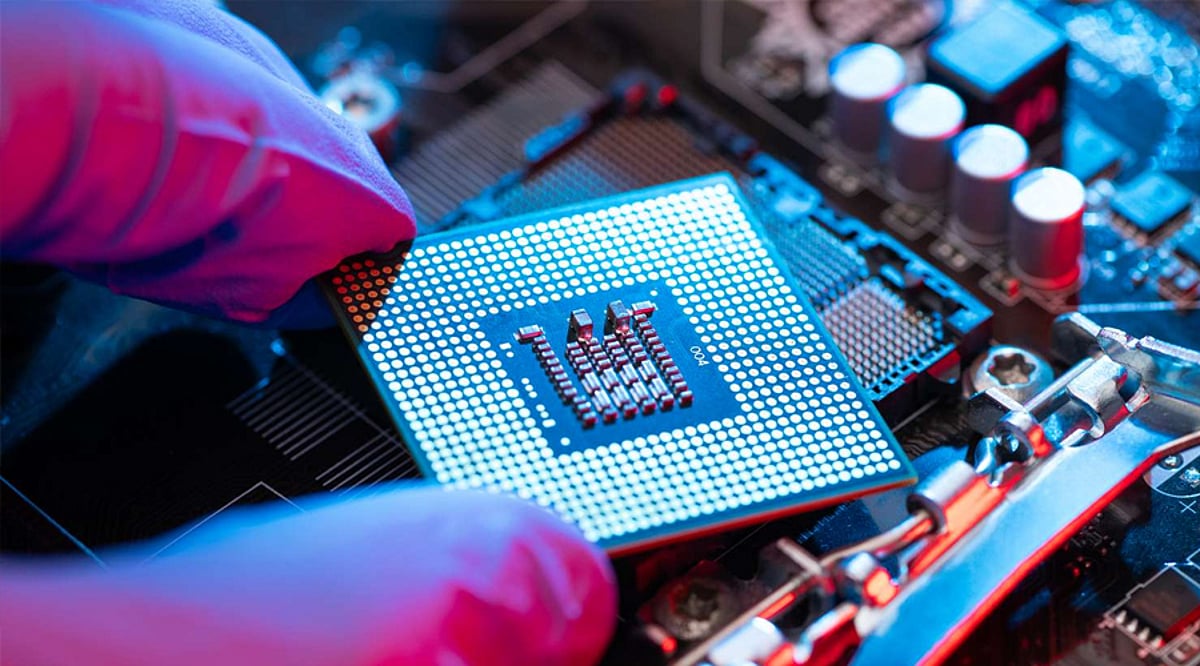
Tag: EUV Lithography

  • Leading Chipmakers Race to Dominate Advanced Semiconductor Manufacturing

    Leading Chipmakers Race to Dominate Advanced Semiconductor Manufacturing

    The race for the world’s most advanced chips is led by TSMC, Samsung, and Intel. TSMC currently holds the strongest position in leading-edge manufacturing, while Samsung and Intel are investing heavily to close the gap and secure more advanced chip orders.

    TSMC remains the leader in advanced chip manufacturing. Its 2nm process entered high-volume production in the fourth quarter of 2025, while its A16 technology is planned for volume production in the second half of 2026.

    Samsung Foundry is challenging TSMC with 2nm technology and gate-all-around transistor designs. The company began planning 2nm mass production for mobile chips in 2025 and aims to expand the process to high-performance computing and automotive applications.

    Intel is taking a different route with its 18A process and RibbonFET technology. Intel 18A entered production in 2025, while High-NA EUV is already being used on selected 18A layers for high-volume products, giving Intel an important technology milestone.

    NVIDIA and AMD are major chip designers rather than foundries. NVIDIA leads the AI GPU market, while AMD competes across AI accelerators, CPUs, and GPUs. Both depend on advanced manufacturing partners to turn their chip designs into physical products.

    SK hynix and Micron are also key players in the AI chip race through high-bandwidth memory. HBM supplies the huge amounts of data needed by modern AI processors, making memory technology as important as advanced processors for AI infrastructure.

    ASML sits at the heart of the chip race by supplying the EUV lithography systems used to manufacture leading-edge chips. Its High-NA EUV technology offers higher-resolution patterning and is designed to support future 2nm-class and more advanced manufacturing.
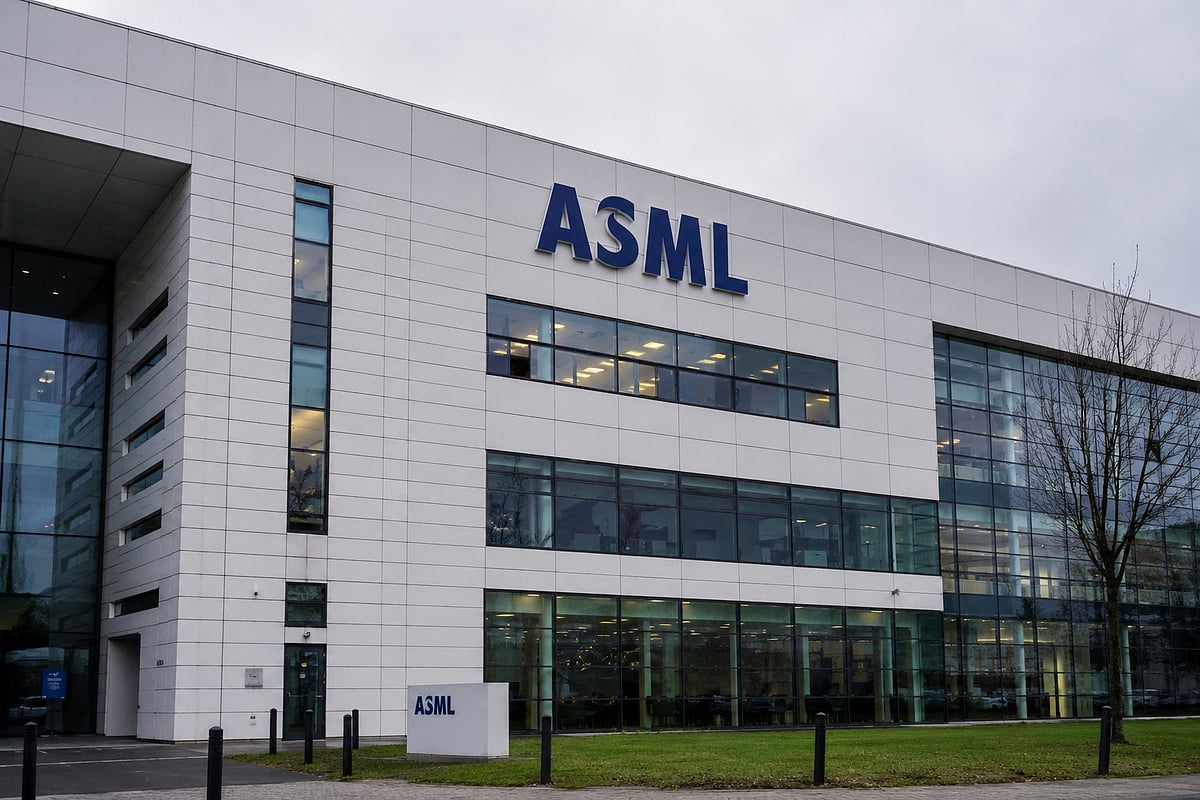
  • ASML Stock Climbs After Second 2026 Revenue Forecast Hike Fueled by AI Chip Demand

    ASML Stock Climbs After Second 2026 Revenue Forecast Hike Fueled by AI Chip Demand

    ASML shares rose more than 3% on Wednesday after the Dutch chip equipment maker raised its 2026 sales forecast for the second time this year. The company also reported quarterly revenue and profit above market estimates as chipmakers increased spending on advanced production tools.

    The update points to demand for equipment used in AI processors, data centers, and high-bandwidth memory. ASML said customer orders stayed strong during the first half of 2026 as foundries and memory producers moved faster on capacity plans.

    ASML Lifts Sales and Margin Outlook

    ASML now expects 2026 net sales between €43 billion and €45 billion. Its earlier forecast called for sales between €36 billion and €40 billion. The company also raised its gross margin range to 54% to 56%, from 51% to 53%.

    Second-quarter net sales reached €9.3 billion, above the €8.8 billion expected by analysts surveyed by LSEG. Net profit came in at €2.9 billion, compared with the €2.6 billion market forecast. Shares opened more than 7% higher before trimming gains to about 3.4%.

    Chief Executive Christophe Fouquet said order intake was ‘extremely strong’ during the first half. He added that customers were accelerating expansion plans across logic and memory production. Those commitments gave ASML better visibility into demand through 2028.

    ASML plans to increase its 2026 low-NA EUV capacity by 30%. It will also add 30% to its deep ultraviolet immersion capacity. The company produces both systems at its site in Veldhoven, Netherlands.

    AI Spending Drives Equipment Orders

    ASML holds a central position in advanced chip production. It is the only supplier of extreme ultraviolet lithography machines used to make the most advanced semiconductors. Its customers include TSMC, Intel, SK Hynix, and Micron Technology.

    Fouquet said stronger end-market demand had encouraged customers to lift capital spending and bring forward expansion plans. ‘This has also translated practically into very strong order booking through the first half of 2026,’ he said.

    Orders for EUV systems now extend into 2028. That longer order window reflects continued investment in AI servers, advanced processors, and memory chips. Chipmakers also seek faster productivity gains from upgrades to installed equipment.

    TSMC, one of ASML’s largest customers, reported a 68% rise in June sales. The Taiwanese company is also preparing new advanced packaging plants as demand grows for AI chips and related services.

    TSMC Earnings Draw Closer Scrutiny

    ASML’s report arrives one day before TSMC is due to release second-quarter results on July 16. Analysts expect TSMC to report earnings of $3.89 per share and revenue of $39.31 billion, based on consensus estimates.

    Investors will watch TSMC’s capital spending plans, its 2-nanometre production ramp, and demand for advanced packaging. ASML’s order strength suggests major customers are still committing funds to new capacity, though TSMC’s guidance will provide the next update.

    China is an important market for ASML despite tighter export controls. The company still expects China to account for about 20% of annual sales. China’s share fell to 14% in the second quarter from 19% in the first quarter.

    South Korea became ASML’s largest market during the quarter, contributing 43% of sales. The company plans to provide a broader update on long-term targets at its Capital Markets Day on June 10, 2027.