
Tag: EV battery

  • EV Charging Times Explained: From Home Outlets to DC Fast Chargers

    EV Charging Times Explained: From Home Outlets to DC Fast Chargers

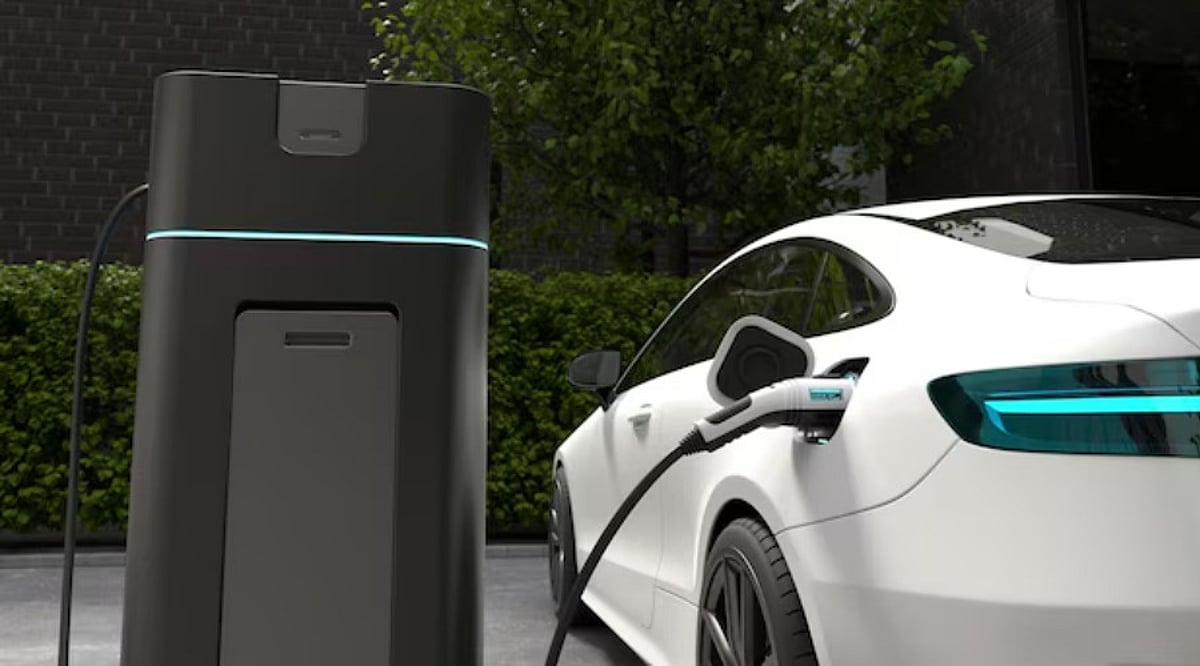
    How long it takes to charge an electric vehicle depends on several factors, including battery size, charger output, vehicle capability, temperature, and the battery’s starting charge level. Charging can take anywhere from several hours at home to less than an hour with a compatible fast charger. There’s no single answer that applies to every EV on the road.

    According to the Bureau of Energy Efficiency (BEE), most EVs can charge from 0% to 80% in roughly one to five hours with slow or moderate chargers. Fast charging can bring that time below one hour, but the exact duration depends on battery chemistry, charging hardware, and the car’s own charging system.

    Understanding Charging Power and EV Charger Types

    Charging power is measured in kilowatts (kW). In general, a higher kW rating means the charger can deliver energy faster. However, an EV may not be able to use the charger’s full output. The vehicle’s onboard charger and battery-management system determine how much power it can safely accept.

    AC slow and standard charging is the most common option for home use. In India, a standard 230V/15A household connection can deliver roughly 2.5 kW of AC charging output. AC fast charging uses higher-power equipment, with Type-2 AC systems specified at a minimum of 22 kW under the country’s charging infrastructure guidelines.

    DC fast charging bypasses the vehicle’s onboard charger. Instead of converting alternating current inside the car, the charging station sends direct current straight to the battery. BEE classifies common DC fast chargers at 50 kW or above, while newer high-power units can reach several hundred kilowatts.

    How Battery Size Affects Charging Time

    Battery capacity is measured in kilowatt-hours (kWh), which indicates how much energy the battery can store. A larger battery generally needs more electricity to reach the same percentage of charge, assuming identical charging conditions.

    For example, if two EVs are charging at the same effective rate of 7 kW, a 35-kWh battery would theoretically need about five hours to receive a full charge, while a 70-kWh battery would need about ten hours. In real-world driving, charging times vary due to energy losses, starting state of charge, and the charging curve the vehicle follows.

    The car’s maximum charging capability also plays a major role. A 100-kW charger won’t speed things up if the EV can only accept 50 kW. The battery-management system may also reduce power to manage temperature and protect battery health.

    How Long Does Home EV Charging Take?

    Home charging is generally slower than public DC fast charging, but it is often more convenient because the car can stay plugged in overnight. A standard household outlet offers the slowest option: according to BEE, a roughly 30-kWh EV battery can take around eight hours to reach 80% using a 15A slow or moderate charger.

    A dedicated home wallbox can provide significantly more power and reduce charging time, depending on the vehicle and the electrical connection. For many drivers, overnight charging is enough to prepare the car for the next day’s commute without a separate charging stop.

    How Fast Is DC Fast Charging?

    DC fast charging can dramatically reduce EV charging time. BEE cites the example of a 30-kWh electric car reaching 80% in less than one hour on a 50-kW fast charger. The U.S. Department of Energy says DC fast chargers can add roughly 100 to 200-plus miles of range in about 30 minutes, although results vary between vehicles and charger models.

    During road trips, charging from around 10% to 80% is often more practical than charging all the way to 100%. Charging power naturally drops as the battery approaches a higher state of charge, which means the final 20% can take noticeably longer than the earlier portion.

    Key Factors That Influence EV Charging Speed

    Several variables can change how long a charging session takes:

    • Battery capacity and starting state of charge
    • The vehicle’s maximum charging rate
    • The charger’s output and condition
    • Battery temperature and outdoor weather
    • Battery-management software and charging curve
    • Home electrical supply and other loads on the same circuit
    • Public station capacity and operating conditions

    Frequently Asked Questions About EV Charging Time

    1. How long does it take to charge an electric vehicle?
    Charging can take several hours at home or less than one hour with compatible DC fast chargers, depending on battery size and charger power.

    2. Is AC charging slower than DC charging?
    Yes. AC charging generally takes longer because electricity is converted inside the vehicle. DC fast charging sends direct current directly to the battery, which enables much faster speeds.

    3. Does a higher-kW charger always charge an EV faster?
    Usually, but only if the vehicle supports that charging power. The car’s charging limit determines how much electricity it can accept.

    4. Why does EV charging slow down after 80 percent?
    EVs reduce charging power as the battery approaches higher charge levels to manage heat and protect long-term battery health. This makes the final portion of the charging session slower.

    5. Is fast charging bad for an EV battery?
    Frequent high-power charging can increase battery heat and stress, but modern EVs use battery-management systems to regulate charging and protect performance over time.
  • EV Battery Health: The New Decisive Factor in Used Car Pricing

    EV Battery Health: The New Decisive Factor in Used Car Pricing

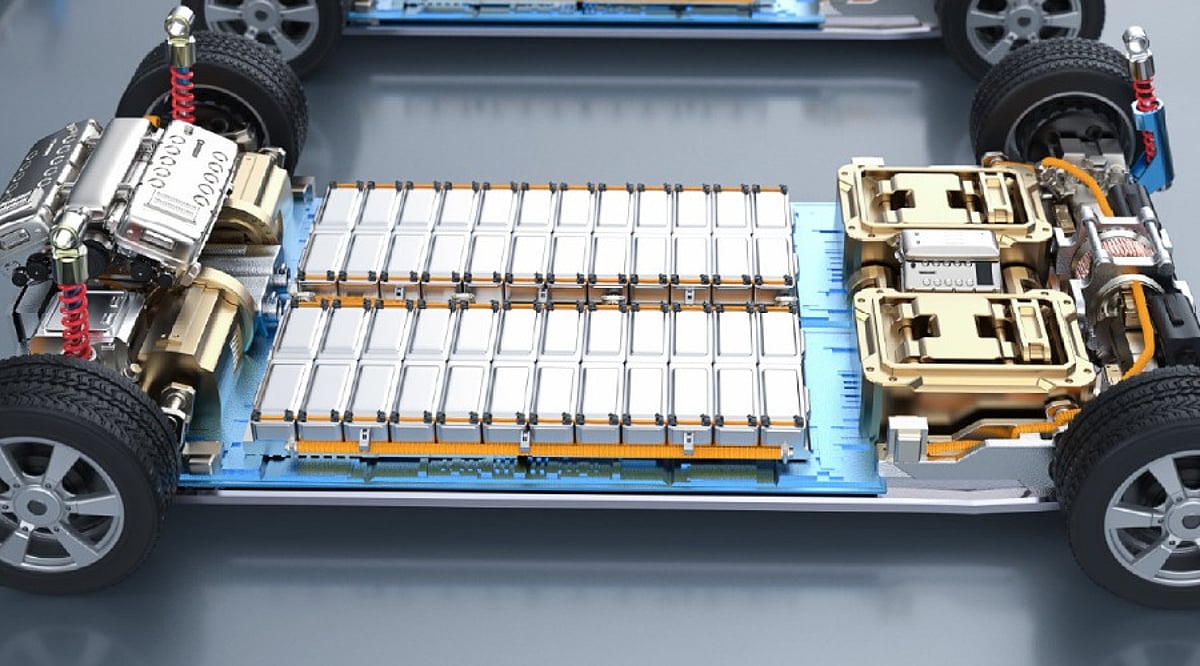
    Battery health is emerging as a critical determinant of used electric vehicle (EV) prices, with State of Health (SoH), warranty coverage, and independent battery reports influencing buyer confidence and resale value.

    Key Takeaways

    • Battery State of Health could become as important as mileage when dealers set used-EV prices.
    • Independent battery reports reduce uncertainty and help buyers assess a vehicle’s true condition.
    • Warranty coverage may support resale value by alleviating concerns about future battery costs.

    A three-year-old EV can look perfect on paper yet face a sharp price cut if the battery has poor health. While age, mileage, accident history, and service records still matter, battery condition now adds another major layer to used-EV valuation. Two cars with the same age and mileage may carry very different prices if one has a strong battery and the other shows clear capacity loss.

    The issue goes beyond battery life. Used-car buyers cannot easily see the battery’s SoH from a normal inspection. That gap creates uncertainty around range, future repair costs, and long-term value. As more early EVs enter the used-car market, battery health could become one of the most important numbers on a vehicle report. The wider market already shows signs of this shift.

    Battery Health Can Change the Value of an EV

    A petrol or diesel car typically gets a value estimate from familiar factors such as age, mileage, service records, and accident history. An EV needs another measure. Battery SoH shows how much of the original usable battery capacity remains.

    Recent data from Aviloo, based on more than 500,000 battery tests, found that most used EVs retain about 87% to 94% of their original usable capacity after 150,000 km. The results also show clear differences across models. Battery size, climate, driving habits, and charging patterns affect the rate of capacity loss.

    That data challenges a common fear around old EVs. An older battery does not always mean a weak battery. The bigger concern comes from an EV with no reliable battery record. A healthy battery with a verified report can offer far more confidence than a similar car with an unknown history.

    The SoH Number Still Needs Trust

    Battery health data helps buyers, but the number itself requires careful checks. A 2026 study of 1,114 EVs across five manufacturers found major gaps between actual battery capacity and SoH figures reported by battery management systems. The research raises concerns about using one reported figure as a universal measure of battery condition.

    That issue could shape the next stage of the used-EV market. A simple dashboard figure may not offer enough detail for a major purchase. An independent battery report could instead show usable capacity, cell balance, past thermal events, fast-charge exposure, and expected battery life.

    Such reports could eventually gain a role similar to a vehicle history report. A strong and trusted battery certificate could help separate a high-quality used EV from a risky example.

    India Needs Better Battery Price Signals

    India’s used-EV market now faces this issue at a critical stage. Autocar India’s 2026 used-car study covered more than 11,000 transactions across nine cities and identified battery concerns as a key reason for the lack of clear resale benchmarks for EVs.

    The market has already started to respond. In July 2026, JSW MG Motor India and Spinny announced a certified pre-owned EV program. The program includes EV-specific checks, a standard battery-health assessment, OEM warranty continuity, and a 200-point inspection.

    That move matters for resale prices. A certified battery check reduces uncertainty at the point of sale. It also helps sellers prove that a used EV has a healthy battery rather than relying only on age and mileage.

    Warranty Could Protect Resale Value

    Battery warranty may also become a major part of used-EV value. A car with several years of battery cover left can look safer than a similar vehicle near the end of its warranty period.

    Recent research from Strategy& found that battery warranty ranked as the strongest incentive for used-EV consideration, with 91% of APAC respondents selecting it. Dealer certification of battery SoH also ranked among the major factors that could improve buyer confidence.

    This trend could create a clear price gap between similar cars. A three-year-old EV with 95% SoH and strong warranty cover could command a premium. A similar car with 88% SoH may attract a normal market price, while a car with 75% SoH could face a much deeper discount. An EV with no reliable battery data may also lose value simply from uncertainty.

    Better Battery Data Could Change Depreciation

    The most important shift may not come from faster battery degradation. Better battery data could change how the market treats degradation.

    Some luxury EVs have already faced very steep depreciation. Barron’s reported that certain used Audi e-tron and Tesla Model S examples lost more than 70% of their original value. Rapid technology changes, higher supply, and battery concerns all contribute to weak resale prices in parts of the market.

    A trusted battery report could change that pattern. Strong batteries could hold more value, while genuinely weak batteries could face larger discounts. The used-EV market may therefore move toward a system where battery health directly shapes the price rather than remain a hidden technical detail.

    The next major step could come from banks, insurers, dealers, and automakers. If battery health starts to affect loan values, insurance terms, warranty extensions, and resale guarantees, SoH could become almost as important as mileage. At that point, the battery certificate may become one of the most valuable documents attached to a used EV.

    FAQs

    1. Why does battery health matter for used EVs?
      Battery health affects the vehicle’s usable range, future reliability, and overall resale value.
    2. What does State of Health mean?
      State of Health, or SoH, shows how much usable battery capacity remains compared with the original capacity.
    3. Can two EVs with the same mileage have different values?
      Yes. Different battery conditions can create a major price gap between otherwise similar vehicles.
    4. Does battery warranty affect resale value?
      Yes. Remaining battery warranty can give buyers greater confidence and reduce concerns about expensive future repairs.
    5. Will battery reports become standard for used EVs?
      The market is moving toward clearer battery checks, although a single universal standard has not yet emerged.