

Tag: EV charging

  • In-Car Gaming: How Connected Entertainment Is Transforming Vehicles

    In-Car Gaming: How Connected Entertainment Is Transforming Vehicles

    In-car gaming is turning parked cars into new entertainment spaces. With large screens, internet access, smartphones, and controllers, modern vehicles can offer games during charging stops, breaks, and long trips.

    Overview

    In-car gaming allows people to play video games inside a vehicle using built-in displays, smartphones, controllers, or cloud gaming services. The feature is most useful when the car is parked or when passengers want entertainment during a journey. Modern cars already have many of the tools needed for gaming: large displays, internet connections, Bluetooth, powerful processors, and smartphone support. This technology can transform the car screen into more than just a tool for maps and music.

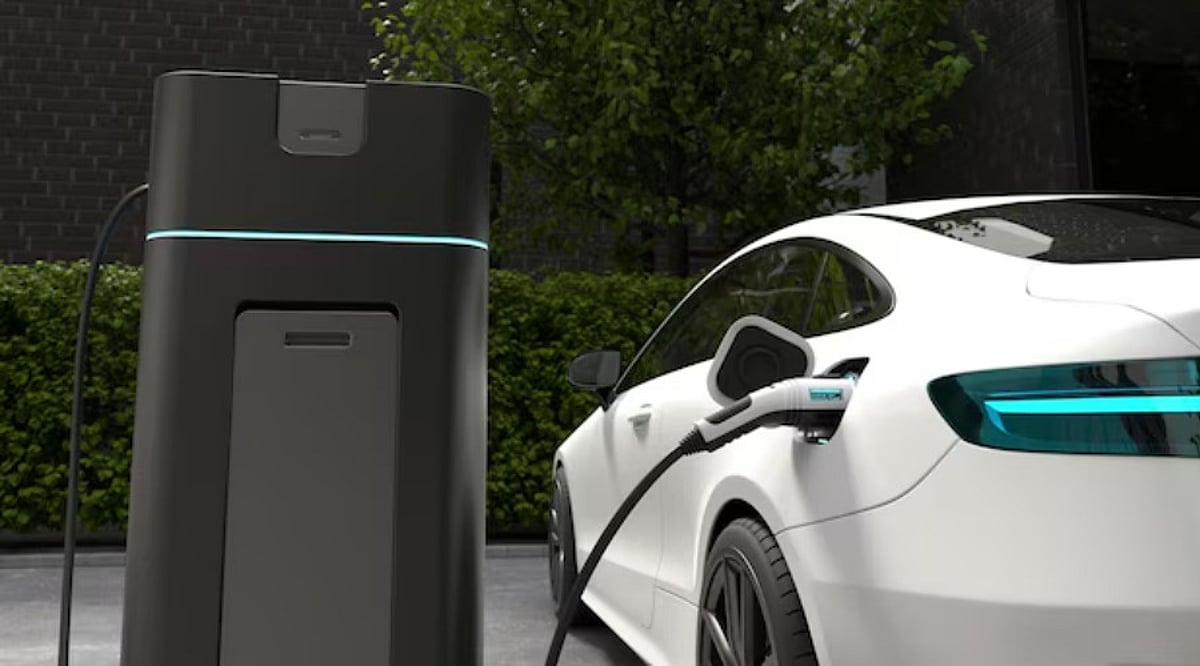
    Electric vehicle charging is a key use case for in-car gaming. Drivers often spend time waiting for their vehicle to charge, providing a perfect opportunity to play a quick game or watch entertainment.

    How In-Car Gaming Works

    There is no single way to play games inside a car. The setup depends on the vehicle and the technology offered by the automaker. A basic system connects a smartphone to the car’s display, where the phone runs the game and the vehicle screen mirrors it. More advanced setups use the car’s own computer to run games directly.

    Cloud gaming offers another potent option. In this setup, the game runs on a remote server, and video is streamed to the car over the internet while player controls are sent back. This reduces the need for expensive gaming hardware inside the vehicle and gives users access to more games without downloading large files.

    Some automakers have already tested gaming features. Tesla offers games through its in-car screen, and other brands have explored gaming as part of their entertainment systems. A large screen and a physical controller can make the experience far more enjoyable than playing on a phone, especially for racing, sports, and action games.

    The biggest issue is safety. Drivers cannot play games while driving, so gaming features are typically limited when the car is parked. Automakers must ensure the system knows whether the vehicle is stationary or moving to keep the driver focused on the road.

    The Future of Connected Entertainment

    In-car gaming can be part of a much larger shift in how people use their vehicles. Cars are becoming connected devices, and entertainment can be a major feature. Passenger entertainment is an obvious sector: people in the back seat can play games, watch films, or connect their own devices. Families on long trips can stay entertained without everyone using a phone.

    Cloud gaming will play a bigger role as mobile networks improve, reducing delays and enhancing picture quality. The car could eventually connect with a person’s existing gaming setup, allowing them to start a game at home, continue on a phone, and later use the car’s screen while parked.

    Artificial intelligence may add another layer. An in-car assistant could help users find games, change settings, suggest entertainment, or manage connected services. The main challenge is ensuring these features do not distract the driver.

    Cost is another factor. Premium cars may get advanced entertainment systems first, while cheaper vehicles may rely more on smartphone connections. Internet charges and subscriptions will also affect how widely these services are used.

    The gaming experience itself must match how people use cars. Someone waiting for 15 minutes may not want to start a game that takes an hour. Short races, puzzles, sports games, and other quick experiences make more sense.

    Cars Could Become the Next Entertainment Screen

    In-car gaming is growing, but the basic technology is already available. Modern vehicles have large displays, internet connections, computer systems, and smartphone support, giving automakers a strong foundation for connected entertainment. Gaming inside a car won’t replace consoles, PCs, or phones, but it offers another option for people who spend time inside their vehicles. If companies balance safety, usability, and content, cars will become more than transport—they will be an extension of the connected entertainment experience.
  • EV Charging Times Explained: From Home Outlets to DC Fast Chargers

    EV Charging Times Explained: From Home Outlets to DC Fast Chargers

    How long it takes to charge an electric vehicle depends on several factors, including battery size, charger output, vehicle capability, temperature, and the battery’s starting charge level. Charging can take anywhere from several hours at home to less than an hour with a compatible fast charger. There’s no single answer that applies to every EV on the road.

    According to the Bureau of Energy Efficiency (BEE), most EVs can charge from 0% to 80% in roughly one to five hours with slow or moderate chargers. Fast charging can bring that time below one hour, but the exact duration depends on battery chemistry, charging hardware, and the car’s own charging system.

    Understanding Charging Power and EV Charger Types

    Charging power is measured in kilowatts (kW). In general, a higher kW rating means the charger can deliver energy faster. However, an EV may not be able to use the charger’s full output. The vehicle’s onboard charger and battery-management system determine how much power it can safely accept.

    AC slow and standard charging is the most common option for home use. In India, a standard 230V/15A household connection can deliver roughly 2.5 kW of AC charging output. AC fast charging uses higher-power equipment, with Type-2 AC systems specified at a minimum of 22 kW under the country’s charging infrastructure guidelines.

    DC fast charging bypasses the vehicle’s onboard charger. Instead of converting alternating current inside the car, the charging station sends direct current straight to the battery. BEE classifies common DC fast chargers at 50 kW or above, while newer high-power units can reach several hundred kilowatts.

    How Battery Size Affects Charging Time

    Battery capacity is measured in kilowatt-hours (kWh), which indicates how much energy the battery can store. A larger battery generally needs more electricity to reach the same percentage of charge, assuming identical charging conditions.

    For example, if two EVs are charging at the same effective rate of 7 kW, a 35-kWh battery would theoretically need about five hours to receive a full charge, while a 70-kWh battery would need about ten hours. In real-world driving, charging times vary due to energy losses, starting state of charge, and the charging curve the vehicle follows.

    The car’s maximum charging capability also plays a major role. A 100-kW charger won’t speed things up if the EV can only accept 50 kW. The battery-management system may also reduce power to manage temperature and protect battery health.

    How Long Does Home EV Charging Take?

    Home charging is generally slower than public DC fast charging, but it is often more convenient because the car can stay plugged in overnight. A standard household outlet offers the slowest option: according to BEE, a roughly 30-kWh EV battery can take around eight hours to reach 80% using a 15A slow or moderate charger.

    A dedicated home wallbox can provide significantly more power and reduce charging time, depending on the vehicle and the electrical connection. For many drivers, overnight charging is enough to prepare the car for the next day’s commute without a separate charging stop.

    How Fast Is DC Fast Charging?

    DC fast charging can dramatically reduce EV charging time. BEE cites the example of a 30-kWh electric car reaching 80% in less than one hour on a 50-kW fast charger. The U.S. Department of Energy says DC fast chargers can add roughly 100 to 200-plus miles of range in about 30 minutes, although results vary between vehicles and charger models.

    During road trips, charging from around 10% to 80% is often more practical than charging all the way to 100%. Charging power naturally drops as the battery approaches a higher state of charge, which means the final 20% can take noticeably longer than the earlier portion.

    Key Factors That Influence EV Charging Speed

    Several variables can change how long a charging session takes:

    • Battery capacity and starting state of charge
    • The vehicle’s maximum charging rate
    • The charger’s output and condition
    • Battery temperature and outdoor weather
    • Battery-management software and charging curve
    • Home electrical supply and other loads on the same circuit
    • Public station capacity and operating conditions

    Frequently Asked Questions About EV Charging Time

    1. How long does it take to charge an electric vehicle?
    Charging can take several hours at home or less than one hour with compatible DC fast chargers, depending on battery size and charger power.

    2. Is AC charging slower than DC charging?
    Yes. AC charging generally takes longer because electricity is converted inside the vehicle. DC fast charging sends direct current directly to the battery, which enables much faster speeds.

    3. Does a higher-kW charger always charge an EV faster?
    Usually, but only if the vehicle supports that charging power. The car’s charging limit determines how much electricity it can accept.

    4. Why does EV charging slow down after 80 percent?
    EVs reduce charging power as the battery approaches higher charge levels to manage heat and protect long-term battery health. This makes the final portion of the charging session slower.

    5. Is fast charging bad for an EV battery?
    Frequent high-power charging can increase battery heat and stress, but modern EVs use battery-management systems to regulate charging and protect performance over time.

  • How Electric Vehicles Are Reshaping the Auto Parts Industry

    How Electric Vehicles Are Reshaping the Auto Parts Industry

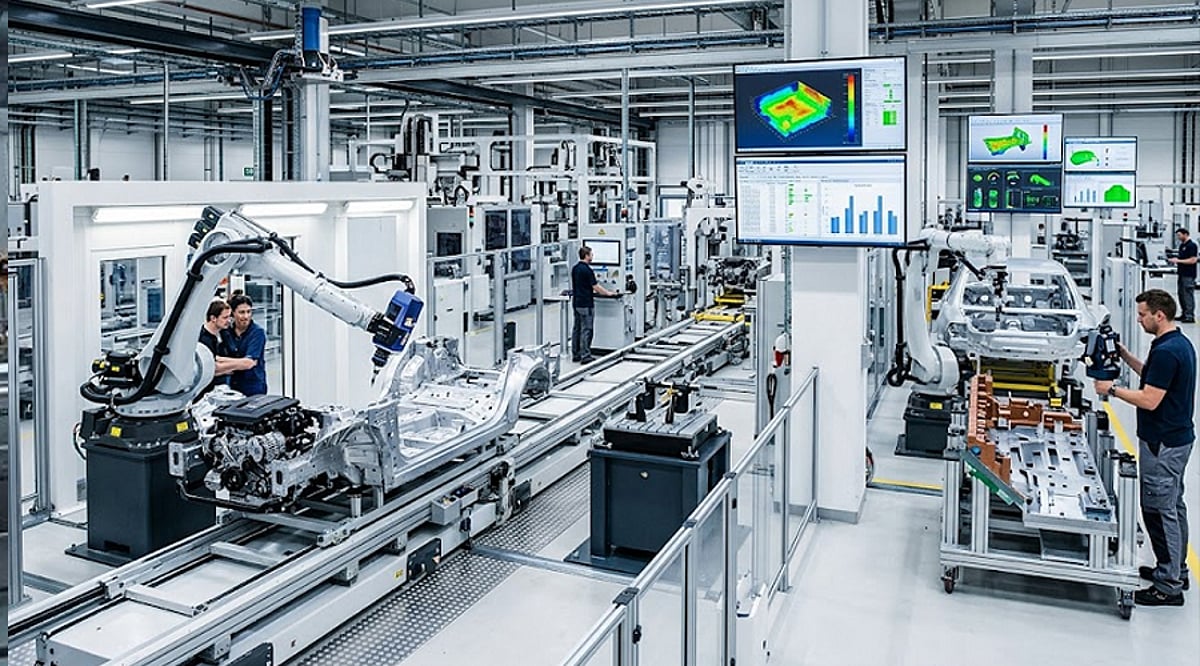
    The rise of electric vehicles is doing far more than changing what powers a car. It is fundamentally rewriting the components, technologies, and skills required to build one. Traditional auto suppliers are adapting at speed, while entirely new opportunities are emerging in batteries, electronics, software, and charging infrastructure.

    Batteries Become the New Core

    The battery has become the single most critical component in an EV. This shift is driving massive demand for battery cells, packs, thermal management systems, and battery-management electronics. Component makers are pouring investment into technologies that improve range, safety, charging speed, and overall battery life.

    Engines Give Way to Electronics

    Electric vehicles contain far fewer moving mechanical parts than conventional cars. This reduces demand for traditional engine components while boosting the importance of motors, inverters, controllers, sensors, and power electronics. Suppliers that once focused heavily on mechanical systems are now expanding into electrical and electronic technologies to stay relevant.

    Software Enters the Supply Chain

    Modern EVs depend on software for driving functions, battery management, connectivity, and vehicle controls. This opens the door for technology companies and traditional suppliers with strong software capabilities. Automotive component businesses now compete not only on hardware but also on digital systems and data-driven solutions.

    Demand for Semiconductors Rises

    Electric vehicles rely heavily on semiconductors to manage power, charging, safety, and connectivity. Chips have become increasingly vital to the automotive supply chain. Recent semiconductor shortages have exposed the risks of a limited supplier base, prompting automakers and component companies to strengthen their sourcing strategies.

    Charging Creates a New Market

    The EV boom is also generating demand beyond the vehicle itself. Charging connectors, power modules, cables, communication systems, and charging hardware are becoming essential parts of a wider ecosystem. Component manufacturers can tap into this growing market as public charging networks and home installations continue to expand.

    A New Race for Suppliers

    The transition to EVs is forcing auto component companies to rethink their future. Some traditional products may see declining demand, while batteries, electronics, software, and thermal systems gain prominence. Suppliers that invest early in new technologies could become major players in the next generation of mobility.

  • RWA Global Inc Forges $300M Tokenization Deal to Open China’s New-Energy Market to Global Investors

    RWA Global Inc Forges $300M Tokenization Deal to Open China’s New-Energy Market to Global Investors

    For over a decade, foreign investors have watched China’s electric-vehicle boom from a distance, locked out by capital controls and strict regulatory barriers. A new advisory agreement between RWA Global Inc and Golden Dolphin Trading L.L.C. aims to change that by tokenizing approximately $300 million in real-world assets tied to China’s new-energy mobility infrastructure.

    RWA Global Inc, a real-world asset tokenization consultancy based in the British Virgin Islands and the UAE, has signed a formal advisory engagement with Golden Dolphin Trading, a UAE-registered company that owns new-energy mobility assets in mainland China. The plan involves wrapping economic rights to assets such as EV charging stations into regulated digital securities that can be offered to global investors while staying within China’s compliance framework.

    The key enabler is a regulatory shift that occurred on February 6, 2026, when the People’s Bank of China, the CSRC, and six other agencies issued a notice (Yin Fa [2026] No. 42) and accompanying CSRC guidelines. While the document tightens rules on onshore tokenization and renminbi stablecoins, it also introduces for the first time a filing-based route for issuing tokens offshore that are backed by onshore Chinese assets, provided the issuer obtains prior CSRC approval. It is not an open door, but it is a real opening.

    The assets under consideration are substantial. China sold roughly 16.5 million new-energy vehicles in 2025, more than half of all new car sales in the country. The charging network has expanded to over 19 million points, and the domestic charging market is valued north of $25 billion. These physical, cash-generating assets are ideally suited for tokenization, which can broaden the investor base, reduce fundraising friction, and add liquidity to traditionally illiquid holdings.

    The global market for real-world asset tokenization is growing rapidly. Excluding stablecoins, tokenized real-world assets reached an estimated $24–30 billion on-chain by the end of 2025, more than tripling year-over-year. Including stablecoins, the broader figure surpassed $300 billion, according to CoinGecko’s 2026 report. Major financial institutions like BlackRock and Franklin Templeton are already active in the space.

    RWA Global Inc CEO Kevin Yunai stated: “China’s new-energy economy is among the most dynamic in the world, yet global investors have had few compliant ways to participate in it directly. This engagement is a first step toward a transparent, regulated bridge between international capital and Chinese real-world assets.” Donna Tang of Esquare Legal described the deal as “an early step toward a compliant offshore bridge between China’s industrial value and global capital,” offering a cleaner path for outside exposure to the country’s clean-energy push.

    Whether the model scales depends on how the CSRC handles filings in practice. Initial deals under any new regime tend to move slowly. But if successful, the template — onshore assets, offshore tokens, regulator in the loop — could extend far beyond a single $300 million deal.

    Disclaimer: This article is for informational purposes only and does not constitute an offer or solicitation to buy any security, token, or financial instrument. The advisory engagement described is indicative and subject to client decisions, qualified counsel, and regulatory approval. Market figures are from third-party sources and have not been independently verified.