
Tag: Exam Preparation

  • Top CTET 2026 Books for Paper 1 and Paper 2: Expert Recommendations for Exam Success

    Top CTET 2026 Books for Paper 1 and Paper 2: Expert Recommendations for Exam Success

    Preparation for the Central Teacher Eligibility Test (CTET) cannot be done only by studying from books. The CTET exam assesses a candidate’s understanding of child development, methodology, subject knowledge, and application. Considering the increasing competition in the CTET exam year by year, it is important to select appropriate study material.

    Experts advise using NCERT books, subject-specific reference books, and CTET 2026 solved question papers to prepare for the CTET exam. Some of the best books for CTET 2026, Papers 1 and 2, are listed below.

    Study NCERT Books for Developing Solid Concepts

    Before moving on to guidebooks, it is advisable to complete the required NCERT books. Many of the questions in the CTET exam are based on concepts and align with the NCERT curriculum, especially in Mathematics, Environmental Studies, Science, Social Science, and Languages.

    For Paper 1, the NCERT books from Class 1 to 5 are necessary, whereas NCERT books from Class 6 to 8 are important for Paper 2 aspirants.

    Best Books for Child Development and Pedagogy

    Child Development and Pedagogy (CDP) is highly important not only for exams but also for determining overall performance. Instead of relying on memorization, the candidate must understand the various aspects of learning theory, educational psychology, inclusive education, and teaching methodology.

    Recommended Books:

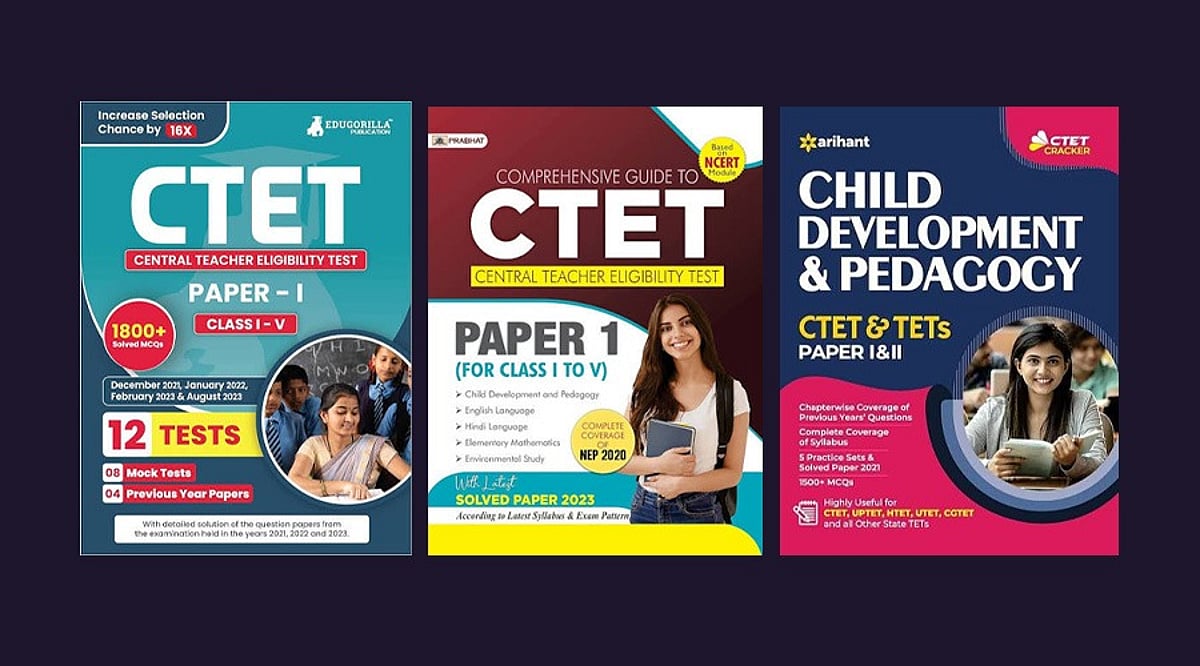
    • Arihant Child Development and Pedagogy for CTET & TETs
    • Wiley Child Development and Pedagogy

    This book explains educational theories in simple terms and includes practice questions aligned with the new CTET pattern.

    Choose Subject-Wise Books for Paper 1

    Paper 1 is designed for candidates aspiring to teach Classes 1 to 5. The focus remains on basic concepts and effective teaching practices.

    Candidates should spend equal time on language pedagogy, as language sections test comprehension and teaching ability rather than grammar alone.

    Best Books for Paper 2 Aspirants

    Paper 2 is for those candidates who wish to teach Classes 6 to 8. In this case, the syllabus becomes broader and requires stronger subject knowledge as well as pedagogy.

    Candidates preparing for Mathematics and Science should first refer to NCERT books for Classes 6 to 8, then move on to solve the practice questions. For Social Science, candidates have to first go through History, Geography, Political Science, and Economics using NCERT books, and then consult specialized books.

    Suggested Books:

    • Arihant Success Master CTET Paper 2
    • Arihant Child Development and Pedagogy
    • NCERT Mathematics, Science, and Social Science (Classes 6–8)
    • Arihant English Language & Pedagogy
    • Arihant Bhasha Hindi

    The books provide chapter-wise analysis, model papers, and topic-wise MCQs similar to those in the real examination.

    Practice Previous Years’ Papers Regularly

    Preparation for CTET will be incomplete without practicing with past years’ question papers, as they allow you to gauge the difficulty level and topic trends, and manage time better.

    Best-selling books in the market:

    • Disha 22 Years CTET Solved Papers (Paper 1)
    • Disha 22 Years CTET Solved Papers (Paper 2)
    • Oswaal CTET Previous Years’ Solved Papers

    Many experts advise solving one full paper per week towards the end of your preparation.

    Complete Preparation Books Worth Considering

    Candidates who prefer to study from a single comprehensive guide can choose books that cover the entire syllabus and include mock tests and previous-year questions. These all-in-one books are especially useful for revision after completing subject-wise preparation.

    Focus on Consistency Over Collecting Books

    However, many candidates do not realize that it is common for them to buy many reference books without completing any of them. Candidates should prepare from only two or three reference books per subject.

    It has been proven that practice through regular mock tests and subject revision, along with a clear understanding of pedagogy, is far more advantageous than buying many books for study material. The candidates must also keep an eye on the latest syllabus and the CTET notification to ensure their preparations stay relevant.

    By making proper use of NCERT books and reference books, along with consistent practice with solved papers, one can easily strategize for CTET 2026.

    Frequently Asked Questions

    What are the best books for CTET 2026 preparation?

    NCERT textbooks, Arihant CTET guides, Wiley pedagogy books, and Disha previous years’ solved papers are among the best resources available.

    Are NCERT books enough for CTET preparation?

    NCERT books build strong concepts, but candidates should also practice with pedagogy, take mock tests, and solve previous years’ papers for success.

    Which book is best for Child Development and Pedagogy?

    Arihant’s Child Development and Pedagogy and Wiley’s pedagogy guide are widely recommended for comprehensive CTET preparation and practice.

    Should I solve previous years’ CTET question papers?

    Yes, solving previous papers improves time management, helps identify important topics, and effectively familiarises candidates with the latest examination pattern.

    Can one book cover the entire CTET syllabus?

    Comprehensive guides help, but combining NCERT textbooks with subject-wise books ensures better understanding, revision, and exam-ready preparation for candidates.

  • Best SSC CGL 2026-27 Books: Subject-Wise Study Resources for Exam Success

    Best SSC CGL 2026-27 Books: Subject-Wise Study Resources for Exam Success

    Choosing the right SSC CGL books makes preparation more focused and effective. One trusted resource for each subject, paired with regular revision, delivers better results than using many guides. Previous year’s papers strengthen exam readiness. Consistency remains the key to success.

    SSC CGL 2026-27 Book List at a Glance

    SSC CGL preparation is built around four core subjects: Quantitative Aptitude, Reasoning, English Comprehension, and General Awareness. The following recommended books are drawn from resources frequently cited in topper interviews and coaching advice.

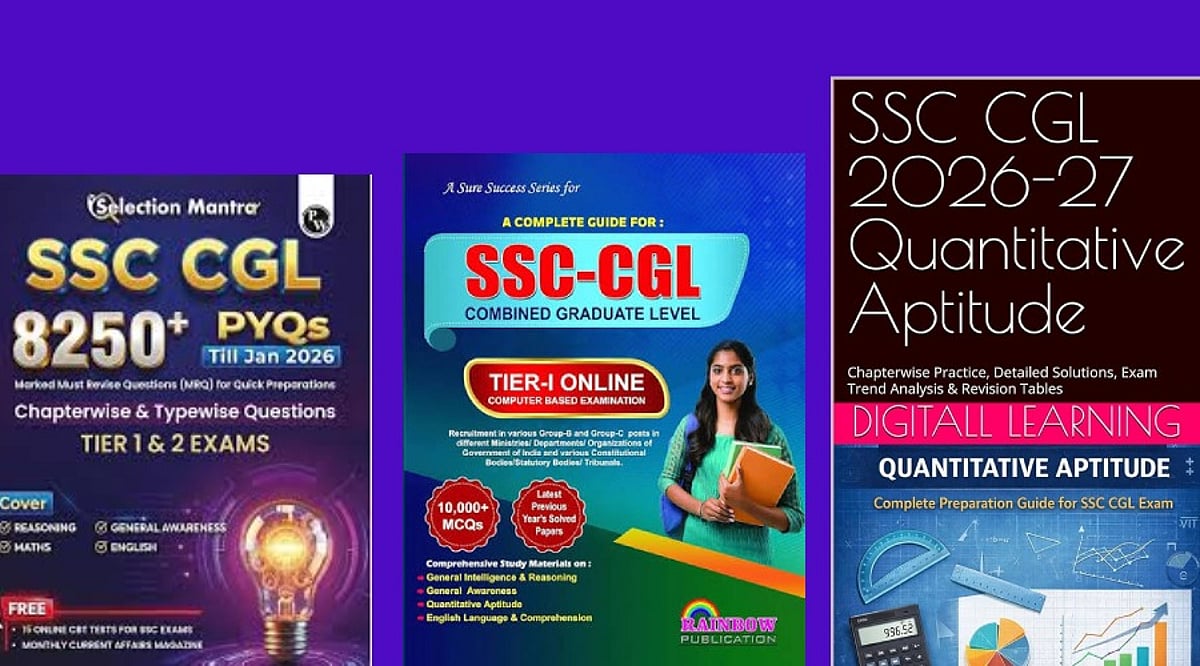
    • Best Quant Book: Rakesh Yadav 7300+
    • Best Reasoning Book: R.S. Aggarwal
    • Best English Book: S.P. Bakshi
    • Best GK Book: Lucent’s General Knowledge
    • Best PYQ Book: Kiran Publication
    • Best Current Affairs: Arihant or Pratiyogita Darpan Monthly

    Subject-Wise Book Recommendations

    Quantitative Aptitude

    Rakesh Yadav’s 7300+ Chapterwise Solved Questions is frequently recommended for its chapter-wise structure and volume of practice questions. For a solid study sequence:

    • Rakesh Yadav 7300+ for chapter-wise practice
    • R.S. Aggarwal’s Quantitative Aptitude for comprehensive concepts
    • Fast Track Objective Arithmetic by Rajesh Verma for speed techniques
    • Arun Sharma’s Quantitative Aptitude for rebuilding fundamentals

    Reasoning

    R.S. Aggarwal’s A Modern Approach to Verbal and Non-Verbal Reasoning covers analogy, classification, coding-decoding, syllogisms, blood relations, seating arrangements, and mirror/image-based reasoning. Analytical Reasoning by M.K. Pandey serves as a companion for deeper puzzle practice. Kiran’s Reasoning compilation offers additional past question practice.

    English Language

    S.P. Bakshi’s Objective General English covers cloze test, error detection, reading comprehension, and synonym-antonym practice. Wren and Martin’s English Grammar helps rebuild grammar basics. Neetu Singh’s English for General Competitions offers an exam-focused format. Word Power Made Easy fills vocabulary gaps.

    General Awareness

    Lucent’s General Knowledge is the standard resource for static GK (history, geography, polity, economics, science). It pairs best with a monthly current affairs compilation from Pratiyogita Darpan or Arihant. Kiran’s General Awareness previous-year compilation adds targeted factual question practice.

    Previous Year Papers

    Previous year papers reveal recurring question styles and topic weightage. Kiran Publication’s chapter-wise previous year compilation organizes past questions by topic for focused revision. Many toppers solve several years of papers before attempting full-length mocks.

    How to Study with These Books

    One trusted book per subject, revised multiple times, builds more exam readiness than several books read once. Quantitative aptitude and reasoning benefit from solving the full book once, then revisiting difficult questions two or three times. English grammar needs three to four revisions. Lucent’s GK rewards repeated revision for recall speed.

    Final Thoughts

    The books on this list build the foundation. Success in SSC CGL often comes from a narrow, well-revised set of resources rather than searching for better books along the way.

    FAQs

    1. Which is the best book for SSC CGL 2026 Quantitative Aptitude?

    Rakesh Yadav’s 7300+ Chapterwise Solved Questions is one of the most recommended books for SSC CGL Quantitative Aptitude due to its extensive practice questions. Beginners can also use R.S. Aggarwal or Arun Sharma to strengthen concepts before solving advanced questions.

    2. Is Lucent General Knowledge enough for SSC CGL General Awareness?

    Lucent’s General Knowledge is considered one of the best books for static GK, covering History, Geography, Polity, Economics, and Science. However, candidates should also follow monthly current affairs magazines or reliable current affairs sources for complete preparation.

    3. Which English book is best for SSC CGL preparation?

    S.P. Bakshi’s Objective General English is widely recommended for SSC CGL because it covers grammar, vocabulary, comprehension, and objective practice. Candidates looking to improve grammar basics can also refer to Wren & Martin.

    4. Are previous year question papers important for SSC CGL 2026?

    Yes. Previous year papers help candidates understand the exam pattern, question types, topic weightage, and difficulty level. Solving them regularly also improves speed, accuracy, and time management.

    5. How many books are enough for SSC CGL preparation?

    Most successful candidates rely on one trusted book for each subject, along with previous year papers and current affairs material. Revising a limited set of quality resources multiple times is generally more effective than studying from many different books.

  • Master the Cisco 200-301 CCNA Exam: Proven Preparation Strategies

    Master the Cisco 200-301 CCNA Exam: Proven Preparation Strategies

    Earning a professional IT certification is an excellent way to strengthen your technical skills and improve career opportunities. Among the most respected networking certifications is the Cisco 200-301 exam, which validates a candidate’s understanding of networking fundamentals, IP connectivity, security basics, automation, and network access. Passing this exam demonstrates that you possess the knowledge required to work confidently in networking environments.

    Preparing for the Cisco 200-301 certification requires dedication, structured study, and consistent practice. With the right resources and a well-planned learning strategy, candidates can approach the exam with greater confidence.

    Why the Cisco 200-301 Certification Is Valuable

    Companies keep growing their networks, so people who know networking are always needed. Businesses depend on solid networks to keep things running, whether that’s communication, cloud services, remote work, or handling data. The Cisco 200-301 helps show that you actually know your stuff in areas like network fundamentals, IP addressing, switching technologies, routing concepts, network security, wireless networking, network automation, and infrastructure services. Many employers prefer hiring certified individuals because it demonstrates both technical knowledge and the dedication to learn.

    Understand the Exam Objectives

    One of the best things you can do before you even start studying is go through the official exam objectives. Read through them first to understand what’s coming. This helps you plan your time better and focus more on areas where you’re weak. Instead of memorizing random facts, try to understand how concepts connect. In real networks, everything works together, so it helps to see the bigger picture.

    Build a Structured Study Plan

    Having a plan keeps you consistent and prevents last-minute cramming. A good study schedule should include daily study sessions, weekly topic reviews, hands-on networking practice, practice questions, revision days, and progress tracking. Breaking preparation into manageable sections makes learning less overwhelming and improves long-term retention.

    Gain Practical Experience

    Reading textbooks alone is rarely enough to master networking concepts. Practical experience plays an important role in preparing for certification exams. Candidates can strengthen their understanding by configuring virtual routers, practicing switch configurations, building small network topologies, testing routing protocols, configuring VLANs, and exploring network security settings. Hands-on practice transforms theoretical knowledge into practical skills valuable during both the exam and future employment.

    Practice with Realistic Questions

    Practice tests help candidates become familiar with the format and difficulty of certification exams. They also highlight knowledge gaps that need additional review. Regular self-assessment offers several advantages: improved time management, greater confidence, better understanding of question patterns, stronger recall of technical concepts, and reduced exam anxiety. Candidates should review incorrect answers carefully instead of simply checking the correct option.

    Helpful Learning Resources

    Using reliable study materials can make exam preparation more efficient and organized. Combining multiple learning resources often provides a broader understanding of networking concepts. Consider official Cisco guides, video courses, online labs, and community forums.

    Focus on Understanding Rather Than Memorization

    Networking professionals solve real technical problems every day. Certification exams often evaluate conceptual understanding instead of simple memorization. Successful candidates focus on learning why protocols work, how devices communicate, when to use specific technologies, troubleshooting techniques, and security best practices. A deeper understanding improves both exam performance and workplace readiness.

    Review Weak Areas Regularly

    Every candidate has strengths and weaknesses. Regular review sessions help reinforce difficult topics before exam day. Subjects that often require additional practice include subnetting, routing protocols, VLAN configuration, IPv6 addressing, wireless networking, and network automation. Revisiting challenging concepts multiple times improves long-term memory.

    Develop Effective Exam-Day Strategies

    Preparation extends beyond technical knowledge. Candidates should also practice reading questions carefully, managing available time, eliminating incorrect answers, remaining calm under pressure, and reviewing marked questions before submitting. Strong exam techniques often improve overall performance.

    Continue Learning After Certification

    Passing the Cisco 200-301 exam represents an important milestone rather than the end of professional development. Technology continues evolving rapidly, making continuous learning essential. Certified professionals can expand their expertise by studying advanced routing, cybersecurity, cloud networking, wireless technologies, network automation, and infrastructure management. Continuous improvement supports long-term career growth and adaptability.

    Frequently Asked Questions

    What is the Cisco 200-301 exam? The Cisco 200-301 exam is the certification exam for Cisco Certified Network Associate (CCNA), covering networking fundamentals, IP connectivity, security, automation, and related topics.

    How long should I study for the exam? Study time varies depending on prior experience, but many candidates prepare over several weeks or months using a structured learning schedule.

    Is hands-on practice important? Yes. Practical experience helps reinforce networking concepts and improves problem-solving skills that are valuable during the exam and in professional environments.

    Are practice questions useful? Practice questions help candidates evaluate their understanding, identify weak areas, improve time management, and become familiar with exam-style questions.

    What topics require extra attention? Many people spend extra time on subnetting, routing, switching, security, wireless, and automation. These topics take practice, so it makes sense to slow down and really work through them.

    What happens after you pass? Don’t stop there. Keep learning. Try newer, more advanced topics. Get real hands-on experience too, not just book knowledge. This builds your skills over time and opens up more career opportunities.

    Conclusion

    Getting ready for the Cisco 200-301 isn’t just about reading books and hoping for the best. You need a structured plan, consistent practice, and a willingness to revisit weak areas. Use reliable study materials, get hands-on with configurations, and test yourself regularly. By combining these elements, you’ll walk into the exam with confidence. The skills you develop go beyond passing a test—they prepare you for real networking roles and set you up for long-term career success in IT.