
Tag: FCC

  • FCC Opens Door for Foreign Investors in Paramount-Warner Bros. Acquisition

    FCC Opens Door for Foreign Investors in Paramount-Warner Bros. Acquisition

    The U.S. Federal Communications Commission (FCC) has approved a request from Paramount Skydance that permits foreign investors to provide funding for its planned acquisition of Warner Bros. Discovery. This decision clears another regulatory hurdle for the massive $110 billion deal, which includes debt.

    Foreign Investors to Hold Non-Voting Equity

    Under the approved structure, foreign investors can collectively hold a substantial share of Paramount’s nonvoting equity. Major investors include the Saudi Arabia Public Investment Fund, Abu Dhabi-based L’Imad Holding, and the Qatar Investment Authority. It is expected that these international entities will hold approximately 49.5% of the company’s nonvoting shares. Meanwhile, the Ellison family and RedBird Capital Partners will maintain control of voting shares.

    The FCC also authorized certain foreign investors to increase their individual equity stakes within specified limits, subject to agency rules.

    Restrictions on Foreign Influence

    The approval comes with conditions designed to prevent foreign investors from gaining control over Paramount’s operations. According to the FCC decision, these investors will not receive voting rights or governance powers, nor can they influence management or content decisions. Additionally, they are barred from accessing nonpublic information involving U.S. citizens.

    The arrangement follows a national security review by the Committee for the Assessment of Foreign Participation in the United States Telecommunications Services Sector, commonly known as Team Telecom. Paramount argued that the additional capital would strengthen its ability to invest in broadcasting, news gathering, and content, helping the combined company compete in the global media market.

    Warner Bros Deal Still Faces Legal Hurdle

    While the FCC decision removes one obstacle, the transaction is far from complete. The proposed merger still faces legal challenges from a group of U.S. states and other parties. Although the U.S. Justice Department and regulators in several other jurisdictions have cleared the deal, litigation remains pending, with a trial expected in March 2027.

    The FCC’s ruling marks another step toward the proposed combination, but its completion still depends on the outcome of the remaining legal proceedings and other closing conditions.
  • Trump Administration Bans New Chinese Robots to Safeguard US AI Infrastructure

    Trump Administration Bans New Chinese Robots to Safeguard US AI Infrastructure

    The Trump administration has implemented new technology restrictions aimed at Chinese-made humanoid robots, quadruped robots, and connected power inverters, citing national security concerns and the need to protect America’s rapidly expanding artificial intelligence infrastructure. The measures, announced by the US Federal Communications Commission (FCC), took effect immediately upon publication.

    The restrictions apply exclusively to new product models not yet released in the United States. However, the FCC retains the authority to revoke approvals for products already authorized for sale if deemed necessary.

    Focus on AI, Cybersecurity, and Critical Infrastructure

    According to US officials, the measure is designed to reduce the risk of cyberattacks, surveillance, and supply chain vulnerabilities as the country invests heavily in building AI data centers and computing infrastructure. Inverters used to connect renewable energy devices and batteries to the electric grid have become increasingly important for AI data centers.

    The administration has also raised concerns about the potential use of networked robots for espionage and remote interference by foreign entities. Officials stated the measure is intended to secure key technologies vital to the nation’s security and economy.

    Chinese Firms Likely to Be Hit Hardest

    While the order does not explicitly name individual companies, it is expected to have the greatest impact on Chinese manufacturers, including Unitree Robotics, one of the world’s leading producers of humanoid and quadruped robots. China currently dominates the global humanoid robotics market, making the restrictions a significant setback for its expansion into the US market.

    The FCC indicated that manufacturers outside China may still qualify for exemptions, provided they satisfy security requirements.

    Beijing Condemns Move

    China condemned the move, claiming that the US unfairly singled out Chinese companies for punitive action and vowing to do whatever is necessary to defend its business interests. These restrictions, among others implemented by the US government in recent times, reflect the increased competition between the two countries as they vie for supremacy in AI and semiconductor production and supply chains.

    This development underscores a convergence of technology policies and national security issues, with AI infrastructure emerging as a key area of competition.

  • Amazon Aims to Launch Satellite-to-Smartphone Service by 2028

    Amazon Aims to Launch Satellite-to-Smartphone Service by 2028

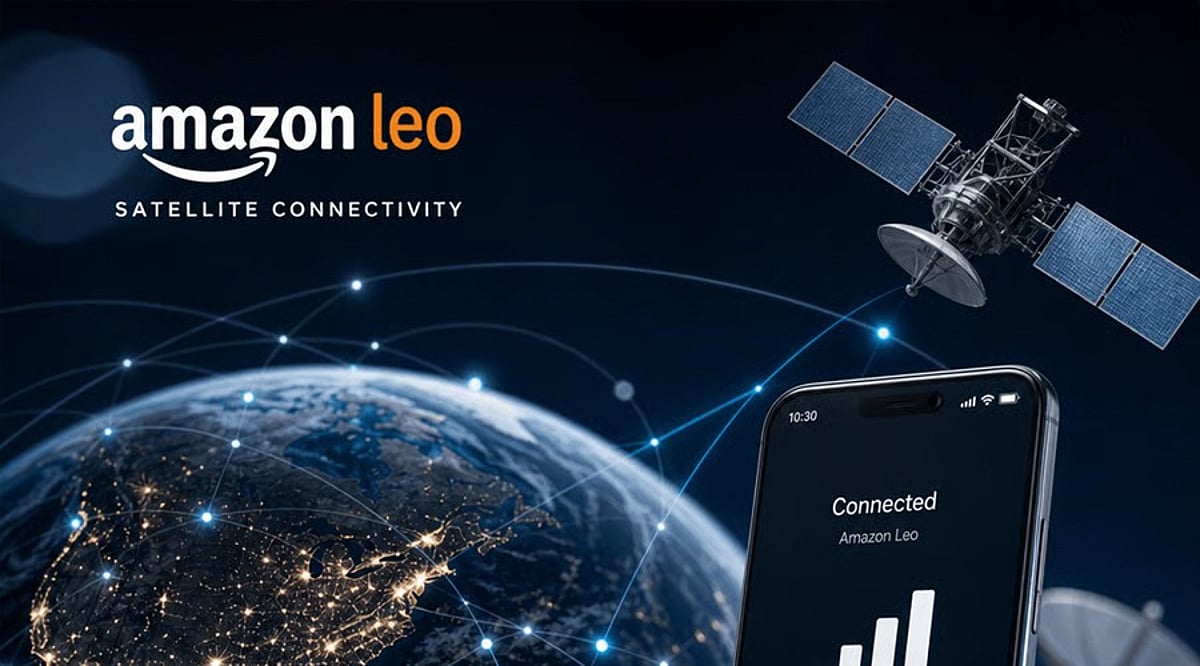
    Amazon is preparing to take smartphone connectivity beyond traditional mobile networks. The tech giant has proposed a satellite-based direct-to-device (D2D) service that could allow compatible smartphones to make calls, send messages, and access mobile data even in areas without cellular coverage.

    According to filings submitted to the US Federal Communications Commission (FCC), Amazon plans to deploy a constellation of up to 5,105 low Earth orbit (LEO) satellites under its Amazon Leo initiative. If approved, the rollout is expected to begin in 2028.

    Unlike Amazon’s existing satellite broadband service, which requires dedicated ground equipment, the new system is designed to connect directly with compatible smartphones. The company says the network will complement, rather than replace, existing mobile infrastructure.

    Voice Calls, Messaging and Emergency Services

    The following services would include calling, messaging, mobile internet, and emergency services. Amazon plans to partner with telecom providers globally to enable connectivity in areas where it is not easy to build mobile network infrastructure. According to the company, this technology may prove useful for industries like logistics and IoT applications.

    How the Satellite Network Will Work

    Amazon’s system of satellites will be operating in five different orbital planes to offer coverage not only to inhabited zones but also to high and near-polar latitudes. L-band and S-band frequencies will enable communication between the smartphones and the satellites. Ka-band and V-band frequencies will connect the satellites to the internet via ground infrastructure. Additionally, Amazon intends to process the network traffic in space, thus decreasing potential signal interference.

    India Among Key Focus Markets

    Amazon has identified India as one of its priority markets as it expands its satellite ambitions. The company has cited India’s rapidly growing digital economy and the need to improve connectivity in underserved regions as key reasons for its interest. The proposal also intensifies competition in the fast-growing satellite connectivity market, where companies including SpaceX, AST SpaceMobile and Lynk Global are developing direct-to-smartphone services. If approved, Amazon’s network would mark another step towards making satellite communication a mainstream feature for future smartphones.