Tag: financial literacy

  • MEXC Launches Opportunity Compass to Bridge Crypto and Traditional Finance Knowledge Gaps

    MEXC Launches Opportunity Compass to Bridge Crypto and Traditional Finance Knowledge Gaps

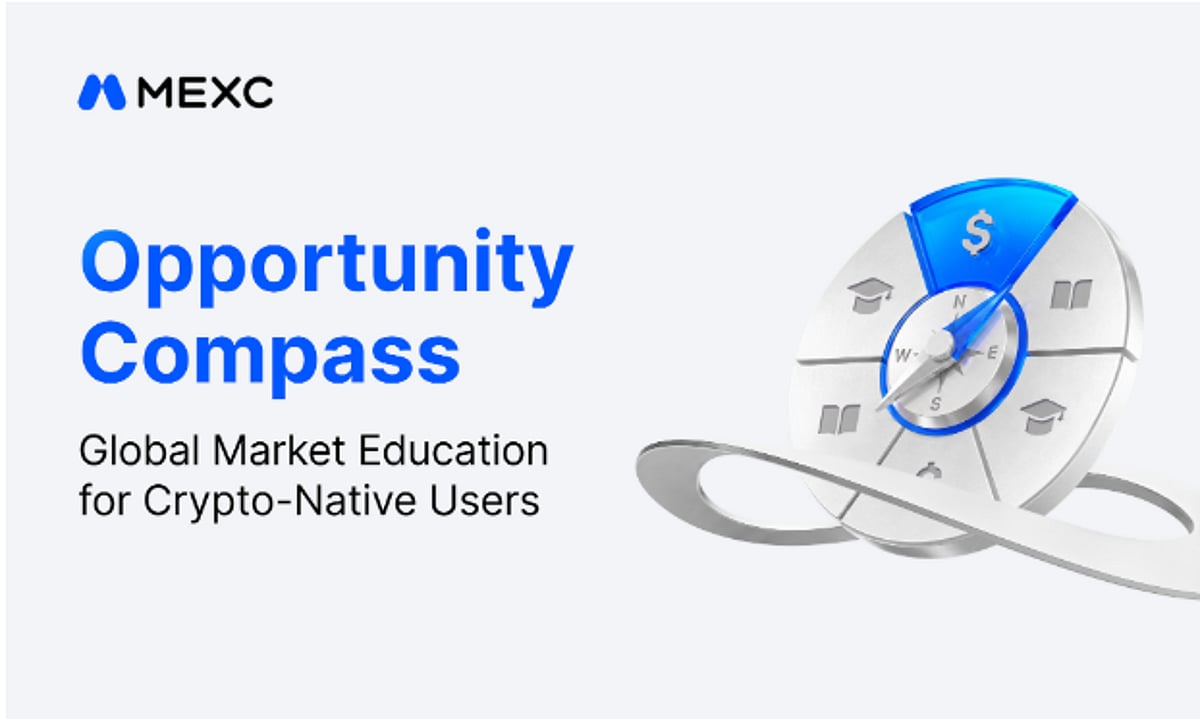
    MEXC, a pioneer in zero-fee digital asset trading, has officially launched Opportunity Compass, a global markets education initiative designed to help crypto-native users better understand both digital and traditional financial markets. The program arrives as new research reveals that 53.7% of crypto users have already invested in stocks, yet significant knowledge gaps remain.

    Why Opportunity Compass Matters

    According to a joint survey by MEXC and CoinGecko, trading volumes for traditional financial assets on crypto exchanges hit $1.45 trillion in the first half of 2026—nearly ten times the total for all of 2025. The survey also found:

    • 53.7% of respondents have invested in stocks, indicating growing crossover between crypto and traditional markets.
    • Among those who haven’t used stock products, 43.1% cite insufficient investment knowledge as a key barrier.
    • Among former stock investors who stopped, 48.3% said limited knowledge contributed to their decision.
    • Current stock investors are influenced by individual stock price movements (44%) and the AI boom (34%).

    These findings underscore that access to financial products is expanding faster than financial literacy. MEXC’s Opportunity Compass aims to close that gap.

    A Five-Season Educational Journey

    The program features five seasons with 30 episodes, guiding users from foundational market knowledge to advanced opportunity evaluation:

    1. See the Global Opportunities – Understand the global financial landscape and how markets connect.
    2. Understand Asset Value – Explore what gives stocks, gold, commodities, ETFs, Bitcoin, and other assets their value.
    3. Decode Market Trends – Learn about interest rates, inflation, market cycles, earnings, and industry trends like AI and semiconductors.
    4. Explore Emerging Opportunities – Dive into tokenized assets, real-world assets, prediction markets, and other models at the intersection of crypto and traditional finance.
    5. Become an Opportunity Explorer – Build an independent framework for evaluating markets, opportunities, and risks.

    Content will roll out from September through December 2026 via a dedicated education hub.

    Industry Partnerships

    Opportunity Compass is not just an MEXC initiative—it brings together partners including xStocks by PAYWARD, Plume, Tether, Pyth, Optimism, CMT Digital, and RootData. These participants represent different parts of the digital asset and financial ecosystem, providing diverse perspectives.

    CEO’s Vision

    “Finding opportunities is important. What matters even more is having a systematic way to understand, evaluate, and act on them,” said Vugar Usi Zade, CEO of MEXC. “As financial markets become more connected, users need more than access alone. Opportunity Compass helps users understand what drives different markets, evaluate opportunities and risks, and build their own framework for navigating a more complex financial landscape.”

    All content is for educational purposes only and does not constitute financial or investment advice.

    About MEXC

    Founded in 2018, MEXC is a global multi-asset trading platform serving users across 170+ markets. It offers zero-fee trading for crypto, stocks, tokenized assets, derivatives, and TradFi-linked opportunities through a single account. MEXC is committed to making global opportunities more accessible.

  • How Nithin Kamath Leveraged Tech to Make Investing Accessible for Millions of Indians

    How Nithin Kamath Leveraged Tech to Make Investing Accessible for Millions of Indians

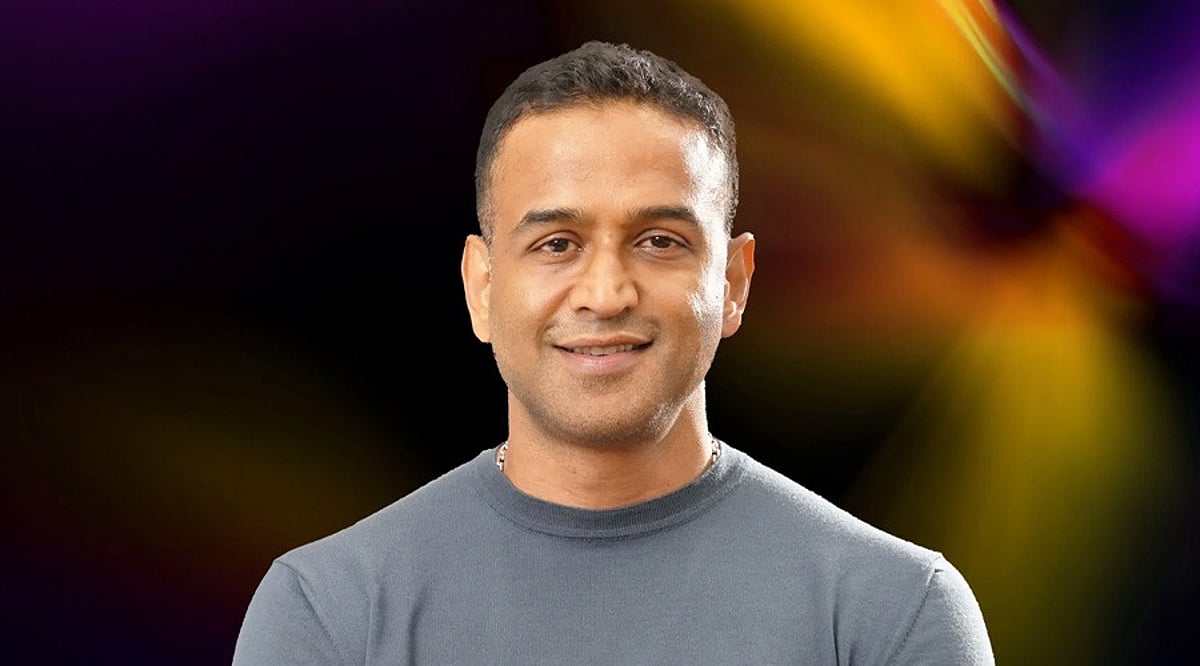
    Investing in stocks was once a complex, intimidating process reserved for the wealthy. High broker fees, mountains of paperwork, and a general fear of the unknown kept most middle-class families away from equities for decades. That picture has changed dramatically over the last fifteen years, and much of the credit goes to Nithin Kamath, co-founder and CEO of Zerodha. He built India’s largest stock brokerage on a simple idea: technology should remove barriers to investing, not create new ones.

    Today, Zerodha serves more than 1.6 crore customers and accounts for close to 15 percent of daily retail trading volumes in the country. This article explores how Kamath used technology to reshape investing for ordinary Indians and why his approach continues to matter.

    A Discount Broker Built on Technology, Not Middlemen

    Kamath started as a self-taught trader, buying his first penny stocks at age 17. Working through the early 2000s, he saw how traditional brokers charged hefty commissions and often had little incentive to help small investors succeed. In 2010, along with his brother Nikhil, he launched Zerodha. The name combines “zero” with “rodha,” the Sanskrit word for barrier. Instead of charging a percentage of every trade, Zerodha introduced a flat-fee model—a move almost unheard of in Indian broking at the time. Building the entire back-end in-house gave the company control over speed, reliability, and cost, three things that mattered enormously to retail traders tired of clunky platforms and hidden charges.

    Kite: Simplifying the Trading Experience for Millions

    Zerodha’s trading platform, Kite, became one of the clearest examples of Kamath’s technology-first thinking. Built to be lightweight and fast, Kite stripped away the clutter that made older trading terminals intimidating for first-time users. A student or shopkeeper with no finance background could open the app, place an order, and track a portfolio without needing a broker on the phone. This ease of use drove Zerodha’s rapid customer growth, especially during the pandemic when lakhs of young Indians opened their first demat account from home. Data from the past year shows demat account additions rose by over 20 percent, taking the industry total past 4.9 crore accounts, and platforms like Kite played a direct role in that surge.

    Varsity and Rainmatter: Investing in Financial Literacy

    Technology alone does not make confident investors. Kamath understood this early and built Varsity, a free educational platform that breaks down everything from stock market basics to advanced options strategies. Millions of users have gone through its modules, many stepping into the market for the first time with a clearer understanding of risk. Alongside Varsity, Zerodha runs Rainmatter, a fintech incubator and fund that backs startups working on financial inclusion, wealth management tools, and sustainability projects. Rainmatter has supported more than 50 startups, extending Kamath’s mission of democratizing finance well beyond Zerodha’s own platform.

    A Bootstrapped Model That Puts Users First

    One thing that sets Kamath apart from most tech founders is his refusal to raise external funding. Zerodha has remained completely bootstrapped since day one, funding its own growth through profits rather than venture capital. This decision keeps the company answerable to its customers rather than to investors chasing quick returns. Kamath has spoken openly about staying cautious on an IPO too, preferring independence over the pressure of public markets. This model has not been without bumps—regulatory changes around derivatives trading led to a sharp drop in brokerage revenue—yet Zerodha continues to expand into asset management and lending to diversify its income.

    Why This Approach Matters for India’s Financial Future

    India’s investing culture is still young compared to more developed markets, and a large part of the population remains outside formal financial systems. Kamath’s work tackles two problems at once: cost and confidence. Lower fees bring more people to the table, and better education keeps them there without falling into risky bets they don’t understand. As a member of a SEBI advisory committee, Kamath has also shaped market policy, pushing for reforms that protect smaller investors. His influence extends into how an entire generation of Indians thinks about money, savings, and long-term wealth creation.

    Final Thoughts

    Nithin Kamath’s journey from a self-taught trader to the head of India’s biggest brokerage reflects a larger shift in how the country approaches investing. Through low-cost trading, an accessible platform in Kite, free education through Varsity, and continued investment in fintech innovation via Rainmatter, he has helped bring capital markets within reach of everyday Indians. As more people in smaller towns and cities come online, Kamath’s technology-driven model looks set to keep shaping the next chapter of India’s investing story.

    Frequently Asked Questions

    1. What is Zerodha known for?

    Zerodha is India’s largest stock brokerage, known for pioneering the flat-fee discount brokerage model and building its own technology in-house rather than relying on third-party platforms.

    2. What is Kite in Zerodha?

    Kite is Zerodha’s trading platform, designed to be simple and fast so that even first-time investors with no finance background can trade and track their portfolios easily.

    3. What is Varsity by Zerodha?

    Varsity is a free educational platform by Zerodha that teaches users about the stock market, from basic concepts to advanced options strategies.

    4. Why has Zerodha never raised external funding?

    Nithin Kamath chose to keep Zerodha bootstrapped so the company stays accountable to its customers rather than to investors seeking quick returns.

    5. What is Rainmatter?

    Rainmatter is Zerodha’s fintech incubator and fund, which has backed over 50 startups working on financial inclusion, wealth management, and sustainability.

  • Nithin Kamath: How Zerodha’s Founder Democratized Stock Investing in India

    Nithin Kamath: How Zerodha’s Founder Democratized Stock Investing in India

    India’s investing landscape has undergone a remarkable transformation over the past decade. Millions of first-time investors now buy stocks, invest in mutual funds, and manage their portfolios through digital platforms. At the center of this shift is Nithin Kamath, an entrepreneur who challenged traditional brokerage practices and made investing more accessible for ordinary Indians.

    At the time of its founding by Nithin Kamath in 2010, stock trading was perceived as an elaborate, costly, and complex process. This situation deterred many retail investors from entering the trading arena. Kamath quickly identified these factors as problems for traders and made simplification, transparency, and accessibility one of his top priorities.

    Unlike most startup founders, Kamath chose not to seek outside investment but to focus on making his business profitable, trustworthy, and long-term successful. Thanks to this strategy, Zerodha has become the largest stockbroker in India in recent years, catering to the interests of millions of people.

    A Passion for Markets Started Early

    Born in Karnataka, Nithin Kamath developed an early fascination with the stock market. Even before he became an entrepreneur, he was involved in trading and gained valuable insight into how financial markets function. The practical knowledge he gained helped him understand the difficulties retail traders face and motivated him to make a difference in their investment experience. As against following a traditional corporate career path, Kamath chose to solve some of the problems in the brokerage sector.

    Building Zerodha Without External Funding

    Zerodha was started by Nithin Kamath along with his brother, Nikhil Kamath, in 2010. It pioneered a discount brokerage model that offered lower trading charges than regular brokers. There has been something that has been quite distinguishing about Zerodha, and that is the growth strategy of the company. The company has remained bootstrapped, without taking any venture capital funding. It has chosen to make its business profitable by building customer trust and using technology to grow organically. Today, Zerodha serves millions of customers in India and is known as one of the most prestigious brokerage platforms in the country.

    Making Investing More Accessible

    Kamath has been vocal about lowering the barriers for novice investors. The simple user interface, low-cost structure, and educational tools of Zerodha have motivated many youngsters in India to start investing. The organization has launched another initiative called ‘Varsity’, an educational tool that explains investment terms such as stocks, technical analysis, options, mutual funds, and personal finance. Varsity has turned into one of the best educational tools for retail investors in India over time. Another important decision by Zerodha is to keep direct mutual fund investments on the Coin platform free of cost.

    Supporting India’s Startup Ecosystem

    Kamath’s business ventures extend beyond stockbroking. In 2016, Zerodha created Rainmatter, which invests in startups in fintech, health, climate, media, and deep technologies. Rather than being solely profit-driven, Rainmatter offers financing, mentoring, industry networking opportunities, and more support to startups. According to Kamath, Rainmatter has invested over Rs. 1,500 crore into 160+ startups. Zerodha has also pledged 10% of its profits to be used to invest in startups and 10% for social causes via the Rainmatter Foundation.

    Leadership Built Around Long-Term Thinking

    One of Kamath’s characteristics is his lack of interest in aggressive expansion techniques. He has always maintained that fostering a good working environment must be actively pursued, not achieved through expansion alone. Zerodha has developed a system in which customer satisfaction, employee welfare, and prudent decision-making are prioritized over high revenue targets. According to Kamath, resilience is attained when employees learn from their mistakes while maintaining high standards of service.

    A Strong Voice on Financial Awareness

    In addition to managing Zerodha, Kamath actively blogs on investing and entrepreneurship and engages with followers on social media on market regulations and investment education. In particular, he often tells investors to adopt a long-term view, maintain investment diversity, and avoid letting emotions interfere when markets are fluctuating. In terms of communication style, Kamath tries to simplify complicated financial matters. Kamath has never shied away from discussing the dangers of derivatives and has encouraged responsible investing.

    Health Issues and Business Looking Beyond

    In early 2024, Kamath confessed to having undergone a mild stroke. He admitted that, in his life, physical fitness, stress management, and getting proper rest became even more important after the incident. Ever since, Kamath has continued talking about physical fitness and health at work. At Zerodha, several employee wellness programs have been launched in line with Kamath’s philosophy. Kamath’s involvement with the Rainmatter Foundation illustrates the increasing inclination of Kamath towards sustainability and social responsibility. The Rainmatter Foundation engages in activities related to climate change action, biodiversity conservation, ecology and ecological restoration, and the creation of sustainable livelihoods. Kamath has stated that, besides being profitable, companies must also play a role in addressing the bigger challenges faced by society.

    A Lasting Impact on India’s Financial Landscape

    Kamath’s impact is not limited to Zerodha alone. His thoughts have made investments easier for people to understand, helped in developing financial literacy among individuals, and motivated many entrepreneurs to start their business ventures profitably without relying on outside investment. Whether through questioning the conventional way of doing things in brokerage services, promoting startups, or environmental causes, Kamath has always been about building something valuable over the long term. It can be seen from his story that innovations need not necessarily come from growth. Rational thinking, proper execution, and dedication to the customer can result in one of the most respectable financial technology companies in India.

  • Top Kid and Teen Savings Accounts in India for 2026: Which Bank Fits Your Child’s Stage

    Top Kid and Teen Savings Accounts in India for 2026: Which Bank Fits Your Child’s Stage

    Choosing the right savings account for a child goes beyond interest rates. Age rules, parental controls, and digital access shape how the account works over time. Comparing these features across banks helps families pick an account that matches their child’s developmental stage, building saving habits while preparing teenagers for greater financial independence.

    What Sets One Account Apart from Another

    Four factors decide whether an account works well for a specific child:

    • Age eligibility determines whether the account must run through a guardian or can be handled independently.
    • Minimum balance rules vary widely. Several minor accounts offer zero-balance options while others expect a few thousand rupees each month.
    • Documentation requirements shift: guardian-operated accounts typically need the guardian’s KYC and the child’s birth certificate; teen accounts often require the minor’s own PAN or Aadhaar.
    • Conversion at 18: almost every bank requires the account to convert into a standard savings account once the child turns 18, along with fresh KYC.

    Interest rates are worth a glance, but most minor accounts sit in a similar range, so this factor rarely changes the decision on its own.

    How Accounts Work for Younger Children

    For children below the self-operation age, a parent or legal guardian typically runs the account. Deposits, withdrawals, and any card requests go through the guardian, since a young child cannot independently enter into a banking contract. There is no separate transaction access for the child, which keeps things simple: one signatory, full visibility, and an easy way to build a saving habit through regular, visible deposits.

    How Teen Accounts Build Toward Independence

    When a child reaches the age of self-operation, many banks provide the ability for children to operate the account themselves. They can be issued a debit card, have access to mobile banking and internet banking, and make transactions without guardian approval for each one. However, restrictions remain:

    • Minor debit cards typically have lower daily withdrawal and spending limits than adult cards.
    • Some banks also impose annual limits.
    • When limits are exceeded, the bank may temporarily restrict certain account activity.
    • Parents or guardians generally continue to receive transaction alerts, even when they don’t need to approve each transaction.

    Comparing India’s Major Banks

    • SBI runs a two-tier system: a joint account for children of any age and a self-operated version once the child can sign consistently, generally from age 10.
    • ICICI Bank follows a similar split, with its self-operated teen product offering some of the more detailed transaction controls among major banks.
    • HDFC Bank keeps the process straightforward, moving a child from a guardian-run account to self-operation at the same age threshold most competitors use.
    • Axis Bank pairs its minor account with personal accident insurance, a feature not every bank includes by default.
    • Kotak Mahindra Bank leans toward lifestyle benefits and discounts alongside the core savings product, appealing to families who value perks over early independence.

    Exact limits and balance requirements shift periodically across all five, so confirming current terms directly with the bank remains the safer approach before opening any account.

    Choosing Based on the Child’s Stage, Not the Bank’s Name

    The clearest way to decide is to ask: does the child need protection or practice? Younger children benefit most from a guardian-run account that builds visible saving habits without introducing spending access too early. Teenagers benefit from a self-operated account with capped, supervised independence, where real financial habits take shape. Families with a child nearing 18 should check the bank’s conversion process well in advance, since some require fresh documentation that takes time to arrange.

    Common Mistakes Worth Avoiding

    • Choosing an account by interest rate alone, overlooking whether the operation type suits the child’s age.
    • Granting debit access too early, before a child is ready to manage it responsibly.
    • Skipping documentation checks, then finding an application stalled over a missing PAN or Aadhaar.
    • Ignoring the 18th birthday conversion entirely, leaving a teenager with a frozen account right when independence matters most.

    n

    Final Thouight

    Banking habits formed at ten often outlast the account itself. The product a family picks today matters less than the discipline it quietly teaches along the way — a lesson most balance sheets never capture, but most adults remember clearly.

    Frequently Asked Questions

    What is a minor savings account?

    A minor savings account is a bank account designed for children below 18 years of age. Depending on the bank and the child’s age, it may be operated by a parent or guardian or, in some cases, by the minor under specific conditions.

    Can teenagers open a savings account without a parent?

    Many banks allow older teenagers to operate savings accounts independently, subject to their age and the bank’s eligibility rules. Younger children generally require a parent or guardian to open and manage the account.

    What should parents consider before choosing a kids’ savings account?

    Parents should compare age eligibility, parental controls, minimum balance requirements, digital banking access, debit card availability, fees, and account features that encourage healthy saving habits.

    Which banks offer savings accounts for kids and teenagers in 2026?

    Several leading banks, including SBI, ICICI Bank, HDFC Bank, Axis Bank, and Kotak Mahindra Bank, offer savings accounts designed for children and teenagers with varying features, supervision options, and digital banking services.

    Do kid and teen savings accounts come with debit cards and mobile banking?

    Many banks provide debit cards, mobile banking, and internet banking for eligible minor or teen accounts. However, transaction limits, parental supervision, and available features vary by bank and account type.

  • Top Classroom Simulation Activities by Subject: Boost Engagement and Real-World Learning

    Top Classroom Simulation Activities by Subject: Boost Engagement and Real-World Learning

    Classroom simulations transform passive students into active decision-makers. They negotiate, defend positions, and solve problems under constraints—changing the energy of the room. The challenge is finding simulations that deliver on that promise, not just look good in a lesson plan. Below are some of the strongest classroom simulation activities, organized by subject, each giving students a real job to do.

    Mission.io – Full-Class Collaborative Simulations (All Grade Levels)

    Mission.io brings the whole class into shared problem-solving, improving engagement and retention. Instead of a few students carrying the experience, no one sits on the sidelines. Teachers select from 100+ standards-aligned Missions covering science, math, language arts, and more. A simple session code launches the entire class into the experience together—no prep, no cleanup, and it runs on any internet-connected device.

    Missions include scenarios like applying coordinate graphing to redirect an asteroid or using environmental science standards to clean up a contaminated water supply. The scenario is fictional, but the skills are real. Mission.io tracks six dimensions: Knowledge, Application, Initiative, Collaboration, Critical Thinking, and Resilience. It works for grades K–8, scaling across grade levels without needing adaptation.

    Financial Literacy and Economics

    The Classroom Economy

    Students are assigned daily jobs, earn mock currency, and pay “rent” for their desk space. Some lose money if they skip responsibilities, creating real economic stakes. Teachers can introduce taxes, loans, or charitable giving. The activity culminates in a reflection on financial decisions, teaching budgeting, scarcity, and opportunity cost.

    The Market Exchange

    The class becomes a live trading floor. The teacher introduces a scarcity event mid-session, and prices shift dramatically. Students argue prices with genuine urgency. At the end, the teacher presents new market conditions, helping students understand supply, demand, and price elasticity while building negotiation skills.

    The Checkbook Project

    Students receive a fictional monthly income and a list of real-world expenses. They track every transaction in a physical checkbook and balance it at the end of each “month.” Unexpected costs like a car repair force students to make hard choices. This project teaches financial risk anticipation and problem-solving, often leading to honest discussions about money management.

    History and Social Studies

    Mock Trial for Critical Thinking

    The classroom becomes a courtroom. Students take on roles as attorneys, witnesses, jury members, and judges to argue a historical case (e.g., trial of Socrates, a Reconstruction-era case). Preparation involves reading primary sources and organizing evidence, developing historical thinking, public speaking, and collaboration. The simulation fosters empathy and understanding of judicial processes.

    Model United Nations

    Students represent countries, research issues, draft resolutions, negotiate, and debate global topics. The structure builds critical thinking as students defend positions not necessarily their own. The simulation can be adapted to any unit—environmental disaster, refugee crisis, trade conflict—and teaches research, negotiation, and conflict resolution.

    The Explorer’s Route

    Students become historical navigators or explorers, plotting trade routes, managing resources, and making decisions under tight constraints. The activity pairs well with units on early global trade or colonization, surfacing ethical dimensions. It promotes experiential learning as students make decisions under pressure and reflect on outcomes.

    STEM and Science

    Human Molecular Builders

    Students physically arrange themselves as protons, neutrons, or electrons to form atomic structures and chemical bonds. When the teacher calls out a compound, students negotiate who goes where. This reinforces abstract concepts through movement and collaboration, helping students understand molecular geometry and bonding types.

    Cell Component Walkthrough

    The entire classroom becomes a cell. Different areas represent organelles, and students physically act out processes like transcription, translation, and energy production. This spatial activity makes the geography of the cell intuitive, fostering deeper understanding of cellular processes and interdependence.

    Digital Physics Labs with Digital Tools

    Platforms like the Smithsonian Science Education Center provide interactive simulations for when physical equipment is limited. A kinetic energy rollercoaster simulation lets students adjust variables like height and mass, observing changes in speed and energy transfer. The speed of iteration changes how students think about hypothesis testing, and digital tools support differentiated instruction and remote learning.

    A Note on What Makes These Simulations Effective

    The simulations on this list work because they create meaningful engagement, not just movement. In the Market Exchange, the student isn’t acting—they’re trying to get the best deal. In Mock Trial, they’re trying to win. That shift from performance to problem-solving is where learning happens. The true value comes in the debriefing phase, where teachers connect decisions back to course objectives and extract the biggest lessons.

  • How AI-Driven Tools Are Transforming Financial Education for Retail Traders

    How AI-Driven Tools Are Transforming Financial Education for Retail Traders

    AI financial education is transforming how people develop the knowledge needed to participate in modern financial markets. In the past, learning about investing often meant reading lengthy textbooks, attending seminars, or spending years gaining experience through trial and error. Today, artificial intelligence is making investment education more interactive, personalized, and accessible to retail traders around the world.

    The rapid growth of financial technology has introduced new ways to understand complex market concepts. AI-powered tools can organize large amounts of financial data, explain technical indicators, summarize economic news, and generate educational content tailored to different experience levels. Instead of searching through dozens of articles, learners can receive structured explanations that match their current understanding.

    As financial markets become increasingly connected and data-driven, AI is helping make financial literacy more achievable for individuals interested in stocks, forex, commodities, indices, and cryptocurrencies.

    Personalized Learning Through Artificial Intelligence

    One of the biggest advantages of artificial intelligence is its ability to personalize education. Every retail trader begins with different levels of knowledge, learning styles, and investment goals. Traditional educational materials often follow a fixed structure that may not suit everyone.

    Machine learning allows educational systems to adapt based on a learner’s progress. Beginners can receive simplified explanations of concepts such as market trends, diversification, or technical analysis, while more experienced traders can explore advanced topics involving macroeconomic indicators, algorithmic trading concepts, or risk management strategies.

    AI-powered learning platforms can also identify knowledge gaps by analyzing quizzes, study habits, and user interactions. Instead of presenting the same lessons to every learner, they can recommend relevant educational materials that strengthen weaker areas.

    At the same time, many investors continue using trusted educational resources alongside AI. As they expand their understanding of financial markets, some also explore ScoreCM to access publicly available market insights and educational materials that support continuous learning without replacing independent research.

    Smarter Market Analysis and Information Processing

    Financial markets generate enormous volumes of information every day. Economic reports, corporate earnings, geopolitical events, central bank announcements, and breaking news all influence market sentiment across multiple asset classes.

    Artificial intelligence is helping retail traders process this information more efficiently. Natural language processing enables AI systems to summarize lengthy reports, identify recurring themes in financial news, and explain how major events could influence different markets.

    For educational purposes, this creates a valuable learning environment. Rather than simply presenting raw data, AI can explain why inflation reports matter, how interest rate decisions affect currencies, or why commodity prices respond to changes in global supply chains.

    This educational approach encourages users to understand relationships between economic events instead of memorizing isolated facts. Whether studying stocks, forex, commodities, indices, or cryptocurrencies, learners gain broader context that improves their overall market awareness.

    Machine learning models can also recognize historical patterns and organize complex datasets into visual formats that are easier to interpret. While these insights should never be treated as predictions, they provide useful educational examples for understanding market behavior.

    AI Should Support Critical Thinking, Not Replace It

    Despite its growing capabilities, AI should be viewed as a learning assistant rather than a substitute for human judgment.

    Artificial intelligence can organize information, explain financial concepts, and highlight patterns within historical data. However, markets remain influenced by human behavior, unexpected geopolitical developments, regulatory changes, and emotional decision-making that cannot always be captured through algorithms.

    Retail traders benefit most when they use AI to strengthen their analytical skills instead of relying on automated conclusions. Critical thinking remains essential when evaluating information, questioning assumptions, and managing investment risk.

    Structured learning continues to play an important role in building these skills. Platforms such as ScoreCM Academy demonstrate how organized educational resources can complement learning by helping traders gradually build stronger market knowledge through structured courses and continuous education.

    Combining AI-generated insights with independent research allows learners to develop confidence while maintaining realistic expectations about the uncertainty of financial markets.

    Financial Literacy Matters More Than Ever

    The growing accessibility of investing has created new opportunities for individuals worldwide. Mobile applications, online trading platforms, and digital financial services have reduced many of the traditional barriers to entering financial markets.

    However, easier access also increases the importance of financial literacy. Understanding concepts such as portfolio diversification, volatility, leverage, inflation, and risk management remains essential regardless of the technology available.

    AI financial education can support this objective by making difficult subjects easier to understand. Interactive explanations, conversational learning tools, personalized quizzes, and real-world examples help learners absorb information more effectively than static educational materials alone.

    Better financial literacy also reduces the likelihood of making decisions based solely on social media trends, rumors, or emotional reactions. As AI continues improving educational accessibility, it can encourage more informed participation across global financial markets.

    The Future of AI in Financial Education

    The possibilities that lay ahead for AI in the field of finance do not just end at automation and analytics. Technology in education can become one of the most important uses of artificial intelligence, especially in cases where retail traders need to acquire practical knowledge before getting involved in the financial markets.

    Learning programs of the future may include elements of conversational AI, adaptive courses, market simulation, multilingual instruction, and visual interaction all within a single digital learning system.

    Concurrently, ethical AI development will be equally important. It is imperative that the educational material provides clear explanations about the underlying concepts and teaches users to double-check the received information using several sources.

    AI will not replace conventional education, but it will help open more opportunities for acquiring knowledge and learning in an efficient manner. Combined with financial literacy and critical thinking, AI can revolutionize the understanding of complex financial markets by retail traders.

    In light of the ongoing technology development, one can say that the most efficient learner will be one who embraces the assistance of AI and makes his/her own judgments independently from it. In that regard, the use of AI for financial education is a combination of technological innovation and steps forward towards improving knowledge of the market.

  • Goat Academy Review: Felix Prehn’s Practical Investing Skills for Everyday Investors

    Goat Academy Review: Felix Prehn’s Practical Investing Skills for Everyday Investors

    Buy-and-hold investing worked for a previous generation, but today’s markets move faster. Money shifts rapidly from one sector to the next, and investors who simply buy and wait may end up holding names that big money has already left behind. Felix Prehn, a former investment banker and economist, created Goat Academy to help everyday investors learn how professionals approach the market—using clear, plain-language lessons that teach you to follow the money rather than chase it.

    Key Takeaways

    • Index funds include both strong and weak companies; the average hides the split.
    • Lessons focus on identifying where institutional money is flowing.
    • Students learn professional tools like positioning analysis and crowded trade reversals.
    • Felix Prehn is not a registered financial adviser; the platform never recommends specific buys or sells.
    • The teaching style works for both stock pickers and index-fund investors.

    What Is Inside Your Index Fund

    When you buy an index fund, you own every company in the index—winners, losers, and names you would never choose yourself. The fund shows an average return but hides the underlying divergence. Two stocks may move in opposite directions while your statement prints a single calm number. Felix points out what Wall Street already knows: big institutions shift money between sectors rather than buying a basket and waiting a decade. Goat Academy teaches you to read where the money is flowing, so one number stops covering the true picture. Learning to read the move is the first skill the program delivers.

    The Core Skill Felix Teaches

    The core skill is simple: read where the money is going. Each week, Felix scans the entire market, sector by sector, asking one question: where is money entering, and where is it leaving? Money rarely spreads evenly; it piles into a few sectors and drains from others, even when the overall index looks calm. A record-high index only tells you that the market is up—it never reveals which sectors the money moved into. Felix teaches you to spot that movement for yourself.

    Professional Tools Students Learn

    Goat Academy breaks professional tools into plain language. Positioning analysis counts how many traders are betting on a stock rising versus falling. When a crowd is heavily on one side, pressure builds until the move snaps back in the opposite direction. Felix also explains how much cash money managers hold, because a fully invested market has little spare cash to push prices higher. He covers short selling and forced buying: a heavily shorted stock rises, sellers rush to buy back, and that buying drives the price even higher.

    How Goat Academy Teaches

    Goat Academy shares research and shows students how to think—not what to click. Felix Prehn, the founder, is not a registered financial adviser, and the platform never tells students what to buy or sell. Students also learn from coaches who focus on different parts of the market. A free investing masterclass is available before any payment is required.

    Who the Teaching Fits

    The method works for both cautious and confident learners. Cautious investors can lean on a single ETF to hold an entire sector, such as a software fund that includes more than 130 companies. Those who want more control can study individual companies with Felix’s reasoning laid out for each. The framework remains the same in either case, so anyone can follow the same steps.

    Frequently Asked Questions

    What does Goat Academy teach?

    Goat Academy provides financial education for everyday people through its flagship program, the Wall Street Protocol. The method is built on five disciplines: technical structure, capital flow analysis, condition-aware positioning, risk and exit management, and execution. Students learn to read price by rules, follow where institutional money moves, and plan entries and exits in advance. The goal is a clear, repeatable method for managing money.

    Who runs Goat Academy?

    Felix Prehn, a former investment banker and economist, founded the platform. He teaches alongside coaches who focus on different parts of the market. Together they have taught over 25,000 students.

    Is there free content to try first?

    Yes. Goat Academy publishes free educational videos on its YouTube channel, which has surpassed 670,000 subscribers, 2,700+ videos, and 80 million+ views. Beginners can also join a free trading masterclass before paying anything.

    What is the Wall Street Protocol?

    The Wall Street Protocol is the decision-making framework used at Goat Academy. It gives students a structured way to read financial markets and guides how members weigh a position before acting.

    How does the learning path work?

    Students follow a structured path from basics to advanced skills. Live coaching sessions and webinars cover current market topics. Members also join Q&A sessions and receive support to track progress each week.

    Does Goat Academy cover risk management?

    Yes, risk management is central to the teaching. Felix stresses financial literacy and clear exit strategies. Students learn how a single mispriced position can undo weeks of progress and how to avoid it.

    What kind of support do members get?

    Members gain community access and daily live sessions. Many students value the one-on-one mentoring and direct coaching. Members stay in touch through the community between sessions.

    Can I check Goat Academy reviews independently?

    Yes. Goat Academy holds a 4.6 rating on Trustpilot from over 600 reviews, growing weekly. The profile reads “Goat Academy by Felix Prehn” under the Adult Education School category.

    What is Goat Academy’s mission?

    The mission is to give everyday people the tools professionals use. Felix wants to get a million people on the path to real financial education. He shares how he thinks, and he is not a registered financial adviser.

    What do students say about the experience?

    Reviews commonly highlight the quality of the staff and their support. Members report more confidence in reading the market after working through the material. Success depends on each student’s effort and how they apply what they learn.

    Disclaimer: This article is for informational purposes only and does not constitute financial advice. Cryptocurrencies and investments mentioned may be risky. Always conduct your own research before making any investment decisions.