
Tag: Financial Technology

  • From Smart Glass to Finance: The Intelligent Systems Architecture of Surya Teja Meesala

    From Smart Glass to Finance: The Intelligent Systems Architecture of Surya Teja Meesala

    Across industries like manufacturing and financial services, software systems have become essential for managing complex operations and driving efficiency at scale. Yet research from McKinsey and Boston Consulting Group shows that nearly 70% of large-scale technology and digital transformation initiatives fail to achieve their intended outcomes. The limitation is rarely the idea itself—it often lies in the inability of execution systems to scale or perform reliably under real-world complexity.

    In this environment, engineers who build reliable execution systems are increasingly critical. Surya Teja Meesala, a senior member of IEEE with over a decade of experience spanning advanced manufacturing, medical devices, retail logistics, and financial systems, has focused on designing systems that keep operations consistent, traceable, and reliable at scale.

    Smart glass manufacturing, for example, operates in a high-mix environment where multiple product generations—each with distinct electrical and firmware requirements—move through the same factory equipment in constantly changing sequences. At View, Inc., a leading U.S. electrochromic smart window manufacturer with deployments in commercial buildings, airports, and adoption by companies like Uber and Netflix, this challenge was central to scaling operations. The company needed real-time visibility into material consumption, production workflows, and work order completion, integrated with enterprise systems like Oracle ERP, while accommodating rapid plan changes without breaking traceability or auditability.

    Meesala contributed significantly to creating a comprehensive system that replaced outdated, fragmented tools. Instead of passive tracking, the system actively guided operations by determining what could run, in what order, and under which constraints. One key challenge was managing production around highly energy-intensive equipment, where delays or miscalculations reduced efficiency. Previously reliant on manual calculations and operator expertise, Meesala built automated decision-making into the workflow, making it easier for factory teams to adjust production without guesswork. The result was smoother operations, improved product quality, and more efficient use of expensive equipment.

    He also developed an automated smart connector programming system that removed manual decision-making at a critical stage. Each unit was configured correctly based on production requirements, with a clear, versioned record of every setting applied. This reduced long-term failures and improved overall manufacturing reliability. These capabilities formed the backbone that helped View transition from a private company to a publicly listed manufacturer.

    In the financial sector, at Raymond James Financial, one of the largest U.S. financial advisory networks, Meesala has worked on core treasury and back-office systems that support critical operations. His focus has been on ensuring transactions are processed accurately, transparently, and in compliance with evolving regulatory standards. He also contributed to an AI-powered Incident Intelligence Platform designed to reduce response times during system outages and preserve institutional knowledge—an initiative recognized at a firm-wide engineering event.

    Across industries, Meesala’s efforts demonstrate a reality that industry leaders are increasingly acknowledging: in complex, high-stakes settings, a quiet, disciplined, and invisible execution architecture is what determines whether innovation can survive.
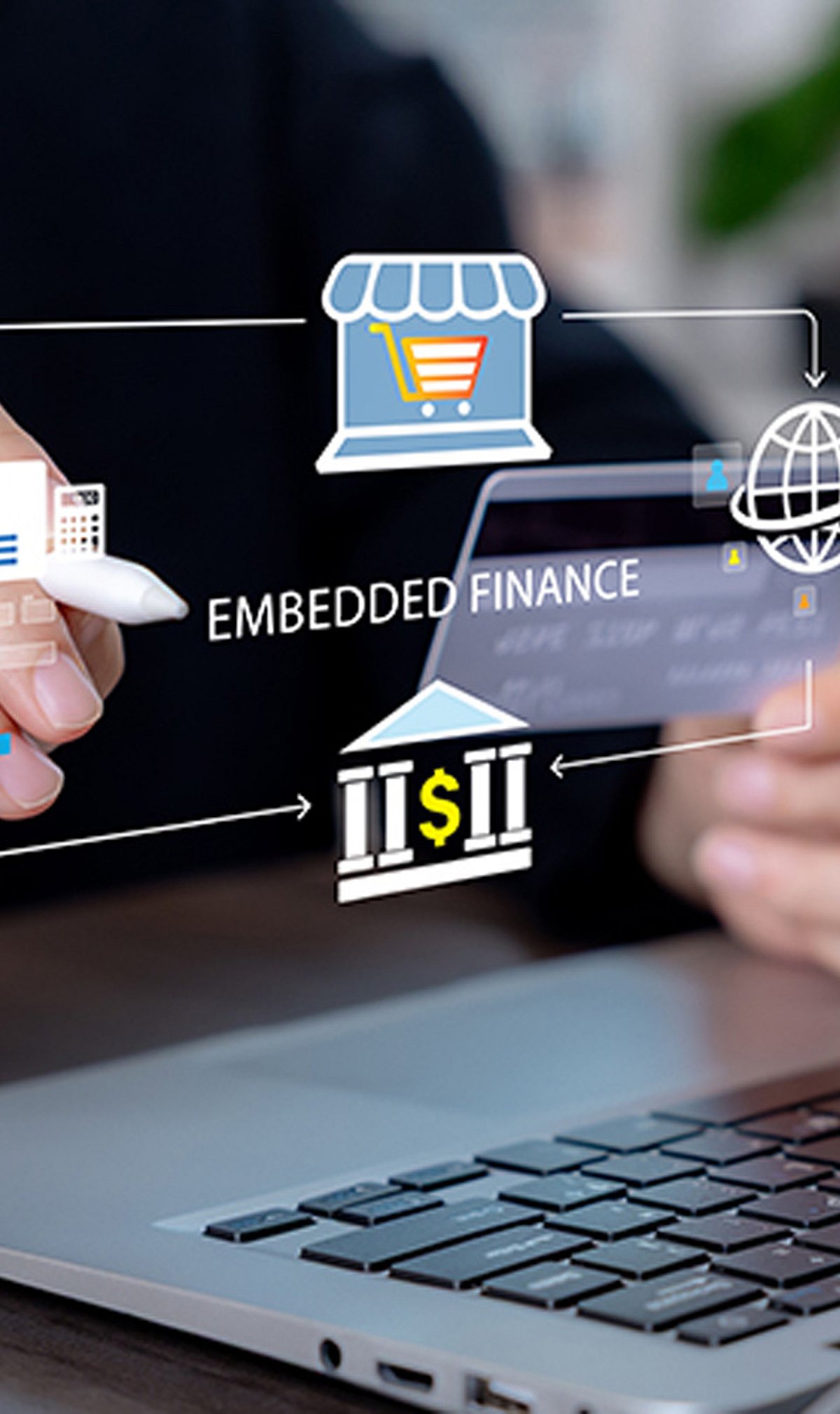

  • Embedded Finance Leaders to Watch in 2026: Top Companies Reshaping Digital Payments and Banking

    Embedded Finance Leaders to Watch in 2026: Top Companies Reshaping Digital Payments and Banking

    Embedded finance is rapidly transforming the way businesses integrate financial services into their platforms. As we look ahead to 2026, several companies stand out for their innovative infrastructure, seamless payment solutions, and banking-as-a-service capabilities. Here are the key players to keep an eye on.

    Stripe

    Stripe continues to expand its embedded payments, treasury, lending, and financial infrastructure, enabling businesses to integrate seamless financial services into digital platforms globally.

    Adyen

    Adyen delivers unified payment processing, embedded financial products, issuing solutions, and merchant services that support businesses across multiple international markets efficiently.

    Marqeta

    Marqeta specializes in modern card issuing infrastructure, embedded payment capabilities, and customizable financial products for fintech companies and enterprise platforms worldwide.

    Solaris

    Solaris provides Banking-as-a-Service infrastructure, allowing businesses to launch embedded banking, payments, lending, and digital financial solutions with full regulatory compliance.

    Unit

    Unit helps software companies embed checking accounts, cards, payments, and lending products directly into applications through developer-friendly banking infrastructure solutions.

    Treasury Prime

    Treasury Prime offers API-driven banking infrastructure that enables fintech firms and enterprises to integrate embedded banking services with regulated financial institution partnerships seamlessly.

    Mambu

    Mambu provides cloud-native core banking technology supporting embedded finance, digital banking transformation, lending operations, and scalable financial product innovation across industries.

    Finastra

    Finastra delivers financial software solutions that enable banks and businesses to create embedded finance ecosystems with payment, lending, and banking capabilities efficiently.

    BaaSis

    BaaSis focuses on Banking-as-a-Service technology, helping enterprises integrate embedded financial products, digital banking features, and payment services into customer experiences successfully.

    These companies are at the forefront of the embedded finance revolution, powering the next generation of digital financial services. Watch them closely in 2026 as they continue to innovate and expand.

  • Digital Asset Lending: A New Frontier in Financial Services

    Digital Asset Lending: A New Frontier in Financial Services

    Introduction

    The financial services industry is undergoing a profound transformation as digital assets move beyond mere speculation and into the realm of practical financial tools. One of the most promising developments is digital asset lending, which allows investors to borrow against their cryptocurrency holdings without selling them.

    What Is Digital Asset Lending?

    Digital asset lending enables individuals and institutions to use their cryptocurrency as collateral to obtain cash or stablecoins. This approach provides liquidity while allowing borrowers to maintain ownership and benefit from potential appreciation of their digital assets. It mirrors traditional securities-backed lending but operates within the blockchain ecosystem.

    Key Drivers of Growth

    Several factors have accelerated the adoption of digital asset lending:

    • Improved custody and security — Advances in wallet technology and multi-signature solutions reduce counterparty risks.
    • Automated risk management — Real-time monitoring of collateral values and automatic liquidations help maintain loan health.
    • Demand for liquidity — Investors increasingly seek ways to unlock value from their crypto portfolios without triggering taxable events.
    • Institutional interest — Hedge funds, family offices, and corporations are exploring crypto-backed loans for treasury management.

    Case Example: Arch Lending

    Companies like Arch Lending are at the forefront, offering tailored financing solutions for cryptocurrency owners. Their platforms allow borrowers to access funds quickly while keeping their digital assets intact, bridging the gap between traditional finance and the crypto economy.

    Future Outlook

    Analysts predict that digital asset lending will become a standard component of modern portfolio management. As regulatory clarity improves and technology continues to evolve, we can expect greater integration with traditional banking systems, more competitive interest rates, and a wider range of collateral options.

    Conclusion

    Digital asset lending represents a paradigm shift in how value is extracted from investments. By combining the flexibility of blockchain with the reliability of collateralized lending, it offers a powerful tool for investors seeking both growth and liquidity. The future of financial services will likely see this model become mainstream.

  • Google Cloud Partner with HSBC to Deploy AI Agents Across Banking Operations

    Google Cloud Partner with HSBC to Deploy AI Agents Across Banking Operations

    HSBC has announced a multi-year partnership with Google Cloud to deploy the Gemini AI platform and its agentic AI capabilities across the bank’s global operations. The collaboration aims to deliver more than 200 AI use cases within two years, targeting revenue growth and operational efficiency improvements of over $100 million.

    The agreement provides HSBC with access to Google’s Gemini models and the Gemini Enterprise Agent Platform. Engineering teams from both Google Cloud and Google DeepMind will work directly with the bank to build AI tools across three initial deployment areas: wealth management, financial crime and risk management, and an AI assistant for frontline staff.

    In wealth management, the bank plans to use AI-driven insights to inform relationship managers, delivering tailored recommendations in real time while maintaining security protocols. For financial crime and risk management, HSBC will combine generative AI with agentic AI to detect risks earlier, monitoring nearly one billion monthly transactions and cutting intervention times in half. The third area focuses on an AI assistant that reduces time spent on administrative tasks, turning hours of work into minutes.

    Thomas Kurian, CEO of Google Cloud, called the partnership “a blueprint for the future of the financial services industry.” Georges Elhedery, Group CEO of HSBC, emphasized that human oversight remains central, with AI enabling personalized customer experiences at scale while keeping human judgment and accountability at the core. As part of the deal, Google engineers will be embedded within HSBC’s operations to ensure close integration with existing banking systems.