Tag: fintech

  • PennyGuard: How Its Features Support Everyday Money Decisions

    PennyGuard: How Its Features Support Everyday Money Decisions

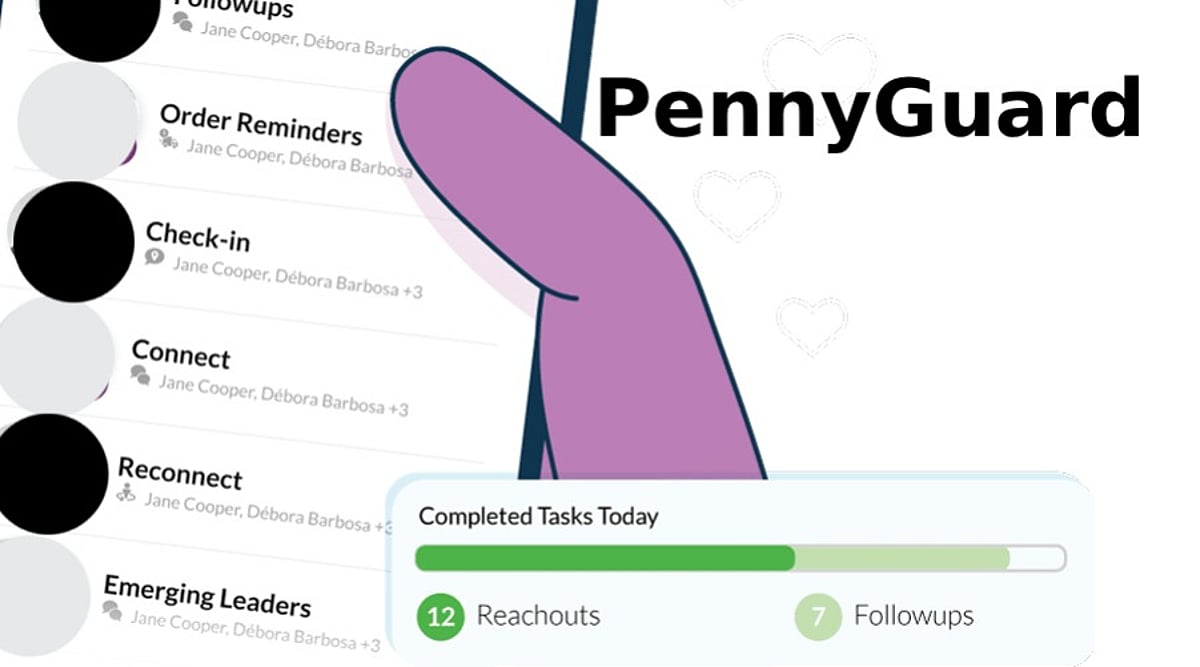
    PennyGuard is a personal finance tool designed to bring the details of your everyday spending into one view. Rather than focusing only on saving, it helps you understand what is happening with each charge, identify recurring expenses, and uncover benefits linked to the cards you already use.

    What PennyGuard Does

    PennyGuard connects to your financial data through a few different paths. It works with bank connections through Plaid, offers a card connection option, and supports email connections from Gmail, Outlook, or Yahoo. The level of bank support depends on Plaid coverage.

    Once connected, the platform uses that information to identify options tied to individual transactions. The outputs fall into three main categories:

    • Information: explaining what a charge is, reminding you of a renewal, or showing a card perk.
    • Requests: actions you confirm, such as a cancellation or refund request.
    • Fulfilled outcomes: completed results, such as a confirmed cancellation or a refund that has landed in your account.

    Keeping these categories separate helps you know exactly what a feature is doing and what still needs to happen.

    Card Benefits for Purchases You Plan to Keep

    Not every transaction needs to be reduced or eliminated. Some charges reflect purchases you are happy with, and your main interest is whether your card offers a benefit for them.

    PennyGuard’s planned transaction-focused main view is meant to surface cashback or perks associated with your card, along with possible ways to pay less. The goal is to help you notice a benefit you might otherwise miss.

    There is an important difference between seeing a benefit and receiving it. Cashback is paid by the bank or card network under its own terms, so eligibility and fulfillment matter after discovery.

    When You Need More Context About a Charge

    A charge can look unfamiliar without being something you want to stop. In those cases, the text AI assistant is designed to answer questions using the same connected information that powers transaction analysis.

    You could ask what a charge is, which subscriptions are worth reviewing, or what perk may apply to a specific transaction. The explanation comes first; deciding to keep a service, cancel it, or request a refund comes later.

    PennyGuard helps surface opportunities and prepares actions, but you stay in control before any request is sent.

    Subscription Review and Cancellation Support

    Subscription detection uses bank and email data to spot recurring payments. The tool also looks for regular bills, trial periods, price increases, and duplicate charges. Those findings are a starting point for reviewing what you actually use.

    For example, you might go through a list of subscriptions after a change in your routine. Some services may still be essential, others may be occasional, and a few may no longer make sense. PennyGuard helps organize that review without assuming every subscription should be canceled.

    When you decide to cancel a service, PennyGuard can initiate cancellation requests through an AI agent, email, or a partner. Confirmation is required before anything is sent. The time to completion depends on the service, and you should treat a cancellation request as separate from a confirmed cancellation.

    Refund Requests vs. Bill Negotiation

    Merchant refunds and bill negotiation both involve another organization’s response, but they address different situations. A refund request is about money already charged. Negotiation is about lowering a bill.

    If you want a merchant to review a charge, PennyGuard can help submit a refund request after your confirmation. The useful output at that stage is initiation. Approval and the return of funds are separate outcomes.

    If you want to keep a service but pay less, the path is negotiation through a partner. The intended result is a changed cost rather than ending the service.

    Because timing depends on the merchant or provider, it helps to distinguish between the request you sent, the decision that came back, and the actual money impact.

    Notifications and Safe to Spend

    PennyGuard includes notifications for renewals, trial endings, price changes, and unfamiliar charges. Email and in-app notifications are planned delivery methods. An alert may simply prompt you to make a conscious decision to keep a service unchanged.

    The Safe to Spend feature answers a common question: how much may be left before your next deposit? It is an estimate, not a guarantee, so you should use it alongside commitments and upcoming expenses when weighing a purchase.

    PennyGuard does not hold money, transfer funds, pay bills, or open financial products. Its role is to keep you informed and help you decide what deserves attention.

    How to Use PennyGuard in Practice

    Start with the question you actually have:

    • If the purchase is staying, look at card benefits.
    • If the charge is unclear, seek context.
    • If a recurring service is no longer useful, consider a cancellation request.
    • If the issue is a past charge, think about refund assistance.
    • If the issue is a high ongoing bill, explore negotiation.

    Then identify what result you are looking at: information displayed, an action you confirmed, or a completed outcome. That distinction is the thread that connects PennyGuard’s planned features without making them interchangeable.

    PennyGuard is scheduled to launch on October 15, 2026. For current product information, consult the official PennyGuard site.


  • No-Cost EMI: Who Really Pays the Interest and What to Check Before You Buy

    No-Cost EMI: Who Really Pays the Interest and What to Check Before You Buy

    What a no-cost EMI actually means

    A no-cost EMI lets a buyer split a purchase into equal monthly payments while the offer advertises zero interest. In practice, the lender may still charge interest, and the merchant or platform offsets that amount through an upfront discount, a merchant contribution, or another promotional adjustment. The customer may not pay interest as a separate line item, but the transaction can still include fees, taxes, or conditions that change the real cost.

    In India, the Reserve Bank of India requires credit-card issuers to disclose the principal, interest, and upfront discount behind a no-cost EMI before converting a purchase. The same details must appear separately on the card statement. That disclosure matters because it lets borrowers see how the offer is structured instead of relying on the monthly payment alone.

    How the interest is offset

    Consider a Rs. 60,000 product with a six-month EMI. A regular EMI would include principal and interest. Under a no-cost offer, the lender may calculate interest, while the merchant provides a discount that offsets it. The exact arrangement varies by lender, merchant, product, and promotion.

    Because the discount may reduce the effective purchase price, two offers with the same monthly payment can have different total costs. Borrowers should compare the cash price, the discount, the interest calculation, the processing fee, taxes, and the total of all installments.

    Who pays the interest?

    The customer may not pay the interest separately, but that does not mean the interest disappears. The merchant or platform often absorbs it through a discount or contribution. In some cases, the cost is built into the product price or promotion. The key point is that no-cost EMI describes the interest structure, not a guarantee that every cost is zero.

    Where extra costs can appear

    • Processing fees: Lenders may charge a one-time fee to set up the EMI.
    • Taxes: Applicable taxes may apply to interest, fees, or the transaction, depending on the lender and location.
    • Late-payment penalties: Missing an installment can trigger charges and affect the account.
    • Foreclosure or cancellation terms: Closing an EMI early or cancelling a purchase may involve conditions or charges.
    • Credit-limit impact: On a credit card, the purchase can reduce available credit until the EMI is repaid.

    No-cost EMI versus a regular EMI

    A regular EMI normally includes both principal and interest, so the borrower repays the purchase price plus financing cost over time. A no-cost EMI tries to offset the interest through a discount or merchant contribution. The final structure can differ from one offer to another, so the safest comparison is the total amount repaid.

    Check the product’s cash price, the advertised discount, any fees or taxes, the EMI tenure, and the sum of all monthly payments. If the total EMI cost is higher than the cash price after adjustments, the offer is not truly cost-free.

    What to check before accepting an EMI offer

    • Confirm the original price and the final amount payable.
    • Ask whether the discount is applied upfront or adjusted later.
    • Review the interest rate, processing fee, taxes, and EMI tenure.
    • Check the total repayment amount, not just the monthly installment.
    • Confirm cancellation, refund, and early-closure conditions.
    • For credit cards, check available credit and how the EMI will affect the limit.
    • For loans, review the annual percentage rate and other cost-of-credit disclosures.

    When a no-cost EMI may make sense

    A no-cost EMI can help spread a large purchase across several payments, but it should fit the borrower’s budget without relying on the promotional label. Multiple EMIs can quickly increase monthly obligations. Before signing, compare the total EMI cost with paying upfront and make sure each installment is comfortably affordable.

    The practical rule is simple: no-cost EMI may describe how interest is handled, but it does not mean every charge is zero. Read the full offer, compare the final repayment amount, and verify all fees before accepting.

    FAQs

    Does no-cost EMI really have zero interest?

    The lender may still calculate interest. Under a no-cost structure, a discount or merchant contribution can offset that interest. Borrowers should review the transaction details rather than assume no interest is involved at any stage.

    Who pays the interest on a no-cost EMI?

    The merchant or platform may effectively absorb it through a discount or contribution. The customer may not pay it as a separate cost, but the arrangement varies by lender, merchant, product, and promotion.

    Can a no-cost EMI include extra charges?

    Yes. Processing fees, taxes, late-payment penalties, and other conditions may apply. Check the complete terms before accepting the offer.

    Does no-cost EMI affect a credit card limit?

    Yes. The purchase can reduce available credit until the EMI is repaid. Check the remaining limit before making another large purchase with the same card.

  • Why Global Investors Are Flocking to the UAE: Key Growth Drivers

    Why Global Investors Are Flocking to the UAE: Key Growth Drivers

    The United Arab Emirates has emerged as one of the most attractive destinations for international capital. With a sharp rise in foreign direct investment (FDI) and a clear push toward economic diversification, the country is positioning itself as a hub for long-term opportunity beyond traditional energy markets.

    Foreign Investment Is Surging

    FDI inflows into the UAE jumped 48.7% in 2024, reaching $45.6 billion compared to $30.7 billion the previous year. This surge reflects growing global confidence in the country’s business climate, modern infrastructure, and expanding investment landscape.

    An Economy Moving Beyond Oil

    The UAE is actively building a more diversified economy. Sectors such as tourism, finance, transport, construction, and technology are playing increasingly important roles. The World Bank expects non-oil activity to remain a key growth driver, supported by structural reforms, investment incentives, and infrastructure development.

    AI and Digital Infrastructure Take Center Stage

    Artificial intelligence is becoming a cornerstone of the UAE’s economic strategy. Significant investments in data centers, cloud computing, GPUs, and digital networks are advancing the country’s push toward an AI-driven economy. The World Bank has recognized the UAE as one of the Gulf’s leaders in digital transformation and AI readiness.

    Infrastructure Built for Global Business

    The UAE continues to invest heavily in infrastructure that connects businesses to international markets. Transport networks, logistics hubs, digital services, and financial systems are all being upgraded to support its status as a global business gateway. Abu Dhabi’s long-term economic vision also prioritizes resilient financial markets and world-class infrastructure.

    Fintech and Emerging Sectors Expand Opportunity

    Financial technology is another growing area of interest. The UAE’s official Investor Navigator highlights fintech as a high-potential sector, alongside ICT, logistics, tourism, manufacturing, renewables, gaming, and smart cities. This diverse mix offers investors far more than traditional real estate and energy plays.

    Trade Agreements Open New Markets

    The UAE’s investment story is closely tied to its role as a major trading hub. Economic policies are focused on boosting exports and expanding market access. Comprehensive Economic Partnership Agreements with countries across Asia, Europe, and beyond are strengthening trade connectivity and business activity.

    A Long-Term Bet on Diversification

    Ultimately, the UAE’s appeal lies in its long-term economic transformation. The country’s 2031 vision targets a larger economy, higher non-oil exports, stronger tourism, and expanded foreign trade. For investors, the narrative is clear: this is a story built on diversification, technology, infrastructure, and global connectivity.

  • Moneyview IPO Day 1: 37% Subscription with Grey Market Premium Soaring to 42%

    Moneyview IPO Day 1: 37% Subscription with Grey Market Premium Soaring to 42%

    Moneyview’s initial public offering (IPO) received bids for 37% of the shares on offer by 11:25 a.m. on September 24, according to NSE data. The Bengaluru-based fintech company has set a price band of Rs. 32–34 per share, and the bidding window will close on September 28.

    Moneyview IPO Subscription and Grey Market Premium

    Investors bid for 8,62,08,003 shares against 23,25,24,175 shares available at the time of the NSE snapshot. Retail investors subscribed to 55% of their allotted shares, while non-institutional investors subscribed to 43%. These figures cover only the opening hours of the three-day offer.

    Moneyview shares carried a grey market premium (GMP) of about Rs. 14 on the morning of September 24, according to InvestorGain. That was roughly 42% above the top of the Rs. 34 price band and pointed to an estimated price of Rs. 48 per share. An earlier report put the premium near 32%, showing that quoted GMP figures can change. Grey market trades are unofficial, and their prices do not determine where a stock will list.

    Issue Size, Price Band and Key Dates

    The Moneyview IPO totals about Rs. 1,092 crore, comprising a fresh issue of Rs. 750 crore and an offer for sale of about Rs. 341.68 crore. Under the offer for sale, existing shareholders will sell shares; Moneyview will receive the proceeds from the fresh issue.

    Investors can bid in lots of 441 shares. At the upper price of Rs. 34, one lot costs Rs. 14,994. The company expects to finalise the allotment on September 29 and list its shares on the BSE and NSE on October 1, under the tentative timetable.

    Before public bidding began, Moneyview raised Rs. 327.5 crore from anchor investors by allotting 9.63 crore shares at Rs. 34 each. Participants included SBI Mutual Fund, ICICI Prudential AMC, HDFC AMC, Goldman Sachs and Amundi Funds.

    How Moneyview Plans to Use the Proceeds

    Moneyview plans to put Rs. 325 crore from the fresh issue toward loan disbursals under default loss guarantee arrangements. It also plans to invest Rs. 250 crore in its subsidiary, Whizdm Finance, to strengthen the lender’s capital base. The company has earmarked the remaining net proceeds for general corporate purposes.

    The company connects customers with banks, non-banking lenders, insurers and other financial firms through its digital platform. Its products include personal loans, insurance, credit cards and digital gold. Moneyview reported 14.03 crore registered users and 48 financial partners as of June 2026.

    Financial Performance and IPO Managers

    For the June 2026 quarter, consolidated net profit rose to Rs. 173.8 crore from Rs. 67.2 crore a year earlier. Revenue from operations increased 50.2% to Rs. 1,041.1 crore. For the year ended March 2026, profit rose 1.2% to Rs. 244.1 crore, while revenue grew 43.3% to Rs. 3,351.2 crore.

    Axis Capital, BofA Securities India, IIFL Capital Services and Kotak Mahindra Capital Company are managing the IPO. Public bidding remains open through September 28, with final subscription figures due after the offer closes.

  • 10 TravelTech Startups Shaping India’s Travel Industry in 2026

    10 TravelTech Startups Shaping India’s Travel Industry in 2026

    Key Takeaways

    • India’s TravelTech ecosystem now extends far beyond traditional flight and hotel bookings.
    • AI, fintech, visas, mobility, and personalized experiences are creating new opportunities across travel.
    • Major companies such as OYO, MakeMyTrip, ixigo, Rapido, Atlys, and Scapia continue to expand their market presence.

    India’s TravelTech market now reaches far beyond flight and hotel bookings. Online travel, hotels, mobility, travel finance, visa services, travel software, and holiday experiences now form a much larger digital ecosystem. Inc42 tracks about 1,562 TravelTech startups in India, including 261 funded companies and more than USD 19.2 billion in cumulative funding. The online travel market reached about USD 23.1 billion in 2025 and could rise to USD 33.9 billion by 2030.

    The market also shows a clear shift toward specialized travel products. Large platforms focus on scale, while newer companies target visas, travel credit, group holidays, and AI-based trip planning. Here are 10 major names that stand out in the Indian TravelTech sector in 2026.

    OYO Takes Hospitality Tech Beyond Hotel Bookings

    OYO remains one of India’s largest hospitality technology companies. Its business covers hotel aggregation, franchising, hotel management, and technology services. Inc42 places OYO’s cumulative funding at about USD 3.71 billion, which puts the company among the most funded names in India’s TravelTech sector. OYO’s role now goes beyond a simple hotel reservation platform. Its technology supports hotel owners and helps OYO manage a large hospitality network across several markets.

    MakeMyTrip Builds Scale Across Travel Categories

    MakeMyTrip remains a major online travel platform with services across flights, hotels, buses, and holiday packages. Its Q1 FY27 results show USD 2.9 billion in gross bookings, a 19.9% year-over-year rise in constant currency, and 16.1% revenue growth in constant currency. Hotels and packages rose 21.3%, while bus ticketing rose 32.4%. These figures show a wider travel mix rather than a business that depends only on air tickets. Hotels, buses, and other travel services now hold a larger place within the platform.

    Rapido Pushes Mobility into the TravelTech Mix

    Rapido sits at the intersection of mobility and TravelTech. The company raised USD 240 million in 2026 at a reported USD 3 billion valuation. Inc42 places its cumulative funding at about USD 1.53 billion. The company has focused on a broad mobility network and stronger technology. Its position matters for TravelTech since transport often forms a key part of a trip, especially within cities and across short distances.

    ixigo Targets the Mass Travel Market

    ixigo covers trains, flights, buses, and hotels through one digital platform. The company reported 544 million annual active users in FY25. Its strategy also places a strong focus on artificial intelligence and digital travel decisions. The company’s large user base gives it a strong position across several parts of the Indian travel journey. Its product can serve travelers who need rail, bus, air, or hotel options from one platform.

    RateGain Powers Travel Businesses from the B2B Side

    RateGain represents a different side of TravelTech. Its software serves hotels, airlines, car rental companies, and other travel businesses through revenue management, distribution, and data solutions. RateGain reported Rs. 785.01 crore in Q1 FY27 revenue, along with Rs. 171.53 crore in operating profit and Rs. 94.91 crore in net profit. Inc42 places its cumulative funding at about USD 236.7 million. Its business shows how Indian TravelTech can serve companies rather than travelers alone.

    EaseMyTrip Expands Beyond Air Tickets

    EaseMyTrip declared gross booking revenue of Rs. 8,376 crore for FY26, and the gross booking revenue of the company amounted to Rs. 2,138 crore in Q4 FY26. Revenue from operations of the company in Q4 reached Rs. 152 crore, which increased by 8.9% on a year-over-year basis. The company has also announced a Vision 2030 plan based on areas such as AI, international travel, and non-air travel segments. To execute the plan, EaseMyTrip is looking to raise up to Rs. 500 crore.

    Atlys Digitizes the Visa Process

    Atlys focuses on one of the hardest parts of international travel: visa applications. The company raised USD 36 million in Series C funding in 2026, which took its total funding to about USD 84.25 million across five rounds. Atlys offers a clear example of how TravelTech can solve a problem before the flight or hotel booking even starts. Its model connects travel demand with visa services through a digital process.

    Scapia Connects Travel with Fintech

    Scapia combines travel with financial services through credit cards, travel bookings, rewards, and payments. In 2026, the company raised USD 63 million in a round led by General Catalyst. The deal valued Scapia at more than USD 500 million and took total funding to about USD 126 million. The company shows a clear shift toward travel products that combine booking with payment and financial benefits.

    WanderOn Focuses on Experience-Led Holidays

    WanderOn targets group trips, road trips, treks, adventure travel, and curated experiences. The company raised Rs. 54 crore in Series A funding in January 2026, with DSG Consumer Partners and Client Associates Alternate Fund among the investors. Before that round, WanderOn said it had crossed Rs. 100 crore in business. The new capital supports destination growth, adventure travel, sports travel, wellness travel, technology, and international expansion.

    30 Sundays Brings AI into Holiday Planning

    30 Sundays focuses on personalized holiday planning and combines trip discovery, planning, booking, and concierge services. The company raised Rs. 61 crore in Series A funding from Bessemer Venture Partners and existing investors in 2026. The company reported an annualized gross booking value run rate of about Rs. 200 crore. Its model points to a new type of travel platform where artificial intelligence can help turn a broad travel idea into a complete holiday plan.

    A Broader TravelTech Market Takes Shape

    These 10 companies show how wide India’s TravelTech sector has become. OYO and MakeMyTrip operate at large consumer scale, while RateGain serves travel businesses. Atlys tackles visas, Scapia connects travel with fintech, WanderOn focuses on experiences, and 30 Sundays brings AI into holiday planning. The strongest shift lies in the scope of the travel journey. A modern TravelTech company does not need to sell only a flight or hotel room. It can handle transport, finance, visas, experiences, business software, or the full holiday plan. That wider market gives Indian TravelTech a much larger field for new products and business models.

    FAQs

    1. What is TravelTech? TravelTech refers to technology-based products and services that support travel, including bookings, mobility, hotels, visas, payments, software, and trip planning.
    2. Which TravelTech companies are prominent in India in 2026? The article covers OYO, MakeMyTrip, Rapido, ixigo, RateGain, EaseMyTrip, Atlys, Scapia, WanderOn, and 30 Sundays.
    3. How is AI affecting India’s TravelTech sector? AI now supports areas such as personalized trip planning, travel recommendations, customer service, and travel-related decision making.
    4. Is TravelTech limited to online travel booking? No. The sector now includes hospitality, mobility, travel software, visa services, fintech, group travel, experiences, and AI-powered planning.
    5. Why is India’s TravelTech market important? Its growth reflects rising digital adoption across travel and creates opportunities for companies that solve specific problems throughout the traveler’s journey.
  • Airtel Money Eyes London IPO to Raise at Least $800 Million

    Airtel Money Eyes London IPO to Raise at Least $800 Million

    Airtel Money, the digital financial services arm of Airtel Africa, has announced plans to pursue an initial public offering (IPO) on the London Stock Exchange. The proposed listing is expected to value the African mobile money business at between $8 billion and $9 billion, positioning it as one of London’s largest IPOs in recent years.

    Airtel Money Targets $800 Million From Share Sale

    The company is aiming to raise at least $800 million through the offering. However, the IPO will consist entirely of existing shares, meaning Airtel Money itself will not receive fresh capital from the transaction. Instead, current shareholders will sell part of their holdings to public investors, with the company planning to maintain a free float of at least 10% after listing.

    The targeted valuation range is slightly below earlier market expectations. Reports had previously suggested that Airtel Money was weighing a larger offering with a valuation of around $10 billion.

    Potential Boost for London’s IPO Market

    The proposed float arrives at a time when London’s IPO market has experienced a prolonged period of subdued activity. According to Reuters, the offering could rank among the biggest London listings in recent years, giving the exchange a significant African fintech deal.

    A successful listing would also give public-market investors direct exposure to Africa’s rapidly expanding digital payments sector. Airtel Money operates across multiple African markets, offering mobile payments and a range of other digital financial products.

    Prospectus Expected in October

    Airtel Money said it expects to publish further details about the proposed offer in early October, including the indicative price range and the number of shares to be offered. Final pricing is expected in mid-October, subject to market conditions and the completion of the listing process.

    The company’s latest quarterly performance underscores the scale of its business. Revenue for the quarter ended June 2026 rose 38% year over year to $399 million.

    The listing remains subject to regulatory approvals, market conditions, and other customary requirements. Airtel Money’s London debut will ultimately depend on the completion of the IPO process and final investor demand.

  • PayGlocal Receives IFSCA In-Principle Approval for GIFT City Payment Services Subsidiary

    PayGlocal Receives IFSCA In-Principle Approval for GIFT City Payment Services Subsidiary

    PayGlocal, a Bengaluru-based fintech company, has secured in-principle approval from the International Financial Services Centres Authority (IFSCA) to establish a wholly owned subsidiary as a Payment Service Provider (PSP) in GIFT City. The proposed entity is designed to serve businesses operating in international markets, with plans to offer cross-border money transfers, account services, and merchant payment solutions.

    Scope of the IFSCA Approval

    The IFSCA approval enables PayGlocal to issue e-money accounts, facilitate cross-border transfers, and provide merchant acquisition services—allowing businesses to accept payments seamlessly. The company has not yet announced when operations will commence or whether final authorization has been obtained.

    PayGlocal intends to develop international payment services through its GIFT-IFSC entity while continuing its technology and operational work from India. The subsidiary will serve as a base for these services once all required approvals are in place.

    Existing Regulatory Permissions

    The GIFT City approval adds to PayGlocal’s existing regulatory footprint. Last year, the company received final authorization from the Reserve Bank of India (RBI) to operate as a Payment Aggregator-Cross Border, covering both inward and outward payments. Additionally, PayGlocal has registered as a Money Services Business with the U.S. Financial Crimes Enforcement Network (FinCEN), supporting its expansion into the American market.

    CEO’s Vision and Future Plans

    Prachi Dharani, co-founder and CEO of PayGlocal, emphasized the company’s mission to simplify cross-border money movement for businesses. “PayGlocal is building something from India that can become a trusted part of how businesses transact with the world,” she said. Dharani added that the company aims to make cross-border payments feel as straightforward as domestic transactions.

    Looking ahead, PayGlocal plans to help Indian merchants reach overseas customers, enter new markets, and develop localized options for collecting and making payments. The company did not disclose specific markets or a launch timeline.

    Company Background

    Founded in 2021, PayGlocal serves businesses in exports, retail, travel, education, and software services. Its product suite includes multi-currency accounts, payment gateways, and solutions for international merchants to accept payments from Indian customers via UPI, cards, and netbanking. The platform supports over 130 currencies and more than 40 global and local payment methods. PayGlocal has not specified which of these services the GIFT City entity will offer initially.

  • MoonPay Bolsters Tokenized Asset Strategy With $60M All-Stock North Capital Acquisition

    MoonPay Bolsters Tokenized Asset Strategy With $60M All-Stock North Capital Acquisition

    Cryptocurrency payments company MoonPay is expanding beyond digital asset payments with an all-stock acquisition of North Capital, a private-markets investment platform, in a deal valued at more than $60 million. The transaction, announced Wednesday, is pending regulatory approval.

    North Capital to Operate as MoonPay Subsidiary

    Once the deal closes, Salt Lake City-based North Capital will become a wholly owned subsidiary of MoonPay. The platform has processed about $9 billion in combined primary and secondary transaction volume.

    North Capital supplies technology infrastructure for private securities issuers and fund managers, covering capital raising, asset management, clearing, custody, and secondary trading. Its affiliates also hold broker-dealer, trading, transfer, and investment advisory registrations with the U.S. Securities and Exchange Commission (SEC).

    MoonPay said the acquisition will add North Capital’s securities tokenization infrastructure and regulatory capabilities to its existing payments and tokenization stack.

    Why MoonPay Is Buying North Capital

    The deal supports MoonPay’s focus on tokenized real-world assets (RWAs). MoonPay CEO Ivan Soto-Wright said the acquisition will help create the regulatory foundation needed for wider adoption of tokenized RWAs.

    “We believe bringing those capabilities into the MoonPay ecosystem can help connect different parts of the financial system through modern, programmable infrastructure,” Soto-Wright said.

    Tokenization converts real-world assets such as equities, bonds, and commodities into blockchain-based tokens that can be bought, sold, and traded on distributed ledgers.

    MoonPay’s Push Beyond Crypto Payments

    The purchase is the latest step in MoonPay’s move beyond its core cryptocurrency payments business. The company’s Trade platform connects banks and fintech companies with tokenized assets, decentralized finance (DeFi) protocols, and stablecoin liquidity.

    Earlier this year, MoonPay also acquired Solana-based trading infrastructure provider DFlow and security startup Sodot. The North Capital deal adds another layer to its push into tokenized assets, a growing blockchain use case among traditional financial institutions.

  • Why Modern Brokerages Must Evolve Beyond Trade Execution

    Why Modern Brokerages Must Evolve Beyond Trade Execution

    The retail brokerage industry has long operated on a simple model: generate transaction volume, charge for execution, and move on. But as traders and active investors become more sophisticated, the traditional terminal-only relationship is proving insufficient. When the trading session ends, customer funds typically vanish into banking channels, offline accounts, or external payment networks. That fragmentation is exactly what forward-thinking firms are now trying to eliminate.

    Mikhail Bobkin, Co-Founder and CEO of rewalt:, believes the future lies in treating capital as a continuous journey rather than a series of isolated transactions. “The problem in finance isn’t a lack of products; it’s the walls between them,” he explains. “A typical customer earns money in one place, banks it somewhere else, transfers it to a broker to trade, uses another platform for digital assets, and moves it again when they want to spend it. Every institution controls one part of that journey, with its own incentives, fees, and restrictions.”

    Bobkin argues that Rock-West’s evolution into rewalt: is not a departure from its founding principles but a natural extension of them. The company started with fair treatment for traders; now it aims to build infrastructure that lets capital flow naturally between trading, holding, converting, transferring, and spending.

    Why Conflict-Free Execution Is the Precondition for Ecosystems

    Many financial brands claim to be multi-asset ecosystems, yet their underlying revenue models remain contradictory. When a broker’s profitability depends on aggressive churn or client losses, expanding into payments or card services creates an irreconcilable conflict of interest. A lasting platform, Bobkin stresses, must be built on a pure-agency environment.

    “Integration alone doesn’t create an ecosystem,” he says. “A broker can add a card. A bank can add trading. An exchange can add payments. But if every product is driven by conflicting incentives, you’ve simply put several businesses behind one login.”

    Rock-West adopted an A-Book philosophy precisely to avoid profiting from customer losses. That alignment becomes even more critical as the company expands beyond brokerage. “If a customer decides not to trade today and instead wants to hold, move, convert, or spend their capital, that shouldn’t be a bad outcome for us,” Bobkin adds. “A customer who doesn’t trade today should still be a valuable customer tomorrow.”

    Reimagining the Capital Lifecycle Around the Trader

    The classic broker workflow — deposit via card, trade an instrument, withdraw back to a bank — is fundamentally obsolete. Modern participants expect capital to remain active, liquid, and instantly accessible, whether they are pursuing multi-asset exposure, following top strategies through copy trading, or funding daily expenses directly from their trading balance.

    “We start with a different question,” Bobkin explains. “Instead of asking, ‘What product can we sell this customer?’ we ask, ‘What is this customer trying to do with their capital?’” The resulting experience is simple: Fund. Trade. Move. Convert. Spend. All within a single platform. “Customers shouldn’t have to rebuild their financial identity every time their money changes purpose,” he says.

    Institutional Rigor as a Seamless Customer Experience

    Professional financial firms are expected to maintain operational integrity, tier-one liquidity aggregation, and rigorous regulatory oversight. Yet legacy platforms often force customers to confront institutional complexity at the worst possible moment. rewalt: designs its compliance layer to absorb that administrative burden quietly on the server side.

    “Regulation isn’t the enemy of customer experience — poor architecture is,” Bobkin asserts. KYC, AML, security, suitability, and sanctions controls exist for good reason. The company’s responsibility is to handle that complexity intelligently without making customers navigate it. “Compliance should create safety; it shouldn’t become the product.”

    Fairness Beyond the Closed Position

    The brokerage market is approaching an inflection point. Low spreads and fast execution are now baseline expectations, not differentiators. The next competitive frontier is total capital mobility — bringing the same institutional-grade transparency from execution into everyday financial life.

    “Our ambition is to make the movement of capital feel more like the movement of information,” Bobkin concludes. Money still lives in silos: banks, brokers, exchanges, wallets, payment processors, and cards all impose their own entry and exit rules. rewalt: wants to reduce those boundaries without sacrificing the safeguards that financial infrastructure requires.

    Rock-West started with the belief that customers should be treated fairly when they trade. rewalt: asks the logical next question: Why should that fairness stop when the trade ends?

  • Soteris Debuts AI Tool to Uncover Unprofitable Insurance Policies

    Soteris Debuts AI Tool to Uncover Unprofitable Insurance Policies

    Soteris, a Y Combinator-backed machine learning company, has launched a new AI-powered tool designed to help property and casualty insurers and managing general agents identify policies that are draining profits. The tool leverages machine learning to analyze policy characteristics and deliver actionable profitability insights at every stage of the insurance lifecycle — without requiring changes to rates, policy forms, regulatory filings, or staffing levels.

    Soteris Targets Hidden Policy Losses

    The launch comes on the heels of a strong year for the U.S. property and casualty insurance sector. According to AM Best’s latest financial review, the industry recorded a net underwriting gain of US$60.9 billion in 2025 — nearly triple the US$22.1 billion reported in 2024. The combined ratio improved by 3.7 points to 92.9. Separately, Verisk and the American Property Casualty Insurance Association estimated the underwriting gain at roughly US$63 billion, with the combined ratio improving to 92.9% from 96.6% in 2024. Fitch Ratings called this the industry’s strongest performance in two decades, with the combined ratio reaching its best level since 2006.

    Soteris’ original loss-ratio product has been used by carriers and MGAs since 2020, scoring more than 100 million policy submissions covering over US$180 billion in premiums.

    Moving Beyond Loss-Ratio Analysis

    Soteris’ new product goes beyond traditional loss-ratio analysis by bridging the gap between predicting a policy’s loss ratio and determining its actual profitability. The economics of a single policy can be divided among multiple entities — including companies handling sales and servicing, state licensing, and capital backing.

    “Every insurer knows they’re writing policies that will lose them money. They can’t find those policies with the resources currently at their disposal,” said Sunit Shah, founder and CEO of Soteris. He described this as the “blind spot” the company aims to address.

    Millions of Policy Combinations

    Insurers commonly rely on spreadsheets and pivot tables to assess policy performance. Soteris’ approach generates millions to billions of segment combinations by analyzing multiple policy characteristics simultaneously and treating each policy as its own credible segment. Implementation takes under 90 days. Once active, the system delivers insights in under 250 milliseconds through an API at any stage of a policy’s lifecycle, including quote or binding.

    Users of Soteris’ original loss-ratio product reported improvements of five to 15 percentage points within a year. In proof-of-concept work for the new product, participating insurers saw book EBITDA increases of 70% to 125%.

    Funding and Company Background

    Soteris has raised more than US$8 million in seed funding from Spider Capital, Khosla Ventures, Intact Ventures, Amplify Partners, Foundation Capital, and Webb Investment Network. The company was part of Y Combinator’s 2019 cohort. Founder Sunit Shah previously built pricing models for life insurance and spent two years building a US$750 million P&C insurer within hedge fund Pine River Capital.