
Tag: FMCG

  • ITC Targets ₹20,000 Crore in Aashirvaad Consumer Spending Within Five Years

    ITC Targets ₹20,000 Crore in Aashirvaad Consumer Spending Within Five Years

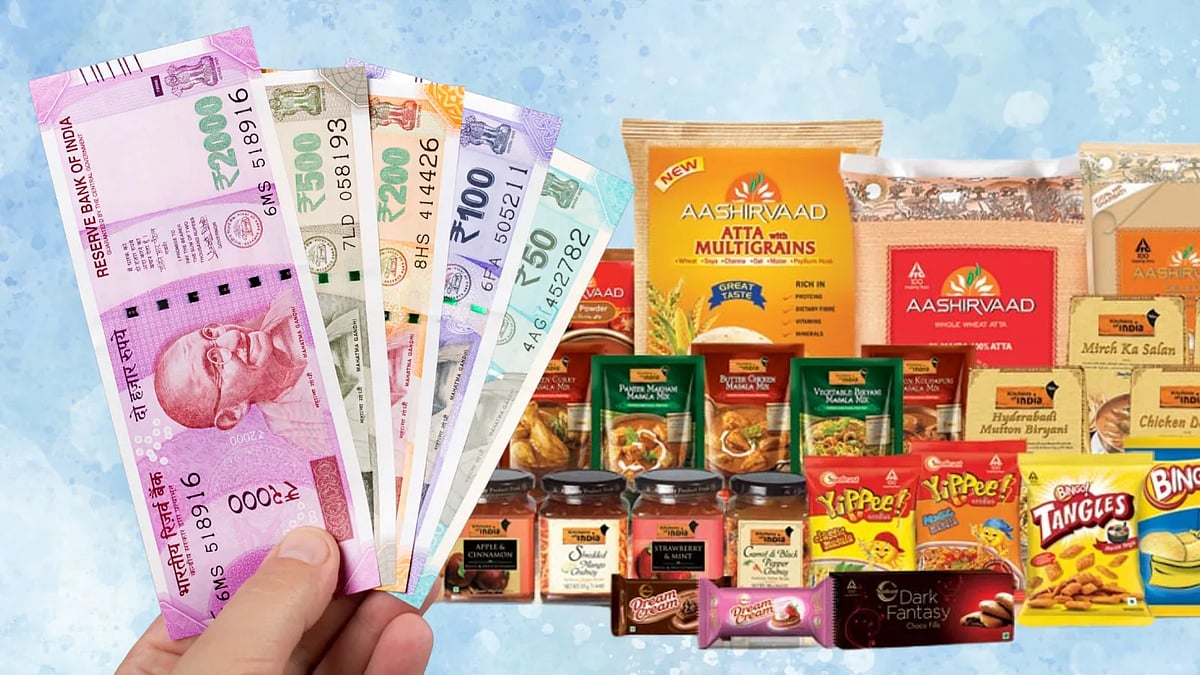
    ITC expects consumer spending on its Aashirvaad brand to double from over ₹10,000 crore to ₹20,000 crore within the next five years. The company plans to grow its core atta business while expanding into ready-to-cook, frozen, and other food categories.

    Hemant Malik, Chief Executive Officer of ITC’s Foods Division and Executive Director at ITC Ltd, said the brand is on track to reach the new spending target by 2031. “We will double in the next five years,” Malik stated.

    ITC Expands Aashirvaad Beyond Atta

    Aashirvaad entered the Indian market in May 2002 as a whole wheat atta brand. Since then, ITC has expanded it into staples, spices, fresh foods, and frozen products. The brand now has more than 200 stock-keeping units across different food categories.

    ITC currently manufactures Aashirvaad products at 66 facilities across India. This network allows the company to serve consumers in different regions and support wider distribution, while also enabling shorter delivery times.

    In FY26, ITC’s entire FMCG portfolio reached around 28 crore households and recorded nearly ₹37,000 crore in consumer spending. Consumer spending includes net sales, channel margins, and applicable taxes paid by buyers.

    ITC sees more room for growth in the atta market. The company introduced multigrain, high-protein, organic, and millet-based atta variants as consumers increasingly look for products linked to nutrition, wellness, and regional food preferences.

    Aashirvaad Expands Food Portfolio

    Along with atta, ITC is using the Aashirvaad brand to enter more convenience food categories. The company introduced ready-to-cook chapatis aimed at younger households and consumers with limited cooking time. Each pack contains 10 chapatis with no added preservatives and a shelf life of five to six days.

    The wider range also includes besan, vermicelli, rava, soya chunks, frozen naans, frozen parathas, fresh chutneys, and sambar. ITC wants these products to increase the number of meals and cooking occasions in which consumers use Aashirvaad products.

    Malik said consumers increasingly look beyond price when selecting packaged food products. “Premiumisation is not merely about a higher price point. Consumers today are willing to spend on products that offer tangible value, whether through superior quality, convenience, health and nutritional benefits built through meaningful innovation,” he said.

    He also said ITC plans to enter categories where it can address specific consumer needs. “The objective is to be present in categories where ITC can meaningfully address consumer pain points through innovation and differentiation,” Malik added.

    ITC Expands Sattu Push

    ITC also added sattu to the Aashirvaad portfolio as it expands into protein-rich traditional foods. The company launched Aashirvaad Chana Sattu in Bihar, Jharkhand, and West Bengal. It also introduced Sattu Masala under Sunrise, the spice brand ITC acquired in 2020.

    The company makes Aashirvaad Chana Sattu using a traditional sand-roasting process. It sells Chana Sattu with Jeera in Bihar and Plain Chana Sattu in West Bengal and Jharkhand. ITC also introduced a ₹10 pack that provides 10 grams of protein.

    Malik said ITC wants to expand the product outside eastern India. “While we have initially launched it in the eastern markets, we see significant potential in the product. Our ambition is to scale it nationally and make ‘sattu’ a widely accessible and affordable protein option for consumers,” he said.

    The expansion of sattu, ready-to-cook foods, frozen products, and premium atta variants forms part of ITC’s plan to widen Aashirvaad’s presence across India while working toward the ₹20,000 crore consumer spending target.
  • ITC Targets ₹20,000 Crore in Aashirvaad Consumer Spend Over Five Years as Brand Expands Beyond Atta

    ITC Targets ₹20,000 Crore in Aashirvaad Consumer Spend Over Five Years as Brand Expands Beyond Atta

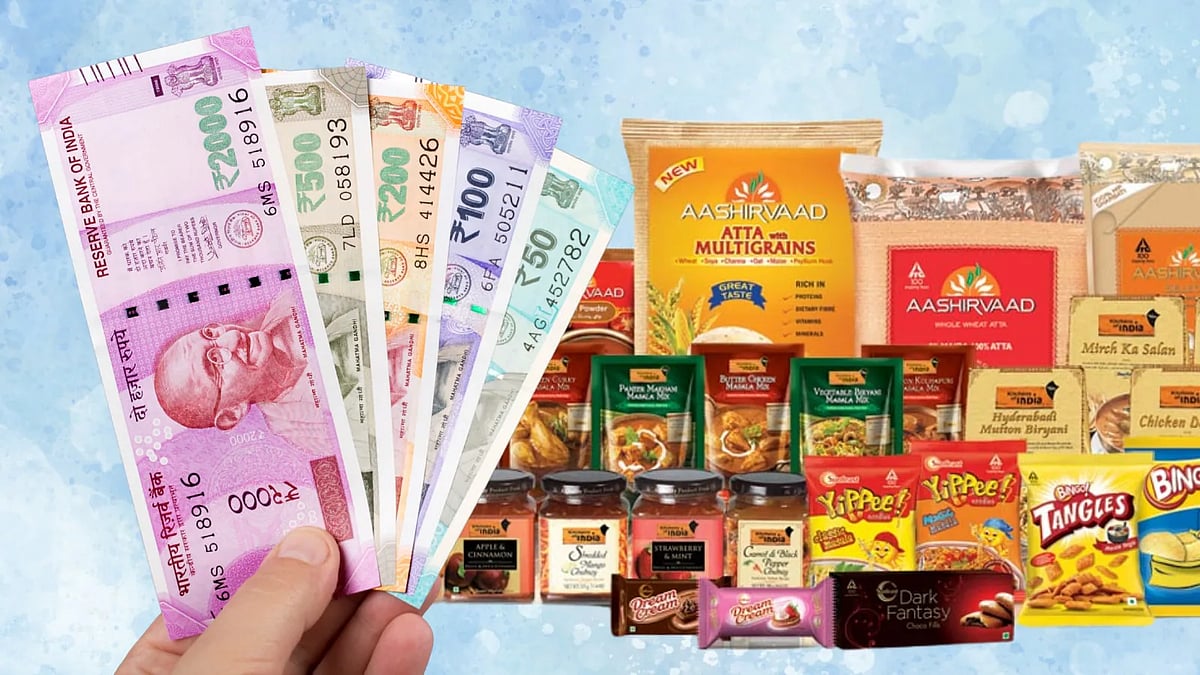
    ITC Ltd expects consumer spending on its flagship Aashirvaad brand to double from over ₹10,000 crore to ₹20,000 crore within five years, driven by expansion into ready-to-cook meals, frozen foods, and other kitchen categories.

    The company plans to grow its core atta business while adding products such as ready-to-cook chapatis, frozen naans and parathas, besan, vermicelli, rava, soya chunks, fresh chutneys, and sambar. Hemant Malik, Chief Executive Officer of ITC’s Foods Division and Executive Director at ITC Ltd, confirmed the brand would reach the new spending target in half a decade.

    “We will double in the next five years,” Malik said.

    Aashirvaad’s Journey from Atta to Full Portfolio

    Launched in May 2002 as a whole wheat atta brand, Aashirvaad has since expanded into staples, spices, fresh foods, and frozen products. The brand now carries more than 200 stock-keeping units across diverse food categories. ITC manufactures Aashirvaad products at 66 facilities across India, enabling shorter delivery times and broader distribution.

    In FY26, ITC’s entire FMCG portfolio reached around 28 crore households and recorded nearly ₹37,000 crore in consumer spending, which includes net sales, channel margins, and applicable taxes.

    Premiumisation and Convenience

    Malik noted that consumers increasingly look beyond price when selecting packaged foods. “Premiumisation is not merely about a higher price point. Consumers today are willing to spend on products that offer tangible value, whether through superior quality, convenience, health and nutritional benefits built through meaningful innovation,” he said.

    ITC is entering categories where it can address specific consumer pain points through innovation and differentiation. For example, its ready-to-cook chapatis, with no added preservatives and a shelf life of five to six days, target younger households with limited cooking time.

    Sattu Expansion

    ITC has also added Aashirvaad Chana Sattu to its portfolio, focusing on protein-rich traditional foods. The product, made using a traditional sand-roasting process, is initially available in Bihar, Jharkhand, and West Bengal. ITC also introduced Sattu Masala under the Sunrise spice brand acquired in 2020.

    “While we have initially launched it in the eastern markets, we see significant potential in the product. Our ambition is to scale it nationally and make ‘sattu’ a widely accessible and affordable protein option for consumers,” Malik said.

    The expansion into sattu, ready-to-cook foods, frozen products, and premium atta variants forms part of ITC’s broader strategy to widen Aashirvaad’s presence across India and achieve the ₹20,000 crore consumer spending goal.

  • Hindustan Unilever Shares Drop Nearly 6% After Q1 Profit Miss Despite 10% Revenue Surge

    Hindustan Unilever Shares Drop Nearly 6% After Q1 Profit Miss Despite 10% Revenue Surge

    Hindustan Unilever opened FY27 with sharply mixed signals for investors. Sales grew at its fastest pace in several quarters, but profit growth failed to keep up, triggering a nearly 6% tumble in its share price on the National Stock Exchange (NSE).

    Shares of India’s largest consumer goods maker fell sharply after the Q1 results. While sharp stock reactions like this are common in the FMCG sector, a profit miss often outweighs strong top-line growth in the short term.

    Stock Tumbles Nearly 6% After Results

    Hindustan Unilever shares (HINDUNILVR) were trading at Rs 2,045.80 on the NSE. According to TradingView, the stock was down close to 5.92% during the session on July 28, 2026. The stock briefly touched its 52-week low zone during the session, and trading volumes surged well above recent averages, pointing to heavy selling pressure right after the earnings release.

    Profit Falls on Tough Base and Higher Costs

    Consolidated net profit fell 3% year-on-year to Rs 2,673 crore, compared to Rs 2,756 crore in the same quarter last year. Rising input costs weighed on the bottom line this quarter.

    EBITDA Margin Holds Within Guided Range

    EBITDA rose 8.4% to Rs 3,947 crore, up from Rs 3,640 crore. The EBITDA margin stayed at 23%, remaining within the range management had earlier guided for FY27.

    Revenue Growth Stays Strong Across Categories

    Revenue from operations grew 10.1% to Rs 17,341 crore this quarter. Underlying volume growth came in at 5%, a healthy pace for the sector. Pricing and volume both contributed equally to this growth.

    Home care was the clear standout this quarter. Its revenue rose 13.4% to Rs 6,554 crore. Underlying sales growth of 14% marked its best show in three years.

    Segment-Wise Revenue Performance in Q1 FY27

    Beauty and wellbeing revenue grew 12.4% to Rs 4,083 crore this quarter. Premium skin care and hair care posted double-digit growth, while foods revenue rose 6.8% to Rs 3,480 crore on steady demand for staples.

    Personal care stayed the weakest link again this quarter. Revenue rose just 3.3% to Rs 2,624 crore. Pricing drove most of the gain, while volumes slipped slightly.

    Leadership Stays Focused on Volume-Led Growth

    CEO Priya Nair called the quarter resilient despite a volatile external backdrop. She pointed to ongoing investments in market development and portfolio transformation, which she said are building a stronger, future-ready business.

    Nair added that the near-term focus stays on volume-led revenue growth. Investments in channel expansion and premium products should support performance ahead. Management gave no signal of a near-term change in strategy.

    Market Outlook

    HUL’s revenue strength points to healthy consumer demand across most categories. The sharp stock fall appears tied more to sentiment than fundamentals. Investors should watch margin trends and personal care recovery in coming quarters.

    Hindustan Unilever delivered strong sales growth this quarter, even as profit growth disappointed the Street. Home care and beauty segments both posted their best show in years, pointing to a business still gaining consumer traction. The sharp stock reaction looks driven by short-term market sentiment rather than any deeper weakness. As costs ease and personal care regains pace, Hindustan Unilever’s scale should keep supporting its long-term standing in India’s consumer goods space.

  • Parle Products Files for Rs 9,530 Crore IPO at Over Rs 1 Lakh Crore Valuation

    Parle Products Files for Rs 9,530 Crore IPO at Over Rs 1 Lakh Crore Valuation

    Parle Products, the iconic Indian company behind Parle G, Melody, and other household brands, is reportedly preparing for a blockbuster initial public offering (IPO) that could raise more than Rs 9,530 crore and value the company at over Rs 1 lakh crore. If finalized, the listing would be one of the largest consumer-sector IPOs in India.

    According to media reports, Parle Products has selected top investment banks—Kotak Mahindra Capital, HSBC Securities, and Axis Capital—as advisors for the proposed IPO. Another bank may join later. The issue is expected to be structured primarily as an offer for sale, meaning existing shareholders will sell part of their stakes rather than the company raising fresh capital.

    The company has not confirmed the reports. Chief Marketing Officer Mayank Shah stated that Parle Products does not comment on market speculation but regularly evaluates options to support future growth.

    Strong Brand Portfolio and Financial Health

    Founded in 1929, Parle Products is one of India’s most trusted food companies. Its brands include Parle G, Melody, Monaco, Hide & Seek, KrackJack, Poppins, Mazelo, Kaccha Mango Bite, and 20-20 Cookies. These products are available across India and in many international markets.

    Financially, the company has shown steady growth. In FY25, operational revenue rose 8.5% to Rs 15,568.49 crore, while total income reached Rs 16,190.98 crore. However, net profit fell 39% to Rs 979.53 crore due to higher raw material costs.

    Impact on India’s Consumer Market

    A successful IPO would bring one of India’s most-loved consumer brands to the stock market, potentially encouraging other family-owned businesses to go public. The timing aligns with the expansion of India’s packaged food industry, which the India Brand Equity Foundation estimates will grow from about Rs 1.16 lakh crore in 2025 to nearly Rs 1.64 lakh crore by 2030.

    Investors are now waiting for an official announcement regarding the IPO size, valuation, and timeline. If executed, the Rs 9,530 crore IPO could become a landmark event in India’s FMCG and capital markets sectors.

  • Indian Stock Market Today: Sensex Rises to 76,865, Nifty50 Approaches 23,981 as Auto and FMCG Sectors Drive Gains

    Indian Stock Market Today: Sensex Rises to 76,865, Nifty50 Approaches 23,981 as Auto and FMCG Sectors Drive Gains

    Indian benchmark indices traded higher on July 1, 2026, showing resilience amid global geopolitical tensions. The Sensex gained 0.51% to close at 76,865.87, while the Nifty50 rose 0.48% to reach 23,980.80. Buying interest was led by the auto, FMCG, and media sectors, while metal stocks faced selling pressure.

    Key Takeaways

    • Nifty50 climbed 115.05 points (+0.48%) to 23,980.80; Sensex added 387.20 points (+0.51%) to 76,865.87.
    • Top sectoral performers: FMCG, Auto, and Media. Weakest sector: Metal.
    • IPO market remains active with Knack Packaging IPO opening and several SME IPOs continuing subscription.

    Market Performance

    Despite heightened uncertainty from U.S.-Iran tensions, domestic markets stayed positive. Large-cap stocks provided strong support, with Mahindra & Mahindra, Titan Company, and Eternal emerging as top gainers on the Nifty50.

    Broader Markets

    The Nifty MidCap index inched up 0.21%, and the Nifty SmallCap index rose 0.41%, indicating healthy investor participation beyond blue chips.

    Sectoral Highlights

    • Top sectors: FMCG, Auto, and Media recorded strong gains.
    • Weakest sector: Nifty Metal dropped the most, dragged by selling pressure.

    IPO Activity

    Knack Packaging launched its Rs. 439.5 crore IPO on July 1. Six SME IPOs entered the second day of subscription: Kratikal Tech, Vinit Mobile, Sampark India Logistics, Seemax Resources, Atharva Polyplast, and Teja Engineering Industries. Meanwhile, Aastha Spintex (Rs. 170 crore) and Adon Agro Commodities (book-built issues) reached their final subscription day.

    FAQs

    1. How did the Indian stock market perform on July 1, 2026?
    The market showed strong resilience. Sensex rose 0.51% to 76,865.87 and Nifty50 climbed 0.48% to 23,980.80.

    2. Which stocks led the gains?
    Mahindra & Mahindra, Titan Company, and Eternal were the top Nifty50 gainers.

    3. Which sectors outperformed?
    FMCG, Auto, and Media sectors led; Metal sector declined the most.

    4. How did mid-cap and small-cap stocks fare?
    MidCap index rose 0.21%, SmallCap index gained 0.41%, reflecting broad-based confidence.

    5. What IPO activity was reported?
    Knack Packaging IPO opened for subscription, six SME IPOs continued, and two IPOs (Aastha Spintex, Adon Agro) entered final day.

    Disclaimer: This article is for informational purposes only and does not constitute investment advice. Always conduct your own research before making any investment decisions.