
Tag: food delivery

  • How AI and Business Intelligence Are Transforming Food Delivery

    How AI and Business Intelligence Are Transforming Food Delivery

    The global online food delivery market is on track to generate more than $1.5 trillion in revenue by the end of 2026, according to Statista, with projections reaching $2.05 trillion by 2031. What started as a niche convenience has become a massive global industry, with platforms like Uber Eats, Zapp, Just Eat, and Deliveroo competing for dominance in markets such as the UK. As the sector prepares for another five years of aggressive expansion, food delivery companies are turning to data-driven technologies to win customer loyalty and increase market share.

    Turning Customer Data into a Competitive Edge

    Food delivery firms are no longer relying on generic marketing. Instead, they are analyzing customer behavior to deliver more personalized and intuitive experiences. Deliveroo, for example, uses Amazon Web Services’ machine learning tools to understand real-time ordering patterns. By leveraging Amazon SageMaker, the company builds and deploys ML models that process historical order frequency, price points, and cuisine preferences, generating a unique restaurant feed for each user. This approach enables targeted marketing campaigns and keeps customers engaged far longer than traditional blanket promotions.

    The same pattern appears across other web-based industries. In iGaming, for instance, platforms tailor promotions to new customers or those who play at specific times, such as after 6 PM. Food delivery has adopted this playbook, using business intelligence (BI) to anticipate when a customer might order again and issuing special offers or milestone rewards that build brand affinity.

    Building a User-Centric Experience

    Rather than sending the same email to every subscriber, platforms are using BI to connect with customers on a more personal level. DoorDash developed a unified consumer memory BI engine that monitors long-term behavior, including dietary habits and average basket size. The system identified valuable patterns, such as a user’s tendency to try a new cuisine on a particular day of the week.

    This long-term memory powers DoorDash’s AI assistant, Ask DoorDash. During a chat session, the assistant retrieves stored preferences in real time, allowing it to build personalized grocery carts or suggest meals. By combining this long-term memory with real-time session intent, DoorDash reported a 24% increase in grocery checkout conversions and a 17% rise in basket sizes.

    Uber Eats is also pushing the boundaries of personalization. The company applies graph learning, an advanced form of machine learning, to map complex relationships among users, dishes, and restaurants. By analyzing millions of order patterns, Uber Eats uncovers specific taste preferences and suggests cuisines or local venues before the user even searches. The app merges these smart recommendations with real-time updates on kitchen prep times and delivery routes, driving higher order frequency and long-term customer retention.

    Raw Data Is No Longer Enough

    In a trillion-dollar market expected to grow exponentially, raw data alone cannot deliver the level of personalization consumers now expect. By combining business intelligence and machine learning, food delivery companies are moving away from static menus toward intuitive, context-aware experiences that respond to individual habits and preferences. The winners in this space will be those that can turn data into meaningful, real-time actions that keep customers coming back.
  • DoorDash Air Launches: The Rise of Drone Food Delivery

    DoorDash Air Launches: The Rise of Drone Food Delivery

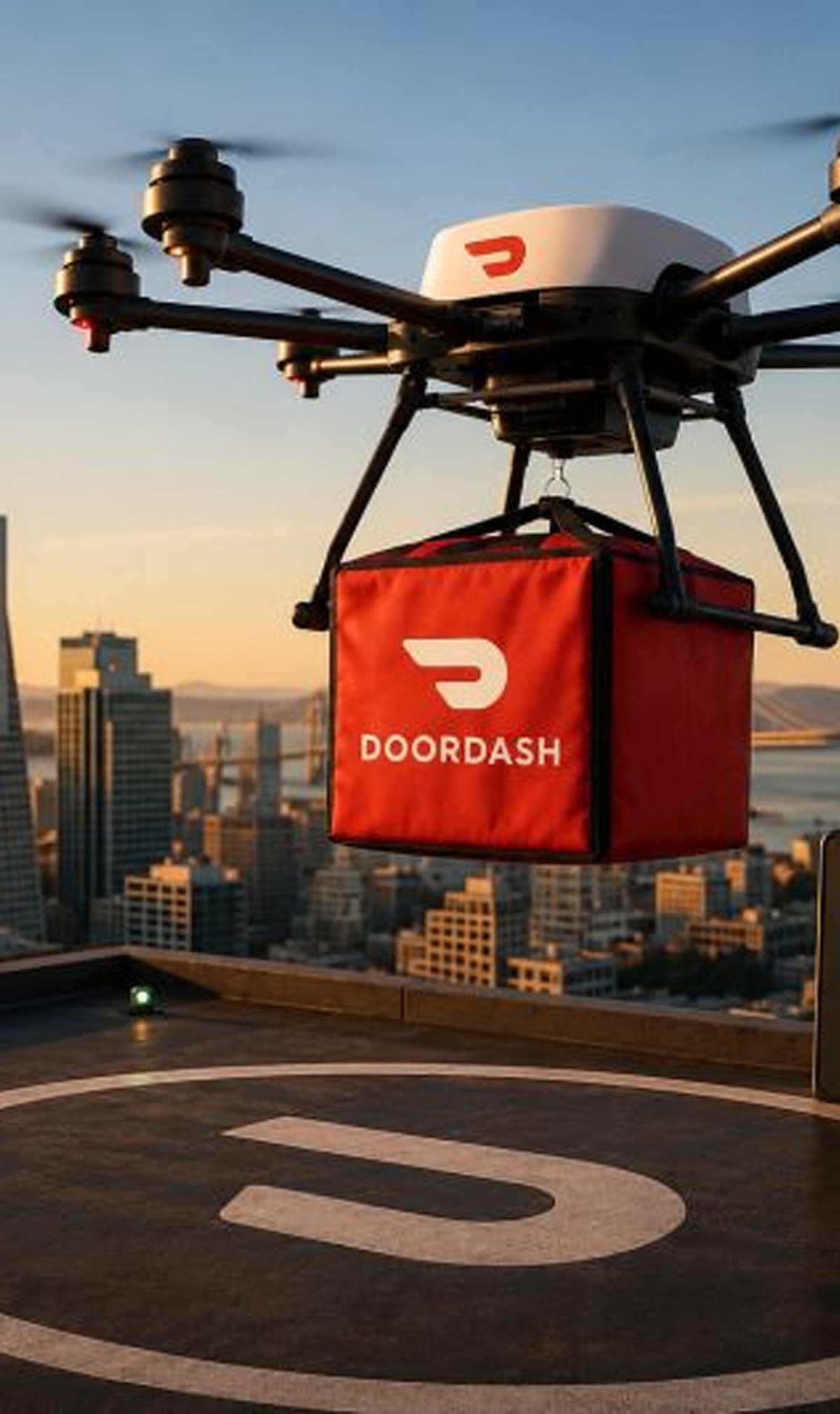
    DoorDash has introduced DoorDash Air, its in-house drone delivery service designed to make food deliveries faster and more efficient than traditional methods. Using advanced autonomous drones, the service transports food orders directly from restaurants to customers via GPS-guided flight, bypassing road traffic.

    Key features of DoorDash Air include:

    • Lightning-Fast Delivery: Drones fly above traffic, enabling customers to receive meals much quicker, especially during peak hours.
    • Live Order Tracking: Customers can monitor drone flights in real time and receive accurate estimated delivery updates through the DoorDash app.
    • Safety Systems: Every drone is equipped with intelligent navigation, obstacle avoidance, and automated flight controls to ensure safe operations.
    • Restaurant Advantage: Businesses benefit from faster deliveries, reduced dependence on drivers, and improved customer satisfaction during busy periods.
    • Eco-Friendly Operations: Electric drones reduce carbon emissions and support cleaner, more sustainable last-mile delivery solutions.

    DoorDash plans to expand drone deliveries into more cities as approvals and infrastructure develop. DoorDash Air represents the next phase of food logistics, combining AI, automation, and aviation technology to transform how we receive food.

  • Flipkart Gears Up to Challenge Zomato and Swiggy with Low-Cost Food Delivery

    Flipkart Gears Up to Challenge Zomato and Swiggy with Low-Cost Food Delivery

    Flipkart, the Walmart-owned e-commerce giant, is preparing to enter India’s competitive food delivery market with a disruptive low-commission model. The company is set to launch its service in Bengaluru around August 15, with initial reports indicating that restaurants across the city are already being onboarded onto the platform.

    One of the most striking aspects of Flipkart’s entry is its proposed 10% commission rate for restaurant partners, significantly lower than the 16% to 30% typically charged by established players like Zomato and Swiggy. This aggressive pricing strategy could attract restaurants looking to reduce operational costs and pass on savings to customers.

    Flipkart’s foray into food delivery is expected to shake up a market that has long been dominated by Zomato and Swiggy. Reports suggest that Flipkart is taking a different approach than its competitors, exploring the Open Network for Digital Commerce (ONDC) as part of its long-term strategy to scale its food delivery business. This move aligns with the Indian government’s push for open, interoperable e-commerce.

    Flipkart CEO Kalyan Krishnamurthy has confirmed that the rollout will be phased. The company will first test the service with a limited set of users, gather feedback, refine the offering, and then scale it up. This cautious approach indicates Flipkart aims to deliver a polished experience from the outset.

    Flipkart brings several advantages to the table, including a vast existing customer base, one of the country’s largest delivery networks, and the financial backing of Walmart. These strengths could help the company gain significant traction soon after its launch.

    However, food delivery is a challenging business. Low commissions alone will not guarantee success. Fast and reliable delivery partners, efficient logistics, and excellent customer service are equally crucial. Zomato and Swiggy have spent years building these capabilities. If Flipkart wants to be a serious contender, it must match their operational excellence.

    Flipkart’s entry could inject much-needed competition into India’s food delivery market. If it can deliver both great service and lower costs, it could become a strong alternative for both restaurants and consumers. The coming months will reveal whether this new player can carve out a significant share of the market.

  • Uber to Acquire Delivery Hero in $14.8 Billion Deal to Expand Global Food Delivery Network

    Uber to Acquire Delivery Hero in $14.8 Billion Deal to Expand Global Food Delivery Network

    Uber is making a major play in the food delivery market. The company announced it will acquire Delivery Hero’s food delivery business in a deal valued at $14.8 billion. Under the terms, Uber will pay Delivery Hero shareholders €41.50 per share in cash.

    Dara Khosrowshahi, CEO of Uber, said, “By bringing our platforms together, Uber will extend affordable, reliable delivery to many millions more people in some of the world’s most dynamic economies, while creating more opportunities for merchants and couriers.”

    The acquisition will be financed through a mix of cash and shares. Once completed, Uber will gain a stronger foothold in markets where Delivery Hero already has a large customer base. This is one of the largest deals in the food delivery industry in recent years.

    Additionally, Uber has committed to investing €2 billion in Germany through 2031, focusing on developing its local corporate workforce and expanding its nationwide business. Niklas Östberg, Co-Founder and CEO of Delivery Hero, commented, “This acquisition and Uber’s planned investment in Germany demonstrate the attractiveness of the European tech ecosystem, and we intend to keep contributing to its growth.”

    For consumers, the deal could mean faster deliveries and more choices. A larger delivery network typically leads to more delivery partners and better coverage, potentially reducing wait times, especially in busy urban areas.