
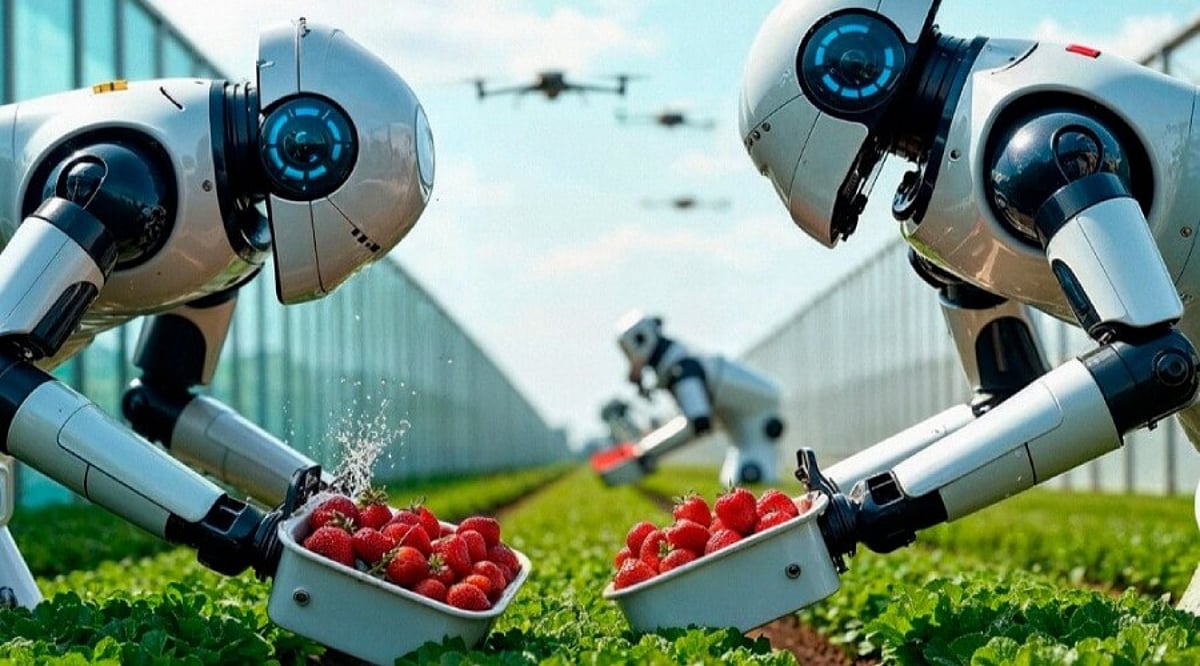
In the food and beverage (F&B) sector, artificial intelligence (AI) and robotics are reshaping how the industry operates, addressing labor shortages, rising production costs, stricter food safety regulations, and evolving consumer demand. While conventional automation relies on manual analysis of production data, AI systems can automatically analyze data in real-time, detect quality problems, forecast equipment failures, and optimize manufacturing processes with minimal human intervention. Combined with robotics, these technologies are creating smarter, faster, and more efficient production facilities.
Smarter Production Through AI
AI enhances nearly every aspect of food production. Machine learning models help manufacturers predict demand more accurately, minimizing inventory waste and optimizing production planning. Computer vision systems inspect products at high speed, detecting defects, contamination, or packaging issues that are difficult for the human eye to catch. AI also powers predictive maintenance, tracking equipment performance and predicting potential failures before they cause costly downtime. This reduces maintenance expenses and boosts production uptime.
According to Grand View Research, the global AI in food and beverages market is projected to grow from $22.6 billion in 2026 to $84.7 billion by 2030, at a compound annual growth rate (CAGR) of 39%.
Robotics Enhances Speed and Food Safety
Robotic systems are increasingly handling repetitive, hygienic tasks such as sorting, cutting, filling, packaging, pick-and-place, and palletizing. Humans can fall short in accuracy and pose greater contamination risks, whereas robots perform precisely and without contamination. Collaborative robots, or cobots, are also being deployed in food processing plants. These machines work alongside human workers, augmenting their abilities in physically draining or repetitive tasks while ensuring safety and productivity.
The global food robotics market is expected to expand at a CAGR of 20.9% from 2026 to 2034, reflecting a growing trend of automation investments in the food sector.
Real-World Adoption Is Accelerating
AI-powered robotic systems are being deployed on a large scale. Chef Robotics recently announced that its AI-powered food preparation robots have prepared over 100 million meals in North America and Europe, continuously increasing the number of meals they can prepare per minute. Meanwhile, advanced robotics manufacturers are developing intelligent systems that enable greater precision and adaptability in handling delicate food products.
Challenges Ahead
Despite rapid progress, several barriers remain. High implementation costs, integration with legacy production lines, cybersecurity concerns, and a shortage of skilled workers are major challenges, especially for small and medium-sized enterprises (SMEs). Building trustworthy AI models also requires extensive, high-quality production data.
Outlook
AI and robotics are no longer just research projects in food manufacturing; they are increasingly seen as strategic investments. AI-powered quality checks, predictive maintenance, automated material handling, and intelligent production planning are expected to become standard as technology evolves and implementation costs decrease.
Frequently Asked Questions
- How is AI used in food and beverage manufacturing? AI helps optimize production planning, forecast demand, inspect product quality using computer vision, and predict equipment failures through predictive maintenance, improving efficiency while reducing waste and downtime.
- What tasks do robots perform in food processing plants? Robots handle repetitive, hygiene-sensitive tasks such as sorting, cutting, packaging, filling, palletizing, and pick-and-place operations, improving consistency, reducing contamination risks, and enhancing productivity.
- What are collaborative robots (cobots)? Cobots are designed to work safely alongside human employees, assisting with repetitive or physically demanding tasks so workers can focus on higher-value activities while improving safety and efficiency.
- What challenges are slowing AI and robotics adoption? Major challenges include high implementation costs, integration with existing lines, cybersecurity risks, limited access to quality production data, and a shortage of skilled professionals.
- What is the future of AI and robotics in the food industry? As technology becomes more affordable, AI and robotics will become standard in food manufacturing, leading to smart factories that improve food safety, production efficiency, sustainability, and supply chain resilience.