Tag: Ford

  • Ford Fathom EV Pickup: 7 Key Facts About the Affordable Electric Truck

    Ford Fathom EV Pickup: 7 Key Facts About the Affordable Electric Truck

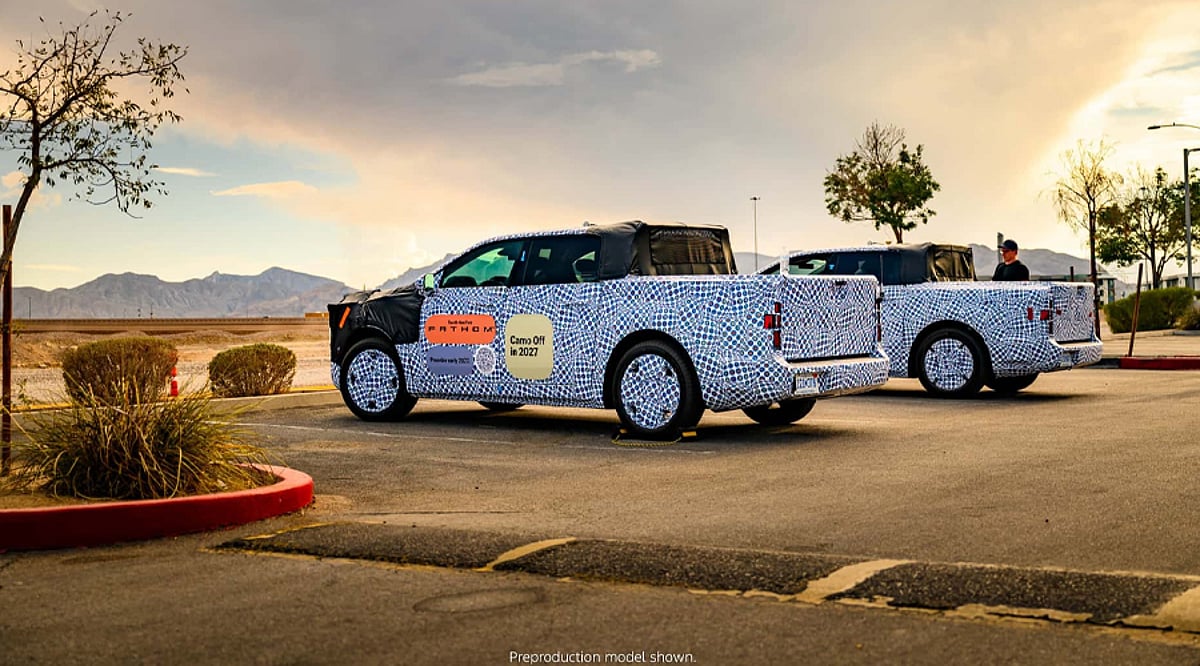
    The Ford Fathom is an upcoming midsize electric pickup from Ford, built on the automaker’s new Universal EV Platform. Aimed at buyers seeking a practical electric truck with everyday usability, modern technology, and a price below many existing options, the Fathom promises to make EV ownership more accessible.

    Starting Price

    The Ford Fathom will start at $28,350 before destination charges. This sub-$30,000 price point places the electric pickup within reach of buyers who may have previously considered EVs too expensive. Ford is positioning the truck around affordability while retaining the core utility expected from a pickup.

    Five-Seat Cabin

    The Fathom will offer seating for five adults, making it suitable for families and everyday commuting. Ford says the truck is designed to provide more projected passenger volume than the Toyota RAV4. This combination gives the electric pickup a practical focus beyond traditional work-oriented truck duties.

    Universal EV Platform

    The Fathom will be the first Ford vehicle built on its Universal Electric Vehicle Platform. The architecture is designed around cost efficiency, simplified manufacturing, and electric powertrain integration. Ford is developing the platform as part of a broader strategy to produce more affordable electric vehicles at higher volumes.

    BlueCruise Support

    Every Fathom will include hardware supporting Ford’s BlueCruise driver assistance technology. The system enables hands-free driving on designated compatible roads when conditions allow. Its inclusion gives the electric pickup access to one of Ford’s established driver assistance technologies while keeping the vehicle focused on everyday usability.

    Bidirectional Power

    The Fathom will combine conventional pickup utility with several electric-specific features. Ford has highlighted a frunk, truck bed, digital key, and bidirectional power capability. These features expand storage options and allow the truck’s battery to provide power for compatible equipment, devices, or other uses.

    Production Plans

    Ford plans to open Fathom pre-orders in early 2027, while preparations for prototype production are underway. The truck will be produced at Ford’s Louisville Assembly Plant. Its launch will mark an important step in bringing the company’s Universal EV Platform to the market.
  • Top 9 Automakers Dominating Global Vehicle Sales in 2026

    Top 9 Automakers Dominating Global Vehicle Sales in 2026

    The global automotive landscape is shifting rapidly, with established giants and emerging EV leaders vying for dominance. Based on current sales trajectories and market trends, these nine car brands are expected to lead worldwide vehicle sales in 2026.

    Toyota – Continues to dominate global vehicle sales with its dependable models, hybrid leadership, and an unmatched worldwide manufacturing network.

    Volkswagen – Maintains strong demand across markets thanks to a broad portfolio of passenger cars, SUVs, and a growing lineup of electric vehicles.

    BYD – Has emerged as one of the fastest-growing automakers by offering affordable EVs, leveraging battery innovation, and rapidly expanding internationally.

    Honda – Attracts millions of buyers with reliable cars, efficient engines, and strong hybrid offerings across major global markets.

    Hyundai – Expands market share through stylish SUVs, advanced technology, and competitive EV options tailored for modern consumers.

    Ford – Remains a global leader thanks to its bestselling pickup trucks, commercial vehicles, and continued investments in electric vehicles.

    Tesla – Sustains strong global EV demand with software-driven innovation, long-range batteries, and advanced autonomous driving technologies.

    Nissan – Retains customer confidence through practical vehicles, affordable pricing, and an expanding lineup of electrified models.

    Chevrolet – Continues delivering strong sales with versatile SUVs, pickup trucks, and growing electric vehicle options worldwide.

  • Why Major Automakers Are Splitting Investments Between EVs and Hybrids in 2026

    Why Major Automakers Are Splitting Investments Between EVs and Hybrids in 2026

    Automakers are now taking a more balanced approach to powertrain investments, splitting billions between fully electric vehicles (EVs) and hybrids. Rather than retreating from electrification, companies like Toyota, Ford, GM, Honda, and Stellantis are using hybrids to manage risk and support long-term EV goals.

    Why EV Demand Has Cooled

    Between 2021 and 2024, automakers set ambitious timelines for an all-electric future. But by 2025, EV demand slowed as several markets cut incentives and consumer interest plateaued. Toyota reduced its 2026 global EV production target to 1 million units and delayed its US EV production start. Yet Toyota remained the top-selling automaker in the US in 2025, largely thanks to strong hybrid sales. This shift signals that many buyers still prefer hybrids as a practical, affordable choice.

    Why Hybrids Are Making a Comeback

    Hybrids appeal to buyers who want better fuel economy without worrying about charging infrastructure or the higher upfront cost of many EVs. Ford is adding hybrid options across nearly its entire lineup. Honda is developing a new hybrid platform from the ground up. Stellantis, meanwhile, is moving away from plug-in hybrids in North America toward mild hybrids and range-extended models.

    Why Automakers Need Both Powertrains

    Hybrid production uses existing engine and transmission lines, existing supplier deals, and much smaller battery packs than full EVs. This reduces exposure to volatile lithium and nickel prices and helps factories stay busy while EV demand catches up. Ford expects its EV division, Model e, to turn a profit by 2029, with hybrid profits helping bridge the gap. GM took a $6 billion writedown on its EV business and is rethinking an all-electric Cadillac lineup. Stellantis is building the STLA One platform, designed to handle EV, hybrid, and gas models on the same production lines. This approach doesn’t sideline EVs—it uses hybrid profits to buy time for the industry to get electric mobility right.

    Regional Strategies Shape Powertrain Choices

    No single global strategy works for every market. Easing US emissions rules have reduced the compliance value of plug-in hybrids in some segments, leading Stellantis to retire them in North America. Europe, on the other hand, continues to push for tighter emissions standards and stronger EV incentives. North America’s uneven charging infrastructure keeps hybrids ahead in mainstream segments, while regions with robust charging networks and policy support favor EVs. Executives now describe this as running several regional strategies in parallel, rather than one transition plan with a fixed end date.

    What It Means for Buyers and Investors

    Buyers can expect more hybrid choices in mainstream segments through 2026, alongside EVs positioned carefully where charging infrastructure is mature. For investors, key metrics to watch are hybrid margins, capital committed to shared platforms like STLA One, and how fast EV divisions close their profitability gap.

    Final Thoughts

    Instead of betting solely on EVs or hybrids, automakers are competing on operational flexibility—running both powertrains on shared factories and platforms without overcommitting to either. That flexibility, more than any single technology, is shaping up as the industry’s real competitive advantage for the rest of the decade.

  • Tech Roundup: Samsung Stocks Dip, Indian Startups Thrive Under Digital Rules, Robinhood Unveils Blockchain, and Anthropic Releases Claude Sonnet 5

    Tech Roundup: Samsung Stocks Dip, Indian Startups Thrive Under Digital Rules, Robinhood Unveils Blockchain, and Anthropic Releases Claude Sonnet 5

    Good morning! Here’s your quick roundup of today’s biggest developments across semiconductors, digital policy, enterprise AI, cryptocurrency, and generative AI.

    What’s New Today

    • South Korean technology stocks took a hit after a Nasdaq-led selloff.
    • India’s digital regulatory measures are helping startups scale rapidly.
    • Ford is hiring hundreds of engineers despite the rise of AI automation.
    • Robinhood launched its own public blockchain for tokenized assets.
    • Anthropic released Claude Sonnet 5 with improved agentic AI capabilities.

    Fast-Track Insights

    • Samsung and SK Hynix shares decline amid global tech weakness.
    • India’s digital ecosystem strengthens startup growth.
    • Ford adds 350 engineers to support product development.
    • Robinhood launches a public blockchain for tokenized assets.
    • Claude Sonnet 5 expands AI capabilities with API access.

    Samsung and SK Hynix Shares Fall After Global Tech Selloff

    Samsung Electronics and SK Hynix stocks fell amid an acute selloff in U.S. tech shares on the Nasdaq. The downturn followed rising concerns about valuations tied to artificial intelligence and semiconductor demand. Analysts, however, maintain a long-term growth outlook, citing sustained investments in AI infrastructure and memory chips.

    India’s Digital Rules Strengthen Startup Ecosystem

    An Oxford Economics report indicates that India’s evolving digital regulations are helping startups expand by boosting consumer trust, encouraging innovation, and creating a more predictable business environment. The study highlights that balanced policies are supporting investment, digital adoption, and economic growth, enabling emerging companies to compete more effectively in the technology sector.

    Ford Hires Engineers Despite AI-Driven Automation

    Ford is looking to hire approximately 350 engineers, recognizing that AI cannot fully replace human skills in automobile production. Experts note that while AI can increase productivity, it is not a substitute for human engineering creativity, product design, and safety expertise. The hiring drive reflects the lasting importance of human talent in modern vehicle development.

    Robinhood Launches Public Blockchain for Tokenized Assets

    Robinhood has introduced its own public blockchain, deepening its engagement with digital assets. The blockchain will support tokenized financial products and fast transactions. This development marks a significant step for Robinhood in the blockchain space.

    Claude Sonnet 5 Brings More Agentic AI Capabilities

    Anthropic has launched Claude Sonnet 5, its latest AI model featuring enhanced reasoning, coding, planning, and tool-use capabilities. The model is available through the Claude API, Claude Code, Amazon Bedrock, Google Cloud, and other platforms. Sonnet 5 now serves as the default model for Free and Pro users, while offering developers improved performance at lower API pricing.

  • Ford Brings Back Hundreds of Engineers After AI-Driven Quality Issues Led to Billions in Warranty Costs

    Ford Brings Back Hundreds of Engineers After AI-Driven Quality Issues Led to Billions in Warranty Costs

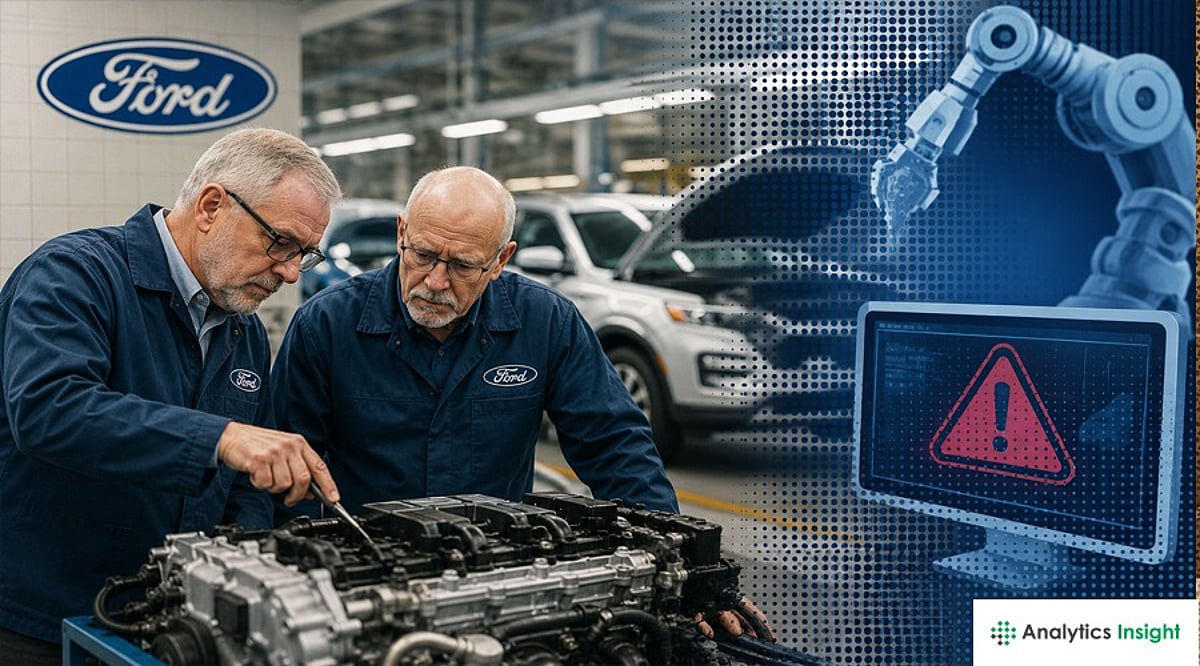
    Ford Motor Company has begun rehiring hundreds of veteran engineers following a series of quality problems and skyrocketing warranty expenses that exposed the limits of relying too heavily on artificial intelligence. The automaker’s renewed focus on experienced talent marks a significant shift after years of investing in AI-led quality control that ultimately failed to deliver expected results.

    This strategic pivot underscores a costly lesson: while AI can process vast amounts of data and accelerate certain tasks, it cannot replace decades of hands-on engineering expertise. After suffering substantial quality-related losses, Ford is now returning to a model where AI supports engineers rather than replacing them.

    Hundreds of Experienced Engineers Return

    Approximately 350 engineers and technical experts who had retired or left the company are being rehired. Their deep institutional knowledge will be applied to developing new vehicles and improving product quality.

    Charles Poon, Ford’s Vice President of Vehicle Hardware Engineering, acknowledged that the company had underestimated the value of experienced engineers. He noted that years of institutional knowledge walked out the door with retiring employees, leaving a gap that AI systems could not fill despite advances in automation.

    Ford has also reinstated engineer-led design reviews, giving senior technical teams a larger role in evaluating products before they move into production.

    Early Results Show Improvement

    The new approach appears to be paying off. Ford recently earned the top spot among mass-market brands in the 2026 J.D. Power Initial Quality Study — its best performance since 2010. The company has also trimmed warranty spending by identifying manufacturing and design problems earlier, during the development phase, so fewer defects reach customers.

    Still, Ford remains the automaker with the most recalls in the U.S. this year, though many of those recall actions are linked to older vehicle programs rather than newly launched models.

    AI Remains Part of Ford’s Future

    Despite the strategic shift, Ford is not abandoning artificial intelligence. The company continues to use AI for software validation, automated testing, and manufacturing analysis — with more than 100,000 software tests now handled through AI-assisted systems.

    Executives say the company’s approach has changed, not its commitment to technology. AI will continue to play a role in increasing efficiency and decision-making, but skilled engineers remain indispensable in manufacturing.

    Ford’s initiative serves as a cautionary tale for companies adopting AI in manufacturing: technology can assist engineering, but it cannot replace human expertise.