
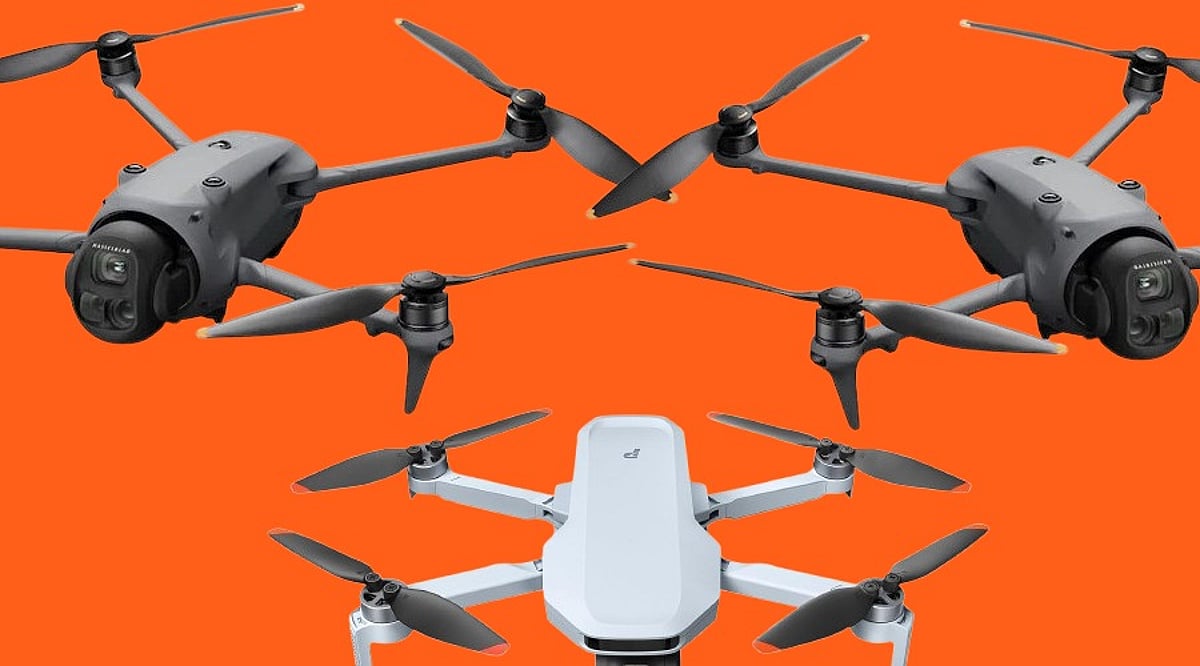
Tag: FPV drones

  • 2026’s Best Budget Drones: Affordable Options for Beginners and Creators

    2026’s Best Budget Drones: Affordable Options for Beginners and Creators

    Introduction

    Budget drones have come a long way, now offering stabilized 4K video, GPS-assisted flight, and intelligent shooting modes without breaking the bank. Whether you’re a beginner learning to fly, a traveler capturing memories, or a content creator looking for aerial shots, there’s a cheap drone that fits your needs. In this guide, we highlight the best budget drones in 2026, covering different use cases and budgets.

    Top Budget Drones in 2026

    DJI Neo – Best for Vloggers and Hands-Free Filming

    Weighing just 135g, the DJI Neo records 4K video with electronic image stabilization. It offers palm launch and landing, target tracking, QuickShots, and full propeller guards. With 18 minutes of flight time, it’s ideal for vloggers and tourists who want effortless footage. Note: it lacks obstacle avoidance.

    DJI Mini 4K – Best Overall Budget Drone

    The DJI Mini 4K features a 12MP camera on a 1/2.3-inch sensor, shooting 4K video with a three-axis mechanical gimbal. It flies up to 31 minutes, includes GPS, and comes with a physical controller for precise piloting. Level 5 wind resistance makes it suitable for outdoor flights.

    Holy Stone HS720G – Best for Affordable GPS Flying

    This foldable GPS drone has a 4K camera with a two-axis gimbal and up to 26 minutes of flight time. GPS features include position hold and return-to-home. It’s heavier than sub-250g drones, so less travel-friendly.

    Potensic Atom SE – Best Alternative for Travel

    Under 249g, the Potensic Atom SE records 4K at 30fps with EIS. It boasts 31 minutes flight time, GPS, 4km transmission, downward vision positioning, and a ToF sensor. Its folding design is great for travel, but it lacks a three-axis gimbal.

    Ryze Tello – Best for Learning the Basics

    At 87g, the Ryze Tello has a 5MP camera shooting 720p video and 13 minutes flight time. It’s not for serious photography but perfect for beginners to learn flying basics.

    HOVERAir X1 – Best for Automated Personal Videos

    Designed for automated filming, the HOVERAir X1 excels at follow shots and is highly portable. It’s great for vloggers but not for long-distance flying or professional photography.

    BetaFPV Cetus Pro Kit – Best for FPV Beginners

    This ready-to-fly kit includes an FPV drone, goggles, and controller, making it easy to enter the world of FPV flying. It’s not meant for photography but for immersive flying experience.

    What to Look for in a Budget Drone

    When choosing a cheap drone, consider camera quality beyond resolution: sensor size, stabilization, and processing matter. Flight time is often lower in real conditions. GPS is useful for position hold and return-to-home. Obstacle avoidance is rare in budget models. Weight and wind resistance affect portability and stability. A physical controller usually offers better control than a smartphone app.

    Frequently Asked Questions

    What is the best cheap drone in 2026?

    The best budget drone depends on your needs, but models with stabilized cameras, GPS, practical flight times, and reliable controls offer the best value.

    Are cheap drones good for beginners?

    Yes, many affordable drones now have automated modes, GPS assistance, and simplified controls, making them suitable for beginners.

    Is 4K video important in a budget drone?

    4K video adds detail, but sensor size, stabilization, and bitrate also affect quality. Don’t base your decision solely on resolution.

    How long should a budget drone fly?

    Aim for 20-30 minutes advertised flight time, but expect less in windy conditions.

    Should beginners choose GPS or FPV drones?

    GPS drones are easier for stable aerial photography, while FPV drones are for those interested in immersive manual flying.

    Conclusion

    For most beginners and creators, the DJI Mini 4K stands out as the best all-around budget drone. However, the DJI Neo and Potensic Atom SE are excellent for travel and vlogging, while the BetaFPV Cetus Pro Kit opens the door to FPV flying. Choose based on your primary use case and enjoy the world of affordable aerial creativity.
  • LiPo vs Li-Ion Drone Batteries: How to Pick the Right Power Source for Your Drone in 2026

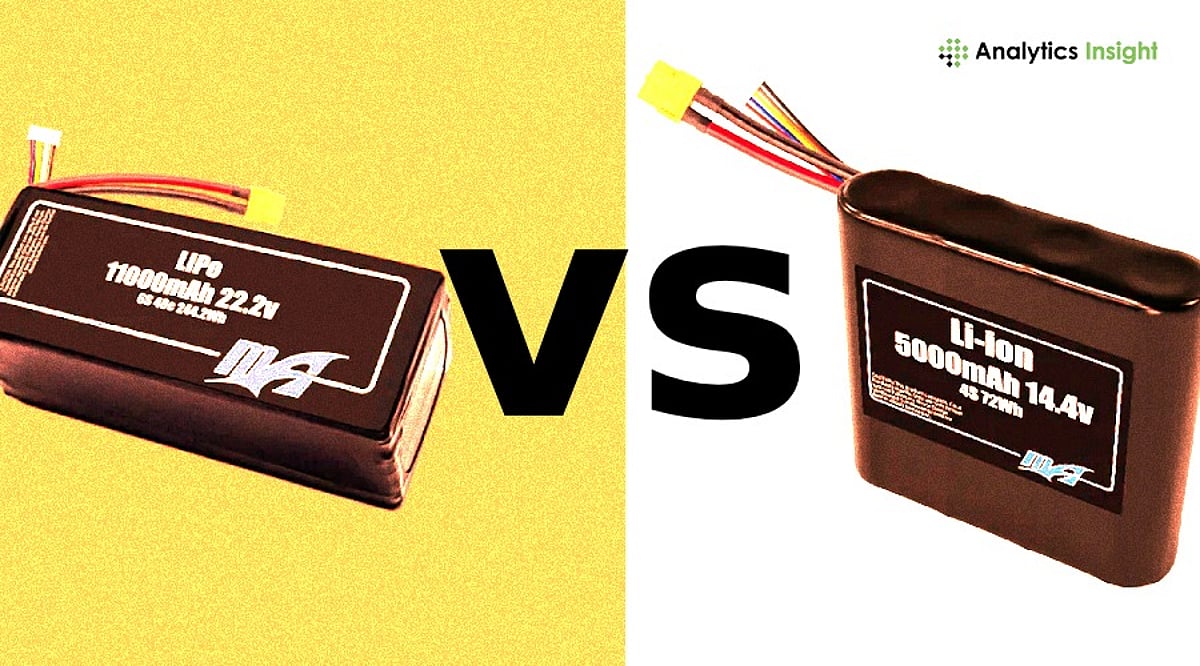
    LiPo vs Li-Ion Drone Batteries: How to Pick the Right Power Source for Your Drone in 2026

    Ask ten FPV pilots why their drone barely made it home, and most will blame the build. Only a few will point to the part that decided the outcome before takeoff. Most people ignore the fact that battery chemistry often plays a bigger role in a drone’s performance than most pilots realize.

    Same Chemistry Family, Different Builds

    Drones have moved well past being weekend toys. Racing rigs look for split-second throttle response, while survey and delivery fleets demand maximum airtime. LiPo and Li-Ion have become the two main battery choices for both types of drones. The gap between them is shifting so fast that a choice made a year ago might already be outdated.

    The split starts with construction. Li-Ion cells are built as rigid cylinders or prismatic blocks, the same format used in laptops and electric cars. LiPo cells use a flexible foil pouch filled with a polymer electrolyte instead of a rigid shell. That construction lets manufacturers mold LiPo into the thin, oddly shaped packs that fit inside a quad’s frame.

    Why Packaging Changes the Numbers

    Packaging is not just cosmetic. It carries real electrical consequences. Commercial Li-Ion cells typically achieve around 180–250 watt-hours per kilogram. Most drone-grade LiPo packs fall between roughly 130 and 200 watt-hours per kilogram, depending on cell design. A LiPo’s pouch, meanwhile, gives current a shorter, more direct path in and out of the cell. That shorter path lowers internal resistance, which means less voltage sag when a pilot slams the throttle.

    High C-rated LiPo packs remain the benchmark for aggressive throttle response, sustaining discharge rates of 50C — sometimes past 100C — without the voltage collapsing mid-maneuver. The trade-off is fragility. A punctured pouch fails far more dramatically than a dented metal can.

    Closing the Power Gap

    LiPo has held a clear advantage in high-power drone applications for years, but that gap is becoming smaller. A newer cylindrical design called a tabless cell removes the traditional spiral tab connection. Instead, it allows current to flow across a much larger part of the cell. Less resistance along that path means less heat and less sag, even under hard pulls.

    Independent cell testing already shows tabless 21700 packs closing much of the historical performance gap against older high-discharge Li-Ion cells, particularly in endurance-focused applications. Top-tier LiPo packs still hold the edge on raw peak burst current, but that edge keeps shrinking with each new cell generation.

    What Actually Wears Out

    Lifespan tells a similar story in reverse. LiPo packs typically last 300 to 500 charge cycles before capacity drops off, while Li-Ion cells last 500 to 1,000 cycles or more. Much of that durability comes from the pack, not the bare cell. Many Li-Ion battery packs include a battery management system that balances and protects each cell. Hobby-grade LiPo packs typically rely on external balancing during charging instead. A five-inch freestyle quad pulling 100 amps out of a hard punch needs LiPo’s instant power far more than it needs extra grams of capacity.

    A mapping drone flying for 45 minutes over a survey site benefits more from steady voltage and maximum airtime per gram, which is exactly where Li-Ion earns its keep. Storage habits matter just as much as the chemistry itself. A LiPo pack left fully charged for weeks loses capacity far faster than one stored near 3.8 volts per cell.

    The Real Cost Over Time

    Cost follows the same logic over time. LiPo is cheaper to buy, which still makes sense for short-term projects and tight budgets. Over the course of hundreds of missions each year, Li-Ion’s longer cycle life and lower maintenance begin to offset the higher purchase price. The exact savings depend on duty cycle and charging habits more than on any single published figure.

    One common assumption deserves correction, too. Shipping and storage rules for lithium batteries are set by watt-hour rating, not by whether a cell is a pouch or a cylinder. Neither does chemistry get an automatic pass on safety paperwork.

    Where the Technology Is Headed

    Some experimental and industrial UAV platforms are already exploring hybrid configurations that pair a Li-Ion main pack with a LiPo booster for takeoff. Several manufacturers are also demonstrating early commercial cells using semi-solid and solid-state chemistries that exceed 300 watt-hours per kilogram.

    Battery management systems are advancing alongside battery chemistry, with adaptive charging now predicting cell health rather than just monitoring voltage. Neither LiPo nor Li-Ion will disappear soon, but the line between them keeps getting thinner with each flying season.

    Final Thoughts

    The better battery has never really been about chemistry. It is about matching current delivery, energy density, and mission profile to the way a specific drone actually flies. The biggest change is the growing overlap between LiPo and Li-Ion batteries. Pilots who understand that overlap will outfly those still choosing batteries based on brand loyalty alone.

    FAQ

    1. Which is better for drones: LiPo or Li-Ion?
      Neither battery is better for every drone. LiPo is ideal for racing and freestyle drones that need high burst power, while Li-Ion is better for long-range, mapping, and inspection drones that prioritize flight time and efficiency.
    2. Why do FPV drones use LiPo batteries?
      FPV drones rely on LiPo batteries as they deliver high discharge rates with minimal voltage sag. This provides faster throttle response and consistent performance during aggressive flying.
    3. Do Li-Ion batteries last longer than LiPo batteries?
      Yes. Li-Ion batteries typically last between 500 and 1,000 charge cycles, while most LiPo batteries deliver around 300 to 500 cycles. Proper charging and storage can extend the lifespan of both.
    4. Are tabless Li-Ion cells replacing LiPo batteries?
      Not completely. Tabless Li-Ion cells improve power delivery and reduce heat, making them more suitable for demanding drone applications. However, LiPo batteries still lead in peak burst current for high-performance FPV flying.
    5. How should LiPo drone batteries be stored?
      LiPo batteries should be stored at about 3.8 volts per cell in a cool, dry place. Storing them fully charged for long periods can reduce capacity and shorten battery life.