Tag: France

  • Why France Is Investigating Camera-Equipped Smart Glasses—and What It Means for Wearable AI

    Why France Is Investigating Camera-Equipped Smart Glasses—and What It Means for Wearable AI

    French authorities have opened a criminal investigation into camera-enabled smart glasses after complaints that people, including women, were filmed in public without their consent. The case has placed the fast-growing wearable AI category under renewed privacy scrutiny.

    What prompted the investigation?

    Prosecutors in Paris launched the probe after receiving complaints tied to a social media trend in which women were reportedly recorded on streets without their knowledge and the footage was later shared online. French authorities have also tested the devices to understand how they might be used in such incidents.

    Meta glasses success and privacy concerns

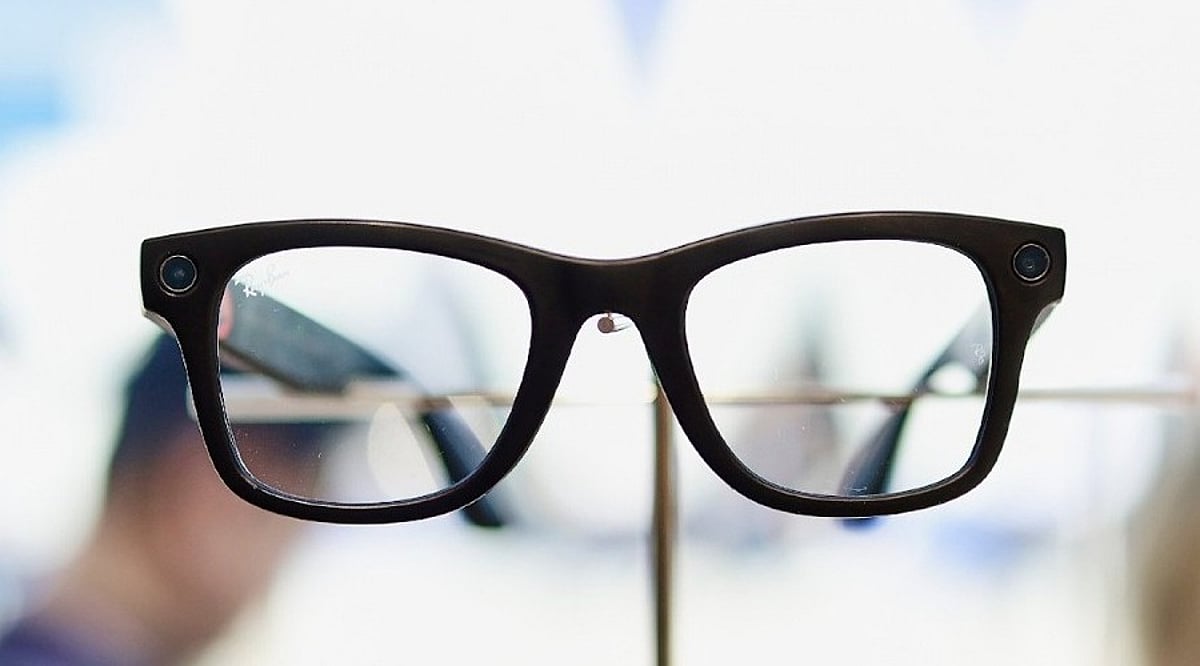
    Meta’s camera-equipped glasses, featuring built-in recording capabilities, have sold more than 7 million units worldwide. However, the integrated camera has drawn criticism since launch. France’s data protection authority, CNIL, has received fewer than 10 complaints about smart glasses being used in workplaces. Some businesses have also asked whether they can prohibit employees from using them. Privacy groups, meanwhile, have questioned whether the indicator light is sufficient to alert people that recording is taking place.

    Beyond one brand

    The issue extends beyond any single manufacturer. Smart glasses can resemble ordinary eyewear while concealing cameras, microphones, and AI tools. Australia has already announced it will ban camera-equipped smart glasses in government workplaces, citing privacy and security concerns.

    Privacy could shape the next wave of wearables

    Wearable companies may now face tougher questions about when cameras can record and how clearly users can signal that recording is happening. The debate is not limited to France; other countries are also watching closely. As smart glasses gain new cameras and AI features, their future may depend as much on public trust as on technological capability. Clear rules could become a core part of how these devices are designed and used.

  • France’s E-Invoicing Mandate: Is Your Business Ready for the 2026 Deadline?

    France’s E-Invoicing Mandate: Is Your Business Ready for the 2026 Deadline?

    The digitalization of tax administration is accelerating globally, and Europe is at the forefront. France’s Ministry of Economy, Finance, and Digital Sovereignty is implementing a groundbreaking digital tax reform that will fundamentally change how businesses handle invoicing and reporting. If your company operates in France, trades with French companies, or is subject to French VAT, understanding these new obligations is critical.

    The reform has two main components: mandatory electronic invoicing for domestic B2B transactions and mandatory e-reporting for cross-border, B2C, and overseas activities. Companies must adapt their ERP and accounting processes well before the implementation deadlines.

    Understanding the Core Architecture of France’s E-Invoicing Reform

    The French mandate rests on two pillars: mandatory electronic invoicing and dynamic e-reporting. The French tax administration (Direction Générale des Finances Publiques – DGFiP) aims to deter VAT fraud, reduce administrative burdens, and gain real-time access to economic activity.

    Unlike traditional paper or unstructured PDF invoices sent via email, e-invoicing under the new framework requires structured digital formats that enable automated machine processing. Invoices will no longer be sent directly from supplier to buyer; they must pass through validated digital channels that extract key tax data and transmit it to a national central hub.

    1. Electronic Invoicing (E-Invoicing)

    Mandatory e-invoicing targets all domestic Business-to-Business (B2B) transactions between companies established in France. Every tax-registered company must be capable of receiving structured electronic invoices, and sellers must issue them in standardized formats such as UBL 2.1, CII (Cross Industry Invoice), or Factur-X (a hybrid format combining a human-readable PDF with embedded XML data).

    2. Electronic Reporting (E-Reporting)

    Transactions outside domestic B2B scope are governed by e-reporting rules. This includes:

    • Business-to-Consumer (B2C) Transactions: Domestic and international sales to end consumers.
    • Cross-Border B2B Transactions: Intra-EU acquisitions, cross-border sales, and international import/export activities.
    • Payment Status Data: For services, payment date status must be reported to enable accurate VAT collection on an accrual or cash-received basis.

    The Regulatory Timeline: Phased Implementation Schedule

    The French government has established a phased implementation roadmap to allow businesses to progressively integrate necessary software and test data flows. While mandatory issuance is tiered by company size, every business in France must be equipped to receive structured e-invoices starting in September 2026. Waiting until 2027 is risky even for smaller enterprises, as receipt capability demands functional integration, system updates, and employee training today.

    Technical Infrastructure: PDP, PPF, and OD

    The operational framework relies on a Y-shaped architectural ecosystem designed by the French tax authority:

    • Public Billing Portal (Portail Public de Facturation – PPF): The state-run central repository that aggregates transaction data for tax oversight, provides basic free invoicing services, and routes data directly to the tax authority.
    • Partner Dematerialization Platforms (Plateformes de Dématérialisation Partenaire – PDP): Third-party certified service providers that convert non-compliant formats, validate invoice integrity, exchange invoices between platforms, and automatically route tax data to the PPF.
    • Dematerialization Operators (Opérateurs de Dématérialisation – OD): Uncertified technology vendors that can generate or process electronic invoices but cannot connect directly to the PPF or other PDPs without relying on an accredited PDP or manual intervention.

    Key Compliance Takeaway: For multinational businesses with complex ERP ecosystems like SAP, Microsoft Dynamics, or Oracle, partner integration with an accredited PDP is essential to automate high-volume invoice routing, schema transformation, and status tracking without breaking existing business logic.

    Operational Challenges and How to Prepare Your Business

    Transitioning to full compliance requires more than installing a simple software plugin. It impacts core finance, procurement, tax governance, and IT infrastructure. Organizations should undertake a systematic implementation strategy focused on:

    1. Data Governance and Master Data Cleanup

    E-invoicing validation engines rigorously inspect mandatory fields. Errors in SIREN, SIRET, or intra-community VAT numbers, customer addresses, or incorrect tax classification codes will cause instant invoice rejection. Establishing robust master data governance is step one.

    2. ERP and Financial System Alignment

    Assess your current ERP stack. Does your billing system support structured formats such as Factur-X or UBL? Does it track mandatory invoice lifecycle statuses (e.g., Deposited, Approved, Refused, Received, Payment Complete)? ERP systems must be configured to process real-time status feedback loops.

    3. Cross-Border Tax Strategy

    Ensure your tax technology stack can differentiate between domestic B2B flows (requiring e-invoicing) and cross-border or B2C flows (requiring structured e-reporting). Misclassifying transactions will result in compliance gaps and potential tax penalties.

    Future-Proofing Compliance with Integrated Solutions

    Given the shift toward real-time transaction management, maintaining separate systems for each country is unsustainable. Enterprises need scalable solutions that integrate easily with existing ERP environments. SNI Technology offers comprehensive, fully automated solutions for SAP-based compliance, helping businesses meet French e-invoicing and e-reporting requirements through automation of invoice creation, format transformation, validation, and routing via certified PDP channels.

  • Samsung Home Appliances Named Top Choice in US and France by Consumer Testers

    Samsung Home Appliances Named Top Choice in US and France by Consumer Testers

    Samsung has received international recognition for its home appliances in both the United States and France. Independent product testing organizations praised the brand for delivering reliable performance, innovative technology, energy efficiency, and user-friendly features. These achievements strengthen Samsung’s position as one of the world’s most trusted home appliance manufacturers.

    Several Samsung home appliances received high ratings from respected US consumer testing organizations. Products including refrigerators, washing machines, and kitchen appliances impressed reviewers with strong performance, durability, smart connectivity, and ease of use. These ratings reflect Samsung’s continued focus on quality and customer satisfaction across multiple categories.

    Samsung also achieved excellent results in France, where consumer organizations recognized its appliances for outstanding efficiency, dependable operation, and thoughtful design. High scores across different product categories highlight the company’s ability to meet the expectations of European households while maintaining premium quality and long-term reliability.

    Samsung’s connected home ecosystem continues to be one of its biggest strengths. Features such as AI-powered controls, SmartThings integration, remote monitoring, and energy management help users simplify daily tasks. These smart capabilities improve convenience while supporting modern lifestyles that increasingly rely on connected home technology.

    Energy-efficient performance played a major role in Samsung’s recognition. Many of its appliances are designed to reduce electricity and water consumption without compromising performance. This focus helps consumers lower utility bills while supporting environmentally friendly living, making Samsung products attractive to sustainability-conscious households around the world.

    Samsung continues to introduce advanced technologies across refrigerators, washing machines, dryers, ovens, and other household appliances. AI-powered optimization, improved cooling systems, intelligent washing cycles, and enhanced user interfaces demonstrate the company’s commitment to continuous innovation and delivering practical solutions for everyday home needs.

    Recognition from respected testing organizations in both the US and France reinforces Samsung’s reputation for quality and reliability. Consistent performance across multiple appliance categories gives buyers greater confidence when choosing Samsung products. These achievements further strengthen the company’s leadership in the competitive global home appliance market.

  • France’s Proposed Crypto Bill Overhauls Tax Rules for Airdrops, Losses, and Executive Security

    France’s Proposed Crypto Bill Overhauls Tax Rules for Airdrops, Losses, and Executive Security

    French National Assembly member Paul Midy has introduced Bill 3090, co-signed by 91 lawmakers, aiming to reform cryptocurrency taxation, enhance executive safety, and expand blockchain testing. The proposal addresses airdrops, governance tokens, capital losses, small crypto payments, company records, and security expenses. Supporters argue that current rules create tax and safety challenges for French users and digital asset firms.

    Tax Changes Target Unrealized Crypto Assets

    The bill would tax airdropped tokens and governance tokens only when recipients sell them. Under current rules, a tax charge can arise upon receipt of tokens, before any sale generates income. Proponents say this aligns crypto assets with traditional securities in France, focusing taxation on the transaction that produces income rather than the receipt of an unrealized asset.

    The measure also permits crypto holders to carry capital losses forward for 10 years, matching existing stock market rules and allowing future gains to offset previous losses.

    Small Payments and Existing Tax Rates

    Another provision exempts annual crypto payments up to €1,000 (approximately $1,139) from taxation, reducing reporting duties for small purchases and routine digital asset payments. However, the bill does not change France’s flat tax rate on crypto gains, which rose to 31.4% at the beginning of 2026.

    Instead, the proposal modifies assessment and declaration procedures. It reportedly emerged from a legislative hackathon organized with ADAN, France’s digital asset industry association.

    Executive Safety and Competing Tax Direction

    Beyond taxation, the bill would conceal executives’ home addresses from public company registries and require companies to cover security costs when executives face credible threats. Midy introduced a related proposal in June 2025 after kidnapping attempts targeted figures in France’s Web3 industry. The new bill also seeks to open the European Union’s DLT pilot regime to SAS entities, allowing more French companies to test blockchain-based market infrastructure.

    Meanwhile, lawmakers are weighing these reforms against a separate levy on large digital asset holdings. In October 2025, the National Assembly narrowly approved an unrelated amendment targeting digital asset holdings above €2 million, imposing a 1% annual tax under an ‘unproductive wealth’ category. That amendment still requires Senate approval. Midy’s proposal remains pending as lawmakers prepare for further Senate review and National Assembly debate.

    Conclusion

    France’s proposed crypto bill would delay taxes on airdrops until sale, extend capital-loss carryforwards to 10 years, exempt small annual payments, and strengthen Web3 executive protection. As lawmakers debate competing tax approaches, users and companies should monitor the bill’s progress through the National Assembly and Senate.

  • 2026 World Cup Data Analysis: Top Three Contenders According to the Numbers

    2026 World Cup Data Analysis: Top Three Contenders According to the Numbers

    As the 2026 FIFA World Cup enters its knockout rounds, the eye test and advanced analytics are finally aligning. Betting markets, predictive models, and ratings systems like Silver Bulletin’s PELE model all point to a select group of teams that have separated themselves both statistically and on the pitch. Here is a data-driven breakdown of the three strongest contenders and why the analytics back them.

    1. France — The Model’s Clear Favorite

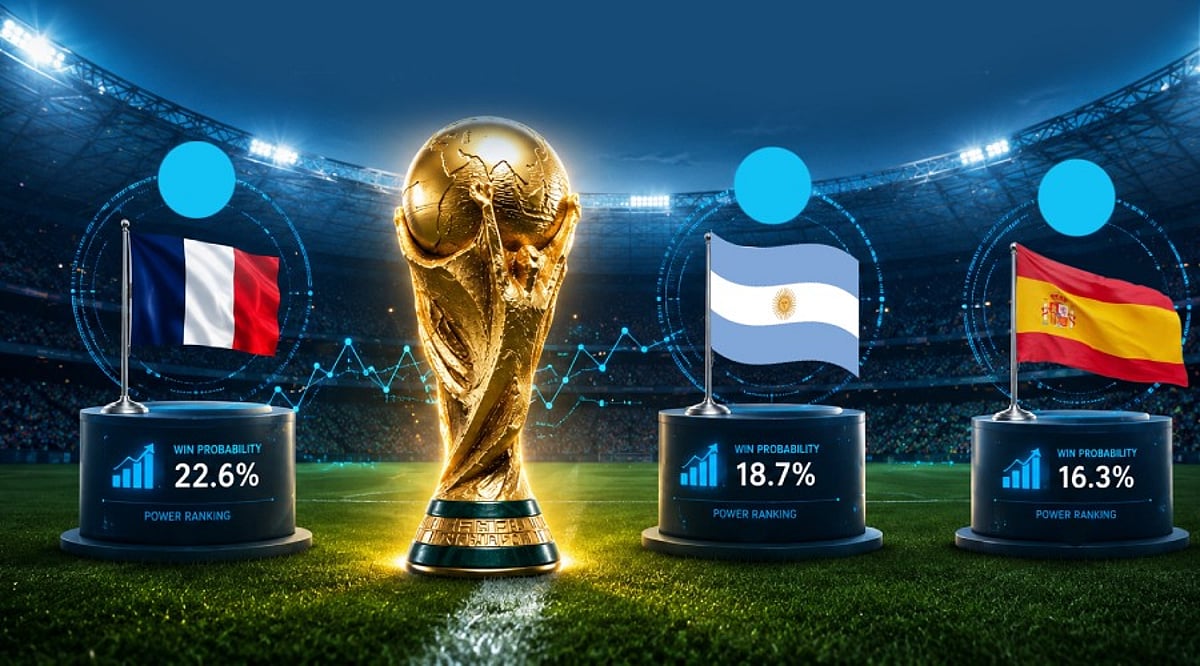
    Across nearly every data source, France sits at the top. Their case is built not just on reputation but on performance quality. France reached the quarterfinals without conceding a single goal in knockout matches—a defensive record that stands out in an expanded 48-team tournament where fatigue and depth usually surface. Their odds shifted from +500 at the start to as short as +175/+180 by the quarterfinal stage, one of the sharpest market moves of the competition.

    Underlying numbers support the shift. In the round of 32 win over Sweden, France produced a dominant attacking display, and against Morocco in the quarterfinals they recorded 22 shots, nine on target. Predictive models weight such shot volume and quality heavily when projecting knockout success. Squad depth is another structural advantage: France can rotate elite players at nearly every position without a meaningful drop-off, which matters more in a longer, physically demanding tournament.

    Why the data likes them: elite expected-goals output, a defense untouched in knockouts, and depth that absorbs injuries or suspensions without losing quality.

    2. Argentina — Pedigree Meets a Skeptical Model

    Argentina presents a fascinating gap between market sentiment and pure model output. The reigning World Cup and Copa América champions have improved dramatically in betting markets—from around +950 at the start to roughly +400 by the quarterfinals—driven by tournament experience, a settled defensive structure, and Messi’s continued brilliance (he entered the quarterfinals as the tournament’s leading scorer at age 39).

    However, data-driven models are more cautious. Advanced ratings systems flag that Argentina’s underlying performance metrics haven’t matched their results. Back-to-back 3-2 knockout wins, including a dramatic late comeback against Egypt, actually caused some model-based ratings to decline because match control and shot data didn’t fully support the scorelines. That combination—proven knockout pedigree and a defense anchored by Emiliano Martínez, but statistically shakier performances—makes Argentina a dangerous contender, especially skilled at winning ugly even when models aren’t fully convinced.

    Why the data likes (and questions) them: elite goalkeeping and knockout experience, but underlying match metrics suggest more vulnerability than results indicate—a classic tension between clutch performance and sustainability in predictive modeling.

    3. Spain — Efficiency and Squad Balance

    Spain entered the tournament as a co-favorite with France and, despite an early stumble (a 0-0 draw with Cape Verde), rebuilt its case through the knockout rounds, including eliminating Portugal. Betting markets have Spain as a solid second or third choice, and the analytical case rests on similar pillars: two capable options at nearly every position, elite attacking talent, and recent tournament pedigree as reigning European champions.

    What separates Spain analytically is efficiency. Instead of overwhelming shot volume, Spain’s model-friendly profile comes from possession control and conversion quality—squeezing high-value chances out of matches rather than needing high shot counts to win. This trait historically endures across deep World Cup runs, holding up against various opponent styles, from possession-heavy sides to disciplined counter-attacking defenses.

    Why the data likes them: balanced squad depth, elite individual attacking talent, and a possession-efficiency profile that travels well against different tactical setups.

    The Bigger Picture

    What models and markets agree on is that this remains an unusually open World Cup. The expanded 48-team format has widened the field of realistic contenders and increased volatility. Teams like Norway, Morocco, Belgium, and England remain live threats. But when you filter for underlying performance data, squad depth, and tournament experience, France, Argentina, and Spain are the three teams the numbers keep pointing to as the final rounds approach.

    If you want to watch the finish live, check available World Cup 2026 final tickets to see the contenders battle on the biggest stage in football.

    Odds and statistics referenced are current as of early July 2026 and subject to change as the knockout rounds progress.

  • Why Switzerland, Nordics, Germany, Japan, Italy, and France Lead Global Quality of Life Rankings

    Why Switzerland, Nordics, Germany, Japan, Italy, and France Lead Global Quality of Life Rankings

    What makes a country the ‘best’ in the world? It isn’t just wealth or breathtaking scenery. The nations that consistently top global rankings excel at safety, quality of life, innovation, healthcare, education, and even everyday happiness. From Switzerland and the Nordic countries to Germany, Japan, Italy, and France, these destinations continue to set the global standard for what it means to live well.

    How These Countries Lead the World

    Each group shines for different reasons, and together they offer lessons about how societies can build comfort, meaning, and prosperity.

    Top Spot: Switzerland

    Imagine a place where trains arrive on the minute, mountains are an arm’s reach away, and local chocolatiers treat craft like religion. Switzerland’s political neutrality and stable institutions make life predictable in a reassuring way. Its banks and finance industries are trusted worldwide, yes, but so are its watchmakers, medical device firms, and small manufacturers that sweat the details. People there enjoy strong public services, low crime, and a sense of trust that makes everyday life feel smooth.

    Nordic Countries: Denmark, Sweden, Finland

    Walk into a playground in Copenhagen or a school in Helsinki, and you’ll see the impact of policies that treat childhood and work-life balance seriously. Denmark, Sweden, and Finland invest heavily in healthcare, education, and family support. The safety net doesn’t make people complacent; it frees them to take risks, start companies, and be creative. These countries are also early adopters of green tech and digital public services, showing that kindness and efficiency can go hand in hand.

    Germany and Japan: Pride in Making Things that Last

    Both Germany and Japan are places where craft and engineering are part of daily identity, whether it’s a perfectly tuned car or a factory robot that never misses a beat. Germany’s apprenticeship system links schools and industry tightly, feeding skilled workers into advanced manufacturing. Japan’s commitment to precision, continuous improvement, and respect for tradition has made its industries global benchmarks. While its economy is driven by exports, Japan also exports a reputation for unmatched quality and reliability.

    Italy and France: Living Well is a National Product

    Italy and France sell more than goods; they sell a way of life. Italy’s influence shows up in design, food, and that effortless sense of style. Small workshops in Florence or tiny bakeries in Bologna keep centuries-old skills alive. France wraps its influence in language, cinema, fashion weeks, and institutions like museums and culinary schools. Tourists flock there not just for monuments, but to breathe the local rhythms. These countries turn culture into an exportable asset that makes people everywhere a little more curious and a little more stylish.

    Comparison Table

    Country/Region Key Strengths
    Switzerland Political stability, trusted institutions, low crime, world-class industries, reliable public services
    Nordic (Denmark, Sweden, Finland) Welfare, innovation, healthcare, education, green tech, work-life balance
    Germany & Japan Engineering, skilled workforce, manufacturing excellence, education, discipline
    Italy & France Culture, heritage, cuisine, fashion, craftsmanship, tourism

    What Makes Nations Thrive: Can Policy Blend Practicality and Beauty?

    Across these nations you find some common threads: an emphasis on education and skills; institutions people trust; reliable infrastructure; and openness to trade and ideas. They don’t all do things the same way; Switzerland’s privacy and neutrality differ from the Nordics’ social focus, but each has leaned into a set of strengths and protected them with thoughtful policy.

    You don’t need Alps or centuries-old museums to copy these models. Start by investing in people: education, healthcare, apprenticeships, and by building institutions people trust. Protect cultural traditions while encouraging new ideas, and make infrastructure reliable so daily life doesn’t become a struggle. These countries show that ‘best’ often means balancing practicality with beauty, making sure life is not only productive, but also worth living.

    FAQs

    Why is Switzerland considered one of the world’s best countries?

    Switzerland stands out for its political stability, efficient public services, low crime, strong economy, trusted financial sector, world-class healthcare, and exceptional quality of life backed by reliable institutions.

    What makes the Nordic countries consistently rank highly?

    Denmark, Sweden, and Finland excel through universal healthcare, excellent education, work-life balance, social security, environmental leadership, and digital innovation, creating happy, productive, and resilient societies.

    Why are Germany and Japan known for engineering excellence?

    Germany and Japan combine skilled workforces, advanced manufacturing, innovation, precision engineering, and strong quality standards, producing globally respected automobiles, machinery, electronics, and industrial technologies.

    How do Italy and France influence the world beyond their economies?

    Italy and France shape global culture through fashion, cuisine, art, architecture, design, cinema, and tourism, turning centuries-old traditions into internationally admired industries and cultural icons.

    What common qualities do these leading countries share?

    Despite different strengths, these countries prioritize education, innovation, trusted institutions, reliable infrastructure, skilled workforces, cultural preservation, and long-term planning to ensure prosperity and a high quality of life.

  • Today’s Tech Roundup: France Launches Chip Testing Lab, AI Funding Tilts to Deep Tech, Multi-Agent AI Advances

    Today’s Tech Roundup: France Launches Chip Testing Lab, AI Funding Tilts to Deep Tech, Multi-Agent AI Advances

    Welcome to your daily briefing on the most significant developments in technology, startups, and digital innovation. Here’s what you need to know today.

    France Opens Joint Semiconductor Validation Laboratory

    French AI chip company Polyn Technology, in partnership with Alter Technology, has inaugurated a new laboratory in France dedicated to chip validation. The facility will test neuromorphic semiconductors in real-time environments, helping chipmakers accelerate product lifecycles and improve reliability.

    AI Investment Shifts Toward Deep-Tech Infrastructure

    Global AI funding remains robust, but capital is increasingly flowing from consumer AI applications to deep-tech companies building foundational infrastructure for AI, semiconductors, and data centers. Investors are prioritizing computing capacity for future AI workloads over short-term consumer products.

    Campus Hiring Delays Persist in India’s IT Sector

    Engineering graduates continue to face delayed onboarding, postponed joining dates, and even withdrawn offers as major IT firms adjust their recruitment policies amid market shifts.

    UN Blockchain Week 2026 Announces Major Media Partnership

    UN Blockchain Week 2026 has partnered with Crypto. The announcement was made during the 81st UN General Assembly. The collaboration aims to raise awareness of blockchain innovation, digital currencies, and policy, bringing together governments, companies, developers, and investors to advance Web3 technologies.

    Multi-Agent AI Systems Drive Smarter Enterprise Automation

    Multi-agent AI systems enable specialized AI agents to collaborate on complex tasks rather than relying on a single model. This approach enhances decision-making, process automation, scalability, and efficiency, allowing enterprises to manage intricate workflows with greater accuracy and speed.