
Tag: fuel costs

  • UK Inflation Reaches 3.1% in August as Fuel Costs Surge Ahead of Bank of England Rate Decision

    UK Inflation Reaches 3.1% in August as Fuel Costs Surge Ahead of Bank of England Rate Decision

    UK inflation climbed to 3.1% in August, up from 2.9% in July, marking its highest level in five months. The increase, driven by higher petrol, diesel, and airfare prices, matched economists’ forecasts and came just one day before the Bank of England’s (BoE) September policy meeting.

    Fuel Prices Drive August Inflation Higher

    The Office for National Statistics (ONS) reported that transport made the largest upward contribution to the annual inflation rate. Motor fuel prices rose sharply, with petrol increasing by 9.1 pence per litre between July and August, while diesel prices climbed by 14.2 pence per litre over the same period.

    Grant Fitzner, chief economist at the ONS, said: “Sharp price rises for petrol and diesel pushed inflation up again in August.” He added that higher long-haul airfares also contributed. Crude oil and fuel costs further raised manufacturers’ raw material and factory-gate prices.

    Core and Services Inflation Remain Stable

    Despite the headline rise, measures closely watched by the Bank of England held steady. Core CPI, which excludes energy, food, alcohol, and tobacco, remained at 2.6% for the fourth consecutive month. Services inflation also stayed at 3.4%.

    Neither measure accelerated in August, even as fuel costs pushed the headline rate above 3%. ONS labour data released earlier in the week showed regular pay growth at 3.5% in the three months to July, close to its weakest pace since 2020.

    Bank of England Prepares for Rate Decision

    The Bank of England will announce its interest-rate decision on September 17. Bank Rate currently stands at 3.75% after the Monetary Policy Committee (MPC) voted 6-3 in July to keep borrowing costs unchanged. Three members had supported a quarter-point increase to 4%.

    Financial markets were pricing in about a 20% chance of a quarter-point increase at the September meeting, according to Reuters. Charlotte O’Leary of the National Institute of Economic and Social Research said: “With limited evidence of second-round effects so far, we expect the MPC to hold rates tomorrow.” The BoE has identified energy prices as a key risk to inflation.

    At its July meeting, the Bank noted that energy prices had remained volatile since the Middle East conflict began. It stated that policy would depend on the scale, duration, and wider transmission of the energy shock.

    Producer Prices Add Pressure to Outlook

    Price pressures were stronger at the manufacturing level. Producer input prices rose 6.1% in the year to August, up from a revised 5.8% in July. Factory-gate output prices increased 3.7%, compared with a revised 3.3% increase a month earlier.

    The rise in inflation also comes as Prime Minister Andy Burnham’s government prepares for an October 28 budget. Chancellor John Healey said the Middle East war was affecting inflation across countries, feeding into household bills, shopping costs, and fuel prices. Official records show Burnham became prime minister on July 20, with Healey taking over as chancellor on the same date.

    Further increases in household energy bills could push headline inflation higher in the coming months because regulated domestic prices respond to wholesale energy costs with a delay. Goldman Sachs expects UK inflation to peak at 3.9% in early 2027. The BoE’s 2% inflation target remains the benchmark, while policymakers continue to track wages, services prices, and business costs for signs of pressure.

  • India’s Alternative-Fuel Vehicle Sales Overtake Petrol Cars for First Time in August 2026

    India’s Alternative-Fuel Vehicle Sales Overtake Petrol Cars for First Time in August 2026

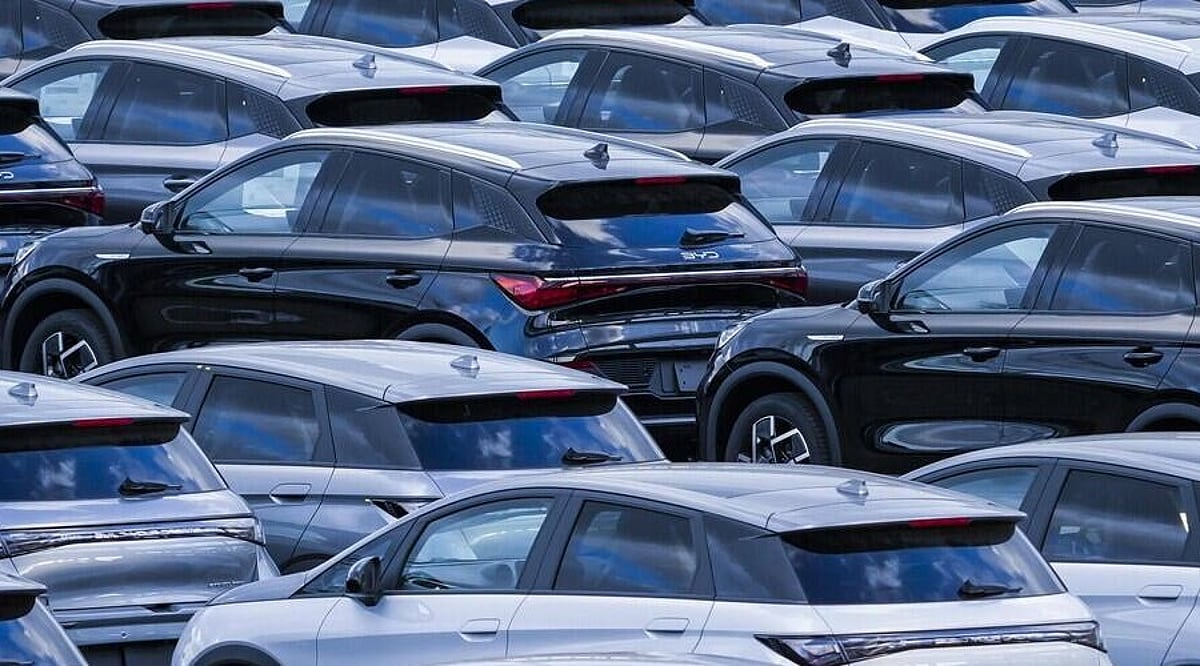
    For the first time in India, sales of alternative-fuel passenger vehicles—CNG, hybrid, and electric—surpassed those of petrol-powered cars in August 2026, according to the Federation of Automobile Dealers Associations (FADA). The milestone reflects shifting consumer preferences driven by rising fuel costs, concerns over E20 petrol, and a widening selection of alternative-fuel models.

    Alternative-fuel vehicles captured 41.95% of passenger vehicle retail sales during the month, while petrol vehicles accounted for 40.85%. This marks a dramatic reversal from just over a year earlier, when petrol vehicles led alternative-fuel models by nearly 11 percentage points.

    FADA Vice President Sai Giridhar attributed the change to several factors. “This shift was bound to happen,” he said. “Concerns about E20 petrol may have pushed some buyers to consider other fuel options earlier than expected.” He noted that better electric vehicle driving ranges, expanding charging infrastructure, and a broader array of alternative-fuel models now support the trend.

    E20 Petrol and Fuel Costs Drive Buyers

    India is transitioning from E10 to E20 petrol, which contains 20% ethanol, as part of efforts to reduce dependence on imported crude oil. However, some owners of older vehicles have raised concerns about fuel economy and compatibility, fearing that E20 could reduce mileage or harm engines not designed for the higher blend. The government has dismissed these as “wild claims,” but the debate continues as E20 becomes more widely available.

    Higher crude oil prices, exacerbated by the ongoing Middle East conflict, have also heightened attention to running costs for petrol vehicles, accelerating the shift toward alternatives.

    Record August Sales, but Monthly Dip

    India’s total automobile retail sales rose 17.51% year-on-year to 24,23,201 units in August, marking the strongest August performance on record. However, sales fell 6.48% from July, which FADA linked to monsoon conditions and the shifting festive calendar—Ganesh Chaturthi and part of Onam moved into September this year.

    Rural markets outperformed urban areas, with rural vehicle sales climbing 19.79% year-on-year versus 15.17% in cities. Rural passenger vehicle sales surged 24.99%, compared to 10.93% in urban markets.

    Festive Season Outlook and Price Hikes

    Although dealers remain optimistic about the upcoming festive season, vehicle price increases and inflation are key concerns. Maruti Suzuki India announced it will raise prices on selected models by up to Rs 20,000 starting September, its third hike since May. Giridhar warned that further price increases could dampen the demand boosted by recent tax reforms.

    Passenger vehicle inventory rose to 38–40 days by end of July, up by about five days. FADA said demand from September through November will provide crucial insight into festive-season buying behavior, as buyers weigh prices, fuel costs, and their growing array of vehicle choices.

  • Trump Calls Out Exxon and Chevron for Record Profits, Demands Lower Gas Prices

    Trump Calls Out Exxon and Chevron for Record Profits, Demands Lower Gas Prices

    President Donald Trump has publicly criticized Exxon Mobil and Chevron after the oil giants reported combined second-quarter profits of approximately $26.5 billion. Trump argued that the companies are profiting excessively from supply shortages and urged them to reduce retail fuel prices for American consumers.

    Speaking at the White House on Monday, Trump said both companies were benefiting from supply disruptions while Americans continued to face high gasoline prices. His remarks come as his administration faces mounting pressure to address fuel costs ahead of the midterm elections.

    “Based on a shortage, they’re making too much money,” Trump told reporters. “I don’t like it, and I should be the last one to say because I’m a big free enterprise guy — nobody bigger.”

    The president specifically named Exxon Mobil and Chevron, calling on them to cut prices at the pump. “Chevron, too much money. Exxon Mobil, too much, too much money. They ought to give some of that back to the public, and they better cut the retail price, the consumer price,” Trump said.

    Exxon Mobil reported second-quarter earnings of $14.5 billion, more than double its profit from the same period a year earlier. Chevron posted $12.1 billion in earnings, nearly five times its year-ago result. Both companies benefited from higher crude prices and stronger refining margins amid Middle East tensions and supply chain concerns.

    Oil Companies Defend Market Conditions

    Industry representatives pushed back against claims that individual oil producers are responsible for elevated gasoline prices. The American Petroleum Institute (API) said fuel prices reflect global supply and demand conditions, along with uncertainty surrounding key shipping routes.

    Andrea Woods, an API spokesperson, stated that higher prices were “driven by global supply, demand and continued uncertainty around the Strait of Hormuz and other critical shipping lanes—not by any one company.”

    Retail gasoline prices are generally determined by independent fuel station operators rather than directly by major oil producers. Distribution costs, taxes, crude prices, and refining margins also influence consumer prices.

    Exxon and Chevron executives warned during earnings calls that limited refining capacity could keep gasoline prices elevated through the autumn. The average US gasoline price has remained near $4.10 per gallon, compared with below $3 before the United States and Israel launched strikes against Iran in February.

    Trump Renews Pressure on Energy Firms

    Trump has increased scrutiny of major oil companies in recent months. In late June, he ordered the Justice Department to investigate whether large producers failed to reduce gasoline prices quickly enough after crude prices declined.

    Trump also criticized Chevron CEO Mike Wirth in a social media post, claiming the executive failed to recognize his administration’s role in supporting the energy sector. He reiterated that oil companies should immediately lower consumer fuel prices, including retail gasoline costs.

    The comments follow a period of strong earnings for US energy companies, supported by higher oil prices during Middle East tensions. Chevron also reported record US production and a 20% increase in global output.

    Oil markets have recently shown volatility as traders monitor diplomatic developments involving Iran and possible changes to supply conditions. Lower crude prices could reduce pressure on gasoline markets if disruptions ease. Trump has argued fuel prices will decline if tensions in the region decrease, while industry officials maintain that broader market forces determine costs at the pump.