Tag: future of work

  • The Future of Work in the AI Era: Masai School’s Pratik Shukla on Jobs, Education, and Continuous Learning

    The Future of Work in the AI Era: Masai School’s Pratik Shukla on Jobs, Education, and Continuous Learning

    In a recent episode of the Analytics Insight podcast, Priya Dialani interviewed Pratik Shukla, founder and CEO of Masai School, to discuss the transformative impact of AI on the workforce, education, and the necessity of continuous learning. Shukla shared his journey from IIT Kanpur and real estate to founding an outcome-driven education platform, and offered insights on how individuals and institutions can prepare for an AI-driven future.

    How AI Will Reshape the Workforce

    Shukla believes that AI will not simply replace people but will change the tasks within existing roles. Job titles may remain, but job descriptions could evolve significantly. He emphasizes the importance of learning to work with machines rather than fearing replacement. In the future, humans will focus on the ‘why’ and ‘when,’ while AI handles the ‘how.’

    The Importance of Continuous Learning

    Continuous learning is critical as technology evolves rapidly. Shukla argues that the ability to learn is more valuable than any single technical skill. Professionals need to stay curious and aware of changes, even if they don’t master every new tool. A degree may have a shelf life, but the capacity to learn does not.

    Preparing Students for AI Careers

    Educational institutions must overhaul their approach, moving away from rote learning toward problem-solving, critical thinking, and adaptability. Students need strong fundamentals, soft skills, and the ability to handle uncertainty. They should be prepared for jobs that may not yet exist.

    New Career Opportunities from AI

    While specific future roles are unpredictable, Shukla is confident that AI will create new job categories, as every technological revolution has done. The key is to stay informed and embrace new opportunities as they arise.

    Advice for Mid-Career Professionals

    Mid-career professionals should start small by integrating AI into their work gradually. They don’t need to become experts overnight. By combining existing expertise with AI capabilities, they can remain relevant without starting over.

    Listen to the full discussion on the Analytics Insight Podcast.

  • AI Workforce Planning 2027: A CHRO Playbook for Skills, Roles, and Human-AI Collaboration

    AI Workforce Planning 2027: A CHRO Playbook for Skills, Roles, and Human-AI Collaboration

    AI Is Rewriting the Workforce Planning Rulebook

    Artificial intelligence is pushing CHROs beyond headcount forecasts and toward strategic capability planning. The central question is no longer just how many employees a business will need; it is how work itself is changing and whether the workforce has the skills to make that transition successfully.

    McKinsey’s 2026 HR Monitor found that only 11% of organizations take a long-term view of workforce planning. That gap points to a larger shift: as AI changes tasks and skills, companies must plan around organizational capabilities rather than simply filling seats.

    Skills Become the Heart of AI Strategy

    Skills intelligence is becoming a core workforce planning function. AI expertise can no longer live only in technology teams; it must be understood across every business function.

    The World Economic Forum’s Future of Jobs Report 2025 projects that 39% of workers’ core skills could change by 2030. The fastest-growing skill areas include AI and big data, networks and cybersecurity, and technological literacy. Human strengths such as creative thinking, resilience, flexibility, agility, leadership, and analytical thinking will remain essential alongside these technical capabilities.

    For CHROs, this means identifying existing skills, mapping gaps, and creating pathways for employees to move into emerging roles.

    Job Roles Are Being Redesigned

    AI is creating new roles while reshaping established ones. Some organizations are hiring for dedicated AI, data, and automation positions; others are folding AI capabilities into existing business functions. According to research from the CHRO Association, HR itself is starting to build new digital, innovation, and AI capabilities, with HR business partner roles and operating models also evolving.

    Human-AI Collaboration Requires Task-Level Design

    AI adoption does not automatically eliminate jobs. More often, it automates or augments specific tasks within a role. CHROs need to examine work at the task level and decide which activities should remain human-led, where AI can provide support, and which tasks can be automated.

    Deloitte’s 2026 Global Human Capital Trends research found that only 6% of leaders say their organizations are making meaningful progress in designing human-AI interactions. That gap shows why adopting AI is only the first step; redesigning work around it is the harder, more strategic stage.

    Reskilling Becomes Continuous

    As roles evolve, organizations need systems that support continuous learning and internal mobility. The World Economic Forum estimates that 59 out of every 100 workers will need reskilling or upskilling by 2030. Employers also cite skills gaps as a major barrier to transformation.

    Rather than relying mainly on external hiring, companies can identify adjacent skills in their existing workforce and build structured learning pathways that prepare employees for new responsibilities.

    Organizational Design and Governance

    AI affects more than individual roles. It changes team structures, decision-making, and the way work is distributed across the organization. McKinsey notes that agentic AI is pushing HR leaders to redesign roles and build the architecture needed for human-agent collaboration.

    Clear governance is equally important. Employees need to know how AI will be used, which decisions will remain under human control, and how their performance will be evaluated. The CHRO Association’s 2026 survey identifies organizational readiness, workforce concerns, governance risks, and investment constraints as the main barriers to scaling AI initiatives.

    CHRO Priorities for 2027

    Gartner’s 2026 CHRO research points to workforce transformation, workforce planning, and organizational design as the key strategic areas for CHROs navigating enterprise AI adoption. To stay ahead, HR leaders should:

    • Move from precise headcount forecasting to flexible capability planning.
    • Embed skills intelligence across all business functions.
    • Design jobs at the task level for human-AI collaboration.
    • Make reskilling and internal mobility a continuous priority.
    • Establish transparent governance and build employee trust in AI.
    • Treat organizational design as a core part of AI strategy.

    By 2027, workforce planning will be less about predicting numbers and more about aligning people, skills, technology, and organizational capabilities with changing business needs.

  • How AI Agents Will Reshape Everyday Life: A Glimpse Into the AI-First Future

    How AI Agents Will Reshape Everyday Life: A Glimpse Into the AI-First Future

    Artificial intelligence is moving beyond chatbots and recommendation engines. In an AI-first world, intelligent systems become the default layer of daily life — helping people set goals while AI agents quietly handle tasks across apps, devices, and digital services.

    Your Personal AI Agent Could Run Your Day

    Imagine a personal AI assistant that manages your calendar, books travel, pays bills, plans meals, tracks spending, and handles everyday errands. Instead of juggling multiple apps and reminders, you simply express an intention and your AI agent coordinates the rest.

    AI Could Become a Digital Coworker

    In the workplace, AI agents are expected to manage multi-step workflows such as research, report generation, coding, and customer support. That shift lets people focus on higher-value activities: making decisions, exercising judgment, and overseeing outcomes rather than performing routine execution.

    Learning Could Become Fully Personalized

    Education is another area poised for transformation. AI tutors could explain difficult concepts, generate practice questions, and adapt lessons to each student’s pace, level, and learning goals. This kind of personalization could make education more accessible and effective for learners of all ages.

    Healthcare Could Become More Proactive

    AI systems could combine wearable data, medical records, and broader health information to flag potential risks, track medications, and schedule follow-ups automatically. Instead of reacting to symptoms, patients and providers could work together to prevent problems before they escalate.

    Smart Homes Could Anticipate Your Needs

    Connected homes powered by AI could adjust energy use, control appliances, manage shopping lists, and optimize household routines based on daily habits and preferences. The home becomes an active participant in comfort and efficiency rather than a collection of manual devices.

    AI Could Change Jobs and Skills

    As agents take on more routine work, human roles will shift toward strategy, creativity, critical thinking, and reviewing AI-generated results. Microsoft reports that AI users in India are placing strong emphasis on human judgment and quality control — a sign that oversight skills will become increasingly valuable.

    More AI Access Also Means More Risks

    AI-first systems require access to sensitive data and digital accounts. That raises serious concerns about privacy loss, incorrect decisions, biased outputs, excessive permissions, and job disruption. Building trust will require careful governance, transparency, and safeguards.

    The most likely future is not one where AI replaces people, but one where daily life becomes human-led and AI-executed. The biggest shift will be moving from doing every task manually to setting goals, checking AI decisions, and retaining control over the choices that matter most.

  • 7 Essential Skills Beyond Generative AI to Future-Proof Your Career

    7 Essential Skills Beyond Generative AI to Future-Proof Your Career

    Generative AI has transformed how millions work—from brainstorming with ChatGPT to summarizing documents and drafting emails. But as AI tools become more intuitive, the real career advantage lies not in writing prompts but in building AI-powered workflows, verifying outputs, and solving meaningful business problems. Here are seven skills that will define the next wave of AI-driven careers.

    1. Understand How AI Agents Work

    AI is moving beyond single-answer responses. AI agents can handle sequences of tasks, use external tools, and complete workflows with minimal human intervention. Learning how agents operate—how to grant them access to tools and where human oversight is critical—will set you apart from casual AI users.

    2. Master Retrieval-Augmented Generation (RAG)

    RAG enables AI to pull information from documents, databases, or company knowledge before generating answers. This is vital for businesses that want AI to work with proprietary data rather than relying solely on pre-trained knowledge. Start with concepts like embeddings, vector databases, and retrieval methods—no need to become a machine learning expert overnight.

    3. Build AI Automation Skills

    Move from using AI to integrating it into daily workflows. Learning basic Python, APIs, databases, and automation tools helps connect AI models with other applications. Even modest technical know-how allows you to automate repetitive tasks and build simple AI-powered solutions.

    4. Develop AI Evaluation Skills

    AI can sound confident even when wrong. Being able to evaluate outputs for accuracy, hallucinations, and consistency is increasingly valuable—especially in fields like finance, healthcare, and legal work. Learn to test model performance and compare responses systematically.

    5. Learn AI Security and Governance

    As companies give AI access to sensitive data and business systems, privacy, security, and responsible use become critical. Understanding data protection, access controls, compliance, and AI risk management opens doors to roles at the intersection of technology and business.

    6. Strengthen Data and Machine Learning Fundamentals

    Generative AI may make technical depth seem unnecessary, but a basic grasp of statistics, data analysis, and how models are trained reveals both strengths and limitations. You don’t need to be a researcher—just knowing why an AI behaves a certain way makes you a smarter user and decision-maker.

    7. Never Forget Human Skills

    The World Economic Forum’s Future of Jobs Report 2025 highlights that analytical thinking, creativity, resilience, and collaboration remain essential. Combining these human abilities with AI proficiency creates the highest career value. The most sought-after professionals will be those who know when to use AI, how to make it work, and when not to trust it.

    By investing in these skills—AI agents, automation, RAG, evaluation, governance, data basics, and human judgment—you position yourself for the next phase of AI, where the real question isn’t “Can you use ChatGPT?” but “Can you use AI to solve a real problem?”

  • AI vs. Human Intelligence: Key Strengths of Each and Why Collaboration Wins

    AI vs. Human Intelligence: Key Strengths of Each and Why Collaboration Wins

    Artificial intelligence continues to reshape the way we live and work, but comparing human abilities with machine capabilities shows that neither side is universally superior. People and AI excel in different areas, and the strongest outcomes usually come from combining the two.

    Where Humans Excel

    • Creativity and original thinking: Humans create original ideas by blending emotions, experiences, imagination, and personal perspective — qualities AI cannot genuinely replicate.
    • Emotional intelligence: People can read body language, tone, and personal context, which makes human judgment essential in sensitive or emotionally charged conversations.
    • Ethical reasoning: Humans can weigh values, social impact, personal responsibility, and real-world consequences when making difficult decisions.
    • Adaptability: Humans use common sense and past experiences to respond to sudden changes or incomplete information.

    Where AI Excels

    • Speed and scale: AI can process enormous amounts of information in seconds and complete repetitive tasks far faster than humans.
    • Data analysis: AI scans massive datasets, spots patterns, compares information, and surfaces useful insights without getting tired or distracted.
    • Consistency in repetitive work: AI can perform the same task thousands of times with steady performance, making it ideal for routine digital and office work.
    • 24/7 operation: AI systems do not need sleep and can handle requests, monitor systems, and process information around the clock.

    Why the Best Results Combine Both

    Neither humans nor AI can fully replace the other. The most effective outcomes come when human creativity, judgment, and empathy work alongside AI’s speed, scalability, and data-processing power.

  • 9 AI-Powered Careers on the Rise: Where Job Growth Is Heading

    9 AI-Powered Careers on the Rise: Where Job Growth Is Heading

    Artificial intelligence is no longer limited to research labs and sci-fi plots. It is reshaping how companies operate, how decisions are made, and which skills are in demand. As organizations integrate AI into their daily workflows, new roles are emerging and existing roles are evolving rapidly. Here are nine careers that are setting the pace in the AI age.

    1. AI Engineer

    AI engineers design intelligent applications, train machine learning models, and build automation systems that power businesses across industries. Their work turns raw data and algorithms into practical products used by millions.

    2. Data Scientist

    Data scientists analyze massive datasets to uncover trends and build predictive models. Their insights help organizations make smarter decisions and provide the foundation for AI development.

    3. Cybersecurity Specialist

    As AI expands the digital attack surface, cybersecurity specialists are needed to protect AI systems, enterprise networks, and critical infrastructure. They defend against increasingly sophisticated threats and evolving attack techniques.

    4. Prompt Engineer

    Prompt engineers craft effective inputs for AI models, improving chatbot performance, automating workflows, and generating reliable, business-ready outputs. This role has become essential as generative AI becomes mainstream.

    5. Robotics Engineer

    Robotics engineers design intelligent machines that automate manufacturing, logistics, healthcare, agriculture, and industrial operations. Their work combines mechanical engineering with AI to create more precise and adaptable systems.

    6. AI Product Manager

    AI product managers sit at the intersection of business strategy and technology. They guide AI product development, drive market adoption, and keep the focus on customer needs while aligning teams around a clear roadmap.

    7. Healthcare AI Specialist

    Healthcare AI specialists implement AI-powered diagnostics, patient monitoring, medical imaging, and personalized treatment plans. These professionals help improve clinical outcomes and make healthcare more efficient.

    8. Digital Marketing Analyst

    Digital marketing analysts use AI tools to optimize campaigns, interpret customer behavior, and improve targeting. By applying AI to real-time data, they help brands maximize marketing ROI across all channels.

    9. AI Ethics Professional

    AI ethics professionals ensure that artificial intelligence systems are transparent, fair, and aligned with responsible governance standards. Their role is crucial as companies seek to build trusted AI frameworks.

    These careers reflect a broader shift: the future of work belongs to people who can work alongside intelligent systems, build them, and keep them accountable. Whether you are entering the job market or planning a career change, the skills behind these roles are worth watching.

  • Tech Careers 2036: The Best-Paying Roles on the Rise

    Tech Careers 2036: The Best-Paying Roles on the Rise

    Technology Jobs Enter a New Growth Era

    Between 2026 and 2036, the technology industry is expected to create millions of new opportunities as organizations accelerate digital transformation. Artificial intelligence, automation, cloud computing, and cybersecurity are becoming core pillars of modern business. Professionals with advanced technical skills are well-positioned for sustained career growth as companies continue investing in innovation, digital infrastructure, and intelligent solutions across sectors.

    Artificial Intelligence Roles Lead Demand

    AI specialists are projected to remain among the most sought-after technology professionals over the next decade. Machine learning engineers, AI researchers, and automation experts will help organizations build smarter systems. With generative AI and intelligent platforms gaining wider adoption, these roles are expected to offer strong demand and competitive salaries in healthcare, finance, manufacturing, and technology.

    Cybersecurity Expertise Becomes Essential

    As digital threats grow, cybersecurity professionals are increasingly critical to protecting businesses and customer data. Security analysts, ethical hackers, and cloud security specialists are expected to stay in high demand. Rising global investment in digital protection will create long-term career paths for professionals with strong security knowledge and hands-on technical skills.

    Cloud and Data Careers Expand Rapidly

    Cloud architects, data engineers, and data scientists are set to see significant growth as organizations rely more on digital platforms. These professionals help manage large volumes of information and build scalable systems. Combining technical expertise with problem-solving, these roles are among the most promising career options for the next decade.

    Software Development Remains a Strong Career Path

    Software engineering remains one of the most reliable technology careers despite rapid change. Developers skilled in modern programming languages, AI tools, and contemporary application development will continue to be valuable. Companies will keep hiring engineers to build solutions, improve user experiences, and support evolving digital ecosystems.

    Competitive Salaries Attract Talent

    Technology careers draw attention because specialized roles often offer attractive pay. Professionals in AI, cloud computing, cybersecurity, and advanced software development frequently earn higher compensation due to growing demand. Continuous learning, certifications, and practical experience will be key differentiators for anyone pursuing success in the competitive tech industry.

    What to Expect Through 2036

    Tech employment is set to evolve with new opportunities and changing skill requirements over the next decade. Professionals who embrace emerging technologies will improve their chances of advancement. As digital transformation continues across industries, technology roles will remain among the most influential and financially rewarding career paths globally.

  • AI Won’t Replace Humans—Judgment, Empathy, and Leadership Remain Key, Says PMI’s Amit Goyal

    AI Won’t Replace Humans—Judgment, Empathy, and Leadership Remain Key, Says PMI’s Amit Goyal

    Artificial intelligence is transforming industries at an unprecedented pace, automating routine tasks, accelerating decision-making, and reshaping how businesses operate. Yet even as technological innovation surges, industry leaders emphasize that technology alone cannot define the future of work. Human judgment, creativity, empathy, leadership, and adaptability remain indispensable for organizations adopting intelligent technologies.

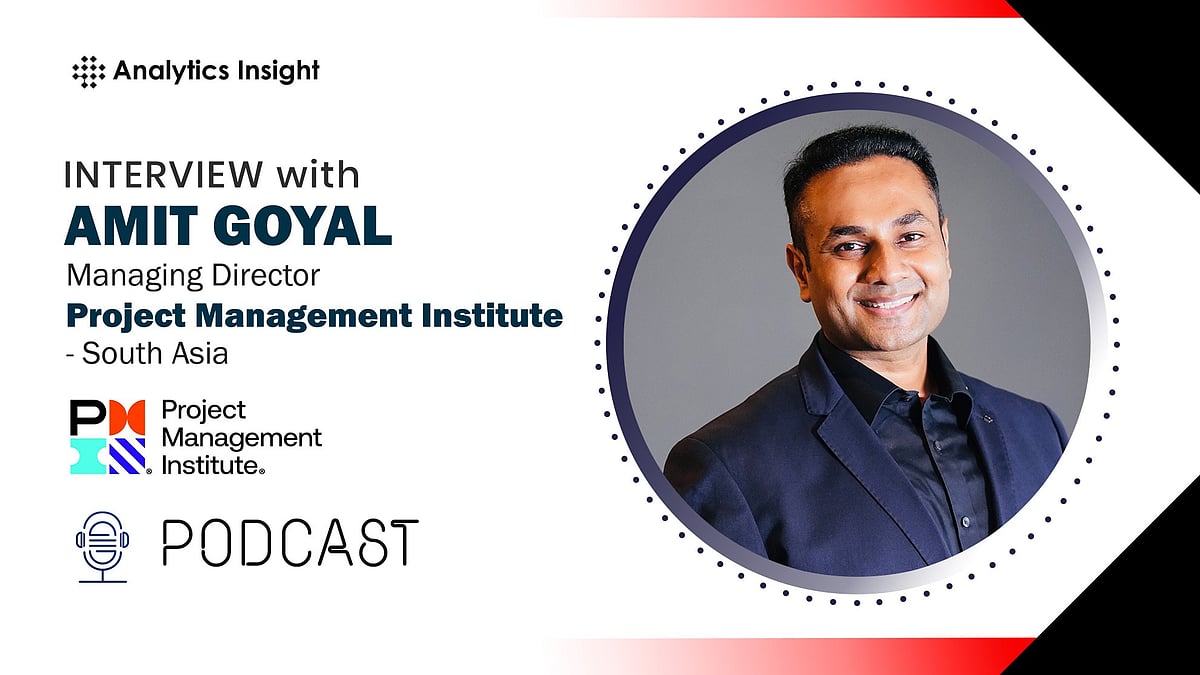
    In the latest episode of the Analytics Insight Podcast, host Priya Dialani speaks with Amit Goyal, Managing Director of the Project Management Institute (PMI) for South Asia, about why humans—not technology—will ultimately determine AI’s success. Goyal shares insights on the human side of the AI era, essential skills for professionals, workforce development shifts, and the future of education. Key excerpts from the conversation follow.

    Why AI Conversations Must Focus on People as Much as Technology

    “Technology provides options, but people make things happen,” Goyal explains. AI can write reports, analyze data, write code, and even plan projects—but it cannot grasp organizational politics, human emotions, ethics, or nuanced decision-making. Throughout history, the greatest challenge with major technological advances has never been the technology itself but its acceptance. Organizations should not fear AI replacing people; instead, they should focus on how to combine AI with human talent.

    What Gives Humans the Edge in an AI-Driven World

    The true human advantage lies in judgment, empathy, creativity, contextual understanding, and accountability. While AI processes massive datasets at incredible speed, it cannot mediate between conflicting parties, motivate teams during uncertainty, or take responsibility for tough choices. “The challenge is not to race with AI in speed, but to ask better questions, make wise decisions, and connect people toward a common purpose,” Goyal notes.

    Key Skills for the AI Economy

    Professionals who master AI technology should also build AI literacy—understanding how AI works, its benefits, and its limitations. Beyond technical knowledge, project management, communication, critical thinking, flexibility, and a commitment to continuous learning are essential. In a rapidly evolving tech landscape, success belongs to those who learn fast and collaborate effectively with AI, not those who claim to have all the answers.

    Preparing the Workforce for AI

    Organizations must shift from annual training programs to continuous learning as a core strategic element. Adopting AI should go beyond providing new tools; it must include employee training aimed at achieving practical business outcomes, improving customer experience, reducing risks, and boosting productivity. “The successful application of AI won’t be about owning the latest technology, but about training competent people,” Goyal emphasizes.

    Evolving Education for the AI Era

    Education systems should move from exam-driven models to producing practical, job-ready professionals. Real-world experience, industry collaboration, teamwork, project implementation, ethical considerations, and problem-solving must complement theoretical knowledge. AI can provide instant access to information, but learners need to apply that knowledge practically. The focus should be on employability and practice-oriented learning.

    The One Human Skill AI Will Never Replace

    Decision-making will become the most critical ability over the next decade, Goyal predicts. AI can interpret data, present options, and offer confident answers, but it cannot own its decisions. Human judgment will be indispensable when data is incomplete, time is limited, and difficult choices must be made. “Those who succeed will not only master AI but also know when to accept or reject its suggestions and rely on their own judgment,” he concludes.

    The full discussion is available on the Analytics Insight Podcast.

  • How Indian CEOs and CHROs Can Forge High-Performing Leadership Teams for 2026

    How Indian CEOs and CHROs Can Forge High-Performing Leadership Teams for 2026

    In 2026, CEOs and CHROs in India will face a new set of business demands. Companies need leaders who can handle fast market changes, new technology, global competition, and rising employee expectations. A strong leadership team will not depend only on senior titles or years of experience. It will need clear vision, sharp business sense, trust, and the ability to make smart decisions at the right time.

    Indian companies now operate in a market where speed and quality matter together. A leader must understand customers, support business goals, and guide teams with confidence. CEOs and CHROs must focus on leadership quality as a core business priority rather than treat it as only a human resource activity.

    Key Takeaways

    • Strong leadership teams need clear goals, shared values, and business-focused thinking.
    • Future leaders require adaptability, digital understanding, and strong people skills.
    • CEOs and CHROs must build systems that support long-term leadership growth.

    Create a Clear Leadership Vision

    It is important to have a defined objective to form a great leadership team. CEOs need to ascertain what they are willing to reach through the company. CHRO can assist in matching the development goals to the leadership capabilities. Some companies fail because their leaders act according to different sets of priorities. One leader may focus on the improvement of production without thinking about costs, while the other may ignore everything except cost control. That is why there needs to be a single vision so that every senior person can think in the same direction.

    Starting from 2026, the leadership teams need to have the right balance between the knowledge of the business and the ability to manage people. A leader needs to be very good at numbers, but at the same time, he or she should have great communication skills and emotional control.

    Choose Leaders With the Right Skills

    CEOs and CHROs must look beyond past success while selecting future leaders. A person with a strong record may not always handle new challenges well. Companies need leaders who can adapt, think clearly, and support change without losing focus. The right leadership team should include people with different skills and views. A mix of backgrounds, professional experiences, and ideas can help companies solve complex problems faster. Diverse leadership groups often make better decisions and understand wider customer needs.

    CHROs can create better talent systems that identify future leaders early. Regular reviews, clear career paths, and fair assessment methods help companies find people with strong potential. This approach helps avoid last-minute leadership gaps.

    Build a Culture of Trust and Accountability

    In a leadership team, trust among members and accountability from the members need to be established. It falls on CEOs to show by their actions what is expected from the members of the leadership team. It is up to senior leaders to enforce ethical conduct, responsibility, and accountability in their daily activities. Accountability is not about pressure without any support; it consists in the ability of leaders to know what is expected from them and to take actions in case the results do not meet the expectations. It is important for good culture to exist because it helps avoid hiding the existing problems.

    CHROs are responsible for creating frameworks that make leaders’ behaviors to be rewarded. Performance evaluations must take into account achievements as well as teamwork, ethics, and development of people.

    Use Technology to Improve Leadership Decisions

    Technology will shape leadership choices in 2026. CEOs and CHROs can use data tools to understand workforce trends, skill gaps, and leadership needs. Better information allows companies to make stronger decisions about people and business plans. Artificial intelligence tools can support talent analysis, but human judgment will remain essential. Leaders must use technology as a support system rather than depend on it for every choice. The best results will come from a mix of data and human understanding.

    Companies also need leaders who understand digital change. Senior teams must know how technology affects customers, operations, and future business models. This knowledge will help leaders prepare their companies for new opportunities.

    Prepare Leaders for Future Challenges

    Leadership development takes ongoing work. Companies cannot wait for good leaders to develop on their own. CEOs and CHROs have to create conditions in which leaders can learn new skills and take on a wider scope of responsibilities. The future of leadership training should be centered around practical business problems, communication, problem solving, and strategic thinking. The exposure to real business enables leaders to better understand the inner workings of the organization and to improve their judgment.

    Mentorship from seasoned leaders can support young executives in their effort to establish their own confidence. Effective leadership encourages the development of strong leaders who are likely to act in the best interest of the company in the future.

    Why This Matters

    Strong leadership teams will decide how well Indian companies perform in 2026 and beyond. Business challenges are becoming more complex, and companies need leaders who can make better decisions, support people, and drive growth. Building capable leadership teams helps organizations stay competitive, improve performance, and prepare for future opportunities.

    The Path Ahead for Indian Companies

    In 2026, leadership quality will separate companies that only survive from companies that achieve lasting success. CEOs and CHROs must treat leadership teams as a major business asset. The focus should remain on clear vision, strong values, smart talent choices, and continuous improvement. Indian companies have a strong opportunity to create leadership teams that match the needs of a changing world. When senior leaders combine business knowledge with people skills, they can create organizations that grow with confidence and purpose. A strong leadership foundation will help companies handle uncertainty and achieve better results in the future.

    Frequently Asked Questions

    Why do companies need stronger leadership teams in 2026?

    Companies need stronger leadership teams to handle market changes, technology shifts, customer demands, and new business challenges with better decisions.

    What role do CEOs play in building leadership teams?

    CEOs set the leadership vision, create accountability standards, and ensure senior teams follow common business goals.

    How can CHROs support leadership development?

    CHROs can identify future leaders, create talent programs, improve assessment systems, and connect leadership skills with business needs.

    What skills will future leaders need most?

    Future leaders will need business knowledge, digital awareness, adaptability, communication skills, and the ability to manage people effectively.

    How does technology help leadership teams?

    Technology helps leaders use better data, understand workforce needs, identify skill gaps, and make more informed business decisions.

  • Future-Proofing the Workplace: Essential Strategies CEOs Must Implement Now

    Future-Proofing the Workplace: Essential Strategies CEOs Must Implement Now

    The future of work is no longer a distant concept discussed in boardrooms and industry conferences. It is unfolding in real time. Artificial intelligence is automating routine tasks, hybrid work has become an accepted norm, and employees are demanding greater flexibility, purpose, and opportunities for growth. At the same time, businesses are navigating economic uncertainty, stricter regulations, and a rapidly evolving cybersecurity landscape.

    For CEOs, the challenge extends beyond embracing new technology. The bigger task lies in building organizations that can adapt quickly without losing their human edge. Companies that view workplace transformation as an ongoing process rather than a one-time initiative are more likely to retain talent, improve productivity, and remain competitive.

    AI is Reshaping Jobs, Not Eliminating Them

    AI has emerged as a major driver behind changes in the corporate environment, and it has been moving fast. Even though there are still worries about job displacement, most companies are starting to see that AI shouldn’t be treated like an outside add-on, but rather integrated into the workflow alongside their employees.

    Many of the boring, everyday administrative tasks—document processing, customer support, and data analysis—are already handled by AI systems. This leaves professionals with more time for inventive work and relationship-building. Still, this kind of shift requires the CEO to redesign how work flows, not just roll out a new software tool and call it done.

    Organizations that can demonstrate equal success in developing technological and workforce capabilities will see the greatest results from the introduction of AI technologies.

    Skills are Becoming More Valuable Than Degrees

    The validity period of professional competencies is getting smaller and smaller. Rapid advancements in technology, new business models, and new customer needs mean that people have to learn continuously throughout their careers.

    Companies that think ahead realize the importance of skills-based recruitment, assessing people based on their proven competencies and not just formal qualifications or previous positions. In-house learning programs, AI training, and leadership development are strategic investments rather than additional perks.

    From a CEO’s perspective, investing in a culture of continuous learning means lower recruitment expenses and an adaptable workforce.

    Hybrid Work Needs Structure, Not Freedom Alone

    In fact, there is no longer any discussion about working from home vs. the office. Now the discussion has moved on to creating hybrid work systems where teamwork can be done effectively without losing flexibility.

    Successful organizations are now setting standards for when teams have to meet up and when remote work proves more effective. Offices are being restructured for collaboration and not fixed desk jobs. This helps organizations maintain their culture without taking away flexibility from employees.

    Employee Wellbeing is a Business Strategy

    Employee burnout and stress cannot be treated only as a human resources problem because they also impact productivity and innovation.

    More companies are providing services related to mental health, flexibility, and good work practices. At the same time, they recognize that keeping employees productive means giving them a reasonable workload, rather than making them spend more hours at work.

    Employees who feel valued by their company are more motivated and productive and are less likely to search for other job opportunities.

    Trust Will Define AI Adoption

    As artificial intelligence becomes more prevalent in the workplace, governance has become one of the key roles of the leadership team.

    The requirement for accountability regarding the use of AI technology, data processing methods, and reduction of biases is always increasing. CEOs have to develop policies on how to properly use AI and implement cybersecurity.

    Trust has become the competitive advantage. Companies using AI technology in the right way will gain customer and employee trust.

    Managers Must Become Coaches

    Technology is performing most of the administrative functions that managers usually performed. Therefore, managers can coach and mentor people.

    Most employees nowadays need feedback, personalized coaching, and guidance, especially when organizational change takes place. When managers act as coaches, engagement increases.

    Leadership quality, rather than technology alone, will continue to differentiate high-performing organizations.

    Adaptability is the New Competitive Advantage

    The main takeaway from the evolution of workplaces is the permanency of change itself. Companies can no longer afford to follow a five-year plan that stays intact during its entire life-cycle.

    Leaders of the future are creating organizations that can adapt and respond promptly to any changes in technology, markets, and people’s demands. These organizations will be able to make data-based decisions, ensure cybersecurity, enable continuous learning opportunities, and provide flexibility in the system, while never losing sight of their people.

    Organizations that create empathic innovation will be the winners of the future. Although artificial intelligence may dictate the future of the workplace, it will be the leadership that keeps their people engaged and attracts loyal customers.

    Why This Matters

    Workplace transformation is accelerating as AI, automation and shifting employee expectations redefine business operations. CEOs who invest in adaptable work cultures, continuous learning and responsible technology adoption will be better positioned to attract talent, drive innovation, strengthen resilience and sustain long-term growth in an increasingly competitive global economy.