
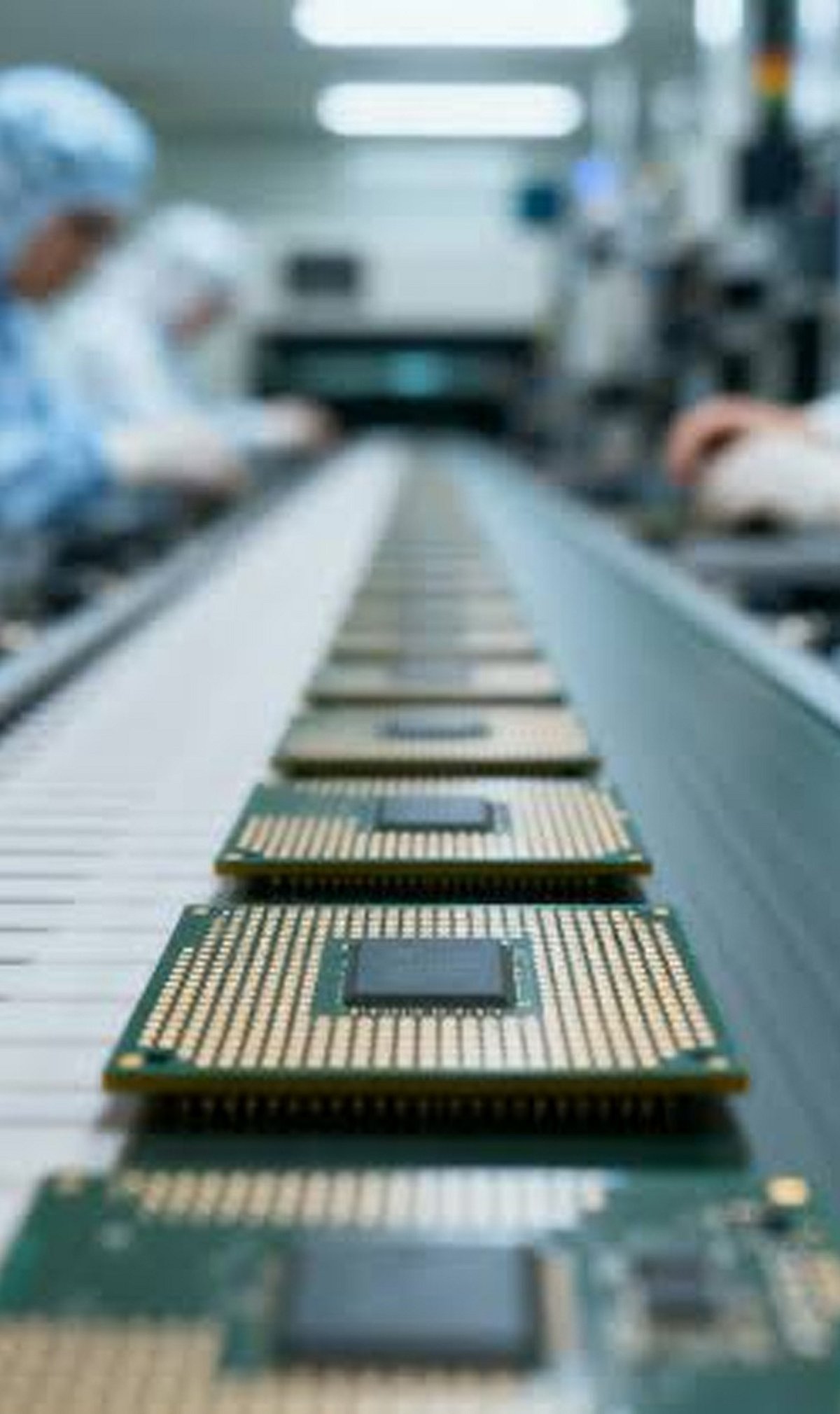
Semiconductor manufacturing is entering a transformative era, driven by soaring demand for AI and the need for more powerful, efficient chips. In 2026, the industry is moving beyond traditional transistor scaling to embrace a broader set of innovations. Here are the seven key trends reshaping chip production.
1. 2nm Chips and GAA Transistors
Chipmakers are advancing toward 2nm-class process technology with gate-all-around (GAA) transistors. These designs deliver higher performance and better power efficiency, but they also increase manufacturing complexity significantly.
2. Advanced Packaging and Chiplets
As shrinking individual dies becomes prohibitively expensive, chiplets and 2.5D/3D packaging are gaining traction. By integrating multiple chip components into a single package, manufacturers achieve higher performance and flexibility without relying solely on node shrinks.
3. High-Bandwidth Memory for AI
AI workloads demand enormous amounts of fast memory. High-bandwidth memory (HBM) places stacked memory close to powerful processors, enabling faster data movement and reducing processing bottlenecks in AI systems.
4. Silicon Photonics and Optical Data
Electrical connections face growing bandwidth and power challenges. Silicon photonics uses light to transmit data at high speeds, making it a critical technology for future AI data centers, networking, and high-performance computing.
5. SiC and GaN Take on New Roles
Silicon carbide (SiC) and gallium nitride (GaN) can handle high voltage, heat, and power demands. These materials are becoming essential in electric vehicles, fast chargers, renewable energy systems, and advanced data-center infrastructure.
6. AI-Powered Smart Factories
AI is moving inside semiconductor fabs. Machine learning monitors equipment, detects defects, improves yields, predicts maintenance needs, and optimizes production processes in real time, making factories smarter and more efficient.
7. Chip Supply Chains Are Going Regional
Geopolitical tensions and supply risks are pushing companies and governments to diversify semiconductor production. New fabs and packaging capacity are being developed across multiple regions to reduce dependence on concentrated manufacturing hubs.
The semiconductor race is no longer solely about making transistors smaller. Advanced packaging, memory, new materials, optical connectivity, AI-driven production, and regional manufacturing are becoming equally important for the industry’s future.