
Tag: Galaxy

  • Samsung Wallet Adds Fingerprint Authentication for UPI Payments in India

    Samsung Wallet Adds Fingerprint Authentication for UPI Payments in India

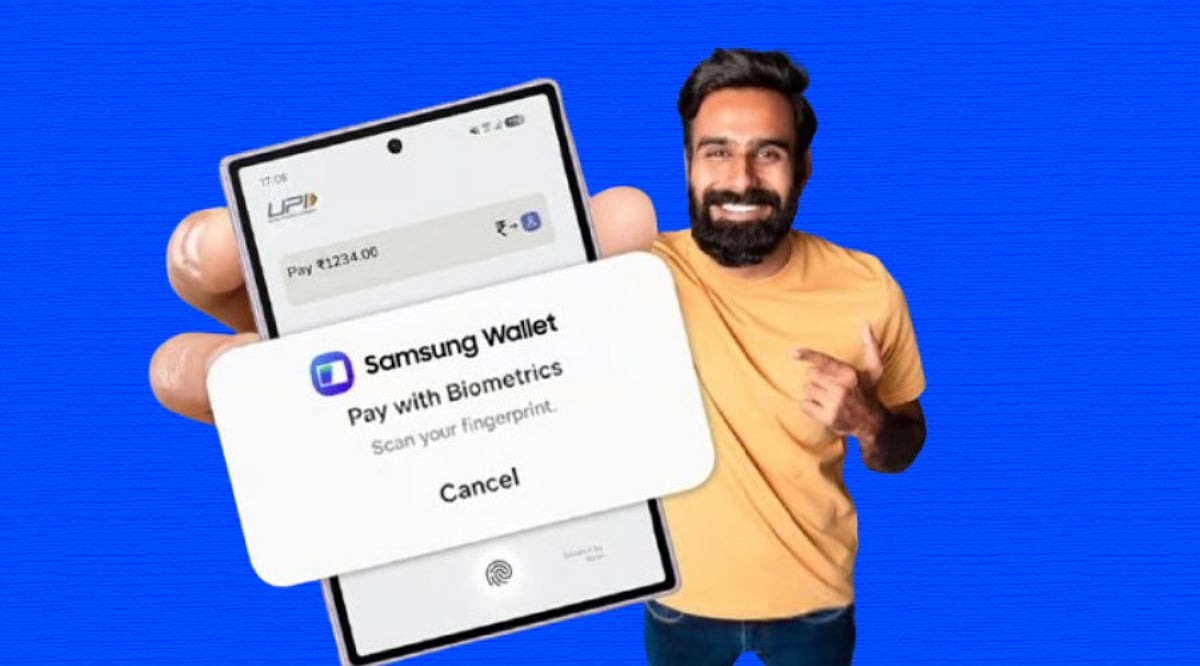
    Samsung has introduced a new fingerprint-based authentication feature for UPI payments through its Samsung Wallet app in India. The update allows users of compatible Galaxy smartphones to approve eligible transactions using the device’s built-in fingerprint sensor, eliminating the need to manually enter a UPI PIN for qualifying payments.

    How Fingerprint UPI Payments Work

    The authentication process is designed to be as seamless as unlocking a Galaxy phone. When a user initiates an eligible UPI payment of up to Rs. 10,000 via Samsung Wallet, the app prompts them to authenticate using the fingerprint sensor. Once the fingerprint is recognized, the transaction proceeds without requiring the user to type their UPI PIN on the screen.

    Samsung has confirmed that the biometric verification occurs entirely on the device. The company leverages its Knox security platform and encryption to protect sensitive payment information, ensuring that fingerprint data is stored securely.

    Enhanced Convenience and Privacy

    This update is particularly beneficial for frequent small-ticket UPI transactions. By removing the manual PIN entry step, Samsung aims to make routine payments faster. The feature also enhances privacy in crowded public spaces, where entering a PIN on a phone screen can risk exposure.

    According to Samsung, on-device biometric authentication can help reduce payment failures caused by incorrect UPI PIN entries. The move aligns with the National Payments Corporation of India’s (NPCI) broader initiative to introduce additional authentication methods for UPI transactions.

    More Than Just UPI

    Samsung Wallet serves as a comprehensive digital wallet. Beyond UPI, it supports contactless payments using tokenized credit and debit cards, utility bill payments, and storage for digital keys, boarding passes, tickets, and ID cards. Samsung emphasizes that the Knox security platform, combined with fingerprint recognition and encryption, creates a secure environment designed to protect sensitive data from both digital and physical threats.

    For Galaxy users in India, this update brings the UPI payment experience closer to the simplicity of unlocking their phone: a simple fingerprint scan is all it takes to complete an eligible payment.

  • Samsung Gallery Ends OneDrive Backup: Google Photos Emerges as Likely Replacement

    Samsung Gallery Ends OneDrive Backup: Google Photos Emerges as Likely Replacement

    Samsung Gallery is set to end its auto-sync feature with Microsoft OneDrive for photos on September 30, 2026. As this deadline approaches, evidence suggests that Samsung is preparing a new backup solution that will leverage Google Cloud instead.

    According to reports, a new version of Samsung’s Gallery Cloud Sync service (version 1.6.09.31) has been spotted on the Galaxy Store. The listing indicates that the service will support Google Photos, allowing Galaxy users to back up photos and videos from Samsung Gallery directly to Google’s cloud. Users will likely be able to view their backed-up content through both Samsung Gallery and Google Photos, with the service requiring a Samsung account and being tied to Samsung devices.

    It is important to note that users who currently have photos stored in OneDrive must back them up before October 1, 2026, or risk losing access. A transition to Google Photos could simplify the process for Galaxy users and bring Samsung Gallery closer to the widely used Google Photos platform.

    Samsung’s Evolving Photo Backup Strategy

    This move reflects a broader trend in the smartphone industry, where manufacturers are increasingly partnering with major cloud platforms rather than building and maintaining their own infrastructure. This approach offers users more storage options while reducing operational complexity for companies.

    For Galaxy users, the key concerns revolve around the ease of migration and the fate of existing OneDrive photos. Samsung has not yet officially confirmed the Google Cloud link, so users should await an official announcement. If implemented, the new service could provide a seamless and secure way for Galaxy owners to manage their photo backups.

  • BNY Mellon to Offer In-Custody Crypto Staking for Institutions via Galaxy Partnership

    BNY Mellon to Offer In-Custody Crypto Staking for Institutions via Galaxy Partnership

    BNY Mellon has announced plans to integrate crypto staking into its digital asset custody platform through a collaboration with Galaxy, the bank confirmed on August 4, 2026. The proposed service would allow eligible institutional clients to earn staking rewards while keeping their assets within BNY’s custody system, pending regulatory approval.

    Under the arrangement, Galaxy will provide the staking infrastructure and technical support, enabling clients to participate in proof-of-stake blockchain networks without transferring their tokens to a third party. BNY said the service would maintain the same controls, governance standards, and asset protections expected by institutional investors.

    “As digital assets continue to evolve, clients want more than safekeeping alone — they want a broader set of capabilities delivered through an institutional-grade model,” said Carolyn Weinberg, BNY’s chief product and innovation officer.

    Galaxy will also serve as a design partner for BNY’s broader digital asset platform, contributing to infrastructure development beyond staking. The Nasdaq-listed firm, which already uses BNY’s custody platform as an early client, brings expertise in proof-of-stake networks and digital asset operations.

    Steve Kurz, Galaxy’s global co-head of digital assets, said: “The future of financial markets will be built on open, programmable rails, and the institutions that move first will define the era that follows.”

    BNY launched its digital asset custody service in 2022 and continues to expand blockchain-related services. The bank manages tens of trillions of dollars in assets under custody and administration. It also plans to move core transfer agency record-keeping onto blockchain, enable around-the-clock settlement for U.S. Treasuries by 2027, and test tokenized Treasuries on a private blockchain before the end of 2026.

    Ethereum, the largest proof-of-stake network by market value, remains a key reference point for staking services. At press time, Ethereum traded near $1,868, with a market value of about $225 billion. However, BNY did not specify which networks or tokens the staking service would support, nor did it provide a launch date, fee structure, or client eligibility details.