Tag: game design

  • 10 Landmark Video Games Since 2000 That Redefined the Industry

    10 Landmark Video Games Since 2000 That Redefined the Industry

    Since the turn of the millennium, video games have evolved from simple pastimes into sprawling online worlds, creative canvases, and cinematic masterpieces. The following 10 titles didn’t just entertain—they reshaped genres, introduced groundbreaking mechanics, built vibrant communities, and fundamentally changed how players experience interactive entertainment.

    The Sims

    The Sims transformed everyday life into a playful sandbox. Instead of following a linear narrative, players gained unprecedented freedom to create characters, design homes, and weave their own virtual stories. It proved that even the most mundane activities could become compelling gameplay.

    Grand Theft Auto III

    Grand Theft Auto III redefined the open-world formula by placing players in a fully explorable 3D city. Missions, exploration, and pure freedom coexisted seamlessly within one massive, living world—a template that countless games have since followed.

    World of Warcraft

    World of Warcraft brought millions together in a persistent online universe. It propelled MMORPGs into the mainstream and changed how communities interact through games, setting a new standard for social gaming experiences.

    Half-Life 2

    Half-Life 2 pushed physics-based gameplay and environmental storytelling to new heights. Its iconic Gravity Gun and richly detailed world made interacting with the environment feel essential to the experience, influencing first-person shooters for years to come.

    Minecraft

    Minecraft turned simple blocks into a virtually limitless creative playground. Blending exploration, construction, survival, and community-driven creativity, it inspired an enormous ecosystem of players, modders, and educators worldwide.

    Dark Souls

    Dark Souls made punishing combat, deliberate exploration, and cryptic environmental storytelling its core identity. Its distinctive design philosophy spawned an entire subgenre of action RPGs and a devoted fanbase.

    Grand Theft Auto V

    Grand Theft Auto V expanded the open-world concept with three interwoven protagonists, a massive interconnected map, and GTA Online. It demonstrated how a single game could evolve into a long-running entertainment platform with endless replayability.

    Fortnite

    Fortnite transformed the battle royale genre into a constantly evolving social platform. Combining competitive matches with live events, crossovers, creative modes, and a rapidly changing virtual world, it became a cultural phenomenon beyond gaming.

    These titles not only dominated their eras but also set new benchmarks for game design, community engagement, and the very definition of what a video game can be.

  • Creating Intuitive VR Experiences: A Guide to UX Design in Virtual Reality

    Creating Intuitive VR Experiences: A Guide to UX Design in Virtual Reality

    Virtual reality stopped being an experimental technology a long time ago. Today it’s used in entertainment, education, medicine, architecture, and many other fields. That’s why quality VR game development starts not with graphics or special effects, but with a well-thought-out user experience. Companies working on these projects — Stepico among them — pay close attention to how people interact with digital space, because that’s what determines whether they’ll come back to the product.

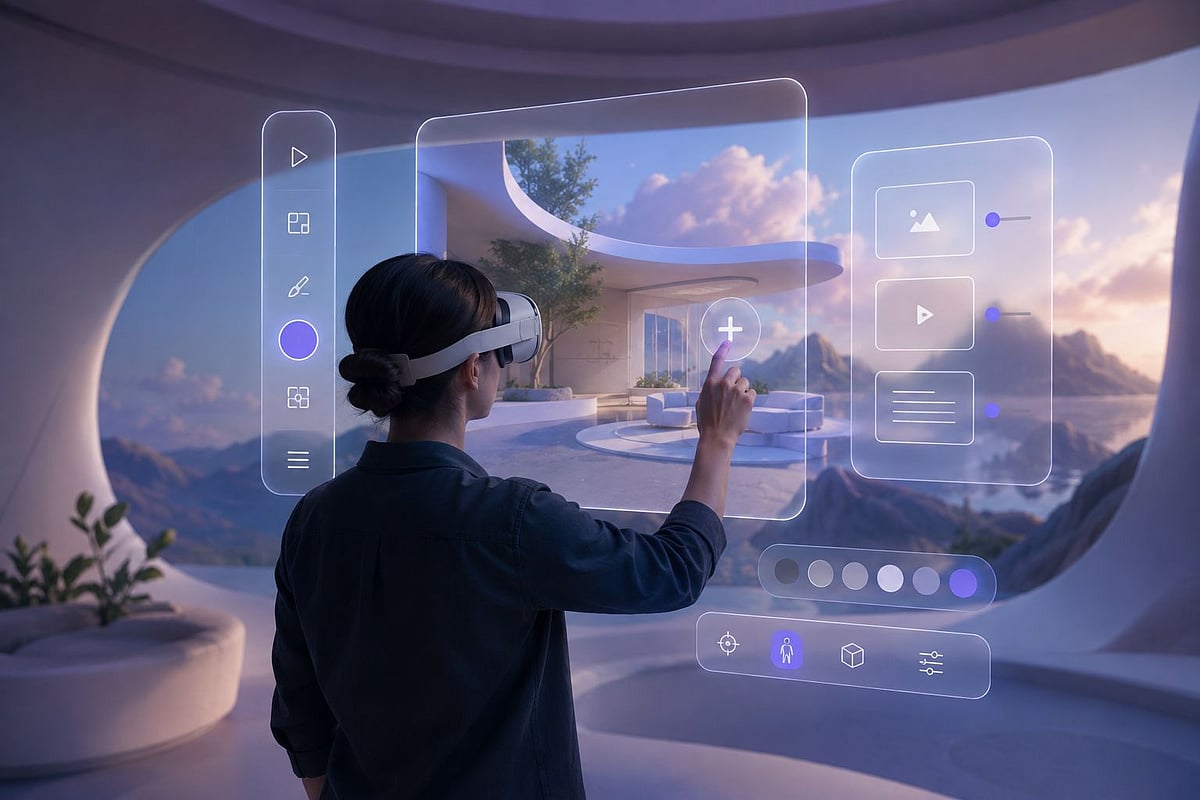
    Building a VR environment is different from developing regular games or mobile apps. In virtual space, the user is literally inside the action. Every detail — from camera rotation speed to menu placement — can affect comfort and overall impression. That’s why UX design for VR requires a different approach. It’s not just about showing a beautiful picture; it’s about making interaction feel natural and intuitive.

    Comfort comes first

    Many users encounter VR for the first time through games. If they feel discomfort in the first few minutes, there’s a good chance they’ll never open that product again.

    To avoid this, development should account for a few key things:

    • Stable frame rate
    • Minimal lag between user movement and system response
    • Comfortable movement speed
    • A choice of locomotion methods
    • Simple control setup

    These may seem obvious, but they define the quality of a user’s first impression.

    The interface should be part of the world

    In traditional games, menus often sit on top of the image. In VR, that approach works much worse.

    When information looks like a separate layer floating in front of your eyes, it breaks immersion. It works far better when the interface is naturally embedded in the virtual environment.

    A map, for example, could be a tablet the character holds. Health indicators might appear on a wristband. Objectives could show up on an interactive panel within the game world.

    This keeps users immersed and makes interaction feel more organic.

    Less tutorial, more intuition

    People don’t want to spend half an hour reading instructions. A good VR product introduces mechanics gradually. The first few minutes might cover simple actions — opening doors, picking up objects, pressing buttons, learning gestures. More complex features can unlock from there. This approach prevents information overload.

    Realistic interaction without unnecessary complexity

    Not every object in VR needs to behave exactly like it would in real life. Sometimes too much realism just gets in the way. If opening a simple door requires a series of precise movements, it gets frustrating fast. The goal is finding the right balance between realism and usability:

    • Large interaction zones
    • Clear visual feedback
    • Simple gestures
    • Predictable object behavior
    • Minimal accidental errors

    Users should feel in control, not like they’re fighting the mechanics.

    Space is part of the interaction

    In VR, the user perceives not individual interface elements, but the entire space around them. That is why designers work with more than just buttons, menus, or prompts. They carefully consider every detail of the environment so that users can quickly understand where they are and what to do next.

    Lighting helps draw attention to the right objects. Contrasting colors highlight important objects, and the familiar layout of furniture, walkways, or equipment makes navigation more intuitive. If the space is structured logically, users are less likely to pause while searching for the next action.

    A well-designed environment allows you to do without a large number of text prompts. The room’s architecture, the direction of light, or even the placement of doors can naturally suggest a route. As a result, the interaction feels cohesive and doesn’t overwhelm the user with unnecessary information.

    Sound works in tandem with visuals

    In virtual reality, sound serves many more functions than just background noise. It helps users orient themselves in space, react to changes, and make decisions faster. Spatial audio allows users to determine where a character is approaching from, in which direction a mechanism has been triggered, or where an important event has occurred. This is especially useful in games, training simulators, and collaborative VR environments.

    High-quality sound design helps solve several tasks at once:

    • it simplifies navigation;
    • it creates a clear soundscape of the environment;
    • it signals important events without text prompts;
    • it makes interactions feel more natural;
    • it helps you react more quickly to changes in your surroundings.

    When sound is used correctly, the user doesn’t need to constantly look at prompts or search for messages on the screen. Many actions become intuitive thanks to the combination of visual and auditory cues.

    Testing should begin as early as possible

    Even an experienced team cannot predict all user behavior scenarios. People react differently to the same mechanics, so it’s worth testing solutions even while creating the first prototypes. Test participants who have had almost no experience with VR headsets are particularly valuable. They are the ones who most often reveal which elements cause difficulties, where people get lost, or which actions seem confusing.

    During testing, the team may identify the following issues:

    • awkward movement;
    • difficult object manipulation;
    • an overloaded interface;
    • subtle or hard-to-notice prompts;
    • errors in spatial design.

    The sooner these flaws are identified, the less time and resources will be needed to fix them. Minor changes at an early stage are usually much less expensive than reworking a finished product.

    Conclusion

    Many well considered choices are necessary for a high-quality VR user experience. An unobtrusive interface, well-tuned music, a rationally arranged area, easy navigation, and intuitive object interaction all function as a cohesive system. A user’s level of comfort in the virtual world is influenced by each of these factors.

    Both effective solutions and flaws are immediately apparent to users. They remain in the app longer, learn its features more quickly, and are more inclined to return if the interface is simple from the very beginning. For this reason, effective VR projects are based on both contemporary technology and actual human behavior and expectations.


  • 10 Legendary Video Games That Revolutionized the Industry Forever

    10 Legendary Video Games That Revolutionized the Industry Forever

    From the simple yet revolutionary Pong to the cultural phenomenon Fortnite, certain video games have transcended mere entertainment to reshape the entire gaming landscape. These titles introduced groundbreaking mechanics, spawned new genres, and inspired countless developers. Here are 10 games that didn’t just sell millions—they changed how we play, connect, and imagine virtual worlds.

    1. Pong (1972)

    Before realistic graphics or sprawling open worlds, Pong proved that video games could be fun and mainstream. Its simple table-tennis premise became an arcade sensation and laid the foundation for the modern gaming industry.

    2. Super Mario Bros. (1985)

    With memorable characters, precise controls, and brilliantly designed levels, Super Mario Bros. revitalized console gaming. It set a gold standard for platformers and showed how engaging gameplay could captivate a global audience.

    3. The Legend of Zelda (1986)

    Unlike linear level-based games of its time, The Legend of Zelda encouraged exploration. It introduced secret areas, puzzles, and a vast overworld, pioneering the action-adventure genre and inspiring future open-world designs.

    4. Doom (1993)

    Doom revolutionized first-person shooters (FPS) with fast-paced combat, multiplayer deathmatches, and a vibrant modding community. It set the template for PC shooters and remains a benchmark for the genre.

    5. Super Mario 64 (1996)

    Mario’s leap to 3D was risky but transformative. Super Mario 64 introduced smooth movement, a dynamic camera, and open-ended levels, establishing standards for 3D platformers that still influence games today.

    6. Grand Theft Auto III (2001)

    Grand Theft Auto III redefined open-world gaming. Players could freely navigate a city, take on missions at will, or create their own adventures. Its legacy is visible in countless action-adventure titles that followed.

    7. World of Warcraft (2004)

    For millions, World of Warcraft was more than a game—it was a community. It popularized the massively multiplayer online role-playing game (MMORPG) genre and shaped the live-service model through constant expansions and updates.

    8. Minecraft (2011)

    Minecraft gave players unprecedented creative freedom. Instead of dictating a story, it provided tools to build, explore, and survive in infinite blocky worlds. It inspired user-generated content, educational uses, and a new sandbox genre.

    9. Pokémon Red & Blue (1996)

    These games turned creature-catching into a global phenomenon. Trading and battling via link cables made gaming social, and the franchise became one of the biggest entertainment properties ever.

    10. Fortnite (2017)

    Fortnite transformed how games are supported post-launch. Frequent updates, crossovers, live concerts, and cross-platform play turned it into an evolving digital platform, defining the live-service era.

    Final Takeaway

    These games achieved far more than commercial success. They introduced ideas that reshaped the industry—from technological breakthroughs to innovative gameplay and online communities. As gaming moves toward AI, cloud streaming, and virtual reality, these classics remain the foundation on which the future is built.