Tag: gaming history

  • 10 Landmark Video Games Since 2000 That Redefined the Industry

    10 Landmark Video Games Since 2000 That Redefined the Industry

    Since the turn of the millennium, video games have evolved from simple pastimes into sprawling online worlds, creative canvases, and cinematic masterpieces. The following 10 titles didn’t just entertain—they reshaped genres, introduced groundbreaking mechanics, built vibrant communities, and fundamentally changed how players experience interactive entertainment.

    The Sims

    The Sims transformed everyday life into a playful sandbox. Instead of following a linear narrative, players gained unprecedented freedom to create characters, design homes, and weave their own virtual stories. It proved that even the most mundane activities could become compelling gameplay.

    Grand Theft Auto III

    Grand Theft Auto III redefined the open-world formula by placing players in a fully explorable 3D city. Missions, exploration, and pure freedom coexisted seamlessly within one massive, living world—a template that countless games have since followed.

    World of Warcraft

    World of Warcraft brought millions together in a persistent online universe. It propelled MMORPGs into the mainstream and changed how communities interact through games, setting a new standard for social gaming experiences.

    Half-Life 2

    Half-Life 2 pushed physics-based gameplay and environmental storytelling to new heights. Its iconic Gravity Gun and richly detailed world made interacting with the environment feel essential to the experience, influencing first-person shooters for years to come.

    Minecraft

    Minecraft turned simple blocks into a virtually limitless creative playground. Blending exploration, construction, survival, and community-driven creativity, it inspired an enormous ecosystem of players, modders, and educators worldwide.

    Dark Souls

    Dark Souls made punishing combat, deliberate exploration, and cryptic environmental storytelling its core identity. Its distinctive design philosophy spawned an entire subgenre of action RPGs and a devoted fanbase.

    Grand Theft Auto V

    Grand Theft Auto V expanded the open-world concept with three interwoven protagonists, a massive interconnected map, and GTA Online. It demonstrated how a single game could evolve into a long-running entertainment platform with endless replayability.

    Fortnite

    Fortnite transformed the battle royale genre into a constantly evolving social platform. Combining competitive matches with live events, crossovers, creative modes, and a rapidly changing virtual world, it became a cultural phenomenon beyond gaming.

    These titles not only dominated their eras but also set new benchmarks for game design, community engagement, and the very definition of what a video game can be.
  • 10 Legendary Video Games That Revolutionized the Industry Forever

    10 Legendary Video Games That Revolutionized the Industry Forever

    From the simple yet revolutionary Pong to the cultural phenomenon Fortnite, certain video games have transcended mere entertainment to reshape the entire gaming landscape. These titles introduced groundbreaking mechanics, spawned new genres, and inspired countless developers. Here are 10 games that didn’t just sell millions—they changed how we play, connect, and imagine virtual worlds.

    1. Pong (1972)

    Before realistic graphics or sprawling open worlds, Pong proved that video games could be fun and mainstream. Its simple table-tennis premise became an arcade sensation and laid the foundation for the modern gaming industry.

    2. Super Mario Bros. (1985)

    With memorable characters, precise controls, and brilliantly designed levels, Super Mario Bros. revitalized console gaming. It set a gold standard for platformers and showed how engaging gameplay could captivate a global audience.

    3. The Legend of Zelda (1986)

    Unlike linear level-based games of its time, The Legend of Zelda encouraged exploration. It introduced secret areas, puzzles, and a vast overworld, pioneering the action-adventure genre and inspiring future open-world designs.

    4. Doom (1993)

    Doom revolutionized first-person shooters (FPS) with fast-paced combat, multiplayer deathmatches, and a vibrant modding community. It set the template for PC shooters and remains a benchmark for the genre.

    5. Super Mario 64 (1996)

    Mario’s leap to 3D was risky but transformative. Super Mario 64 introduced smooth movement, a dynamic camera, and open-ended levels, establishing standards for 3D platformers that still influence games today.

    6. Grand Theft Auto III (2001)

    Grand Theft Auto III redefined open-world gaming. Players could freely navigate a city, take on missions at will, or create their own adventures. Its legacy is visible in countless action-adventure titles that followed.

    7. World of Warcraft (2004)

    For millions, World of Warcraft was more than a game—it was a community. It popularized the massively multiplayer online role-playing game (MMORPG) genre and shaped the live-service model through constant expansions and updates.

    8. Minecraft (2011)

    Minecraft gave players unprecedented creative freedom. Instead of dictating a story, it provided tools to build, explore, and survive in infinite blocky worlds. It inspired user-generated content, educational uses, and a new sandbox genre.

    9. Pokémon Red & Blue (1996)

    These games turned creature-catching into a global phenomenon. Trading and battling via link cables made gaming social, and the franchise became one of the biggest entertainment properties ever.

    10. Fortnite (2017)

    Fortnite transformed how games are supported post-launch. Frequent updates, crossovers, live concerts, and cross-platform play turned it into an evolving digital platform, defining the live-service era.

    Final Takeaway

    These games achieved far more than commercial success. They introduced ideas that reshaped the industry—from technological breakthroughs to innovative gameplay and online communities. As gaming moves toward AI, cloud streaming, and virtual reality, these classics remain the foundation on which the future is built.

  • The 1970s Games That Shaped Modern Gaming: A Retrospective

    The 1970s Games That Shaped Modern Gaming: A Retrospective

    The 1970s changed entertainment forever. Arcades became popular gathering spots, while home gaming slowly entered people’s lives. Developers experimented with new genres, gameplay mechanics, and storytelling techniques. Many of the ideas introduced during this decade are still used in modern games.

    Some titles focused on action, while others encouraged exploration, strategy, or problem-solving. Together, they proved that video games could offer much more than simple fun. The 1970s were the decade that started it all. Long before lifelike graphics and massive open worlds, video games won players over with simple ideas, exciting challenges, and endless fun. Arcades buzzed with competition, while early home systems gave families a new way to play together. These games may look basic today, but they introduced genres, gameplay styles, and mechanics that continue to influence modern titles.

    Mattel Auto Race (1976)

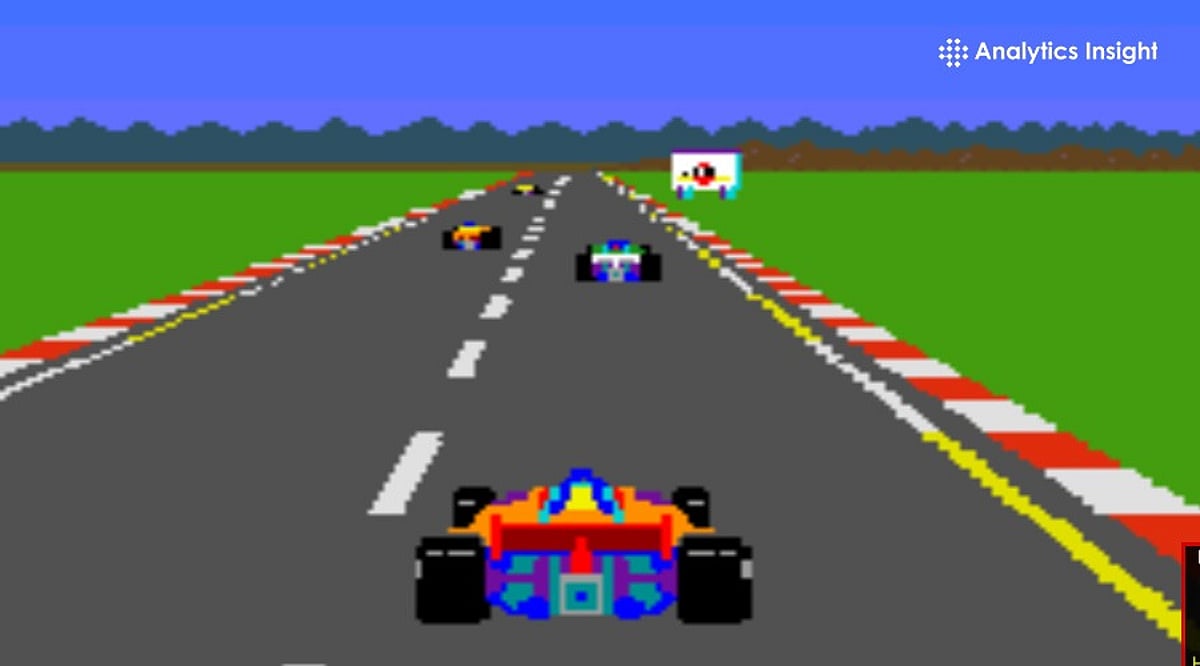
    Released in 1976, Mattel Auto Race became one of the first successful handheld electronic games. Players switched lanes to avoid oncoming traffic while trying to stay on the road. Its simple gameplay made it easy to pick up and enjoy. More importantly, it showed that gaming could be portable, paving the way for future handheld consoles.

    Western Gun (1975)

    Western Gun arrived in arcades in 1975 and became one of the earliest competitive multiplayer shooters. Two players faced each other in a Wild West duel while using rocks and cacti for cover. Every match felt different because movement and timing mattered. It helped introduce player-versus-player action that later became a major part of gaming.

    The Oregon Trail

    The Oregon Trail proved that educational games could also be entertaining. Players guided a wagon party across America while managing food, supplies, and difficult decisions. Hunting, disease, and unexpected events made every journey unique. Its mix of learning and survival created an experience that generations of students still remember with nostalgia.

    Galaxian (1979)

    Galaxian took arcade shooters to a new level in 1979. Enemy ships no longer stayed in fixed formations. Instead, they broke away and attacked players in fast diving patterns. The colorful visuals and exciting gameplay made every round feel intense. Its ideas later influenced countless space shooter games that followed.

    Lunar Lander

    Lunar Lander challenged players to land a spacecraft safely with limited fuel. Every movement had to be carefully controlled because even a small mistake could end the mission. The realistic physics made the game feel different from other arcade titles. It rewarded patience, precision, and careful planning instead of quick reactions alone.

    Akalabeth: World of Doom

    Created by Richard Garriott, Akalabeth: World of Doom was among the earliest role-playing games on home computers. Players explored dungeons, completed quests, and fought monsters while improving their characters. The open-world structure encouraged exploration instead of following a fixed path. Many RPG franchises later built upon the ideas first introduced here.

    Star Raiders (1979)

    Released for Atari 8-bit computers in 1979, Star Raiders combined action with strategy. Players explored a galaxy map, defended friendly bases, and battled enemy fleets across space. Every mission required smart planning and quick combat skills. Its blend of exploration and space battles made it one of Atari’s most memorable computer games.

    Personal Recommendation: Two Classics That Still Stand Out

    If I had to recommend only two games from this list, they would be The Oregon Trail and Galaxian. The Oregon Trail remains enjoyable because every choice feels meaningful. Managing resources amid unpredictable events creates suspense throughout the journey. Even today, it offers a fun way to experience history while testing decision-making skills. Galaxian is equally impressive because its gameplay still feels exciting. The attacking enemy formations keep players alert from start to finish. It may look simple by modern standards, but its fast-paced action remains surprisingly addictive and shows why it became an arcade classic.

    Why These Games Still Matter

    The technology of the 1970s was limited, yet developers created experiences that inspired future generations. These games introduced multiplayer competition, role-playing adventures, space combat, handheld gaming, and educational gameplay at a time when the industry was just beginning. Many modern genres trace their origins back to these classics. Their influence continues to appear in today’s biggest games, proving that strong gameplay ideas never become outdated.

    A Legacy that Lives On

    The greatest games of the 1970s did more than entertain players. They laid the groundwork for one of the world’s biggest entertainment industries. From the portable fun of Mattel Auto Race to the fantasy adventure of Akalabeth: World of Doom, every title brought something new to gaming. Looking back at these classics reminds us that great games are built on creativity, not just technology. Their simple designs and memorable gameplay continue to inspire developers and delight retro gaming fans decades later.

  • From 2D Streets to Immersive Worlds: The Complete Evolution of GTA Maps (1997-2026)

    From 2D Streets to Immersive Worlds: The Complete Evolution of GTA Maps (1997-2026)

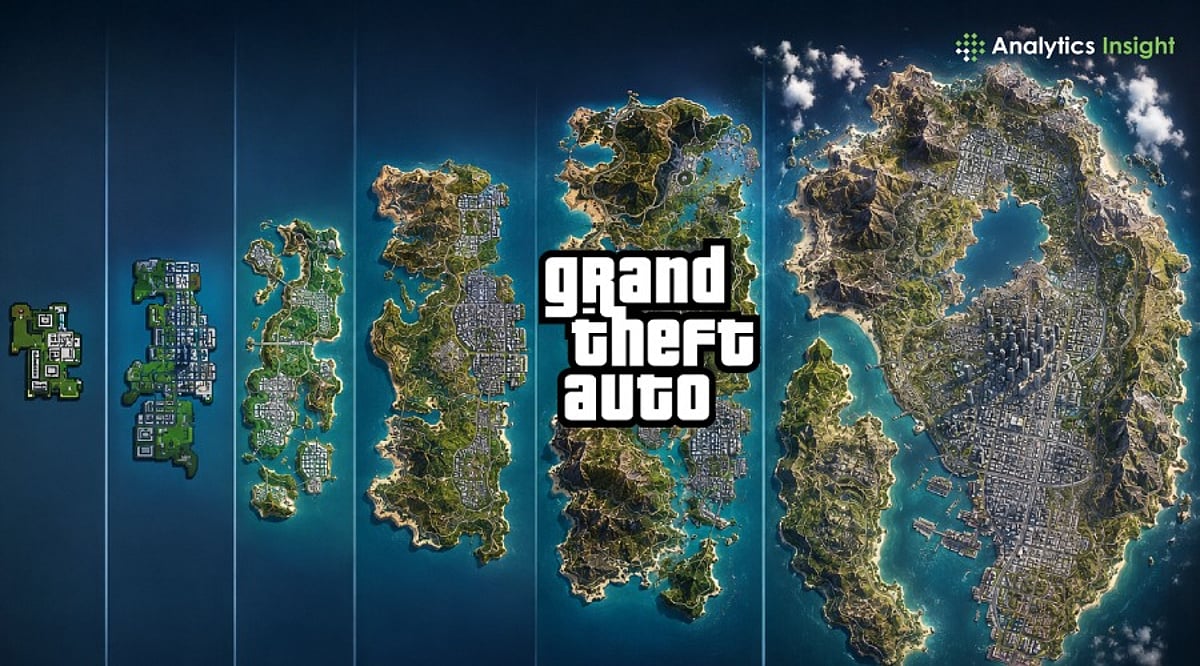
    Grand Theft Auto began as a straightforward crime game with a top-down perspective and has since evolved into one of the most expansive open-world franchises in gaming history. Starting with small 2D cities and progressing through detailed 3D environments to the modern HD era, each new installment has pushed the boundaries of map size, interactivity, and immersion. With GTA 6 on the horizon, the anticipation for Rockstar’s next leap is palpable.

    The 2D Origins (1997–2000)

    The early GTA games—released between 1997 and 2000—used a top-down 2D viewpoint. Players could explore cities inspired by Liberty City, Vice City, and San Andreas, but technical limitations kept the maps flat and lacking in realism. While enjoyable, these worlds did not feel like living cities.

    The 3D Revolution: GTA III and Vice City (2001–2002)

    With GTA III in 2001, Rockstar transitioned to full 3D. Liberty City gained crowded streets, traffic, pedestrians, and hidden alleys, offering a sense of being inside a real city. GTA Vice City followed with a vibrant 1980s setting—neon lights, beaches, and a soundtrack that made every street memorable.

    San Andreas: The First Massive Open World (2004)

    GTA San Andreas broke new ground by featuring three distinct cities—Los Santos, San Ferris, and Las Venturas—plus countryside, deserts, mountains, and small towns. The world felt enormous for its time and offered unprecedented freedom.

    The HD Era: GTA IV and GTA V (2008–2013)

    GTA IV introduced a denser, more realistic Liberty City with reactive NPCs and a believable atmosphere. GTA V combined scale and detail, presenting Los Santos and Blaine County with beaches, highways, deserts, and a bustling metropolis—becoming one of the best-selling games ever.

    What GTA 6 Brings to the Table (2026)

    Rockstar has confirmed GTA 6 returns to Vice City and the state of Leonida. Trailers show a world with smarter NPCs, dynamic weather (storms, heavy rain), interactive environments, and a living ecosystem that changes over time. Protagonists Jason and Lucia anchor a narrative focused on survival and crime. The leaked footage suggests a map designed to feel less like a game level and more like a real, breathing world.

    Why This Evolution Matters

    From the 2D streets of 1997 to the photorealistic chaos of 2026, Grand Theft Auto has repeatedly redefined what an open world can be. Each title built on its predecessor—larger maps, richer details, and more player freedom. GTA 6 is poised to continue that legacy, and fans are counting the days until they can explore Leonida.

    “The journey from the first GTA to the world of Leonida is one of the greatest evolutions in gaming history.”

    Frequently Asked Questions

    • When did the GTA series begin? The first Grand Theft Auto launched in 1997 with a top-down perspective.
    • Which GTA game first used a full 3D world? GTA III (2001) was the first main entry to go fully 3D.
    • Why is GTA San Andreas still loved? It offered three cities, vast countryside, and a level of freedom rare at the time.
    • What has Rockstar confirmed about GTA 6? It is set in Vice City and Leonida, starring Jason and Lucia.
    • Can GTA 6 change open-world games again? Many believe so, given its larger, more reactive world revealed in trailers.