
Tag: Go

  • Esbuild: The Blazing-Fast JavaScript Bundler Every Developer Should Know

    Esbuild: The Blazing-Fast JavaScript Bundler Every Developer Should Know

    esbuild is a modern JavaScript and TypeScript bundler, minifier, and transpiler built using the Go programming language. It helps developers bundle files, reduce code size, and speed up web app builds. Its biggest advantage is performance, making it one of the fastest build tools available today.

    Why Speed Matters

    The biggest reason developers choose esbuild is speed. Because it is written in Go and uses parallel processing, it can build projects 10–100 times faster than traditional tools like Webpack or Rollup. Large applications often compile in under a second.

    Broad File Support

    esbuild works with JavaScript, TypeScript, JSX, CSS, JSON, and other file types without requiring multiple tools. Developers can build React, Vue, and other modern frontend projects with minimal configuration and fewer dependencies.

    Built-in Features

    It includes many important features by default. esbuild supports tree shaking to remove unused code, code minification for smaller bundles, source maps for debugging, and both ES Modules and CommonJS, making project setup simple and efficient.

    TypeScript and JSX Handling

    TypeScript and JSX are supported out of the box, but esbuild focuses on speed instead of type validation. It removes TypeScript types during the build process, so developers should still run the TypeScript compiler (tsc) separately for complete type checking.

    Developer Experience

    esbuild also improves the development experience with watch mode for automatic rebuilds and a built-in local server for testing projects. It offers both a command-line interface and APIs, making it suitable for automation, scripts, and CI/CD workflows.

    Ecosystem and Adoption

    Many popular tools, including Vite, Remix, Astro, and SvelteKit, use esbuild to deliver faster builds. While its plugin ecosystem is smaller than Webpack’s, it is an excellent choice for developers who want simple configuration, lightning-fast performance, and modern web development workflows.
  • Best Backend Frameworks for 2026: FastAPI, Django, NestJS, and More

    Best Backend Frameworks for 2026: FastAPI, Django, NestJS, and More

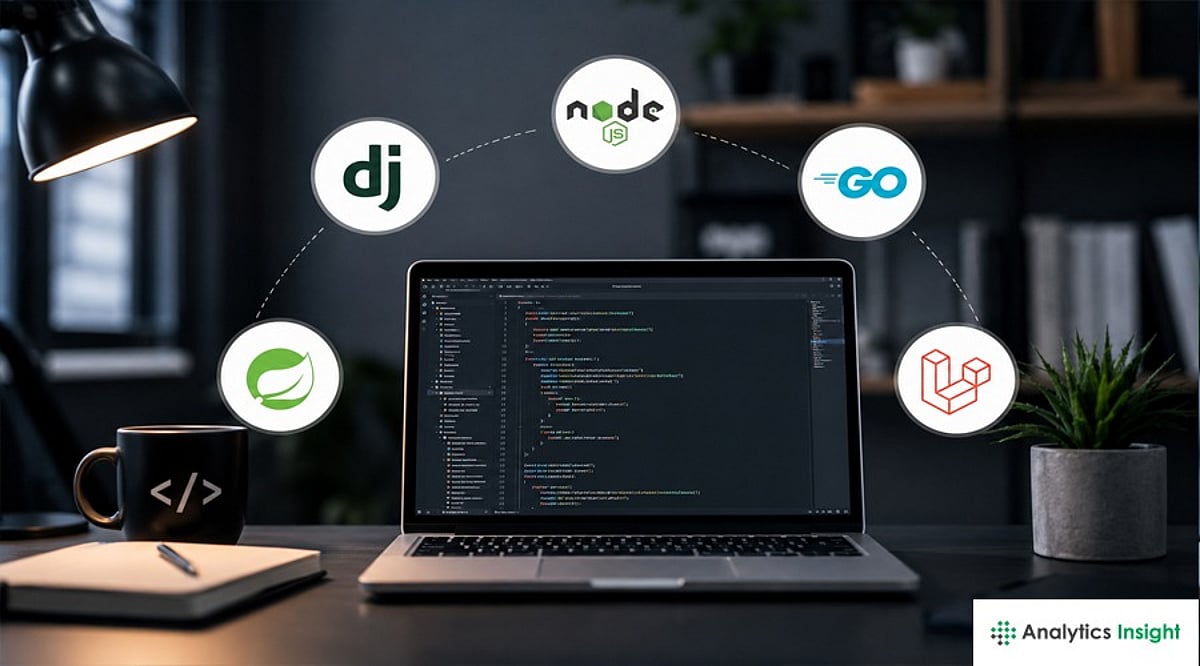
    Backend frameworks continue evolving alongside AI, cloud-native computing, and edge applications. Understanding the strengths of FastAPI, Django, NestJS, Express.js, Spring Boot, Laravel, Go, and ASP.NET Core helps developers choose the right technology for modern, scalable, and enterprise-ready backend systems.

    AI-driven workloads, edge computing, and container-native deployment have pulled backend development in different directions at once. With more than 50 actively maintained backend frameworks in circulation, here’s where developer attention is genuinely concentrated in 2026.

    FastAPI Has Become Python’s Fastest-Growing Framework

    FastAPI has overtaken Django in adoption among Python web developers, now used by an estimated 38-40% of them, driven largely by its performance and native fit for AI-integrated backends. Built on Starlette and Pydantic, FastAPI handles roughly 30,000-40,000 requests per second compared to Django’s 8,000-12,000, and its async-first, ASGI-based architecture processes concurrent I/O-bound requests far more efficiently. For teams building API-first products, inference services, or anything that touches machine learning, FastAPI has become the default starting point.

    Django and Laravel Remain the Fast-Delivery Standard

    Despite FastAPI’s momentum, Django hasn’t lost relevance: its batteries-included philosophy, built-in admin panel, ORM, and mature security defaults still make it the stronger choice for full-stack applications, content-heavy platforms, and anything needing an admin interface out of the box. Laravel occupies a similar role in the PHP ecosystem, prized for its Eloquent ORM and MVC structure that lets small teams ship production applications quickly without excessive boilerplate.

    Node.js Splits Between Minimalism and Structure

    Express.js is still the most popular Node.js framework, loved for building minimalistic backends. On the other hand, NestJS represents an approach based on Angular architecture with modules, decorators, and dependency injection. New players like Hono are gaining popularity for edge computing deployments, growing from approximately 1,000 weekly downloads in 2022 to 20 million in 2026.

    Enterprise and Compliance Still Favor Established Players

    For regulated industries such as banking, insurance, and healthcare, framework choice also serves as a compliance decision. Spring Boot and ASP.NET Core continue to dominate financial services due to mature security tooling and strong vendor support. NestJS is gaining ground here, particularly in open banking implementations where API-first design and faster developer velocity are becoming as important as enterprise pedigree.

    Go Is Becoming the Default for Cloud-Native Microservices

    With businesses investing more in containerized and distributed systems, frameworks built in Go—such as Gin and Echo—offer low memory consumption, high speed, and good concurrency support. These make them ideal choices for microservices, IoT backends, and fast-paced cloud systems. While Go does not directly compete with Django and NestJS in full-stack development, it excels when performance under heavy loads is critical.

    Choosing the right backend framework improves developer productivity, simplifies maintenance, enhances security, and ensures applications remain reliable as business requirements evolve.

  • Must-Learn Programming Languages for 2026: Python, JavaScript, Rust, and More

    Must-Learn Programming Languages for 2026: Python, JavaScript, Rust, and More

    As technology continues to evolve at a rapid pace, developers and aspiring programmers must stay ahead of the curve by learning the most in-demand programming languages. The year 2026 will see a shift toward languages that power artificial intelligence, cloud-native applications, and high-performance systems. Here are the top programming languages you should consider mastering in 2026.

    Python Dominance

    Python remains the leading language for AI, machine learning, data science, automation, and backend application development worldwide. Its simplicity and vast ecosystem of libraries make it a must-learn for any developer.

    JavaScript Popularity

    JavaScript continues to power interactive websites, web applications, and full-stack development through modern frameworks and libraries like React, Angular, and Node.js. It remains a cornerstone of web development.

    TypeScript Growth

    TypeScript enhances JavaScript with static typing, improving code quality, scalability, and maintainability for large software projects. Its adoption is rapidly increasing among enterprises and open-source projects.

    Java for Enterprises

    Java remains a preferred choice for enterprise applications, cloud services, financial systems, and Android-based development environments. Its robustness and portability keep it relevant.

    C++ for Performance

    C++ excels in game development, embedded systems, high-performance computing, and applications requiring low-level hardware control. For performance-critical tasks, C++ is indispensable.

    Go for Cloud Computing

    Go, developed by Google, offers simplicity, speed, and concurrency support, making it ideal for cloud-native applications and microservices. Its efficient performance is driving adoption in DevOps and backend systems.

    Rust for Security

    Rust is gaining adoption because it delivers memory safety, reliability, and performance without sacrificing execution efficiency. It is becoming a top choice for systems programming and security-sensitive applications.

    Swift for Apple Ecosystem

    Swift remains essential for developing iOS, iPadOS, macOS, and other applications across Apple’s ecosystem. Its modern syntax and performance make it the preferred language for Apple developers.

    SQL for Data Management

    SQL continues to be indispensable for managing, querying, and analyzing data across databases and business applications. With the rise of big data, SQL skills are more valuable than ever.

    Whether you’re a beginner or an experienced developer, investing in these languages will prepare you for the technological challenges of 2026 and beyond. Stay ahead by learning the languages that shape the future.