Tag: governance

  • How AI-Driven Procurement Unlocks Hidden Millions by Unifying Supply Chains

    How AI-Driven Procurement Unlocks Hidden Millions by Unifying Supply Chains

    When two sites buy the same part from the same supplier at different prices, and nobody in either building knows, the waste is not a rounding error—it is a multi-million-dollar leak. That is the core insight from Priyanka Malla, an IT project manager specializing in AI-driven enterprise procurement and supply chain transformation.

    “At scale, the multi-million-dollar opportunity in procurement is not smarter buying, it is unification,” she says. Malla manages a portfolio of capital and operating spend covering AI initiatives, enterprise procurement, ERP modernization, and infrastructure. Her largest program consolidated procurement across more than 50 geographically distributed sites onto a single standardized platform. Each site arrived with its own legacy process and supplier relationships, and there was no template to follow.

    The obstacle, she found, was not the software. “When integrating systems that were never designed to talk to each other, the hard part is not the technology, it is reconciling how differently each site had been operating.” Reconciling fifty ways of buying into one was less an integration job than a negotiation with each site about how it worked.

    She followed that with ERP modernization across more than 15 branches, bringing together supply chain and financial data that had lived in disconnected legacy systems. The two programs did the same thing from different directions: one standardized how the organization buys, the other standardized what it knows about what it has bought.

    That order matters for artificial intelligence. Organizations that bring together sites or companies that each ran their own procurement “inherit duplicate suppliers, inconsistent pricing, and invisible spend.” An algorithm cannot optimize spend that nobody can see. “AI’s first real job is making that fragmented picture visible before it can make it optimal.”

    Bringing AI into that environment created a problem nobody had solved for her. As an early AI-focused project manager, she needed a way to decide when an AI tool could be trusted in an enterprise adoption decision, and no criteria existed. She built them, and that work became the failure-mode evaluation frameworks she now applies to AI adoption decisions.

    Her conclusion is blunt. “Most AI procurement rollouts fail at governance, not technology.” The risk is specific to scale. “Before scaling across dozens of sites, you need a shared definition of an acceptable failure mode. Otherwise every site trusts the algorithm differently, and you lose the standardization that justified the investment in the first place.”

    It is a pointed observation, because it means a rollout can undo its own business case. The reason to consolidate fifty sites is to make them behave consistently. An AI tool that one site overrides constantly and another accepts without question reintroduces exactly the inconsistency the consolidation was meant to remove.

    On where the technology goes next, she is specific about what automation should and should not do. “The next era of AI procurement is about routing decisions, not replacing buyers. The wins come from letting automation clear the high-confidence, high-volume transactions and escalating the exceptions to a human. That is where the cost curve actually bends.”

    The pattern runs back through her career. Earlier, she worked on a product lifecycle management deployment across more than 500 global sites, another exercise in getting many independent operators onto one system. She is an IEEE Senior Member, holds PMP certification and a master’s degree in management information systems from California State University, Long Beach, and has written for the product management publication Mind the Product.

    The headline promise of AI in procurement is an algorithm that finds millions. Malla’s account suggests the order is the other way round. The millions are already there, spread across suppliers, prices, and sites that were never compared. The algorithm only finds them once somebody has done the slow work of putting everything in one place.

  • CTO’s Roadmap for AI Agent Infrastructure: From Copilots to Autonomous Systems

    CTO’s Roadmap for AI Agent Infrastructure: From Copilots to Autonomous Systems

    Overview

    AI agents require infrastructure beyond traditional model APIs and chatbot frameworks. Identity, sandboxing, observability, data access, and tool controls become essential as autonomy grows. CTOs can scale agent deployments more safely by combining automation with strong governance.

    The Shift from Copilots to Autonomous Agents

    AI agents are moving from workplace assistants into operational systems. This shift changes what enterprises need from their technology infrastructure. A copilot usually waits for a user instruction. An autonomous agent can plan tasks, call tools, and act independently. This difference has major infrastructure implications. CTOs now need more than model access and application APIs. They need secure runtimes, reliable data, strong identity, observability, and control. The architecture must also support changing models and agent behavior.

    Start with a Clear Agent Architecture

    The first step is separating the agent into distinct layers. The model handles reasoning and generates the next action. An orchestration layer manages prompts, workflows, tools, and handoffs. Data services provide business context, retrieval, memory, and application information. The runtime executes agent tasks and manages their state. A governance layer controls permissions, policies, security, and human approvals. This structure makes systems easier to manage and upgrade. Microsoft Foundry now brings models, agents, tools, security, and governance together.

    Build a Runtime for Real Agent Work

    Agents need an environment for more than text generation. They may inspect files, run code, use APIs, and modify business data. This makes runtime isolation especially important. A poorly contained agent can turn a simple error into an operational incident. OpenAI’s Agents SDK now includes sandbox execution for controlled agent workflows. Its updated architecture supports long-running tasks across files and tools. CTOs should define resource limits before deploying autonomous systems. These limits can cover network access, execution time, spending, and tool permissions. High-risk actions should also require explicit approval to keep automation from becoming uncontrolled.

    Treat Identity and Access as Core Infrastructure

    An agent should never receive broad access by default. Its permissions should match the task it is performing. Use separate identities for agents, tools, and workloads. Apply role-based access controls and short-lived credentials where possible. Tool access deserves the same discipline. An agent should not call payment, database, or administrative systems without strict controls. Microsoft’s current agent platform supports Entra identity and role-based access control. It also supports network isolation and policy controls for enterprise deployments. This model creates clearer boundaries between an agent and corporate systems.

    Make Observability Part of the Agent Stack

    Traditional application monitoring is not enough for autonomous systems. Teams need to understand what the agent did and why. This requires tracing model calls, tool usage, latency, failures, and costs. It also requires evaluating task quality and safety over time. Microsoft Foundry supports agent tracing, evaluations, and production monitoring. Its telemetry can include tool calls, inputs, outputs, latency, and token usage. OpenAI’s Agents SDK also includes tracing and observability capabilities. CTOs should treat these signals like application performance data. Agent quality can drift after model, prompt, or tool changes.

    Design for Data, Memory, and Tool Integration

    Agents become useful when they can access relevant enterprise context, which may come from documents, databases, APIs, or business applications. Retrieval systems need strong permissions and reliable source data. Memory also needs clear rules around storage, retention, and user access. Tool integration should use stable interfaces and explicit contracts. Model Context Protocol is gaining attention for connecting agents with external tools. Infrastructure teams should avoid building every integration from scratch. Shared tool registries can simplify authentication, versioning, and governance. Microsoft’s Agent Service supports shared toolboxes and managed MCP endpoints.

    Put Governance Around Autonomous Actions

    Greater autonomy creates greater responsibility for enterprise leaders. Agents can make mistakes faster when they operate without constant human input. Guardrails should therefore cover inputs, tool calls, outputs, and sensitive actions. OpenAI recommends layered guardrails with authentication and authorization controls. Keep human intervention available for high-risk operations. Examples include large refunds, financial transfers, account changes, or destructive actions. CTOs should also define clear ownership for every deployed agent. Someone must be accountable for its performance, security, and business impact.

    Moving from Copilots to Autonomous Systems

    The infrastructure shift is gradual, not a single technology upgrade. Organizations can start with copilots and expand autonomy as controls mature. Early systems may only suggest actions. Later versions can execute approved workflows with limited supervision. Fully autonomous systems require stronger safeguards and deeper operational visibility. They also demand better testing before reaching production. For CTOs, the goal is not maximum autonomy. The goal is useful autonomy that remains observable, secure, and controllable. This principle can shape the architecture long before agents become business-critical.

  • Tata Group Stocks Slide as SP Group Moves to Monetize Rs 25,000 Crore Stake

    Tata Group Stocks Slide as SP Group Moves to Monetize Rs 25,000 Crore Stake

    Tata Group stocks witnessed a sharp decline on Friday as the SP Group announced plans to monetize its stake in Tata Sons, targeting at least Rs 25,000 crore through two transactions over an 18-month period. The proposal reignited concerns about ownership structure and governance within the conglomerate, triggering a selloff across key listed entities.

    Market Reaction

    Tata Chemicals led the decline, dropping as much as 7.8% during early trading. Tata Investment Corporation slipped nearly 3.9%, while TCS fell 3%. Tata Motors Passenger Vehicles declined 2.6%, and Tata Power was down 1.4%. Meanwhile, Tata Steel remained almost flat, and Tata Capital gained around 1.1% in early market hours.

    SP Group’s Proposal

    The SP Group, led by Cyrus and Ratan Tata’s estranged factions, seeks liquidity from its Tata Sons holdings without immediately forcing a public listing. The proposed transaction involves shares held through Sterling Investments Corporation and Cyrus Investments. Under the plan, Tata Sons could pursue selective capital reduction through the National Company Law Tribunal (NCLT).

    Governance Disputes Intensify

    The proposal adds to ongoing tensions over Tata Sons’ leadership and future listing ambitions. The board recently approved N Chandrasekaran’s five-year reappointment as executive chairman and moved toward exploring a public listing for the holding company. However, Tata Trusts, the majority shareholder, opposed both developments, stating, “The Trusts’ position remains unchanged, as a considered judgement of a majority shareholder.” The Trusts urged the board to consider alternatives beyond listing.

    Adding to the regulatory pressure, the Reserve Bank of India (RBI) rejected Tata Sons’ request to surrender its Core Investment Company registration, keeping it within the Upper Layer NBFC framework.

    Impact on Listed Entities

    The ownership structure links several listed Tata companies to Tata Sons’ fortunes. Tata Chemicals, Tata Motors, and Tata Investment hold stakes in Tata Sons, making their valuations indirectly sensitive to these developments. According to ICICI Securities, Tata Chemicals holds around 2.5% in Tata Sons.

    Friday’s selloff reflects uncertainty surrounding Tata Sons rather than operational weakness in the individual businesses. The previous day’s rally, driven by the leadership decision and renewed listing expectations, has now reversed as investors reassess the implications of the SP Group’s proposal.

  • AI in Banking: Sajeev Viswanathan on Connected Intelligence, Governance, and Fraud Prevention

    AI in Banking: Sajeev Viswanathan on Connected Intelligence, Governance, and Fraud Prevention

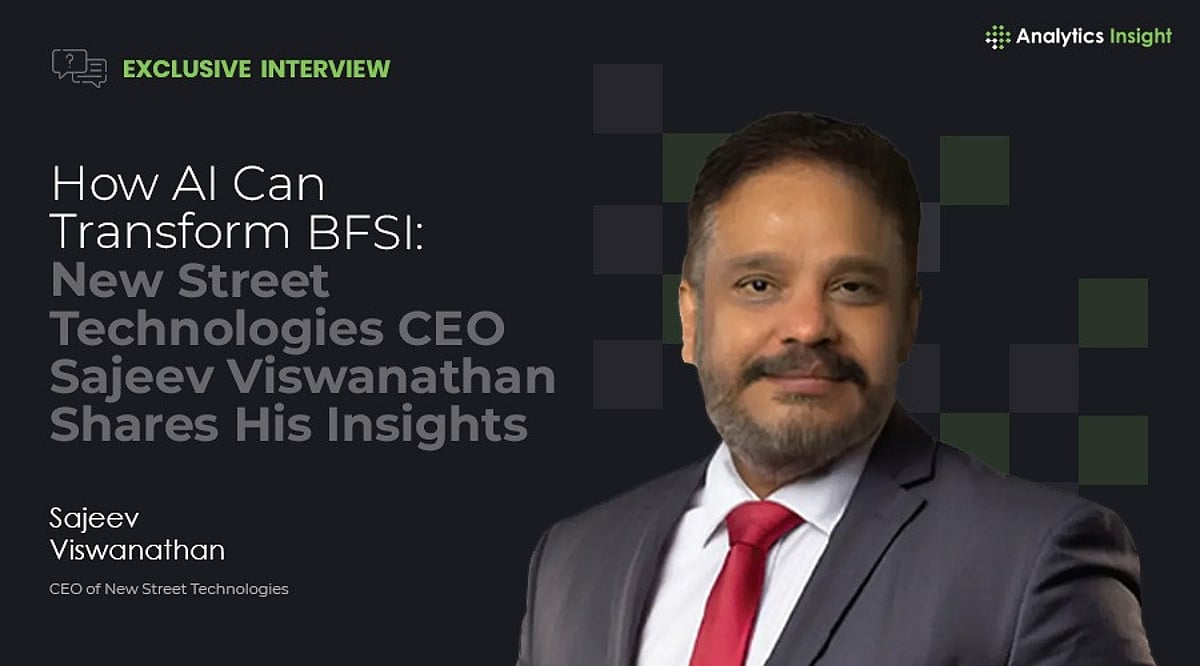
    In a recent interview, Sajeev Viswanathan, CEO of New Street Technologies, shared his vision for how artificial intelligence can transform the banking, financial services, and insurance (BFSI) sector. Rather than deploying AI as isolated point solutions, Viswanathan argues that financial institutions must build a connected, governed intelligence layer that spans the entire organization.

    According to Viswanathan, fragmentation occurs when AI is deployed as a collection of individual tools—such as a voice bot in one department, a coding assistant in another, and employees using consumer-grade LLMs for research. While each may solve a local problem, collectively they create new silos, data boundaries, and governance challenges. The solution is not to ban these tools but to provide a common foundation: a shared layer for identity, audit, version control, and domain intelligence.

    Viswanathan emphasizes the importance of Domain Intelligence Models (DIMs)—permissioned, shared intelligence that multiple processes and products can draw upon, with an optional interface to external LLMs when needed. Keeping AI decoupled from production execution is also critical. When AI-generated designs pass through maker-checker approval before deterministic engines run them, institutions achieve consistency and auditability by design.

    On fraud detection and regulatory compliance, Viswanathan notes that industry-specific AI models—shaped around BFSI transaction patterns, SWIFT message structures, KYC/AML workflows, and regulatory reporting formats—can identify anomalies that general-purpose models miss. However, the real strength comes from the architecture: separating AI that flags or designs from the deterministic engine that executes, ensuring explainability, auditability, and human oversight. Privacy is built in by allowing domain intelligence to be permissioned without moving sensitive customer data outside its governed environment.

    Viswanathan believes that as AI models become more accessible, differentiators will shift from model size to governance, deployment architecture, data strategy, and execution discipline. Banks that can implement regulatory changes in hours or launch new products in days on a well-governed platform will have a significant advantage. Key metrics like time-to-market and total cost of technology ownership become crucial.

    Regarding collaboration to combat financial crime, Viswanathan suggests that shared pattern intelligence and threat signals can be exchanged without compromising competitive advantage. Fraud typologies and money laundering patterns are not areas of competition; differentiation comes from customer experience, pricing, and product design. Federated approaches—where signals or models are shared while underlying data remains local—are particularly relevant. Regulator-sponsored or industry utility models also hold promise.

    Looking ahead, Viswanathan sees industry-specific AI ecosystems becoming as foundational as payment networks. Banks should prioritize three things: modernizing the operational core (not just customer-facing channels), embedding governance by design (audit trails, version control, maker-checker workflows, human oversight), and investing in domain intelligence rather than relying solely on generic AI tools. Ultimately, customers will choose a bank not because it uses AI, but because it responds faster, manages risk better, and earns their trust. AI may be the engine, but trust remains the defining differentiator.

  • 10 Supply Chain Priorities for AI-Driven Operations in 2027

    10 Supply Chain Priorities for AI-Driven Operations in 2027

    Supply chains are entering a new phase of AI adoption. Chief Supply Chain Officers (CSCOs) must now move beyond isolated pilots and build operating models designed for continuous AI-assisted decision-making. According to recent Gartner research, data readiness, legacy-system integration, talent, governance, and measurable value are critical foundations. Agentic AI and physical AI are also pushing supply chains toward greater autonomy.

    1. Build an AI-Ready Data Foundation

    AI-driven supply chains depend on accurate, accessible, and contextual data. Poor master data undermines forecasting, planning, and automation. CSCOs should audit critical datasets, assign clear ownership, and improve data quality across functions. A unified data foundation supports faster insights and more consistent decisions across the network.

    2. Integrate AI with Legacy Systems

    Replacing every legacy platform is neither practical nor necessary. Gartner reports that 56% of CSCOs identify integration with legacy systems as a major AI challenge. Leaders should create integration layers that connect existing systems with newer AI capabilities while gradually moving toward a more composable architecture.

    3. Scale Demand Forecasting and Predictive Planning

    Forecasting remains one of the clearest opportunities for supply chain AI. CSCOs should identify planning processes where AI can improve demand sensing, inventory decisions, and scenario analysis. Start with measurable use cases, establish baseline performance, and scale only when accuracy, speed, or service improvements are demonstrated.

    4. Prepare for Autonomous Decision-Making

    Agentic AI can move beyond generating recommendations to planning and executing actions. Gartner identifies agentic AI as a major supply chain technology trend, but stresses the need for guardrails around accountability and explainability. CSCOs should define which decisions AI can recommend, execute, or escalate.

    5. Strengthen AI Governance and Security

    As AI influences procurement, planning, and logistics, governance cannot be an afterthought. Establish policies covering data access, model monitoring, cybersecurity, explainability, and human escalation. Decision governance should make AI-enabled decisions auditable and accountable, especially when autonomous workflows affect customers or suppliers.

    6. Redesign Supply Chain Workflows Around AI

    Adding AI to inefficient processes can simply automate existing problems. Gartner recommends reimagining operating models rather than bolting AI onto traditional workflows. CSCOs should map end-to-end processes, identify unnecessary handoffs, and redesign decision flows around AI-assisted planning and execution.

    7. Upskill Planners and Build an AI-Ready Workforce

    Technology alone will not deliver an AI-driven supply chain. Gartner says 50% of CSCOs cite limited internal AI expertise as a major challenge, while demand for supply-chain roles requiring AI skills has risen sharply. Leaders should invest in AI literacy, digital skills, and redesigned roles rather than relying solely on external hiring.

    8. Improve Visibility and Supply Chain Resilience

    AI should help organizations detect disruptions earlier and respond faster. Connect supplier, inventory, manufacturing, logistics, and customer data to create greater end-to-end visibility. AI-enabled analysis can then help teams evaluate alternatives and respond to geopolitical, operational, or demand-related shocks.

    9. Create a Clear AI Investment and ROI Framework

    AI spending must translate into measurable business value. Gartner reports that 55% of CSCOs are unclear about the ROI of their AI investments. For every major initiative, define baseline metrics, target outcomes, adoption measures, and financial impact. Tie change-management resources to the initiatives with the strongest strategic value.

    10. Balance Human Judgment with AI

    The autonomous supply chain should not mean removing people from critical decisions. Human expertise remains essential for exceptions, strategic trade-offs, and accountability. CSCOs should establish clear decision rights that specify when AI acts independently, when employees approve recommendations, and when issues must be escalated.

    The goal for 2027 should not be maximum automation. It should be a supply chain that uses AI where it creates measurable value while maintaining resilience, governance, and human oversight. Leaders who combine strong data foundations with better workflows, skilled teams, and controlled autonomy will be better positioned to build an AI-driven supply chain that can adapt as technology and business conditions change.

  • How COOs Are Using AI Agents to Build Truly Autonomous Operations

    How COOs Are Using AI Agents to Build Truly Autonomous Operations

    Modern Chief Operating Officers (COOs) are moving beyond traditional automation by integrating AI agents into core business processes. These intelligent software systems can analyze data, make decisions, and execute multi-step tasks across supply chains, finance, customer service, and IT operations—all with minimal human intervention. The shift from simple automation to autonomous workflows is redefining how enterprises operate, enabling faster decisions, stronger governance, and more resilient business models.

    From Automation to Autonomous Workflows

    Traditional automation tools follow fixed instructions. AI agents, by contrast, process data in real time, determine the next best action, and execute tasks across different enterprise systems. For example, in supply chain management, an AI agent can monitor inventory, forecast demand, detect shortages, place orders, and only alert managers when approval is needed. This integrated approach streamlines processes that were previously handled in silos.

    Where Companies Are Deploying AI Agents

    Organizations are already applying AI agents in several high-impact areas:

    • Supply Chain: AI agents track stock levels, predict demand, flag supplier issues, and recommend purchases—responding faster than humans and reducing waste.
    • Finance: Departments use agents for invoice processing, account reconciliation, anomaly detection, and report generation, cutting manual steps while maintaining control.
    • Customer Service: Agents handle routine inquiries, categorize tickets, and escalate complex issues, freeing human teams for higher-value interactions.
    • IT Operations: Technology teams deploy agents to monitor networks, detect failures, and even prevent outages before they affect customers.

    The Evolving Role of the COO

    As AI becomes integral to daily operations, COOs are shifting focus from pure efficiency to designing a collaborative human-AI operating model. This requires investments in data quality, governance, cybersecurity, and employee training. The key question is no longer which tasks to automate, but which business processes can run autonomously with sufficient human oversight. Successful adoption demands an enterprise-wide approach rather than isolated departmental implementations.

    Building Autonomous Operations: A Phased Approach

    Most organizations take a step-by-step path:

    1. Identify repetitive, high-volume workflows with clear business value.
    2. Improve data quality and establish governance policies.
    3. Define when human intervention is required.
    4. Ensure AI agents can integrate with existing enterprise applications, cloud platforms, and databases.

    Companies that treat AI as a strategic, enterprise-level initiative are more likely to succeed than those deploying it in silos.

    Why This Matters

    The shift to autonomous operations is revolutionizing how businesses manage daily workflows. COOs who combine AI-driven processes with strong governance, reliable data, and human oversight will gain competitive advantages in efficiency and adaptability.

    The Challenges Ahead

    Despite the promise, risks remain. Poor data quality, outdated IT infrastructure, and siloed architecture can undermine even sophisticated AI agents. Governance is critical—especially for decisions involving finance or customer interactions. Firms must develop transparent methods to explain AI-driven decisions, or they risk compounding problems rather than solving them.

    Frequently Asked Questions

    What are AI agents in business operations?

    AI agents are intelligent software systems that analyze data, make decisions, and execute multi-step tasks with minimal human intervention.

    How do AI agents help COOs?

    They automate routine workflows, improve operational efficiency, support faster decisions, and allow COOs to focus on strategic priorities.

    Which departments benefit most from AI agents?

    Supply chain, finance, customer service, procurement, and IT operations are among the earliest and biggest adopters.

    Can AI agents replace human employees?

    No. They handle repetitive tasks, while humans continue overseeing critical decisions, governance, compliance, and complex problem-solving.

    What is the biggest challenge in adopting AI agents?

    Ensuring high-quality data, strong governance, cybersecurity, and seamless integration with existing enterprise systems remains the biggest challenge.

  • From Pilot to Profit: How to Make AI Commercially Viable at Scale

    From Pilot to Profit: How to Make AI Commercially Viable at Scale

    Over the past few years, enterprises have become proficient at launching AI pilots. However, the real challenge—and the key to lasting value—lies in scaling those pilots into reliable, commercially viable capabilities. Technical success in a test environment tells us very little about an initiative’s readiness for production. To bridge that gap, organizations must focus on five critical areas: business case alignment, cost transparency, governance, ownership, and workforce upskilling.

    1. Anchor AI Initiatives in Business Metrics

    One of the most common mistakes is delaying the business case until after a pilot shows promise. Instead, establish the economic logic at the outset. Every use case should tie directly to a metric the organization already values—such as turnaround time, conversion rate, productivity, service quality, or risk reduction. Early-stage experimentation will involve uncertainty, but there should always be a clear hypothesis about where value will come from and what must be true for the investment to make sense at scale. Additionally, prioritize business functions where end-users have a higher propensity to adopt AI, increasing the likelihood of successful scaling.

    2. Understand the Full Cost of Production

    During a pilot, costs like model access or platform fees are visible. But production deployments bring a much broader cost base: data cleaning and maintenance, system integration, security testing, ongoing monitoring, human review, and workflow changes. These costs are manageable when anticipated early. The right question is not simply how much the technology costs, but whether the value created continues to justify the total cost of operation as usage expands. Avoid scaling first and asking about economics later.

    3. Establish Clear Governance and Leadership Direction

    Governance, risk, and compliance concerns are major scaling barriers—50% of respondents in a recent Deloitte study cited them as a primary obstacle. Organizations often swing between rushing ahead without adequate controls or delaying useful initiatives until every data and governance issue is solved. Leadership must assess readiness in the context of each use case. The level of oversight should reflect the consequences of error. Security, compliance, evaluation, and human-in-the-loop processes should be designed in from the start, not bolted on after a successful pilot is waiting for approval.

    4. Define Clear Ownership Across Teams

    AI initiatives commonly begin in innovation, technology, or transformation teams—appropriate during exploration. But difficulty arises when ownership must move beyond that group. Once AI becomes part of a business process, the benefiting function should be accountable for outcomes. At the same time, technology teams own architecture and reliability, risk teams need visibility into controls, and finance must understand the economics. Successful scaling happens when these groups are involved early enough to make decisions together, rather than being brought in sequentially as approval gates.

    5. Invest in Contextual AI Upskilling

    A major barrier to AI adoption and scaling is the lack of a common understanding of AI among employees. Generic online courses often fail to connect to an individual’s day-to-day work in their specific industry, domain, and organization. Enterprises should invest in customized, curated learning and development programs that help employees appreciate how AI applies to their roles. This leads to better adoption and more effective scaling of AI use cases.

    Concluding Note

    As enterprise AI programs mature, success will be defined not by the volume of initiatives but by the value they deliver. Organizations must become more disciplined about prioritizing use cases that demonstrate clear business impact, operational readiness, and sustainable economics. The companies that get this right will not necessarily have the longest list of AI initiatives—but they will consistently turn pilots into trusted, scalable solutions. Ultimately, the true measure of AI maturity is the ability to create lasting business value long after the initial excitement has faded.

    Authored by Raghu A, Partner, Deloitte India

  • The Architect Behind Enterprise Platforms: A Conversation on Scaling, Quality, and AI in Software Engineering

    The Architect Behind Enterprise Platforms: A Conversation on Scaling, Quality, and AI in Software Engineering

    In this interview, Chandrasekhar, a seasoned software and platform engineering leader with nearly two decades of experience, shares his journey from building telecommunications billing systems to designing the infrastructure that powers one of America’s largest banks. He discusses the principles that have guided his work, the challenges of building platforms at scale, and how he integrates AI into quality engineering while maintaining compliance in regulated environments.

    Q: Could you briefly introduce yourself and share your journey into software engineering and platform engineering?

    A: I started as a Java developer in telecommunications, writing billing systems for British Telecom. That environment is unforgiving—processing errors have direct financial consequences for customers, so correctness at the design stage is not optional.

    What pulled me toward platform engineering was a pattern I kept seeing across every organization I worked in: teams solving the same infrastructure problems in isolation, building their own tooling, making the same avoidable mistakes. The London 2012 Olympics work sharpened this. When systems serve a global audience simultaneously, the shared infrastructure underneath the application matters as much as the application itself. I started building for that layer deliberately. Twenty years on, that is still the core of what I do.

    Q: Over the past two decades, what have been the most significant lessons you’ve learned from building enterprise-scale software systems?

    A: The first is that what works for one team breaks at fifty. Scale does not give you more of the same problems—it surfaces assumptions nobody noticed they had made. Decisions that felt reasonable in year one become liabilities in year five, and the engineers who made them are often long gone.

    The second came from Weight Watchers. The SmartPoints algorithm touched millions of daily decisions about what people ate. A subtle error there was not a software bug; it was a public health issue. I carry that framing into financial services. The downstream consequences of a bad deployment are real and human, and that changes how seriously you take the platform work upstream of every release.

    The third is harder to articulate but matters as much: staying longer than is fashionable. The full lifecycle of a platform—design, adoption, scaling, failure, recovery, evolution—takes years to live through. I have seen that arc on more than one system and it has fundamentally changed how I build.

    Q: You developed an automation framework that became the standard across thousands of projects at a major financial institution. What problem were you trying to solve and what impact has it delivered?

    A: The core problem was that quality had no common language across the organization. Teams were running inconsistent configurations, different frameworks, different data strategies, different reporting formats. You could not compare quality signals across teams because the signals themselves were incompatible. Leadership had no reliable picture of delivery health at the portfolio level.

    I redesigned the framework by embedding it directly into CI/CD pipelines, ensuring that any team capable of executing a build could also execute automation. I also rebuilt the entire test result structure throughout so that logging and failure reporting would be consistent regardless of which team or application was running the tests. The impact is measurable: the framework now operates as the standard across more than 2,500 enterprise projects, quality gates are automated rather than manually enforced, and the duplicated infrastructure investment across teams has been largely eliminated.

    Q: How do you ensure software quality and governance across an organization with tens of thousands of engineers without slowing down innovation?

    A: The honest answer is that speed and governance only conflict when governance is badly designed. I have been on both sides of that. I have watched teams grind to a halt because every release needed a manual sign-off from three people. I have also built systems where compliance happened automatically and nobody had to slow down to think about it.

    What I did was embed the quality checks directly into the pipeline so they run without anyone asking them to. Tests fire automatically. Policy gates trigger automatically. Audit records get created automatically. When doing the right thing is also the fastest thing, engineers just do it. It is a design decision I made deliberately. The governance is still there—it just does not require a human in the loop at every step. In a bank that ships software every day, that is the only way it works in practice.

    Q: Can you tell us about the cloud-native execution platform you’ve built and the challenges of operating it at such a large scale?

    A: When I took on this problem, teams were running tests on static infrastructure and execution time was a significant bottleneck. Test suites had grown to the point where sequential execution was taking hours. By then automated testing stops serving its purpose—the feedback arrives after the team has already moved on and the value is lost.

    I built the platform on Kubernetes so workloads run in parallel across containerized environments. In a regulated bank, though, making execution fast is only part of the problem. It also has to be auditable, and those two requirements pull in opposite directions. I originally built on AKS for orchestration, autoscaling and Azure-native integration. I am now expanding it with OpenShift support, which adds image signing, namespace isolation and role-based access controls that compliance teams require and that can be independently verified across environments.

    The numbers reflect what that shift produced. The platform now executes over 137,000 validation jobs and approximately 875,000 automated tests within a thirty-day period, with an average execution time of around 26 minutes. Jobs that previously took hours now finish in under half an hour. But throughput is not the metric I care most about. It results in trustworthiness. Teams have to be able to act on what the platform tells them and that requires a level of reliability that does not happen by accident.

    Q: What role is AI playing in modern quality engineering and how are financial institutions leveraging it to improve software delivery?

    A: I have applied AI to strengthen the automation systems I built, while preserving the control and audit mechanisms that regulated environments require. I introduced a GenAI-based approach to extend automation coverage to approximately 800 applications that previously had none, generating tests calibrated to each application’s complexity and integrating them automatically into the test execution platform.

    I built predictive models into automation workflows that surfaced failure patterns and dependency behavior under load that manual review would have missed. In one instance, a predictive model I built identified a dependency timing issue across seemingly unrelated failures, which significantly reduced investigation time and helped teams reach the root cause faster. But I did not automate decisions based on those outputs. In a regulated environment the model provides insight—the decisions and audit trails remain under human control. The capability is real; the implementation has to be redesigned around compliance requirements before it can run in production.

    Q: As organizations continue their cloud transformation journeys, what are the biggest mistakes you see teams making when adopting cloud-native technologies?

    A: The biggest one I keep seeing is teams treating migration as a hosting decision when it is actually an architectural redesign. I have watched teams lift applications that were built around shared memory and persistent connections, drop them into containers and then spend the better part of two years debugging failures that their old architecture never produced. The containers did not break anything—they just made visible what was always there.

    The second mistake is skimping on observability—and I ran into this myself. Early in building our cloud-native platform we had a category of failures that looked completely random. Nothing in the logs connected them. I added distributed tracing and it turned out to be a container warm-up timing issue that only showed up under certain cluster loads. Without that instrumentation I would still be guessing. In a regulated environment that kind of unexplained failure is not just an ops problem—it creates a compliance problem. I built observability from the start after that.

    Q: What does effective platform engineering look like in a highly regulated environment such as banking and financial services?

    A: The platform has to answer a regulator’s question before it is asked. What was deployed? When? By whom? What validations ran before it reached production?

    Early in my platform work, I had a release that cleared every quality gate—tests ran, coverage thresholds were met, the pipeline went green. It was stopped anyway because the test execution logs were not stored in a format that satisfied the audit requirement. The capability was there; the evidence trail was not. That incident changed how I design permanently. I now ensure every automation workflow captures logs, inputs, outputs and decision points in a structured, reviewable format. Traceability is a first-class requirement from day one, not something retrofitted after a compliance review.

    Effective platform engineering here also means risk and compliance teams are design partners, not downstream reviewers. The institutions that do this well end up with platforms that are both faster to use and easier to audit, because the compliance path and the delivery path are the same path.

    Q: Your research work has received recognition from global institutions and researchers. How do you bridge the gap between academic research and real-world engineering challenges?

    A: The research grows directly out of production problems. While building the data quality dashboard platform, I kept hitting a question that existing literature did not answer well: how do you make quality signals meaningful to non-engineers at enterprise scale? I worked through it, published the findings and that paper has since been cited by researchers at Delft University of Technology, institutions across China and others across fifteen countries. But the more important outcome was that the design patterns I developed for the paper became the foundation for how I structured quality reporting across the platform itself. The research and the engineering fed each other directly.

    As a practitioner, I am accountable for systems that run in production under load in regulated environments. I cannot theorize around a failure—I have to fix it. The research pushes me to evaluate whether the failures I encounter reflect broader, generalizable patterns. That combination produces reusable solutions with documented reasoning behind them, not one-off fixes and not just theory. I have over 100 citations from researchers across fifteen countries and that reach consistently tells me the problems I am solving inside one institution are problems the global research community recognizes as important.

    Q: Looking ahead, what technology trends do you believe will have the biggest impact on enterprise software development and platform engineering over the next five years?

    A: The thing I am watching most closely is AI moving from something that helps individual developers to something that sits inside the delivery pipeline itself. In the platforms I run I am already working through early versions of this: AI-assisted test generation, predictive failure analysis, automated coverage decisions. It works, but it creates a question I do not think the industry has answered yet: how do you audit a system that is partly generating itself, at enterprise scale, inside a regulated institution? That is something I am actively designing around right now.

    The London 2012 experience comes back to me when I think about where this is heading. Those systems had to be correct before they went live. There was no patching it during the opening ceremony. AI in the pipeline raises the same question at a much larger scale and with far less transparency about why decisions were made. The institutions that work out governance early will have a real advantage. The ones that leave it for later will find out why that was a mistake.


  • Building a People-First Digital Transformation Roadmap: Key Phases and Strategies for Enterprise Success

    Building a People-First Digital Transformation Roadmap: Key Phases and Strategies for Enterprise Success

    Digital transformation in 2026 has reached a critical juncture: expectations are higher than ever, yet execution consistently falls short. According to Gartner’s 2026 CIO survey, 94% of CIOs anticipate major changes to their plans within 24 months, but only 48% of digital initiatives meet or exceed business targets. The gap is not ambition or investment—it’s the lack of a disciplined roadmap that turns strategy into sequenced, accountable execution.

    Why Most Transformation Roadmaps Fail

    The most common failure occurs when digital transformation is treated as a mere IT upgrade. Assigned solely to the CIO or IT department, it becomes a technology implementation rather than a holistic business change. Another error is rolling out new platforms without redesigning the processes around them—new tools on old workflows rarely deliver efficiency gains. Many companies also fail to measure ROI at intermediate stages, leaving them blind to course corrections needed mid-implementation.

    The Five Phases of an Effective Roadmap

    A strong roadmap breaks the journey into sequenced phases:

    1. Maturity Assessment: Evaluate people, process, technology, and data. Most enterprises still run 400+ fragmented applications and legacy ERP systems from the early 2000s—this baseline is essential.
    2. Strategy Definition: Align technology investments with business goals and define clear metrics.
    3. Early Execution (90-Day Quick Wins): Build momentum with small, visible successes.
    4. Infrastructure Modernization: Move to cloud-native architecture and zero-trust security.
    5. AI and Automation Integration: Embed AI into core workflows across finance, operations, and customer service.

    Governance and Ownership Determine Success

    The clearest differentiator between successful and stalled transformations is ownership. Effective roadmaps are collectively owned by the CEO, CIO/CTO, COO, CFO, and CHRO—shared accountability, not one executive’s burden. Gartner research shows CIOs who tie technology initiatives to measurable financial outcomes are 25% more likely to outperform peers, though only a third consistently do so.

    The 2026 Shift: From AI Pilots to Operational Integration

    The biggest change in roadmaps this year is the move away from isolated AI experiments that never leave pilot phases. Enterprise AI adoption has doubled year-over-year, reaching 24% in 2026 (up from 12%). Digital leaders are nearly four times more likely to achieve this maturity. Experts note that 2026 marks the year AI adoption shifts from a technical problem to a people and management challenge—roadmaps now explicitly address these human factors.

    Building a Roadmap That Survives Reality

    Winning companies in 2026 share three traits: a senior executive responsible for results (not just delivery), a dedicated budget for change management and training separate from technology, and quarterly review cadences from day one. The lesson: success comes not from bigger goals but from the discipline to execute them.

    Why This Matters

    As organizations accelerate AI adoption and cloud modernization, successful digital transformation depends on leadership, governance, and employee adoption—not technology alone. A structured roadmap reduces risk, improves ROI, and ensures transformation initiatives deliver lasting business value.

  • Cardano Logs 233 GitHub Commits in a Week as Governance Platform Proposal Evolves

    Cardano Logs 233 GitHub Commits in a Week as Governance Platform Proposal Evolves

    Cardano has recorded 233 GitHub commits over the past seven days, according to Token Terminal, positioning it among the most actively developed Layer-1 blockchain networks. The activity represents roughly 6.2% of the approximately 3,700 total Layer-1 commits tracked during that period.

    Meanwhile, the Cardano Foundation continues advancing its governance framework, proposing an off-chain discussion platform following the adoption of the Cardano Constitution in February 2025. Together, these developments underscore the network’s ongoing focus on both technical progress and decentralized decision-making.

    Cardano Maintains Strong Development Momentum

    Token Terminal data shows steady developer participation throughout the week. While commit counts do not directly influence token prices, many market observers track them as a proxy for network advancement. Despite a smaller market capitalization compared to several peers, Cardano consistently ranks among leading blockchain projects for open-source development activity.

    Everstake, a staking provider, recently described Cardano as “one of the strongest foundations in the cryptocurrency industry,” citing its active developer community, improving network metrics, and expanding ecosystem as key factors supporting its long-term position.

    The week’s development pattern followed a familiar cadence: commits started strong, dipped around July 4 (a low point), then rebounded on July 5 and peaked on July 6 before tapering slightly but remaining above the week’s minimum. Such batch-driven activity is common in open-source projects, and similar trends appeared across other Layer-1 blockchains.

    Cardano Foundation Advances Governance Plans

    Alongside development work, the Cardano Foundation is advancing governance tools in the wake of the Cardano Constitution’s activation. A newly proposed open off-chain discussion platform aims to improve collaboration among stakeholders. Participants would access the platform using verified identities linked to on-chain credentials. The framework would feature independent moderation, transparent governance discussions, and open communication standards.

    The proposal carves out dedicated spaces for ADA holders, Delegated Representatives, proposal authors, and committee members. Optional user profiles could display governance interests and prior voting history. Ultimately, the foundation stated that the platform itself could be subject to an on-chain community vote, allowing the ecosystem to decide which collaboration tool best serves its needs rather than relying on a central authority.

    Development and Governance Remain Active

    Cardano’s recent GitHub activity continues a multiyear trend of consistent developer contributions, even as market attention oscillates around price movements. Governance development is proceeding in parallel, with the proposed discussion platform marking the next step in decentralized decision-making. Both efforts reflect ongoing momentum across Cardano’s technical and organizational fronts.

    What could sustained development and expanding governance tools mean for Cardano’s long-term network growth? The latest data shows developers building while governance initiatives move forward under the foundation’s current proposals, offering a clearer picture of the network’s dual-track progress.

    Conclusion

    Cardano recorded 233 GitHub commits over the past week while advancing governance plans through a proposed community discussion platform. The updates highlight continued developer activity alongside efforts to improve decentralized collaboration, providing insight into the network’s ongoing technical and governance evolution.