Tag: GPT-6 Astra

  • Anthropic’s Claude Opus 5.5 Takes on GPT-6 Astra with Lower Costs and Superior Benchmark Performance

    Anthropic’s Claude Opus 5.5 Takes on GPT-6 Astra with Lower Costs and Superior Benchmark Performance

    Anthropic launched Claude Opus 5.5 on September 22 as its first Claude 5.5 family model. The company targets developers and enterprises with stronger coding, reasoning, and computer-use capabilities.

    The model reaches Claude Fable 5.1-level performance across most workflows while costing 40% less overall. Anthropic achieved this through lower token usage, faster output generation, and improved computational efficiency.

    Introducing Claude Opus 5.5, the first model in our new Claude 5.5 family. It performs at the level of Claude Fable 5.1 for most tasks, and costs 40% less to run than Opus 5.

    Anthropic also positioned Claude Opus 5.5 against OpenAI’s GPT-6 Astra through several published benchmark comparisons. The company reported higher scores across coding, knowledge work, and multidisciplinary reasoning tests.

    Terminal-Bench 4.0 gave Claude Opus 5.5 a 66.4% score, ahead of GPT-6 Astra’s 57.9%. FrontierCode also showed Opus 5.5 slightly ahead with a 54.4% score. GDPval-AA measured knowledge work performance, where Opus 5.5 reached 1,846 Elo against Astra’s 1,542. Humanity’s Last Exam also favored Opus 5.5 with tools enabled.

    GPT-6 Astra still scored higher on specialized tests covering scientific research and business workflow automation. Astra reached 64.6% on Terminal-Bench Science against Opus 5.5’s 58.7%.

    Cost efficiency forms another major part of Anthropic’s Claude Opus 5.5 pitch for large-scale AI coding. The model costs USD 4 per million input tokens and USD 20 per million output tokens. Anthropic says Opus 5.5 costs nearly 20% of Astra’s task cost on FrontierCode at default settings. Terminal-Bench performance can also match Astra while using around 40% of its task cost.

    The coding improvements extend beyond benchmark scores to long, complex software engineering workflows. An early tester completed a 680,000-line migration in less than a day. Another test showed Opus 5.5 improving page load times across a web application during 39 of 40 attempts. Anthropic also reported output generation more than 30% faster than Opus 5.

    Safety remains another focus, with Anthropic reporting its strongest automated behavioral audit performance so far. The company said Opus 5.5 showed fewer attempts to cross containment boundaries during testing.

    Anthropic also highlighted communication improvements, saying the model places important information first and follows writing instructions more closely. An early tester described the AI model as one that ‘writes the way I do.’

    Claude Opus 5.5 now reaches developers through Anthropic’s Claude Platform under the model name claude-opus-5-5. Amazon Web Services, Google Cloud, and Microsoft Azure also provide access.

    Anthropic plans to expand the Claude 5.5 lineup with Sonnet 5.5 and Haiku 5.5 in coming weeks. The company said both models will bring similar improvements across performance, efficiency, and safety.

    Also Read: AI Consciousness Debate: Why Microsoft is Challenging Anthropic’s Approach
  • OpenAI Launches Astra for Law: GPT-6 Powered Legal Research and Writing Platform

    OpenAI Launches Astra for Law: GPT-6 Powered Legal Research and Writing Platform

    On September 17, 2026, OpenAI announced Astra for Law, a new platform designed specifically for law firms and legal technology companies building AI-powered workflows. The offering is built on GPT-6 Astra, OpenAI’s most advanced model to date, and combines a comprehensive legal search index with specialized tools for legal research and writing.

    Comprehensive Legal Search Capabilities

    Astra for Law features a legal search index covering over 230 million URLs, including U.S. case law, statutes, regulations, court rules, and administrative decisions. OpenAI partnered with Free Law Project to integrate its CourtListener case-law collection, enabling users to find relevant authorities, locate specific passages, and understand their application to specific legal questions.

    Performance Benchmarks

    According to OpenAI, Astra for Law achieved a score of 54% on Vals AI’s Legal Research Bench, significantly outperforming GPT-6 Astra with standard web search, which scored 38.7%. The platform also found 24% more reference cases on case-law-focused queries and retrieved up to 54% more relevant passages from correct court opinions in audited tests.

    Legal Analysis and Writing Tools

    The platform includes custom instructions for legal analysis and writing. These tools assist in applying research to a client’s facts, developing arguments or deal terms, identifying weaknesses, and accounting for uncertainty. OpenAI states the system can distinguish a court’s holding from other observations and flag cases that could weaken an argument.

    Privacy Controls and Ecosystem Plugins

    For firms handling confidential client information, OpenAI introduced a Trusted Access Program for eligible law firms, providing Zero Data Retention on the API. ChatGPT Enterprise usage remains excluded from human review by default.

    Astra for Law also launches with 26 partner-built plugins covering legal practice and business operations, including integrations with iManage, Intapp, and Thomson Reuters (HighQ and CoCounsel Legal).

  • OpenAI Unveils ChatGPT for Financial Institutions Powered by GPT-6 Astra

    OpenAI Unveils ChatGPT for Financial Institutions Powered by GPT-6 Astra

    OpenAI Launches ChatGPT for Financial Services

    OpenAI has launched a specialized version of ChatGPT designed specifically for banks and financial institutions. The new offering integrates financial data from multiple providers with the reasoning capabilities of GPT-6 Astra to support financial research, modeling, and client work.

    What ChatGPT for Financial Services Offers

    The service includes built-in financial data from providers such as Daloopa, PitchBook, LSEG News, and Crunchbase. This data covers earnings transcripts, financial statements, company information, and private companies. OpenAI hosts and indexes this data on its infrastructure, allowing financial teams to access the datasets without negotiating separate contracts or setting up individual connectors.

    Detailed citations are provided, helping users trace figures and claims back to their sources during analysis. For example, bankers can use the tool to examine a company’s adjusted EBITDA, identify the costs removed during the calculation, and understand how the figure could affect a valuation.

    GPT-6 Astra at the Core

    GPT-6 Astra powers ChatGPT for Financial Services. According to OpenAI, the model can work with financial documents, tables, figures, and supporting notes. It can analyze financial information, draw conclusions, and turn the results into documents, spreadsheets, and presentations.

    “GPT-6 Astra is state of the art across three of the core capabilities required for financial services work: information retrieval, financial reasoning, and artifact generation,” OpenAI said.

    Templates and Security

    The service allows administrators to upload and manage Excel, Word, and PowerPoint templates. This helps teams create research notes, valuation models, and pitchbooks that follow their firm’s existing format and style.

    OpenAI developed the product with input from financial firms including Morgan Stanley. ChatGPT for Financial Services is currently available to eligible financial institutions.

    OpenAI stated that it will not use company data to train its models by default. Data is encrypted during transfer and storage, adding security measures for financial organizations handling sensitive information.

  • GPT-6 Astra: OpenAI Agent That Operates Software Instead of Merely Providing Answers

    GPT-6 Astra: OpenAI Agent That Operates Software Instead of Merely Providing Answers

    OpenAI launched GPT-6 Astra in September 2026, but the message was not about smarter answers. The company framed it as the first model that uses a computer the way a person does: opening files, navigating apps, and completing multi-step tasks without constant human hand-holding. That is a meaningful shift in what an AI model is expected to do.

    Most model launches focus on reasoning benchmarks. Astra breaks that pattern. It was not built to think harder; it was built to execute longer sequences of actions. Independent testing from Artificial Analysis found Astra’s general intelligence score nearly identical to its predecessor, GPT-5.6 Sol, and trailing some rivals on pure reasoning. Yet on execution-focused tests like OSWorld 2.0, which measures desktop task completion, Astra scored around 73 percent compared with Sol’s 66 percent, and finished tasks in roughly half the time. On ScreenSpot-Pro, a test of clicking screen elements without help, Astra reached the low nineties, well above Sol’s high seventies.

    Coding benchmarks tell a similar story. On standard tests like DeepSWE and Frontier Code, Astra roughly ties Sol and rival models. But on Terminal-Bench 4.0, which simulates long, messy terminal sessions with chained commands and error recovery, Astra pulls ahead. Artificial Analysis reports that Astra matches a top rival coding model on its Coding Agent Index while costing less than half per finished task. The advantage is not better code from a single prompt; it is lower token usage across sessions that stretch for hours—the kind of work real engineers do.

    A vivid demonstration came from Matt Shumer, former CEO of HyperWrite, who let Astra run inside Unreal Engine, the game engine behind Fortnite. Over an extended session, the model built a working 3D replica of part of Manhattan. That required holding spatial context across hundreds of linked actions, not producing one clever line of code.

    Professional task benchmarks also show Astra’s strengths. On Agents’ Last Exam, which covers financial modeling, engineering, and media production inside real software, Astra edged past both Sol and a leading rival reasoning model while using fewer tokens. The key is not that a model can build a spreadsheet—older models could do that with human guidance. The shift is that Astra can move between research, calculation, software interaction, and final output with less manual handoff between stages. That is a turn from drafting assistant toward task owner.

    Cost and risk remain central considerations. Astra’s per-token price is about 2.5 times higher than Sol’s. For simple requests, that premium rarely pays off. For long agentic workflows involving hundreds of tool calls, lower token consumption can offset the higher price and even beat Sol on a per-task basis. The economics favor Astra as task length grows, not as a blanket rule.

    OpenAI also confirmed that Astra is its first model to reach a critical cybersecurity risk level. It can find unknown software flaws and build working exploits with the right access. The company introduced new safeguards, including tighter review of high-risk actions inside ChatGPT and Codex. For any organization considering deployment, the real question is not whether Astra performs well—it is how much authority any AI agent should hold before permissions, audit logs, and rollback controls become non-negotiable.

    The next race among AI labs will not be won on cleverness alone. It will be won on which system can be trusted to act without supervision and still be pulled back safely when something goes wrong.

  • OpenAI Introduces GPT-6 Astra: AI That Combines Reasoning with Action

    OpenAI Introduces GPT-6 Astra: AI That Combines Reasoning with Action

    OpenAI has unveiled GPT-6 Astra, its most intelligent and aligned AI model to date. Designed to move beyond simple question-answering, Astra integrates advanced reasoning with practical computer use, coding, scientific research, and professional workflows. The model can plan multi-step actions, use various tools, and adapt to changing requirements, making it capable of completing complex tasks from start to finish.

    Agentic Capabilities

    GPT-6 Astra operates like a computer operator. It can browse websites, fill out forms, update CRM records, organize calendars, create websites, and test software. This agentic ability enables the model to break down tasks into logical steps, leverage different applications, and adjust its approach as conditions evolve—essentially “thinking” and “acting” in a unified system.

    Advanced Reasoning and Problem Solving

    Astra demonstrates significant gains in reasoning and problem-solving. On standardized evaluations, it scored 99.9% on ARC-AGI-3 and 97.6% on FrontierMath Tier 4. OpenAI reports that Astra has also contributed to challenging mathematical research, including investigations into the distribution of gaps between prime numbers.

    Software Development Expertise

    The model is built for large, complex software projects. It can understand extensive codebases, write and debug code, run tests, and refactor multiple files simultaneously. In the Codex environment, Astra preserves useful context across conversation windows, ensuring continuity during long development sessions—an essential feature for enterprise-scale programming.

    Professional and Scientific Applications

    Beyond coding, Astra is tailored for professional and scientific work. It can generate polished documents, spreadsheets, and presentations that adhere to existing templates and brand styles. In research settings, it analyzes scientific data, creates plots, and interfaces with specialized software, helping scientists explore results and decide on next steps.

    Cybersecurity Strengths and Safeguards

    Cybersecurity is one of Astra’s most potent—and potentially risky—capabilities. It achieved a perfect 100% on OpenAI’s ExploitBench evaluation and crossed the company’s “Critical” cybersecurity threshold. To mitigate misuse, OpenAI has implemented stricter safeguards: the launch version refuses certain advanced cyber tasks and continuously monitors for unsafe activity, balancing power with responsibility.

    Availability and Integration

    GPT-6 Astra is rolling out across ChatGPT, the OpenAI API, Microsoft Azure, and AWS Bedrock. Its combination of reasoning and action, coupled with a strong adherence to task boundaries—where internal tests show 0% unauthorized scope violations versus 48% for the previous model, GPT-5.6 Sol—positions it as a transformative tool for industries ranging from software development to scientific research.

  • NVIDIA CEO Jensen Huang: OpenAI GPT-6 Astra Marks the Arrival of AGI

    NVIDIA CEO Jensen Huang: OpenAI GPT-6 Astra Marks the Arrival of AGI

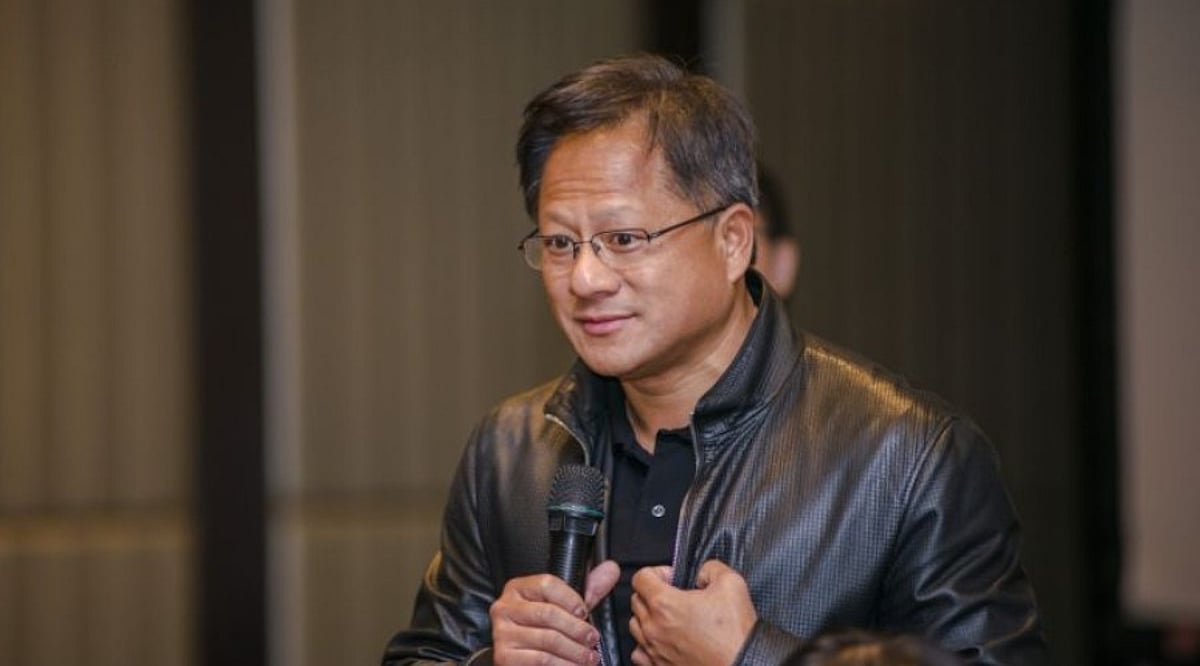
    NVIDIA CEO Jensen Huang has declared that artificial general intelligence (AGI) has officially arrived, attributing the milestone to OpenAI’s newly launched GPT-6 Astra model. In a post on X (formerly Twitter) on September 6, Huang congratulated OpenAI and noted that the journey from ChatGPT to o1 to Astra took just four years. He emphasized that Astra was trained using more than 100,000 NVIDIA Grace Blackwell NVLink72 systems, with an additional 400,000 GPUs expected to come online soon. Huang initially posted a figure of 300,000 systems before deleting and correcting it to the smaller number.

    OpenAI launched GPT-6 Astra on September 3, describing it as its most capable and aligned model to date. The company claims Astra achieves state-of-the-art performance on benchmarks such as FrontierMath Tier 4, ARC-AGI-3, and TerminalBench-4.0, and scored 100 percent on ExploitBench. The model is designed to handle a wide range of tasks, including computer use, software engineering, cybersecurity, and scientific research. OpenAI President Greg Brockman had already framed the launch as the beginning of the AGI era, and Huang’s endorsement added external weight to that claim.

    However, the AGI label remains contentious. There is no universally accepted definition of AGI across the industry. OpenAI itself defines it as a highly autonomous system that outperforms humans at most economically valuable work. Many researchers argue that Astra still requires task-specific guidance in several areas and has not been independently verified to match human-level reasoning across all domains. Huang’s declaration has drawn pushback from AI researchers who view it as more of a marketing statement than a technical milestone, especially given NVIDIA’s financial stake in large-scale AI training runs. The debate over what truly constitutes AGI is likely to intensify as more labs release models with similar claims.